- What you'll learn
- Why calorie tracking is really a self-monitoring task, not just math
- How portion-size estimation makes even simple foods hard to log accurately
- Why restaurant meals, takeout, and homemade mixed dishes are difficult to track
- How food logging apps add friction with duplicate entries and awkward searches
- Why fatigue, boredom, shame, and stress can make tracking harder to sustain
- How to decide when to simplify, pause, or keep tracking in a lighter way
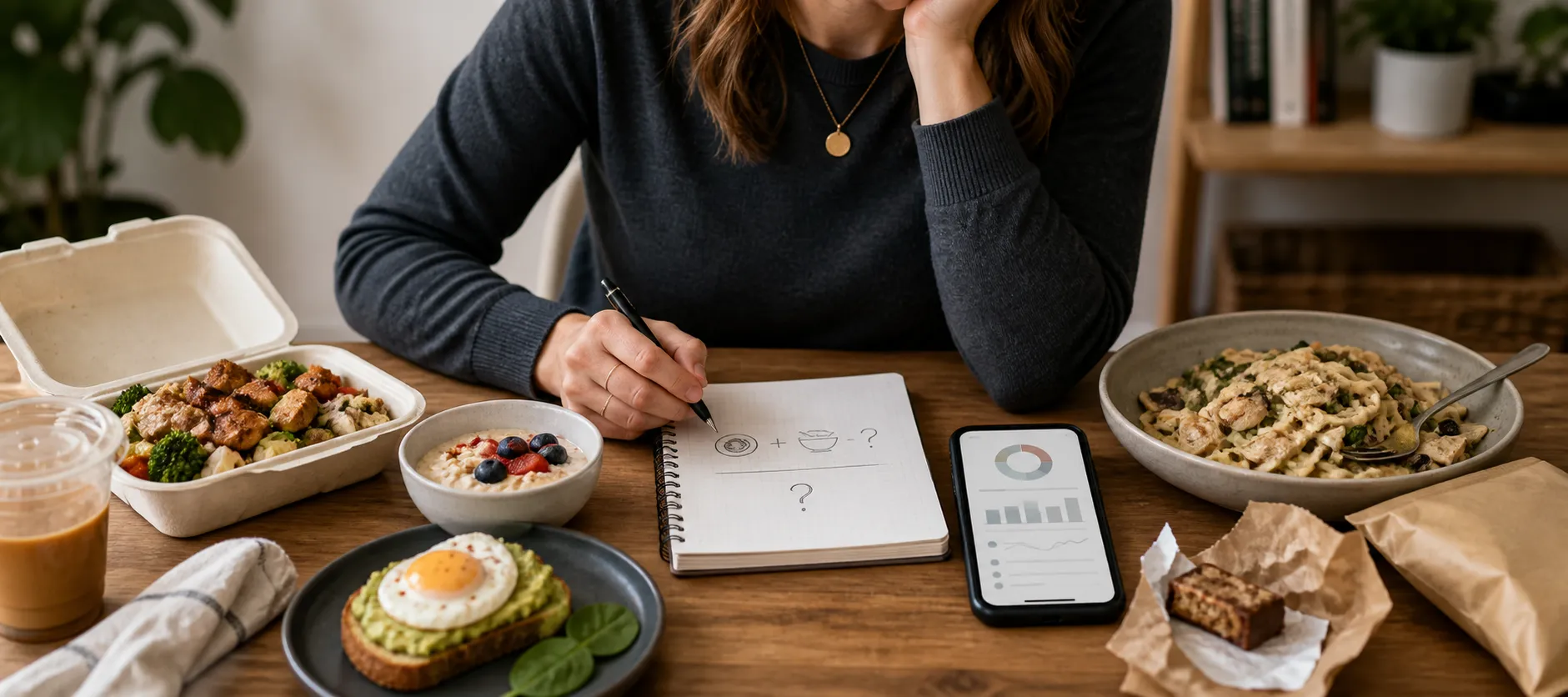
Breakfast is easy enough to log: yogurt, berries, coffee. Then dinner shows up as a homemade bowl or shared pasta, and suddenly you are guessing the oil, the sauce, the serving size, and which of three nearly identical app entries is close enough.
That is why calorie tracking feels hard in real life. The problem is rarely basic math. It is the hidden workload around food: estimating, searching, remembering, deciding, and sometimes dealing with the guilt that tags along.
Calorie tracking sounds simple until real meals, social situations, app friction, and emotions enter the picture. This article breaks down why that happens without blaming you for finding it difficult.
The hard part is not counting. It is constant self-monitoring.
Calorie tracking feels hard because eating turns into an ongoing attention task. People often describe it like math, but the heavier burden is behavioral: noticing what you ate, remembering the details, logging it soon enough, and doing that again at the next meal.
That distinction matters because self-monitoring is a real, evidence-backed tool. Research on behavior change and weight management has repeatedly found that tracking intake can help increase awareness and support progress, but it works best when people can sustain it over time. See reviews on self-monitoring for weight loss and maintenance and the NIH’s overview of behavior-based weight management.
The catch is that awareness is not free. Calorie tracking is not one habit; it is a bundle of micro-habits repeated several times a day. Before you learn anything useful from the data, you have to keep collecting it through ordinary, distracting, real-life days.
Calorie tracking feels hard because every meal becomes a measurement task, a memory task, and a judgment call.
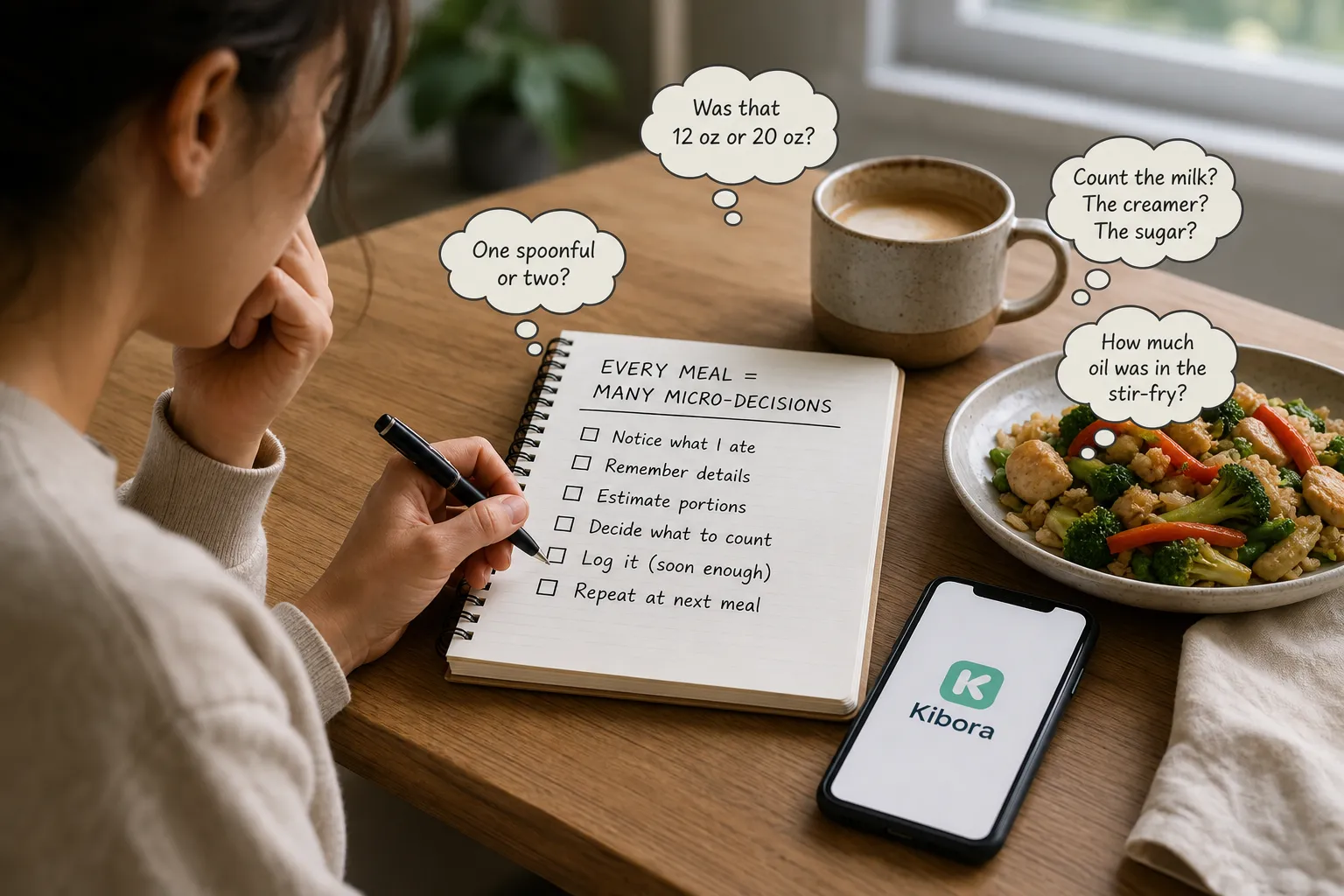
Take a simple coffee. Logging it can mean deciding whether to count the milk, the creamer, the sugar, the second pour, and whether the cup was actually 12 ounces or closer to 20. None of those choices is dramatic on its own, but a normal day can stack up dozens of these tiny decisions before you see any meaningful pattern.
That is why missed logs matter more than people expect. Once you do not write something down, the task shifts from “track this meal” to “reconstruct this meal,” and memory is messy. Was that peanut butter one spoonful or two? How much oil went into the stir-fry? Did you finish the leftovers, or just pick at them?
The emotional side also adds friction. Every entry can feel like a small evaluation of whether you did “well,” even if that was never your intention. And because the work is immediate while the payoff is delayed, tracking can feel boring or tedious even when someone is genuinely motivated.
So if you have ever started strong and then faded, that does not automatically mean you lacked discipline. More often, it means you ran into the basic reality of self-monitoring: it is useful, but it asks for steady attention, repeated decisions, and consistency under less-than-ideal conditions.
Portions turn calories into educated guesses
Knowing what you ate is only half the job. The other half is knowing how much, and that is where calorie tracking often gets hard fast.
Most calorie-tracking error starts before the app: if the portion is a guess, the calorie number is a guess too. Research on portion-size estimation consistently shows that people are not especially good at judging amounts by sight alone, especially once food is served loosely in bowls, on plates, or from shared containers PubMed.
This is not a discipline problem. Visual estimation is genuinely difficult, and small differences in serving size can change a log more than people expect.
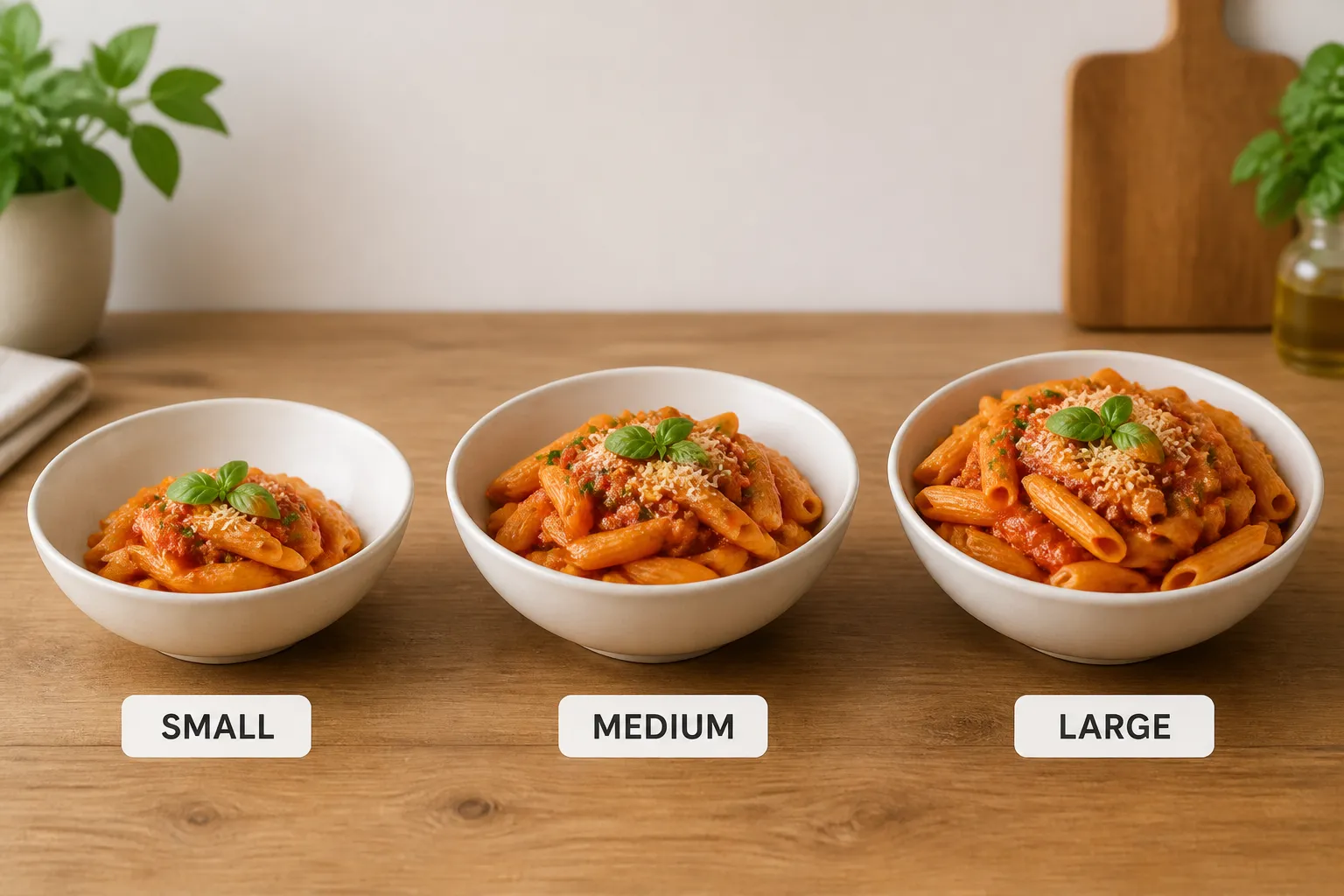
A spoonful of peanut butter can mean a level tablespoon or a heaping one. A pour of olive oil can be one tablespoon or two. A bowl of cereal can be a measured serving or something much closer to double once it reaches your usual bowl.
The same thing happens with pasta, rice, and leftovers. Two plates can contain the same foods but land at very different calorie totals because one has a little extra pasta, more sauce, or a larger scoop of rice than the other.
Calorie-dense foods make the gap matter more. If you log a generic serving of rice but actually ate closer to one and a half or two servings, or if your coffee creamer and cooking oil were poured loosely, the total can drift without you doing anything “wrong.”
Packaged foods are easier because the serving size is standardized. Tools that help you look up calories in common foods can reduce some friction, but even then you still have to decide whether you ate one serving, one and a half, or two.
Restaurant meals and homemade food break the tidy database model
Portion uncertainty is only part of the problem. Food composition is its own guessing game, especially when the meal was cooked by someone else, customized at a counter, or built from several ingredients that never appear separately on the plate.
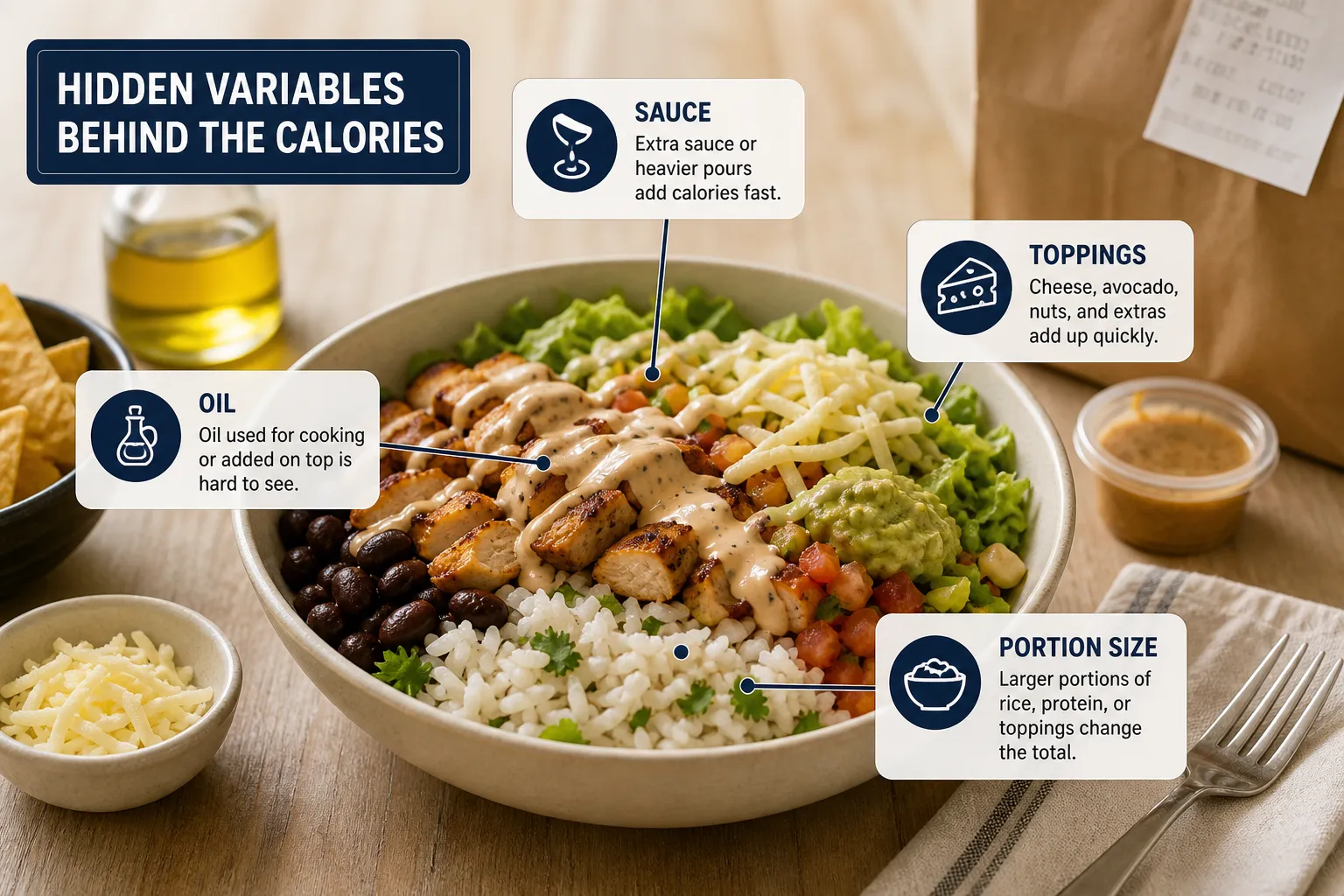
That is why restaurant calories feel slippery even when you are trying to be careful. A salad can look straightforward, then swing widely based on dressing, cheese, nuts, avocado, croutons, and how much oil was used to cook the chicken. Research on restaurant and out-of-home meals has also found that people often underestimate calories in these settings, which helps explain why logging them feels so uncertain in practice according to PubMed-indexed research.
The same thing happens with takeout. A burrito bowl or curry might seem easy to match in an app, but the real calorie total depends on details you usually cannot see: extra oil on the rice, a heavier pour of sauce, more cheese than usual, or a larger scoop of protein and toppings.
None of that is shady or unusual. It is just how food is made in real life. Cooks use oil so food does not stick, sauces are rarely measured tablespoon by tablespoon, and spreads, dressings, and toppings are often added by feel rather than by a standard recipe.
Homemade meals are not automatically easier. A stir-fry cooked at home may include vegetables and lean protein, but it also includes cooking oil, sauce, rice, and whatever portion ends up on your plate after everyone serves themselves. If the recipe was never weighed or written down, the app entry is still an estimate.
Shared meals make this harder again. If the table splits fries, appetizers, pizza, or a family-style dish, most people do not know exactly how much they ate. You can remember having “some,” but turning “some” into a precise number is where calorie tracking gets hard.
The messier the meal, the more calorie tracking shifts from recording facts to choosing the least-wrong estimate. That does not make tracking pointless. It just means many entries for restaurant food, takeout, leftovers, and informal home cooking are approximations rather than exact records.
Apps reduce math, but they add decisions
A calorie app can make tracking easier without making it effortless. The arithmetic is mostly automated, but the judgment calls remain, and that is where a lot of the friction lives.
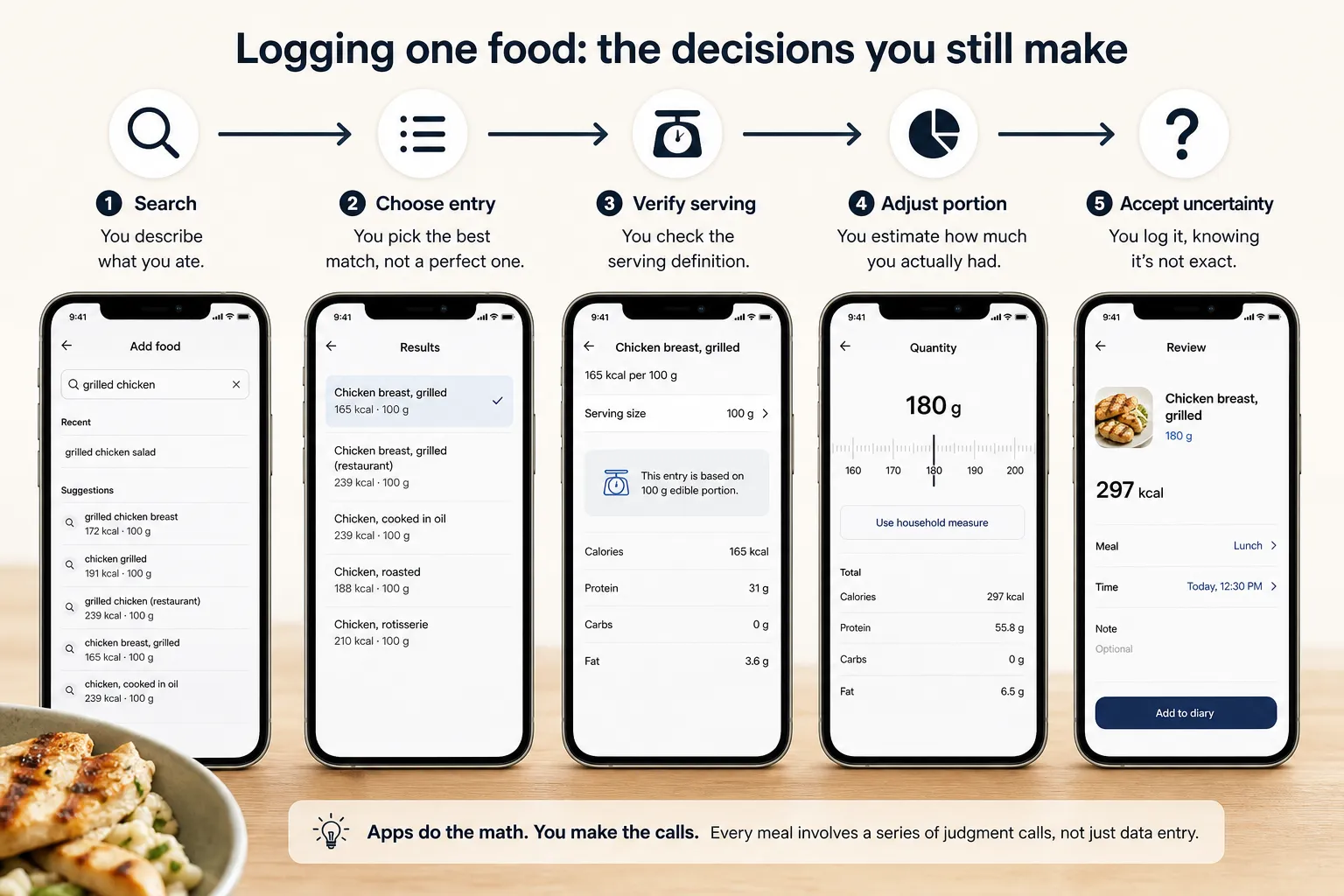
You open the app, type “grilled chicken,” and get a wall of options: raw breast, cooked breast, restaurant chicken, chicken cooked in oil, generic homemade chicken. None of those is exactly your lunch, so you start making micro-decisions about what is close enough.
The same thing happens with ordinary foods. Logging oatmeal can mean choosing between dry weight or cooked volume, instant packets or plain oats, made with water or milk, plus whatever went on top. The app did the math part, but you still have to translate real food into database language.
That translation is not always clean, even in well-built systems. Structured databases such as USDA FoodData Central provide a strong nutrition-data backbone, but consumer apps often layer on brand listings, imports, and user-created entries, which means similar foods can show different calories and serving sizes. That variation is one reason food logging can feel less trustworthy and more mentally tiring.
Barcode scans help with packaged foods, but they do not solve leftovers, takeout bowls, shared appetizers, or a homemade stir-fry. For those meals, people often have to pick between duplicate entries, convert cups to grams, decide whether to log sauce separately, and guess if “1 serving” means anything useful.
Research on food-logging app usability also points to burden and adherence challenges over time, especially when repeated searching and verification become part of every meal PubMed. If that pattern sounds familiar, this look at why diet apps often get harder to stick with explores the same problem from the long-term side.
Life gets loud right when tracking needs precision
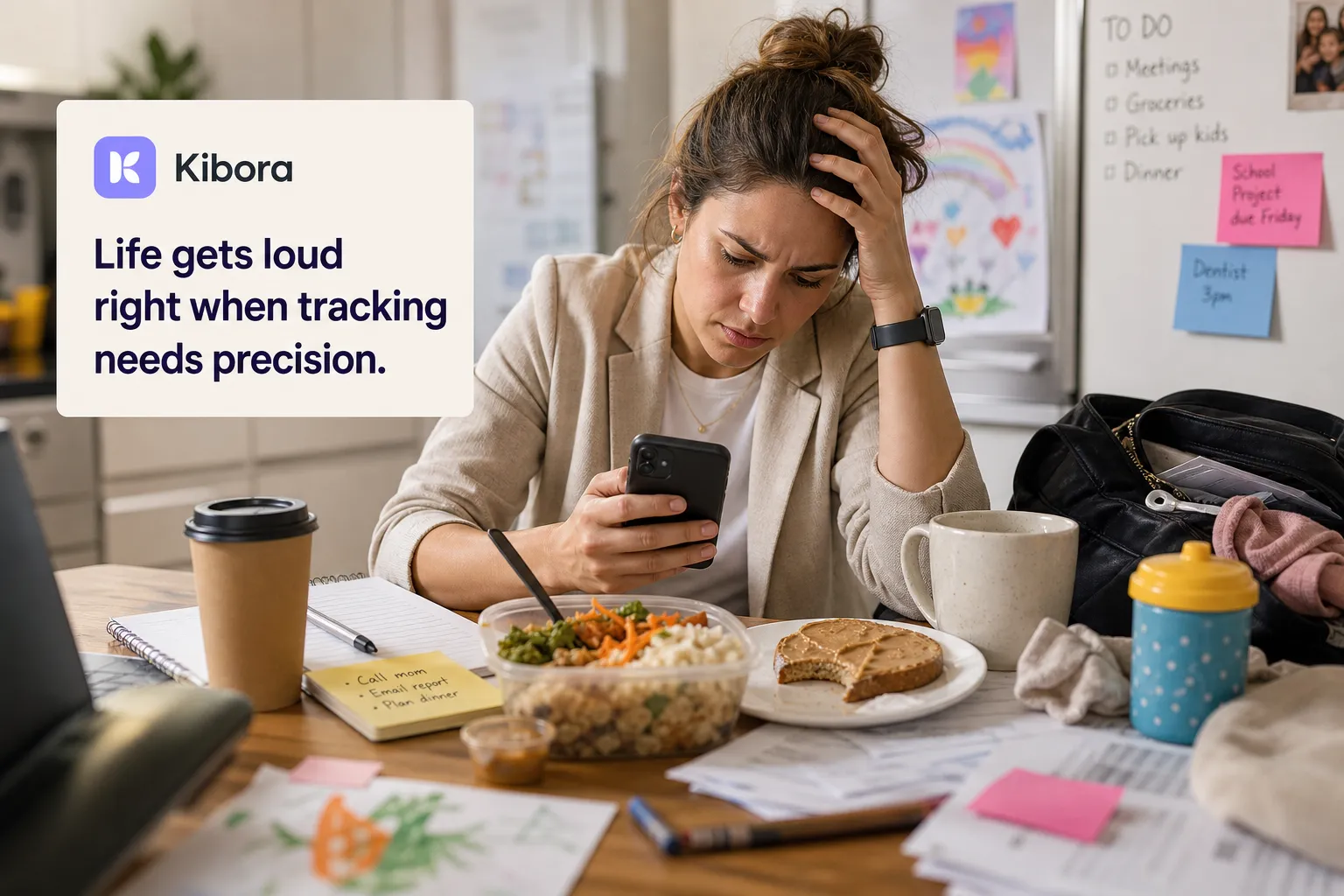
Calorie tracking is usually hardest in the exact moments when life is least tidy. Tracking does not break down only when motivation is low; it often breaks down when life friction is high. Hunger, fatigue, busyness, and stress all make a detail-heavy task feel much heavier.
In theory, pre-logging is easier than trying to remember everything later. In real life, that is not always possible when you are grabbing coffee on the way to work, eating a takeout bowl between meetings, or feeding kids while picking at leftovers and a few bites of peanut butter toast.
Social meals add another layer. At a birthday dinner, most people do not want to weigh pasta, ask how much oil went into the sauce, or pull out an app while friends are passing shared appetizers. Even when someone wants to track, restaurant calories, mixed meals, and awkward timing make precision feel unrealistic.
Fatigue also turns logging into a memory test. After a long workday, reconstructing coffee creamer, a handful of crackers, bites while cooking, and the extra sauce on a homemade stir-fry can feel impossible, so people either guess or skip it.
There is also an emotional side that matters. If someone already feels bad about overeating, logging the meal can feel like documenting a mistake, which is why guilt often creates gaps and all-or-nothing thinking.
Tracking should be a tool, not a source of harm. Nutrition guidance from the Academy of Nutrition and Dietetics supports using self-monitoring in ways that fit the person, and research literature has raised caution for people who experience obsessive or distressing patterns around food tracking, as reflected in PubMed-indexed studies. If logging starts creating shame, obsession, or distress, that is a sign to simplify, pause, or seek support if needed.
Useful tracking does not have to be perfect tracking
Calorie tracking is still useful even when it is messy. The best use of calorie tracking is not to create a perfect food record; it is to make invisible patterns visible enough to act on. If a week of rough logging shows that restaurant lunches, late-night snacks, or liquid calories show up more often than you thought, that is already valuable information.
That matters because the real payoff is often awareness, not laboratory precision. A peanut butter spoonful might be off, and a takeout bowl might be impossible to pin down exactly, but repeated entries can still show where your habits are consistent, where portions drift, and which meals create the most uncertainty.
This is also why tracking does not have to last forever or cover every bite. Some people use it temporarily to learn portions for pasta, creamer, oils, or homemade stir-fries, then move to simpler habits once the pattern is clear. Others keep a lighter version because it helps them stay honest without turning dinner into homework.
A simple decision framework
A practical way to judge whether tracking is helping is to ask what it is giving you back.
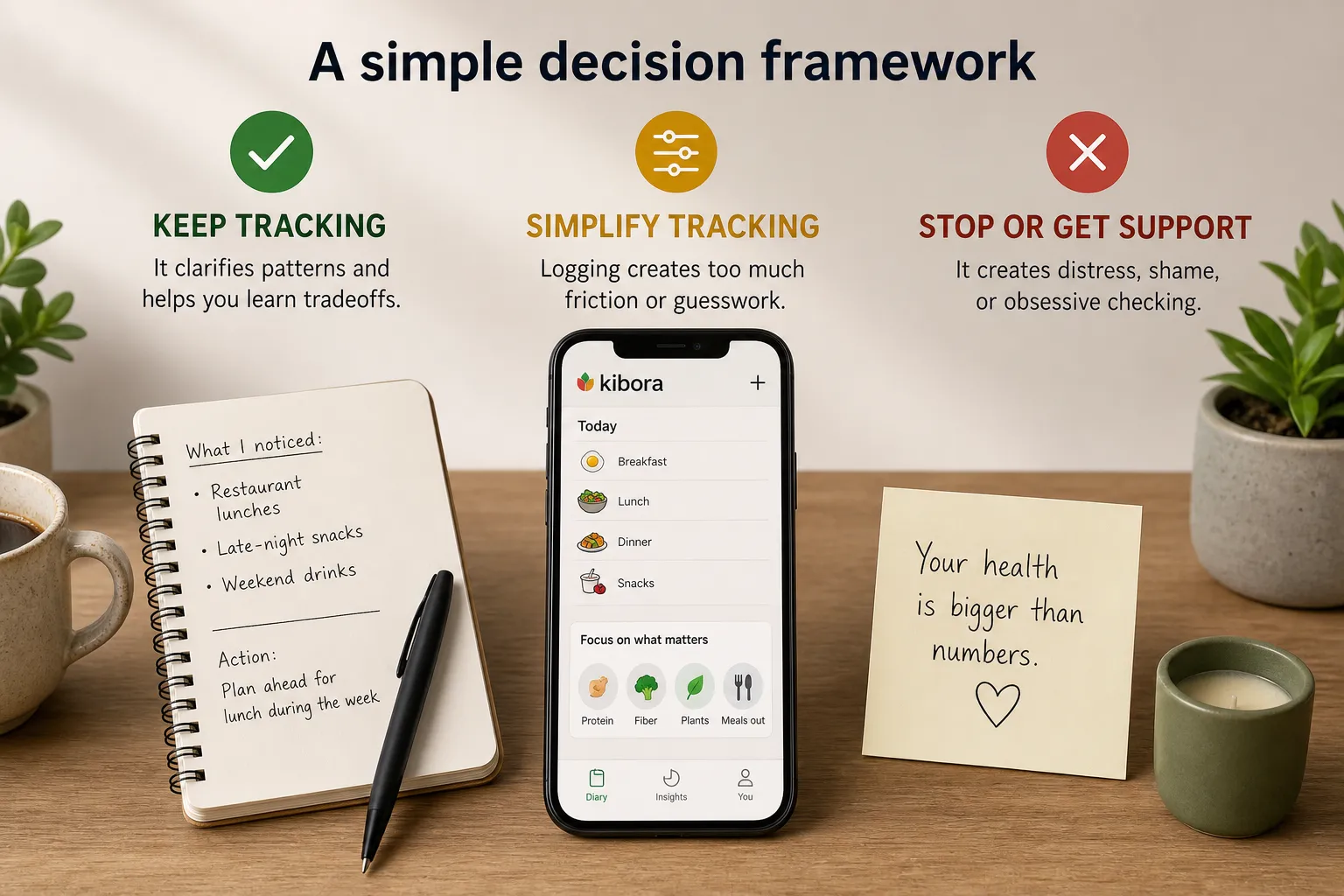
- Track if it clarifies patterns and helps you learn tradeoffs.
- Simplify if logging creates too much friction, boredom, or repeated guesswork.
- Stop or get support if it starts creating distress, shame, or obsessive checking.
That middle option is the one many people miss. You do not have to choose between detailed tracking and giving up completely. You might track only protein, fiber, plants, meals out, or a few recurring foods that account for most of your intake.
A balanced approach is consistent with broader self-monitoring guidance from the Academy of Nutrition and Dietetics, which emphasizes that nutrition tools work best when they fit the person and support behavior change. In practice, that means the system should help you notice something useful, not just ask you to keep proving that you ate.
If calorie counting feels hard because every meal becomes a search problem, simplify the goal. Track the meals most likely to vary, the foods you regularly underestimate, or the moments when eating becomes automatic. A rough but repeatable method usually teaches more than a perfect method you abandon after four days.
And if you want next steps, keep them practical. Tools, including simpler logging setups or apps like Kibora, should reduce friction and uncertainty, not make meals feel like exams. If you want a more action-focused version of that idea, this guide on making calorie tracking useful picks up from here.
Make the tool smaller than your life
Calorie tracking feels hard for real reasons. It asks you to estimate portions, decode restaurant meals and mixed dishes, repeat the same searches, make judgment calls in imperfect apps, and carry the emotional weight that can come with logging every bite.
That does not mean tracking cannot help. It can be useful when it creates awareness, shows patterns, and gives you information you can actually use. If tracking stops teaching you and starts punishing you, the problem may be the system, not your willpower.
A practical next step is to ask what level of tracking gives you insight without taking over your meals. Keep it if it helps, simplify it if full logging feels too heavy, or explore a lighter way to eat better without tracking calories if the process creates distress.
You are allowed to adapt the tool to your life. Calorie tracking is hard because the task asks a lot, not because you are lazy or broken.
- Key sources
- Systematic reviews on self-monitoring for weight loss and weight maintenance
- National Institutes of Health (NIH) / obesity and weight-management behavioral research
- PubMed search: portion size estimation calorie accuracy
- PubMed search: restaurant meals calorie underestimation
- USDA FoodData Central
- PubMed search: food logging app usability
- PubMed search: calorie tracking eating disorder risk
- Academy of Nutrition and Dietetics / behavioral self-monitoring guidance