


- What you'll learn
- How to tell whether you actually need a snack or just think you do
- Why small, plain portions are usually less disruptive than heavy bedtime meals
- Which foods are most likely to backfire before bed, including spicy, fatty, sugary, caffeine, and alcohol choices
- Practical snack options that are easier to digest, like toast, oatmeal, yogurt, fruit, or a few crackers
- How reflux, diabetes, pregnancy, medication timing, and insomnia can change the best choice
- How to spot your own late-night eating patterns with Kibora and use them to make better timing decisions
It is late, dinner was hours ago, and now you are standing in the kitchen trying to decide whether a snack will help you sleep or make the night worse. That question matters, because the best late night snack is often no snack at all.
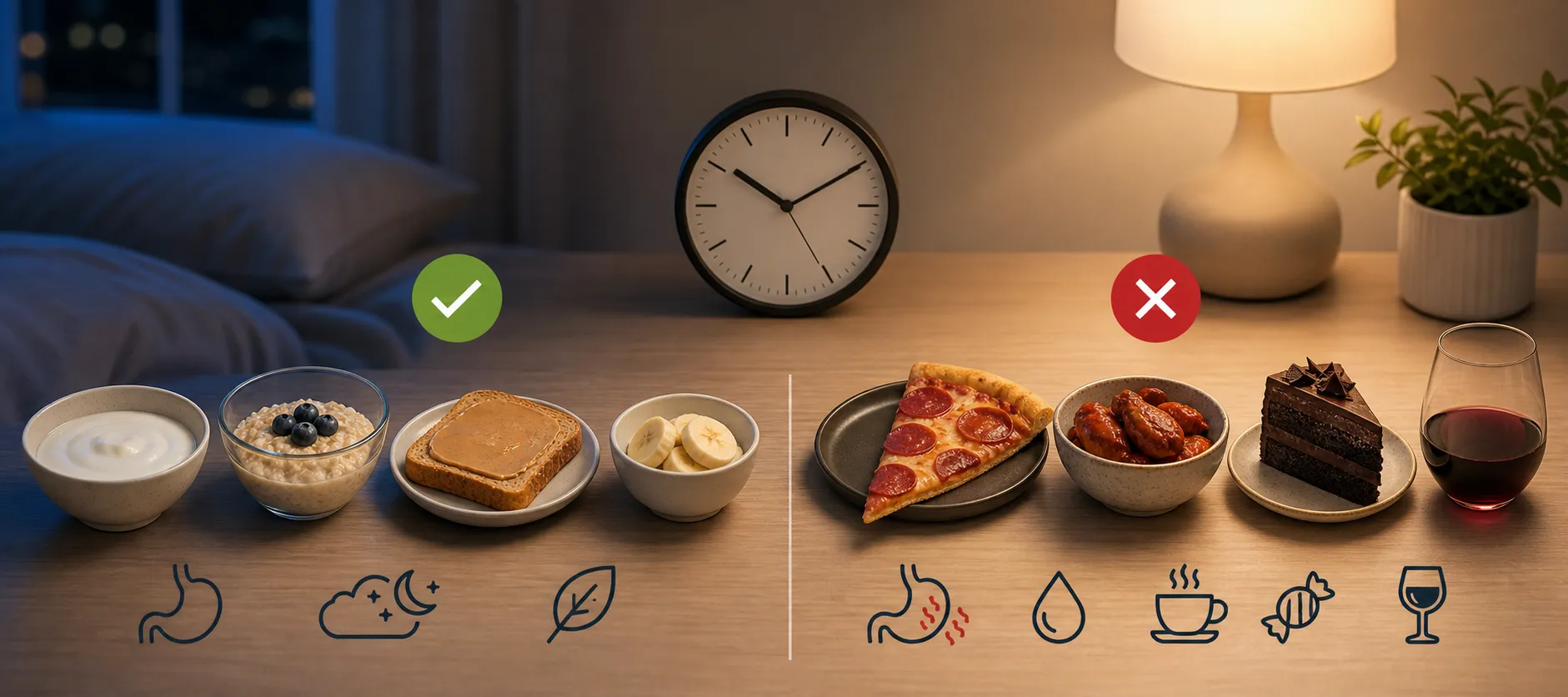
Here is the rule that guides this whole article: if you are not truly hungry, skip it. If you are hungry, make it small, boring, and easy to digest, not pizza, chips, chocolate, wine, ice cream, or a second dinner.
That is the counterintuitive part. The goal is not to find a magical bedtime food, but the least disruptive option when real hunger shows up, so you can eat just enough without setting yourself up for reflux, restlessness, or a too-full feeling at bedtime.
First, decide if you actually need a snack
Before you think about the best late night snacks, do a fast hunger check. For many people, finishing the last meal about 2 to 3 hours before bed is a useful sleep-friendly default, though it is not a strict law for everyone. Both the National Sleep Foundation and Sleep Foundation note that meal timing and food choices can affect sleep, while smaller, simpler snacks may be easier to tolerate than a full late meal.
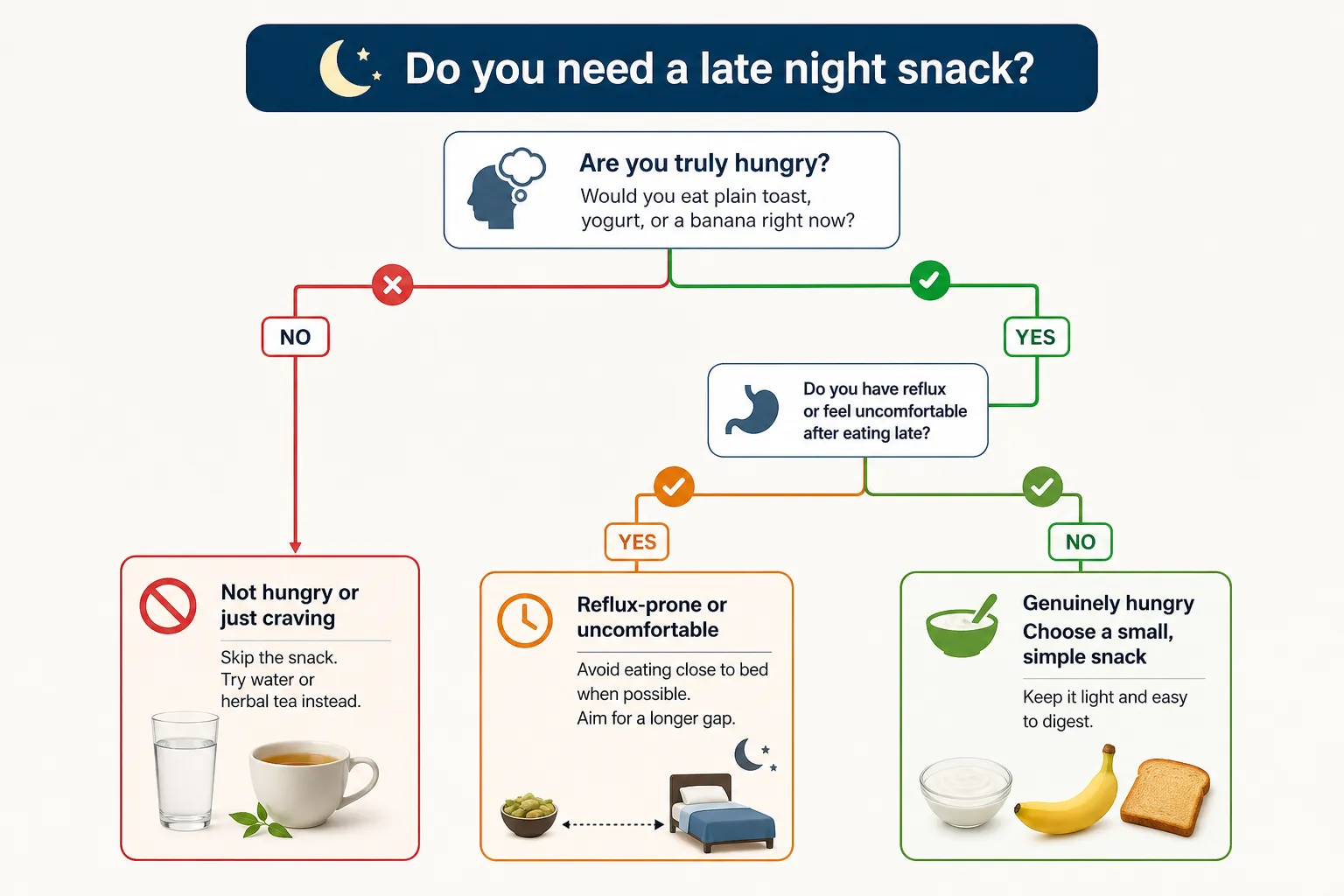
Use a simple decision tree. If this feels like habit, boredom, stress, or a dessert hunt, skip the snack and try water or herbal tea instead. If hunger feels strong enough that it will keep you awake or wake you up later, a small snack makes more sense.
A good test is: would you eat plain toast, yogurt, or a banana right now? If the answer is no, you may not be truly hungry. If the answer is yes, especially after a very early dinner or a meal that was physically small, a light snack can be a practical fix rather than a sleep mistake.
This is also where individual response matters. If you have reflux, you may need a longer gap between food and lying down, and conditions like diabetes, pregnancy, medication timing, athletic recovery, or chronic insomnia can change what is reasonable.
The goal is simple: let the snack solve hunger, not recreate dinner. If you want help noticing whether evening eating, caffeine, alcohol, or dinner size is driving your sleep patterns, this guide on meal timing, sleep, and hunger patterns goes deeper.
The least-disruptive snack formula
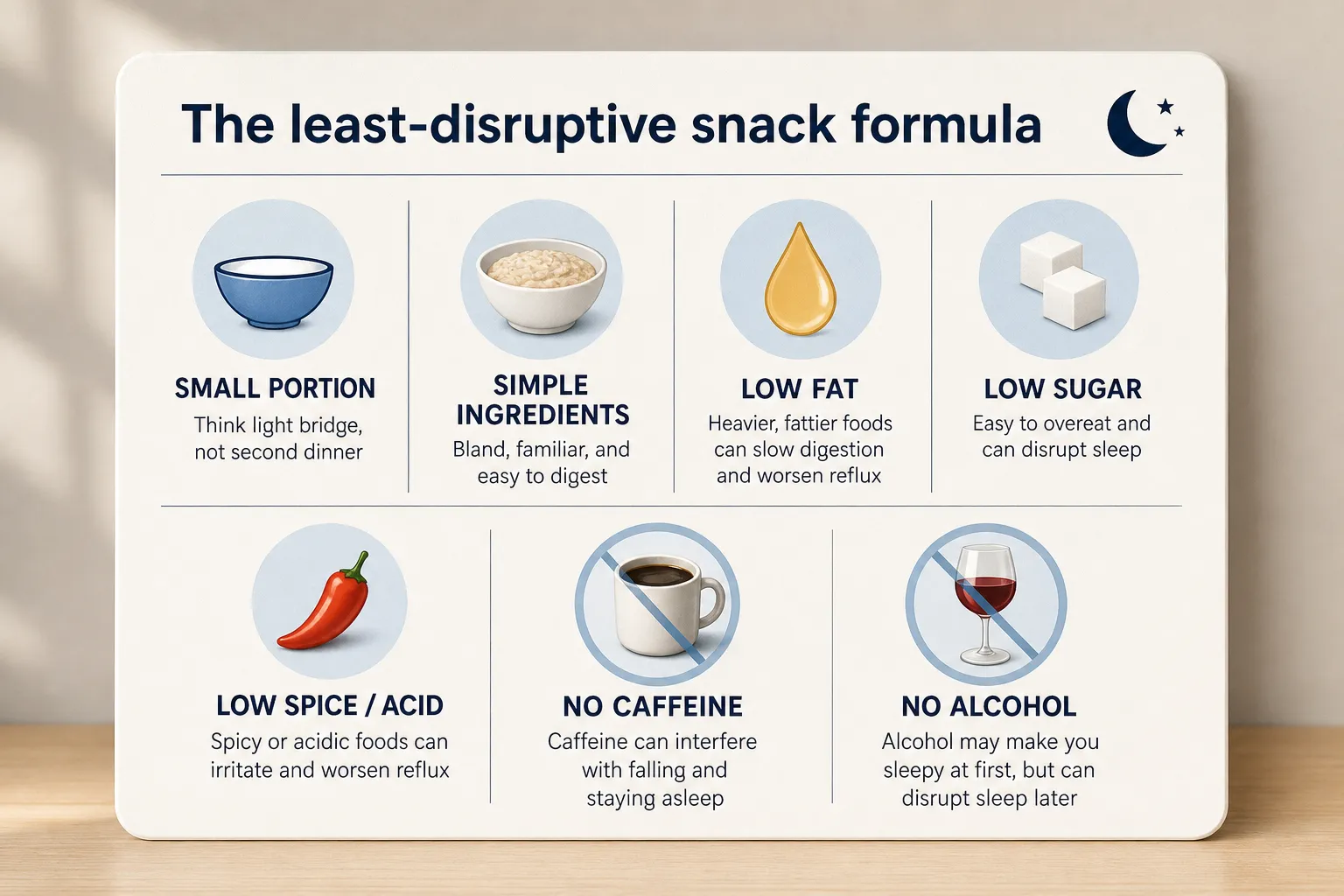
If you really are hungry, the goal is not to find a magical sleep food. The goal is to choose the least disruptive option: small, simple, and unlikely to sit heavily in your stomach right before bed.
Start with portion size. A late-night snack should feel like a light bridge, not a second dinner, so think one slice, a small bowl, half a portion, or a snack-sized amount that takes the edge off hunger without restarting a full digestion cycle.
Then keep the food itself plain and familiar. Bland, easy-to-digest choices such as toast with a thin spread, a small bowl of oatmeal, plain yogurt, a banana, or crackers with a small amount of cheese are usually a better pattern than hot wings, pizza, ice cream, or chips.
Lower fat is a useful rule because heavier, fattier foods can slow digestion and may worsen reflux for some people. If reflux or heartburn is part of the issue, spicy foods, acidic foods, and eating late can also make symptoms worse, according to the NIDDK.
Go easy on added sugar too. Dessert-like snacks are easy to overeat, and many also bring extra fat or caffeine, which is part of why chocolate bars and coffee-based desserts are poor late-night choices.
Caffeine and alcohol both work against this formula. The American Academy of Sleep Medicine notes that caffeine can interfere with sleep, and the NIAAA explains that alcohol may make you sleepy at first but can disrupt sleep later in the night.
One reasonable pattern for some people is modest carbs plus a little protein, like crackers with a bit of cheese or toast with yogurt on the side. Not because that combination guarantees better sleep, but because it is often satisfying without being as heavy, rich, or stimulating as typical late-night comfort food.
Best late-night snacks when you’re actually hungry
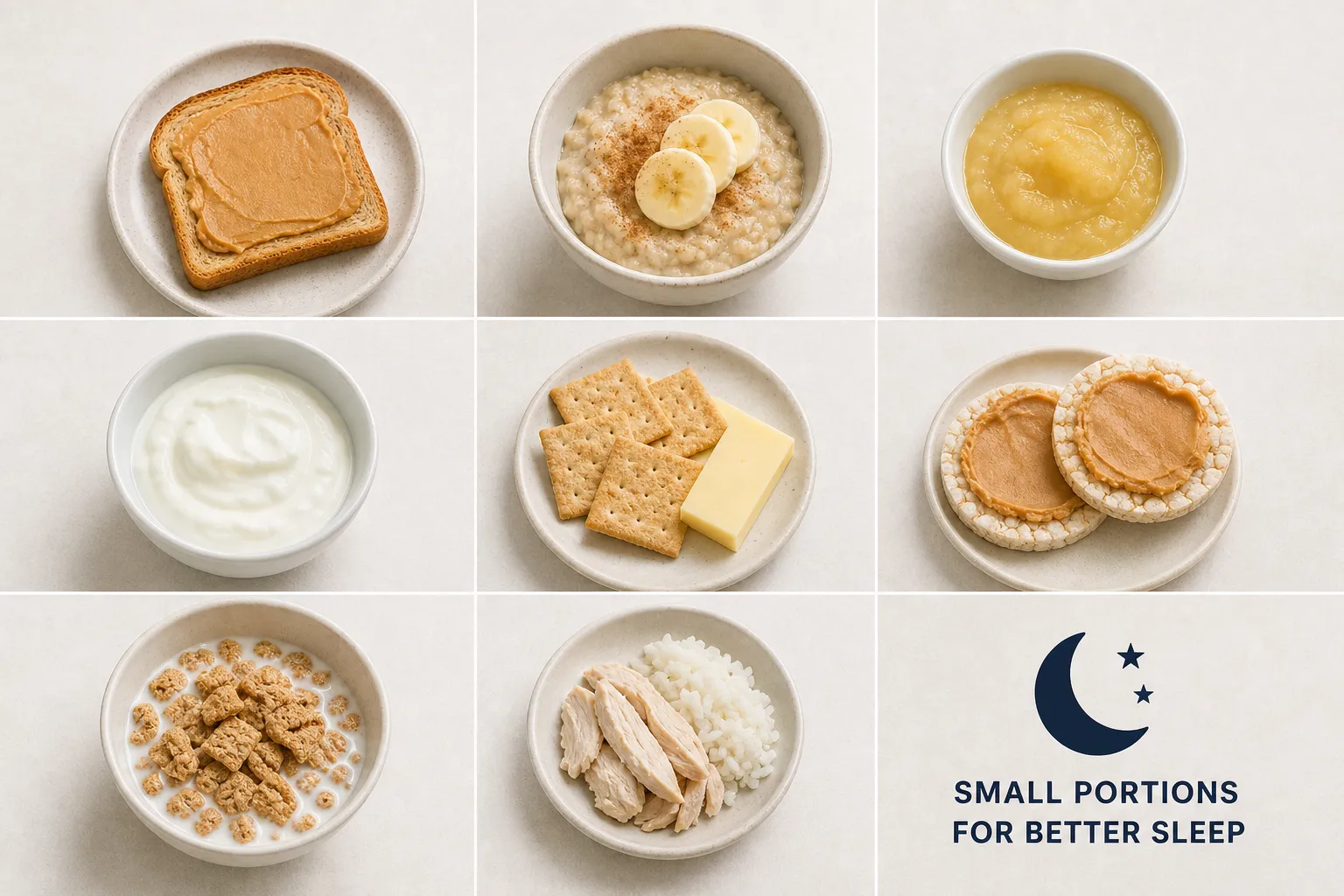
If you need a snack before bed, the goal is small, simple, and easy to digest. Sleep experts generally recommend lighter options over heavy, rich, or sugary foods close to bedtime because bigger, harder-to-digest meals can interfere with sleep and comfort Sleep Foundation, Harvard Health.
-
Plain toast or a small English muffin
Why it works: It is bland, familiar, and usually sits lighter than a richer snack. If plain feels too bare, add a thin layer of peanut butter, cottage cheese, or a little jam if you tolerate it well.
Keep it to: one slice of toast or half to one small English muffin.
Who may want to avoid it: people who notice reflux from bread plus spreads, or anyone who turns it into a loaded sandwich. -
A small bowl of oatmeal
Why it works: Warm oatmeal can feel filling without needing much fat or sugar. The least-disruptive version is a small bowl with cinnamon or a few banana slices, not a large bowl loaded with butter, brown sugar, and nuts.
Keep it to: a snack-sized bowl.
Who may want to avoid it: people who find fiber-heavy foods too close to bed leave them overly full or uncomfortable. -
Banana or applesauce
Why it works: These are practical when hunger is mild and you want something light, soft, and quick. They make more sense as a small bridge snack than as a full mini-meal.
Keep it to: one small banana or a small cup of unsweetened applesauce.
Who may want to avoid it: people managing blood sugar who do better pairing carbs with some protein, or anyone who finds fruit too sweet late at night. -
Plain yogurt or cottage cheese
Why it works: These can help when hunger feels more protein-driven and you want something cool and simple. Choose plain versions and keep the portion modest.
Keep it to: a small bowl, not a large tub.
Who may want to avoid it: anyone whose reflux, lactose intolerance, or dairy sensitivity tends to flare at night. -
Crackers or rice cakes with a small protein add-on
Why it works: Good if you want crunch without reaching for chips. A few plain crackers with a small slice of cheese, a little hummus, or a thin smear of nut butter is usually less disruptive than a salty snack binge.
Keep it to: a few crackers or one to two rice cakes with a light topping.
Who may want to avoid it: people who tend to keep eating once they open a box, or those triggered by richer toppings. -
Low-sugar cereal with milk or a fortified milk alternative
Why it works: It is convenient and easy to portion if you keep it boring enough. Think a small bowl of low-sugar cereal, not a dessert cereal in a giant serving.
Keep it to: one small bowl.
Who may want to avoid it: people sensitive to dairy, highly sweet cereals, or large liquid-heavy snacks before bed. -
Leftover dinner, but miniaturized
Why it works: Sometimes real food is the most satisfying option. A few bites of rice and chicken or a small side portion is often better than reheating a full second dinner.
Keep it to: a few bites or a small side-sized portion.
Who may want to avoid it: anyone whose leftovers are spicy, greasy, very acidic, or heavy enough to feel like a full meal.
These are practical options, not sleep cures. If you have GERD, diabetes, pregnancy-related nausea, medication timing needs, athletic recovery demands, or ongoing insomnia, your best bedtime snack may need a more individual approach.
Late-night foods most likely to backfire
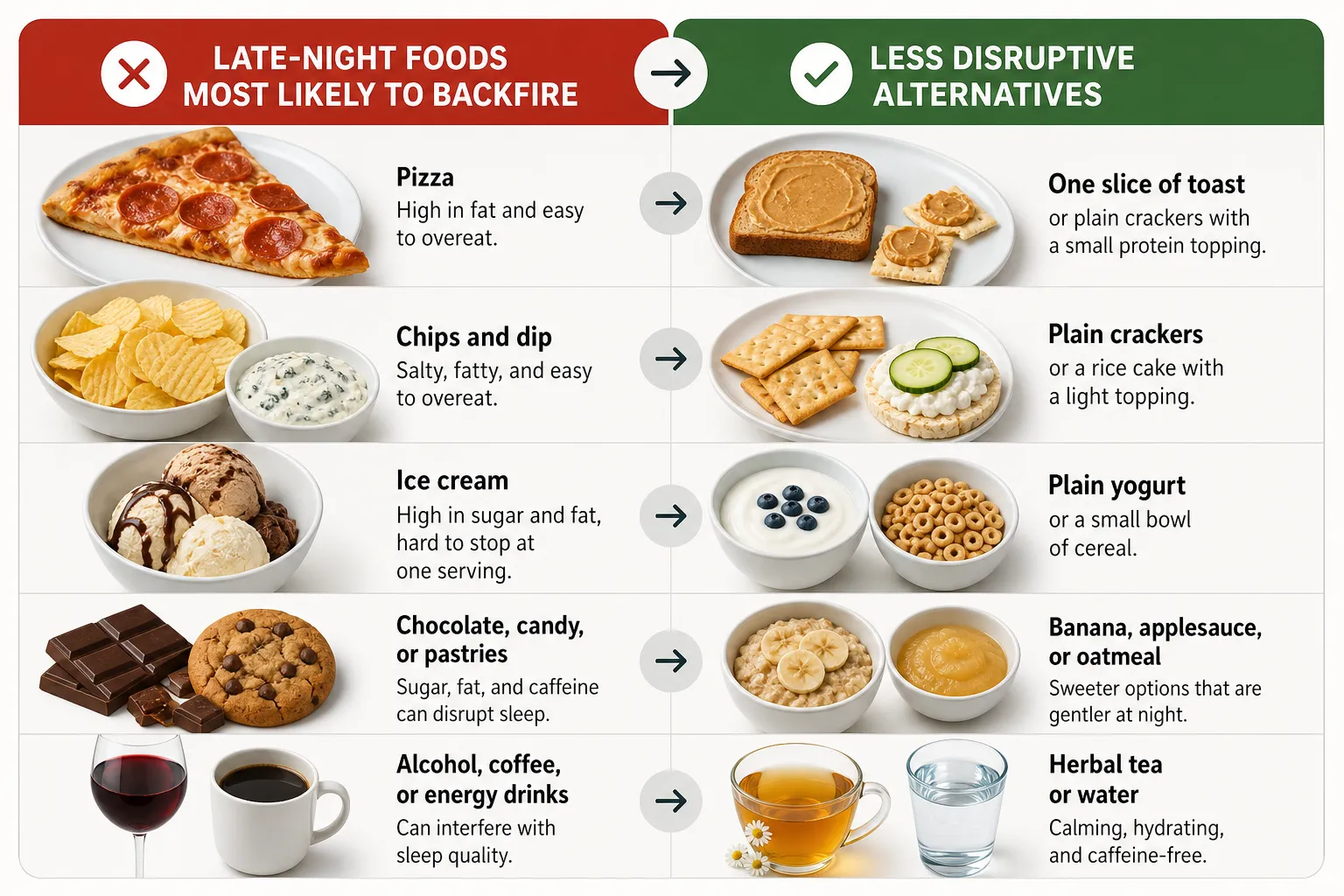
If you need a snack before bed, the biggest problems are usually size, richness, and stimulation. Foods like pizza, burgers, fried takeout, and creamy leftovers tend to be heavy, high in fat, and easy to overeat, which can leave you feeling too full or uncomfortable when you lie down.
Spicy snacks and hot sauce can also be rough at night, especially if you deal with reflux. The NIDDK notes that fatty, spicy, and late meals can worsen reflux symptoms in some people, so a simpler option is often the safer call close to bed.
Try these swaps instead:
- Instead of pizza, have one slice of toast or a few plain crackers with a small protein topping.
- Instead of chips and dip, have plain crackers or a rice cake with a light topping.
- Instead of ice cream, try plain yogurt or a small bowl of cereal if dairy works well for you.
Desserts can backfire for a different reason. Ice cream, pastries, candy, and dessert cereals often combine sugar, fat, and large portions, which can turn a quick snack into a second dinner.
Chocolate is another common miss because it can contain caffeine and theobromine. The American Academy of Sleep Medicine notes that caffeine can affect sleep even hours later, so if you mostly want something sweet, banana, applesauce, or a small bowl of oatmeal is usually less disruptive.
Alcohol may feel relaxing, but it is a poor bedtime snack partner. The NIAAA explains that alcohol can make you sleepy at first while still disrupting sleep later in the night.
The same caution applies to coffee, energy drinks, and some teas. If your usual late-night choice includes caffeine, the easiest fix is often to keep the snack and change the drink.
Choose based on what usually wakes you up
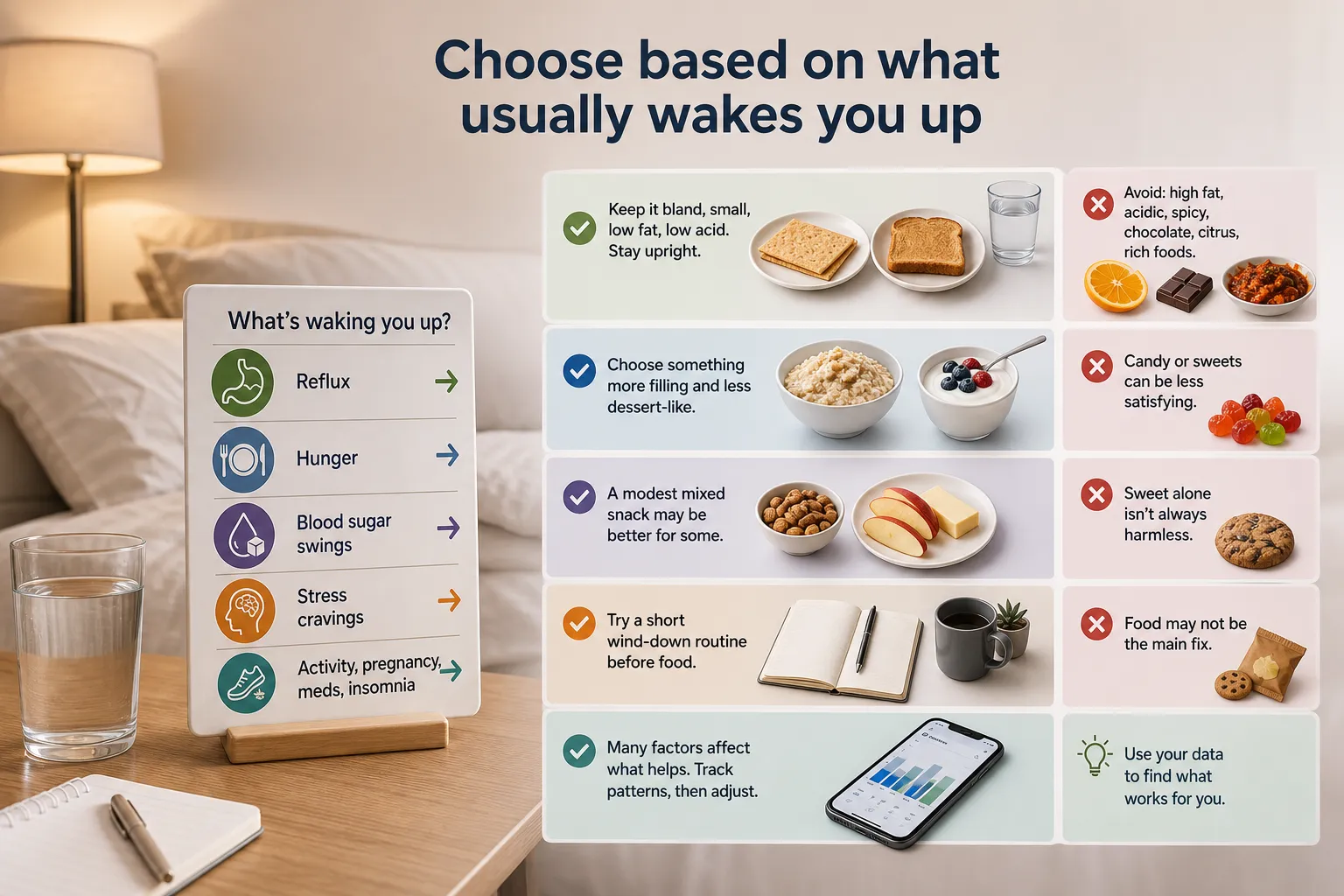
The best late night snacks are not the same for everyone. Start with the problem you are trying to solve, because a snack that helps one person may make someone else more uncomfortable or more awake.
If reflux is what wakes you up, the least disruptive option is often no snack at all, or a longer gap between eating and bed. If you do need something, keep it bland, small, low fat, and low acid, and stay upright for a bit afterward. Plain toast or crackers may be better tolerated than yogurt, citrus, chocolate, spicy leftovers, or fatty foods, and reflux triggers can vary from person to person according to the NIDDK.
If hunger is what wakes you up, look earlier in the day before blaming bedtime. A too-light dinner or a long gap after dinner may be the real issue, but if you need a bridge, a small bowl of oatmeal or some yogurt is usually less disruptive than candy because it is more filling and less dessert-like.
If blood sugar swings are a concern, avoid assuming a sweet snack alone is harmless. A modest mixed snack may be better tolerated for some people, but diabetes, glucose-lowering medications, and overnight lows are situations where personal clinical guidance matters more than generic snack advice.
If stress cravings hit at night, food may not be the main fix. Try a short wind-down routine first so every rough evening does not automatically become a trip to the kitchen.
Workouts, pregnancy, nausea, medication timing, and insomnia can all change what makes sense. If your night eating is frequent, Kibora can help you spot whether heavier dinners, caffeine, alcohol, or repeated late snacks line up with worse sleep, then turn that into a more useful next step in the patterns you track.
Your best answer is probably in your own pattern
There is no universal cutoff or perfect food that works for everyone. Late-night snack tolerance varies, so the useful move is to look for patterns in your own routine instead of copying someone else’s rule.
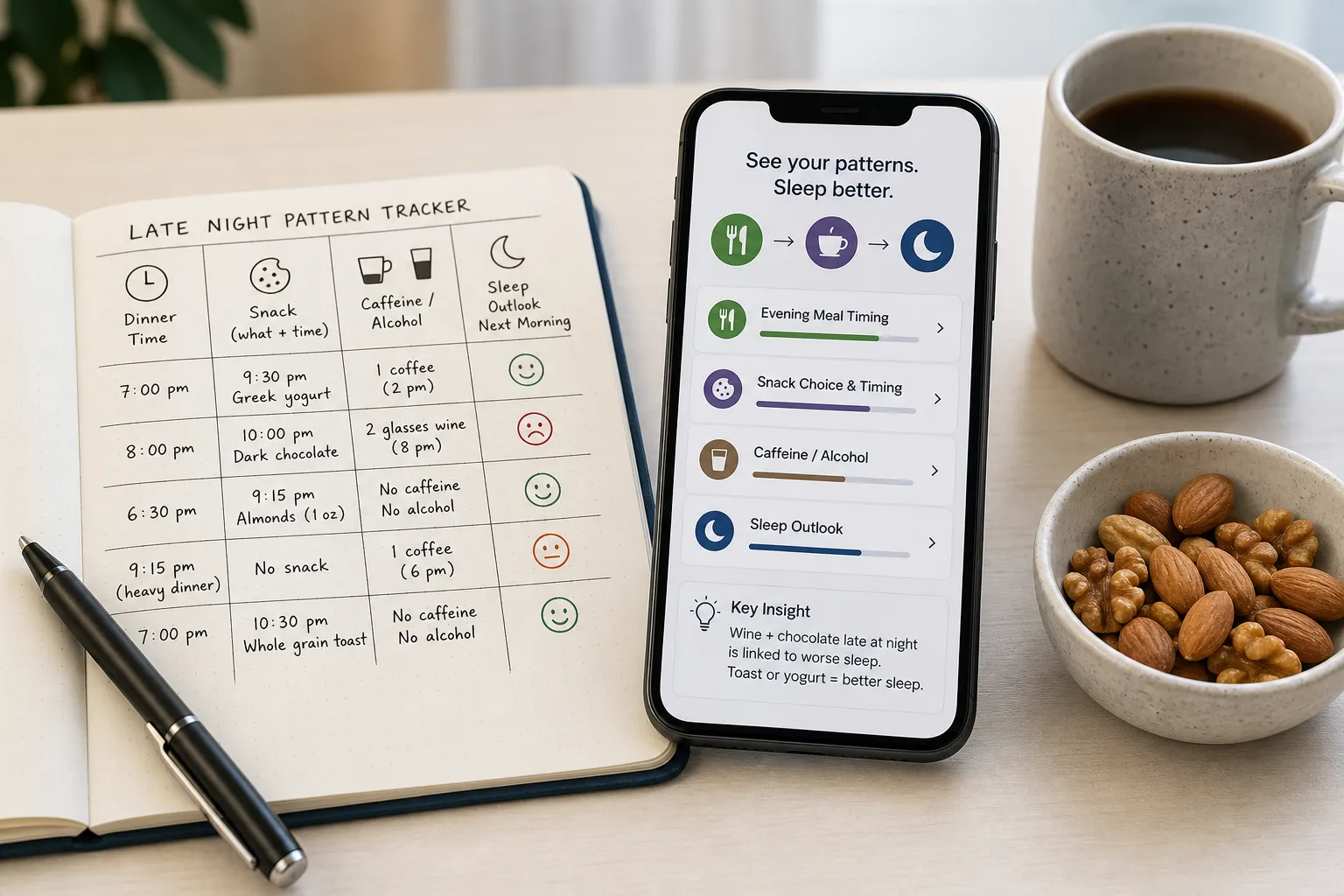
For one to two weeks, track a few basics: dinner timing, snack timing, snack type, portion size, caffeine, alcohol, heavier dinners, fiber, plant variety, and how sleep looked the next morning. Keep it simple and note whether sleep felt worse, better, or unchanged after the last thing you ate.
Do not judge one night in isolation. What matters is the cluster that repeats, especially if late eating seems to line up with more alertness, digestion, reflux, or awakenings, which fits the broader mechanism-based concern around eating too close to bed discussed in this sleep guidance transcript.
Those clusters are often more revealing than the snack itself. If sleep is worse after wine and chocolate but fine after toast, the issue may be alcohol or caffeine rather than eating itself. If reflux shows up after large late dinners, the better fix may be earlier timing or smaller portions. If late snacks keep happening after too-light dinners, dinner composition may need attention first.
This is where behavior change gets easier when you can actually see the pattern. Kibora is useful because it turns logged meals into practical insights, not just calorie totals, helping you connect evening eating with caffeine, alcohol, heavier meals, fiber, plant variety, and your next-morning sleep outlook. If you want a clearer view of what Kibora tracks, its features page is a helpful next step.
The goal is not to find a magical bedtime snack and repeat it forever. It is to adjust the routine earlier in the day when possible, so late-night eating becomes a backup plan instead of a nightly habit.
Keep it small, boring, and occasional
If you can comfortably skip the snack, skip it. The best late-night snack is usually no snack at all, because the goal is not to find a magic sleep food. It is to avoid turning a manageable bedtime into a digestion problem.
If hunger is real and likely to keep you awake, have something small, simple, low in fat and sugar, and free of caffeine and alcohol. Think of it as a light bridge, not a second dinner. One slice of toast beats a second dinner; oatmeal beats ice cream.
If late snacking keeps happening, the more useful question is why. Look at dinner timing, dinner size, caffeine, alcohol, and whether stress or habit is pulling you back into the kitchen at night.
The practical rule for tonight is simple: do not eat late by default, but do eat a small snack if hunger would keep you awake, and choose the least disruptive option. Water and sleep beat a snack you do not actually need, and consistency and pattern awareness matter more than finding a perfect sleep food.
- Key sources
- National Sleep Foundation - Diet and Sleep
- Sleep Foundation - Eating Before Bed
- NIDDK - Acid Reflux (GER & GERD) in Adults
- NIAAA - Alcohol and Sleep
- American Academy of Sleep Medicine - Caffeine and Sleep
- Harvard Health Publishing - How food and sleep interact
- FoundMyFitness transcript: How to Improve Sleep
