- What you'll learn
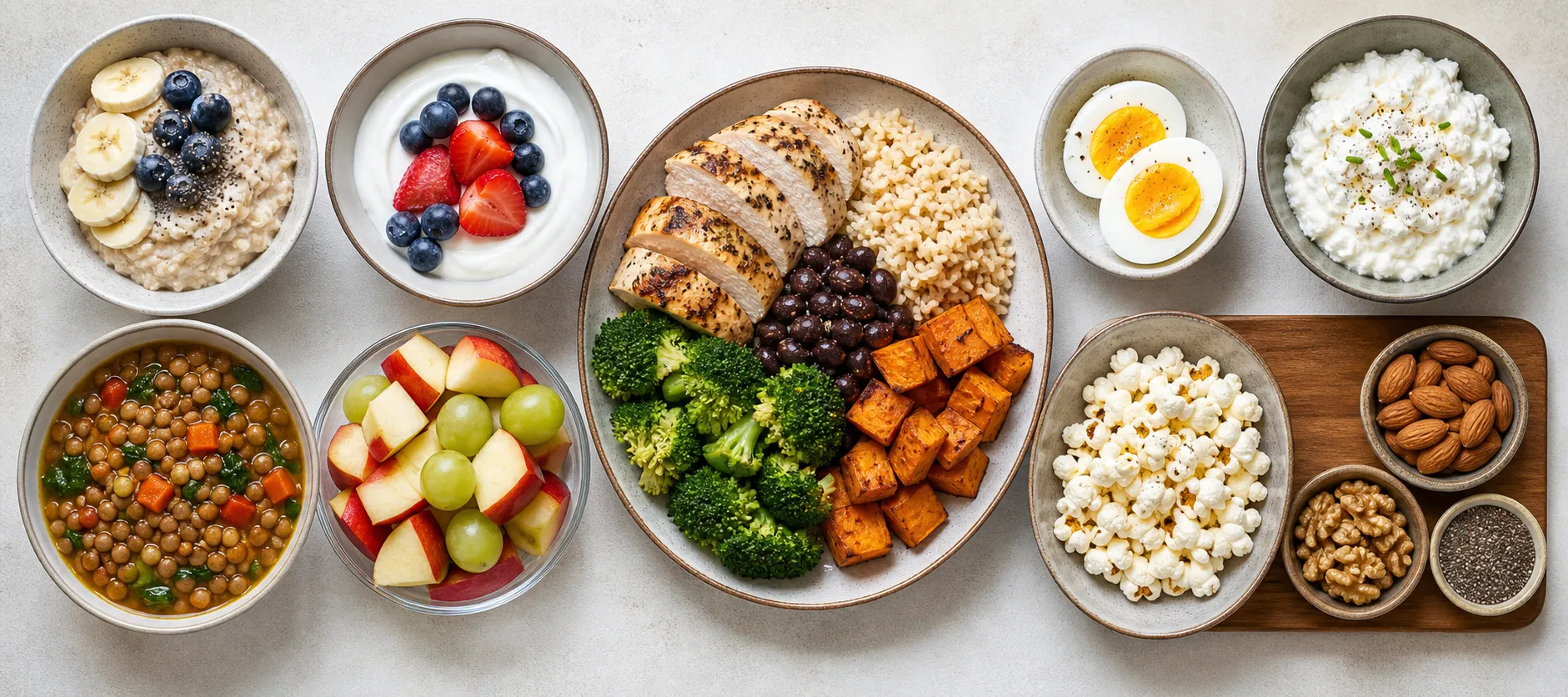
- Which foods tend to satisfy hunger better, including eggs, Greek yogurt, cottage cheese, oats, potatoes, beans, lentils, fish, chicken, tofu, fruit, vegetables, popcorn, nuts, and seeds
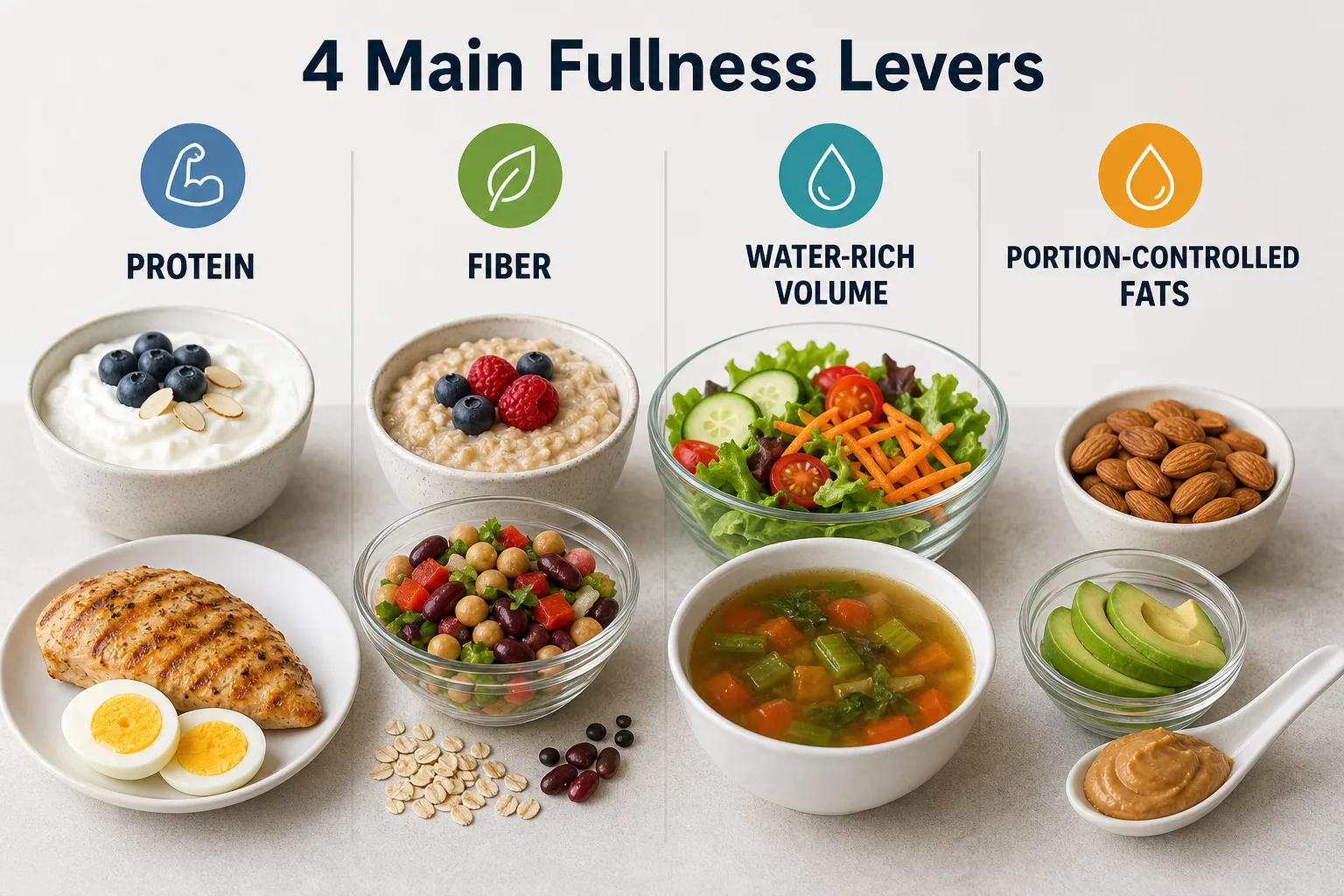
- Why protein, fiber, water-rich volume, and portion-controlled fats matter more than one perfect food
- How oats, beans, lentils, and potatoes can help with fullness when they are prepared in practical ways
- Which yogurt, cottage cheese, and potato options are more filling, and which forms are less useful
- How to build meals and snacks that hold up longer by combining protein with fiber-rich or water-rich foods
- What to watch for if high-fiber foods cause bloating, or if calorie-dense snacks like nuts are easy to overeat
You finish a meal that seemed totally normal, then an hour or two later you are hungry again. That usually does not mean you need to eat less or start a stricter diet. It often means the meal was missing a few traits that help food stick with you.
The good news is that foods that keep you full longer tend to share the same basics: protein, fiber, water-rich volume, slower-digesting carbs, and fats in sensible portions. A sweet cereal breakfast may fade fast, while oats with Greek yogurt or eggs with fruit often has more staying power.
In this guide, you will see 11 realistic foods that fit those traits, plus simple ways to combine them. The real fix is not one magic food. It is building meals and snacks with better satiety from the start.
What makes a food filling in the first place
Satiety is simple: it is how long a meal keeps you satisfied before you want to eat again. Most foods that keep you full longer are not special because of one buzzword. They usually work because they check a few practical boxes.
The first box is protein. It is one of the strongest levers for fullness and can help reduce later hunger more than meals built mostly around refined carbs, especially when calories are similar, according to Harvard's Nutrition Source. That is why Greek yogurt is more filling when it is actually high in protein, not mostly added sugar.
The second box is fiber. Fiber adds bulk, slows digestion, and helps food stay satisfying longer, especially when it comes from whole foods like beans, oats, fruit, and vegetables, as explained by Harvard's fiber guide. Just increase high-fiber foods gradually if you are not used to them, since a big jump can cause bloating or discomfort.
Then there is volume. Water-rich, lower-energy-density foods like vegetables, fruit, broth-based soups, and cooked oats let you eat a bigger-looking meal without making it overly heavy in calories, a pattern supported by research on energy density and satiety from Barbara Rolls and colleagues.
Fat helps too, mainly by improving flavor and satisfaction. But because fat is calorie-dense, a little can make a snack feel complete while a large handful of nuts can add up fast.
A quick caution on glycemic index: it can matter in some situations, but it does not determine fullness by itself. In real meals, protein, fiber, food structure, and overall energy density usually matter more than one number.
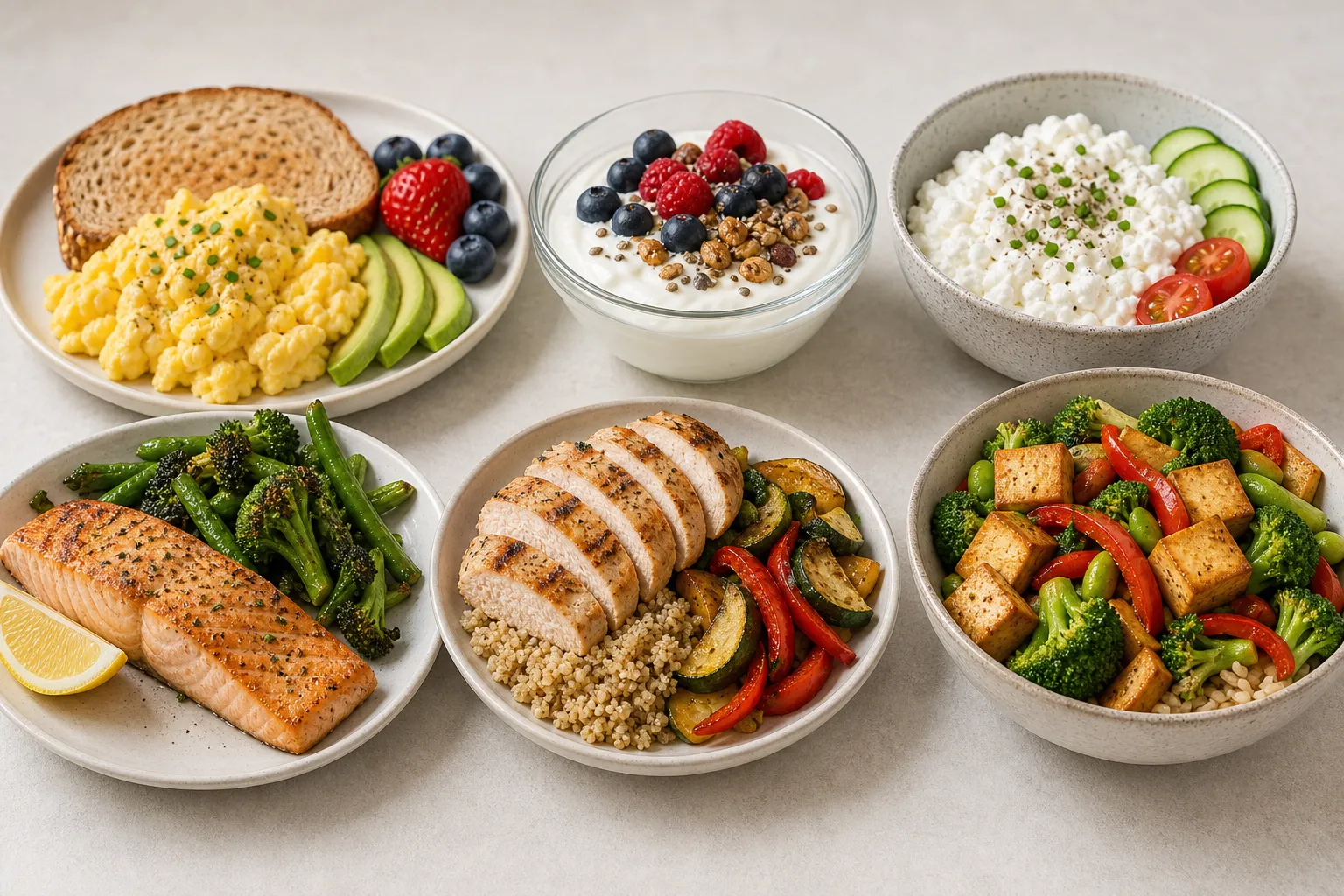
Start with protein anchors: eggs, Greek yogurt, cottage cheese, fish, chicken, or tofu
If you get hungry soon after eating, a clear protein source is often the easiest fix. Higher-protein meals tend to support fullness better than lower-protein ones, which is why protein shows up so often in research on satiety foods in systematic reviews and trials.
Eggs are a practical place to start, especially at breakfast. They provide complete protein, and some studies suggest egg-based breakfasts can be more satisfying in the short term than refined-carb breakfasts like pastries or sugary cereal in randomized trials on eggs and satiety.
What to choose is simple: whole eggs, prepared in a way you actually enjoy. One easy use is two eggs with whole-grain toast and a piece of fruit, which usually has more staying power than a breakfast built mostly from fast-digesting carbs.
Greek yogurt works well because it gives you protein in a form that is quick, portable, and easy to build on. For the best shot at fullness, choose plain or lower-added-sugar versions with a meaningful amount of protein per serving, since higher-protein yogurt and dairy foods can help with satiety according to randomized trial evidence.
A good default is Greek yogurt with berries and a small spoonful of nuts or seeds. That combination adds protein, fiber, and a little fat, which helps the meal feel more complete instead of fading fast.
Cottage cheese is another strong protein anchor, especially if you want something savory or a break from yogurt. Choose a version you like the taste of and texture-wise, then pair it with something that adds fiber or crunch rather than eating it alone.
One easy option is cottage cheese with apple slices, tomatoes, or whole-grain toast. It can work as a quick snack, but it also holds up as a light meal when you add produce or a grain on the side.
For lunch and dinner, fish, chicken, or tofu are reliable bases for more filling meals. On their own they are just one piece, but when you pair them with vegetables, beans, potatoes, or whole grains, the meal usually lasts longer than a plate built mostly around vegetables or refined starch.
What to choose depends on your routine. Fish can be a solid option when you want something lighter, chicken is easy to batch-cook, and tofu works well if you want a plant-based protein that can absorb flavor. A simple use is a bowl with tofu, vegetables, and lentils, or chicken with roasted potatoes and a big side of vegetables.
The practical rule is not to chase one magic food. If there is a meal where you regularly end up hungry an hour later, start by asking: where is the protein anchor?
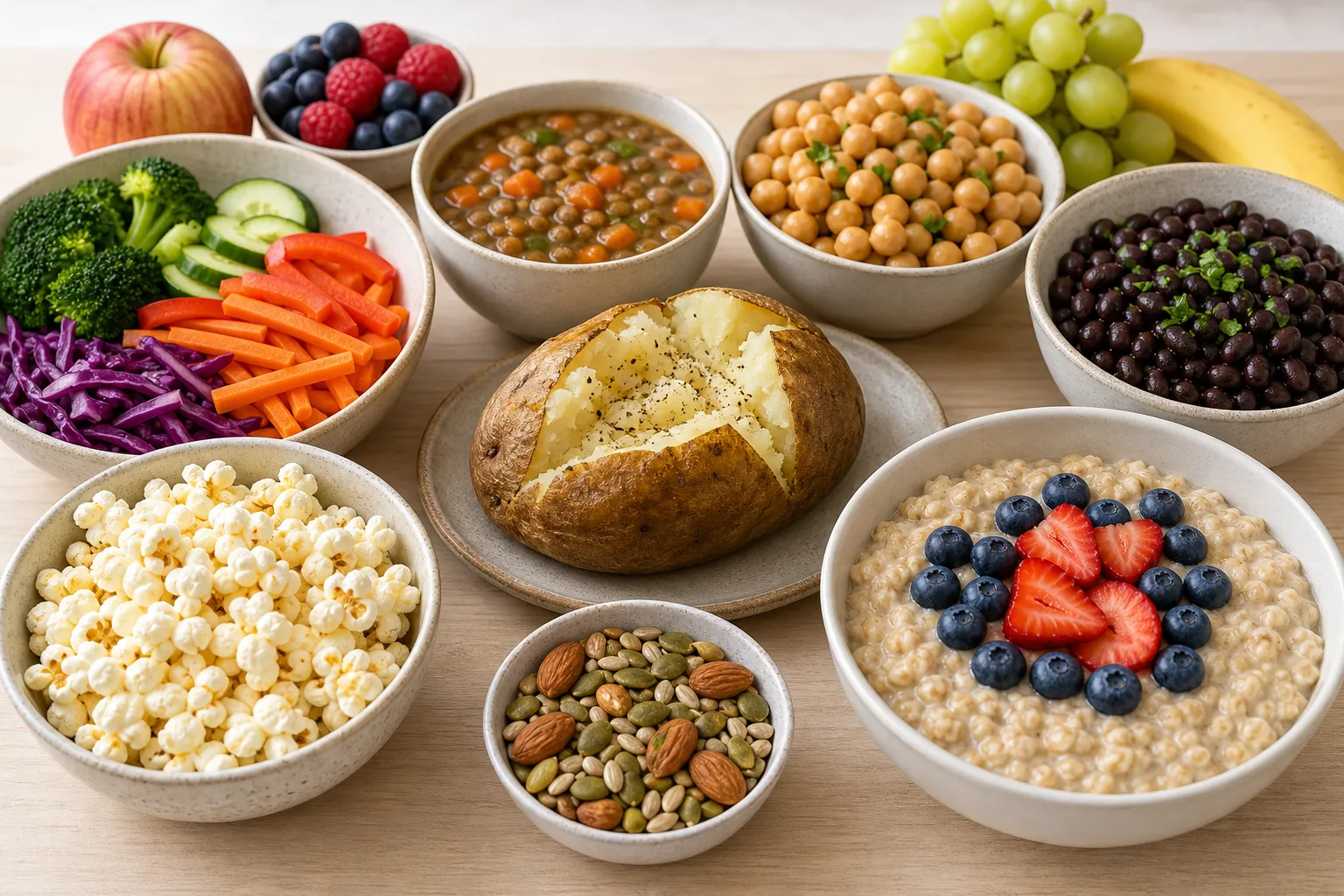
Add fiber and volume: oats, potatoes, beans, vegetables, fruit, popcorn, nuts, and seeds
Oats are one of the easiest foods that keep you full longer because they bring soluble fiber, including beta-glucan, which can help slow digestion and improve fullness. Research on the Satiety Index also found oats rank well compared with many common breakfast foods.
The preparation matters. A bowl of oatmeal or overnight oats tends to work better than sugary instant packets, especially if you add Greek yogurt or milk for protein and berries for extra fiber and volume.
Potatoes surprise people, but boiled or baked potatoes can be very filling for their calories. They ranked especially high in the original Satiety Index study, which is one reason they still come up in conversations about high satiety foods.
This is one food where preparation changes the effect a lot. A plain baked potato or boiled potatoes can anchor a satisfying meal, while fries and chips are far less helpful for fullness because they are more processed, more energy-dense, and easier to keep eating. If you want a practical meal, top a baked potato with beans, cottage cheese, Greek yogurt, or tuna.
Beans and lentils are some of the best all-around satiety foods because they combine fiber, protein, water-rich bulk, and slower-digesting carbs. Reviews of legume studies suggest they can support fullness better than many refined-carb sides when eaten as part of a meal across randomized trial research.
You do not need to make them complicated. Lentil soup, bean chili, or a scoop of chickpeas added to a salad or grain bowl can make lunch feel more substantial without much extra effort.
Non-starchy vegetables help mostly through volume and water content. They make meals look and feel bigger, add chew time, and can help a plate feel more satisfying when pasta, rice bowls, or eggs seem too small on their own.
Fruit can help in a similar way, especially berries and apples. The CDC notes that fiber-rich foods such as fruits, vegetables, beans, and whole grains can help you stay full longer by increasing fiber intake, and whole fruit is usually more filling than juice because you keep the fiber and structure. Many people find an apple with peanut butter or berries with yogurt holds them longer than fruit by itself.
Air-popped or lightly seasoned popcorn is a smart snack when you want crunch and a bigger portion. It is a high-volume option that can feel more satisfying than chips or crackers, as long as it is not loaded with butter, sugar, or heavy coatings.
Nuts and seeds are a little different from the other foods here. They are useful because their fats, fiber, and crunch can add satisfaction, but they work best in small portions rather than as high-volume fullness foods. Think of them as a finishing touch on yogurt, oats, or fruit, not the whole snack.
If your usual meals are low in fiber, increase these foods gradually. Beans, lentils, and other high-fiber foods can cause bloating or discomfort when you add too much too fast.
The real trick is combining them, not eating them one at a time
A lot of foods that keep you full longer work best in combination. A single filling food can help, but if the rest of the meal is low in protein, fiber, or volume, hunger may show up sooner than you want.
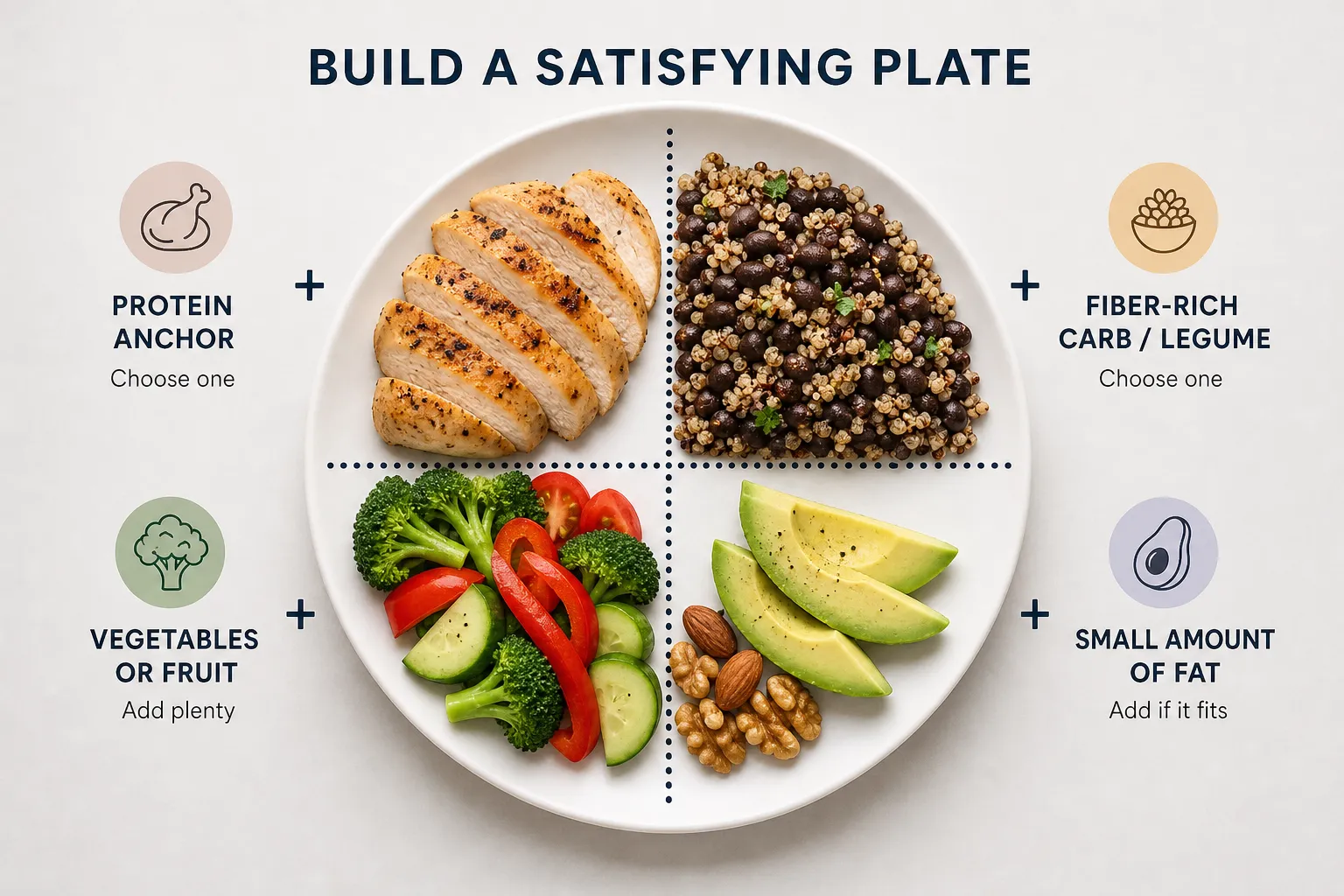
A simple way to build a more satisfying plate is to start with one protein anchor, then add one fiber or volume source, and finish with a small amount of fat if it fits the meal. That often looks like protein + fiber + water-rich volume, not a perfect formula you have to follow every time.
- Breakfast: eggs with vegetables and fruit
- Breakfast: oats with Greek yogurt, berries, and seeds
- Lunch: chicken, tofu, or beans over a large salad or grain bowl with plenty of vegetables
- Dinner: fish with a baked potato and vegetables
- Dinner: lentil soup with a side salad
The same idea works for snacks. Instead of eating just fruit or just popcorn, pair a protein or fat with something fiber-rich to make it last a little better.
- Apple with nuts
- Cottage cheese with fruit
- Greek yogurt with berries
- Popcorn plus a protein source
You do not need to overhaul your routine to use this. Upgrade meals you already eat: add Greek yogurt to oats, put beans in your salad, swap a light snack for fruit plus cottage cheese, or add vegetables and a potato to a simple protein at dinner.
If your main hunger problem shows up later in the evening, it can help to keep a few balanced options ready. You can find more practical ideas in these late-night snack suggestions.
A few filling foods can still backfire if they do not fit your body
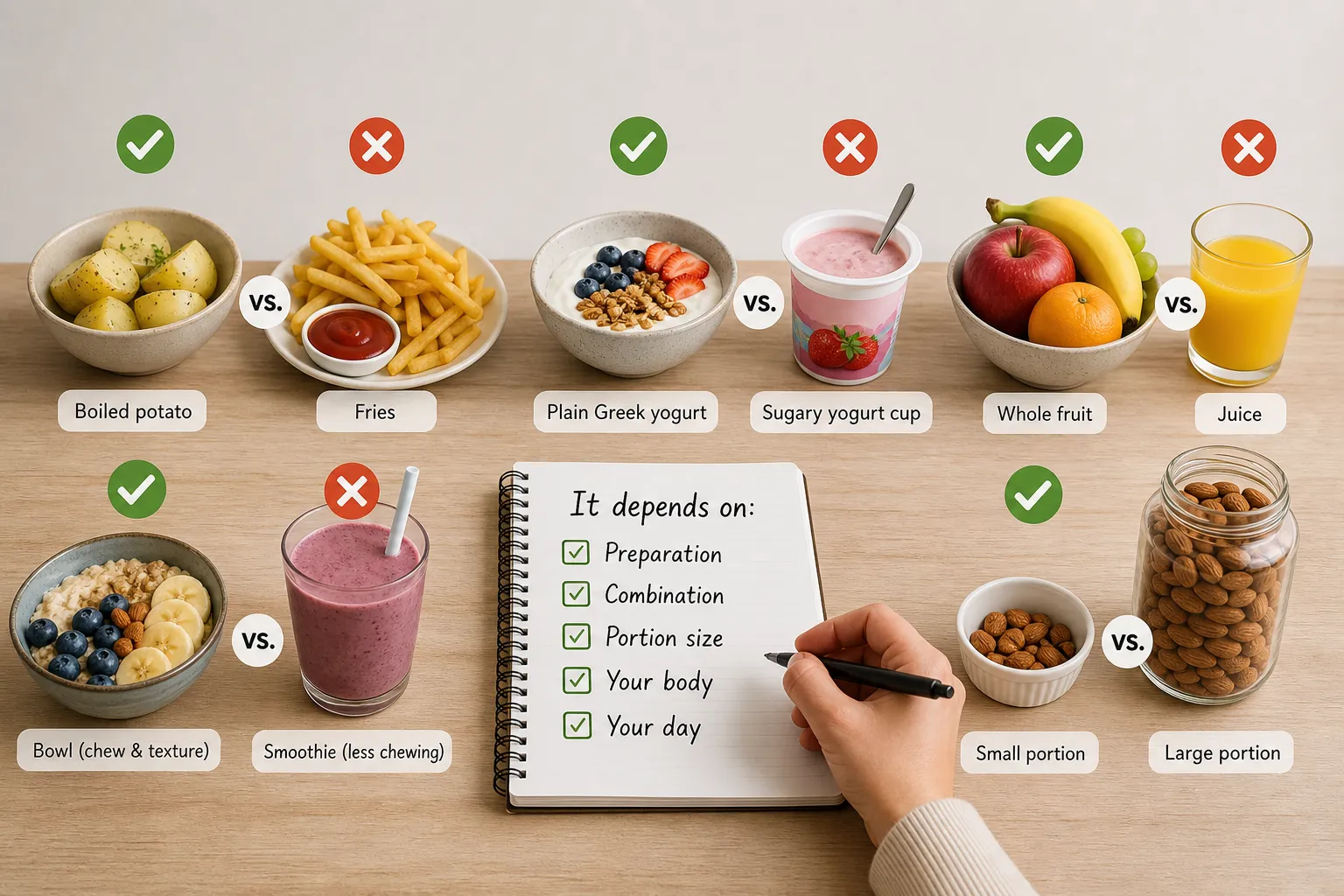
Even high satiety foods are not equally filling in every form. A baked or boiled potato usually works differently than fries, plain high-protein Greek yogurt is not the same as a sugary yogurt cup, and whole fruit often satisfies better than juice because the fiber and structure are still intact.
Preparation matters in quieter ways too. A smoothie with oats, fruit, and yogurt can be convenient, but some people feel fuller from a bowl with those same ingredients because chewing and food texture help the meal register as more satisfying.
Fiber can help with fullness, but more is not always better all at once. Beans, lentils, oats, and big servings of raw vegetables can cause gas or bloating, especially if you increase them quickly or your digestion is sensitive. If that sounds familiar, try smaller portions, cooked versions, or a slower build-up. If you need help troubleshooting, this guide on foods that can cause bloating and what to try instead may help.
Portion size also changes how a food works. Nuts and seeds can improve satisfaction because they bring fat, fiber, and some protein, but they are easy to eat past fullness if you are grabbing from a large bag instead of using a small portion.
Context matters as much as the food itself. A large bowl of raw vegetables may feel bulky but still leave you hungry if there is no protein or fat with it, and sleep, stress, activity, medications, and your usual eating pattern can all shift hunger from day to day.
If one food does not keep you full or leaves you uncomfortable, that does not mean you are doing it wrong. Change the combination, portion, or preparation before you write it off. Beans might work better in a smaller serving, oats may feel better cooked, and yogurt may hold you longer when paired with fruit and nuts.
Build meals that are harder to out-hunger
The real takeaway from these foods that keep you full longer is simple: look for meals that combine protein, fiber, water-rich volume, slower-digesting carbs, and controlled fats. That mix tends to be more satisfying than chasing one “perfect” food on its own.
Start with the meal that usually lets you down. If breakfast leaves you hungry fast, swap a low-protein option for eggs or high-protein Greek yogurt with fruit. If lunch never lasts, add beans, lentils, extra vegetables, or a baked potato. If snacks unravel you, pair foods instead of eating a refined-carb snack by itself, like popcorn with nuts or apple with cottage cheese.
Try one swap at a time and notice how long the meal actually keeps you satisfied. That makes it easier to spot which combinations work best for your appetite, schedule, and digestion. If you want a simple way to track patterns, this guide on using food data to make better decisions can help.
Your next meal is the test: pick one protein, one fiber-rich or water-rich food, one slower carb, and an optional small fat source, then see how it holds up for the next few hours.
- Key sources
- Harvard T.H. Chan School of Public Health, The Nutrition Source: Protein
- Harvard T.H. Chan School of Public Health, The Nutrition Source: Fiber
- Barbara Rolls research on energy density and satiety
- PubMed search: protein and appetite systematic review
- PubMed search: eggs satiety randomized trial
- PubMed search: yogurt satiety protein randomized trial
- Holt SHA, Miller JC, Petocz P, Farmakalidis E. A satiety index of common foods.
- PubMed search: legumes satiety randomized trial review
- CDC: Fiber