- What you'll learn
- Why a nutritious meal can still fail to feel filling
- How portion size, energy density, and meal volume affect satiety
- Why protein makes a big difference in staying full
- How fiber, fat, texture, and chewing change how long a meal lasts
- Why smoothies and other liquid or soft meals often satisfy less than solid ones
- How meal timing and carb balance can make hunger return faster
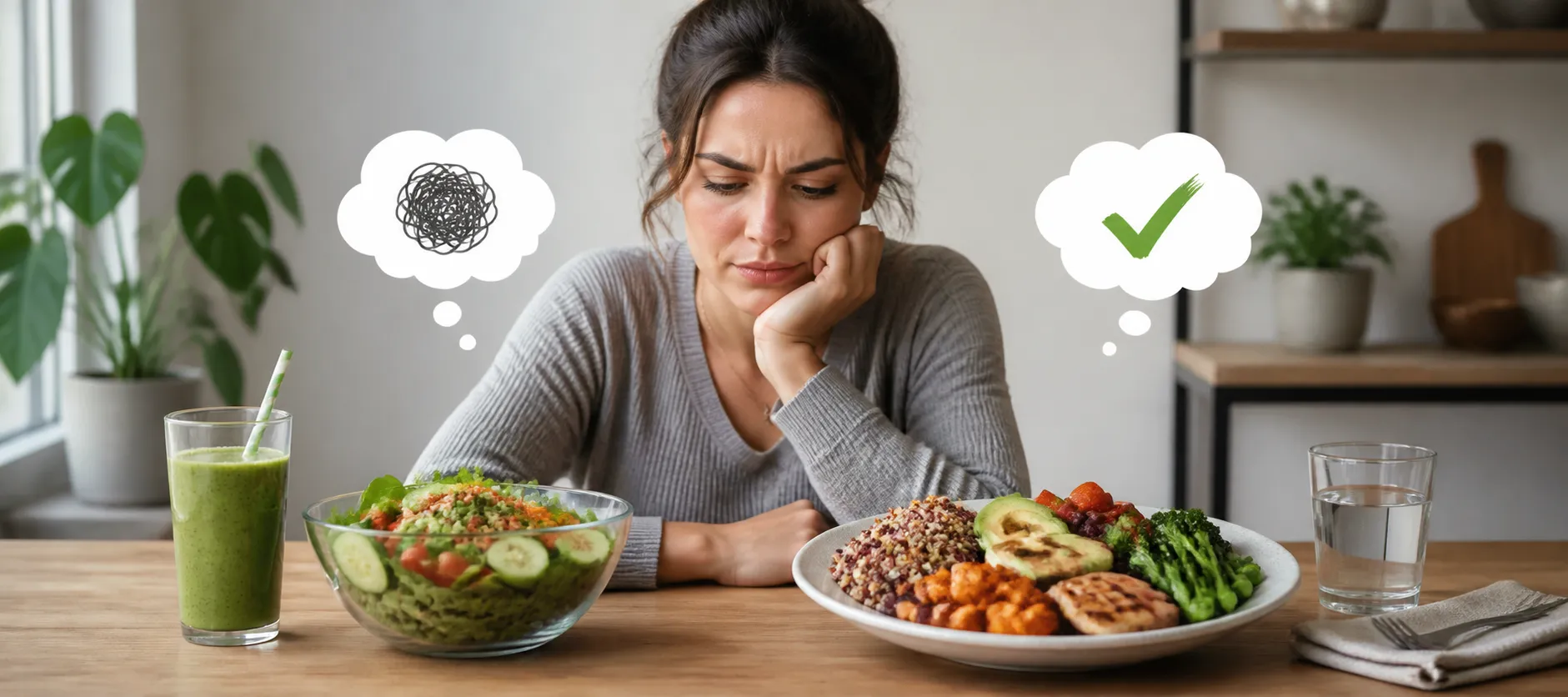
You finish a smoothie, salad, oats, or a veggie bowl and feel hungry again an hour later. That does not mean the meal was “bad,” and it does not mean you lack discipline. Healthy describes nutrient quality, but filling depends on satiety levers like total size, protein, fiber, fat, texture, and timing.
That is why a green smoothie can feel less satisfying than eggs, toast, fruit, and yogurt, or why a plain vegetable salad lands differently than one with chicken, beans, grains, avocado, and dressing. This article looks at the real problem: meal design, and the five common reasons healthy meals still leave you hungry.
The meal is nutritious, but too small for the job
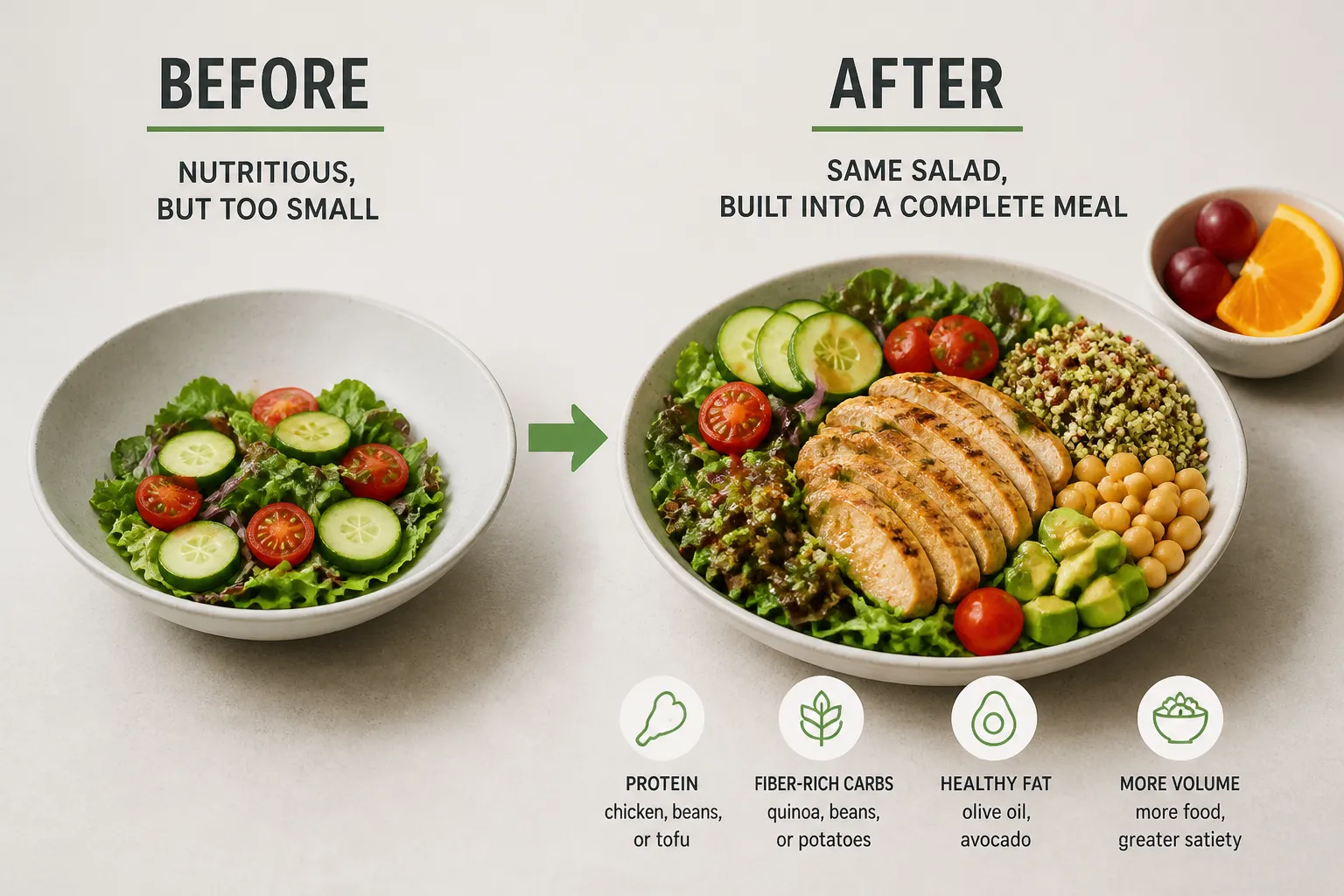
The most common reason healthy meals leave me hungry is simple: the meal does not provide enough total food, energy, or meal volume for the job it is supposed to do. A healthy meal that is too small is not a better meal, it is just an underbuilt meal.
This is the difference between low-calorie by accident and appropriately light by design. A light meal by design fits your appetite, schedule, and next eating opportunity. A meal that is low in calories by accident may look virtuous, but if it functions more like a side dish or snack, hunger is a normal outcome, not a personal failure.
Research on energy density and satiety helps explain why. Lower-energy-dense foods like vegetables, broth-based soup, and fruit can support fullness, but they still need enough volume and enough satisfying nutrients to work as a real lunch or dinner. The NHS notes that fullness is shaped by meal composition, not just whether a food seems “healthy.”
Health-halo thinking often shows up here. Someone grabs a big bowl of greens with cucumber, tomato, and vinegar dressing because it feels like the “good” choice, then wonders why they are hungry at 2 p.m. That salad may be nutrient-rich, but it may not match a long afternoon, a missed breakfast, or a physically active day.
Try this upgrade instead:
- Before: greens, cucumber, tomato, vinegar dressing
- After: the same salad plus chicken or tofu, beans or quinoa, olive oil dressing, and a piece of fruit
The same fix works for soup or snack-like lunches. Vegetable soup alone can be too light. Vegetable soup with lentils, shredded chicken, tofu, or beans plus bread or potatoes is much more likely to feel like a meal.
If hunger keeps returning within an hour or two, ask a basic question: was this actually built as a full meal, or was it really a snack or side? If you suspect your meals are consistently too small for your needs, a simple calorie estimate can help you sanity-check the gap.
Protein is the anchor you left out
Protein is one of the most practical ways to make healthy meals not filling feel more satisfying. Research generally finds that protein increases satiety more than carbohydrate or fat at the same calories, which is why meals with a clear protein source often hold you longer than meals built mostly from starch, fruit, or vegetables according to systematic reviews and meta-analyses.
This is not just about muscle building. Protein helps with fullness for regular meals too, but it is not magic on its own. A meal still needs enough total food and reasonable balance.
Many healthy-looking meals miss this because protein shows up as a garnish instead of the base. If a meal has no obvious protein source, it is probably built more like a side dish than a staying-power meal.
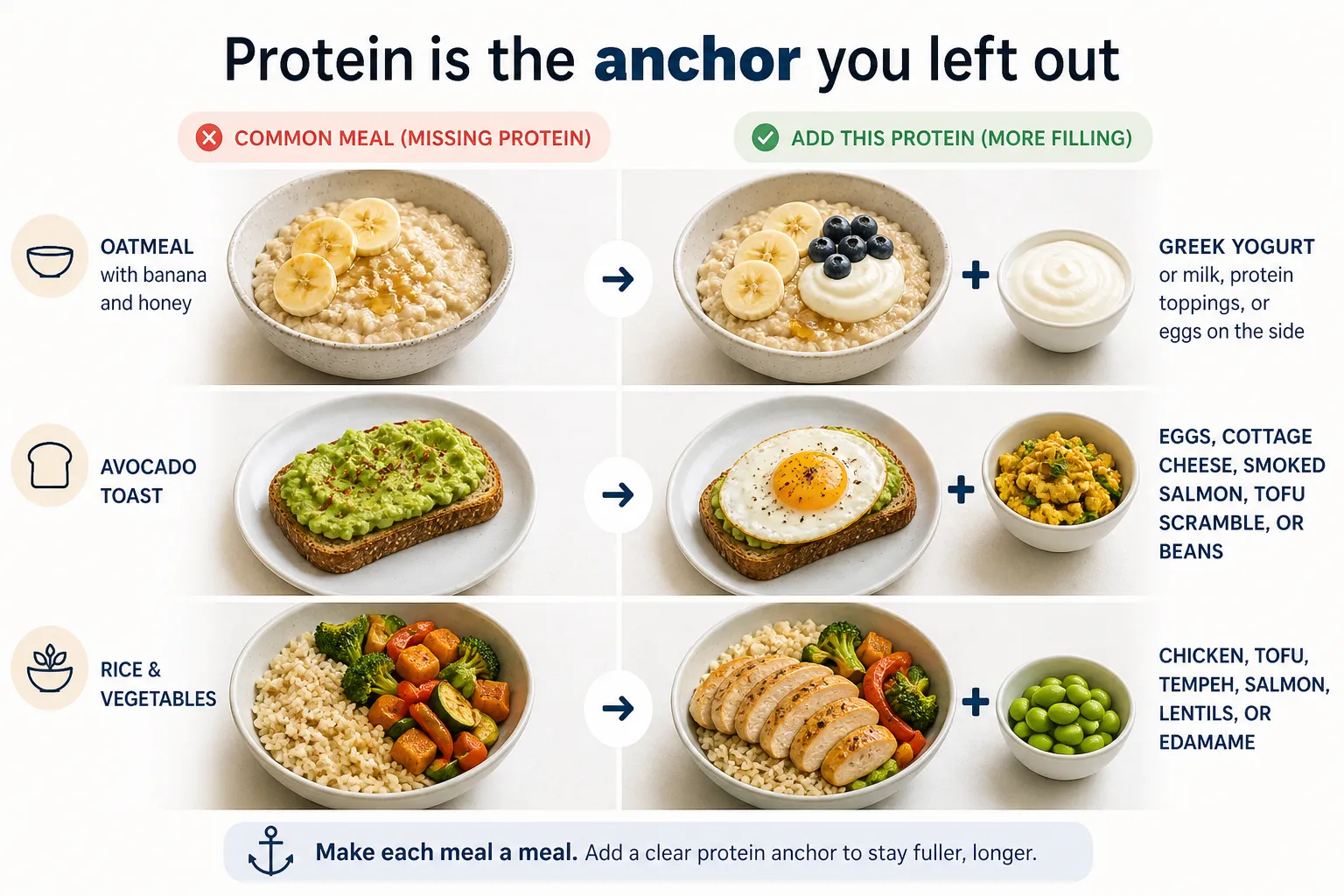
That is why oatmeal with banana and honey can wear off fast, while oatmeal with Greek yogurt, milk, protein-rich toppings, or eggs on the side usually lasts longer. Avocado toast alone can be light on staying power, but avocado toast with eggs, cottage cheese, smoked salmon, tofu scramble, or beans is a different meal.
The same fix works for lunch and dinner. Rice and vegetables can be nutritious, but rice and vegetables with chicken, tofu, tempeh, salmon, lentils, or edamame gives the meal a stronger center.
You do not need to turn every plate into an extreme high-protein meal. The simpler rule is to make sure each meal has a clear protein anchor, not just a token spoonful. If you want a practical way to spot patterns, this guide on tracking macros can help you notice when your meals are consistently low in protein.
Fiber, fat, and volume are out of balance
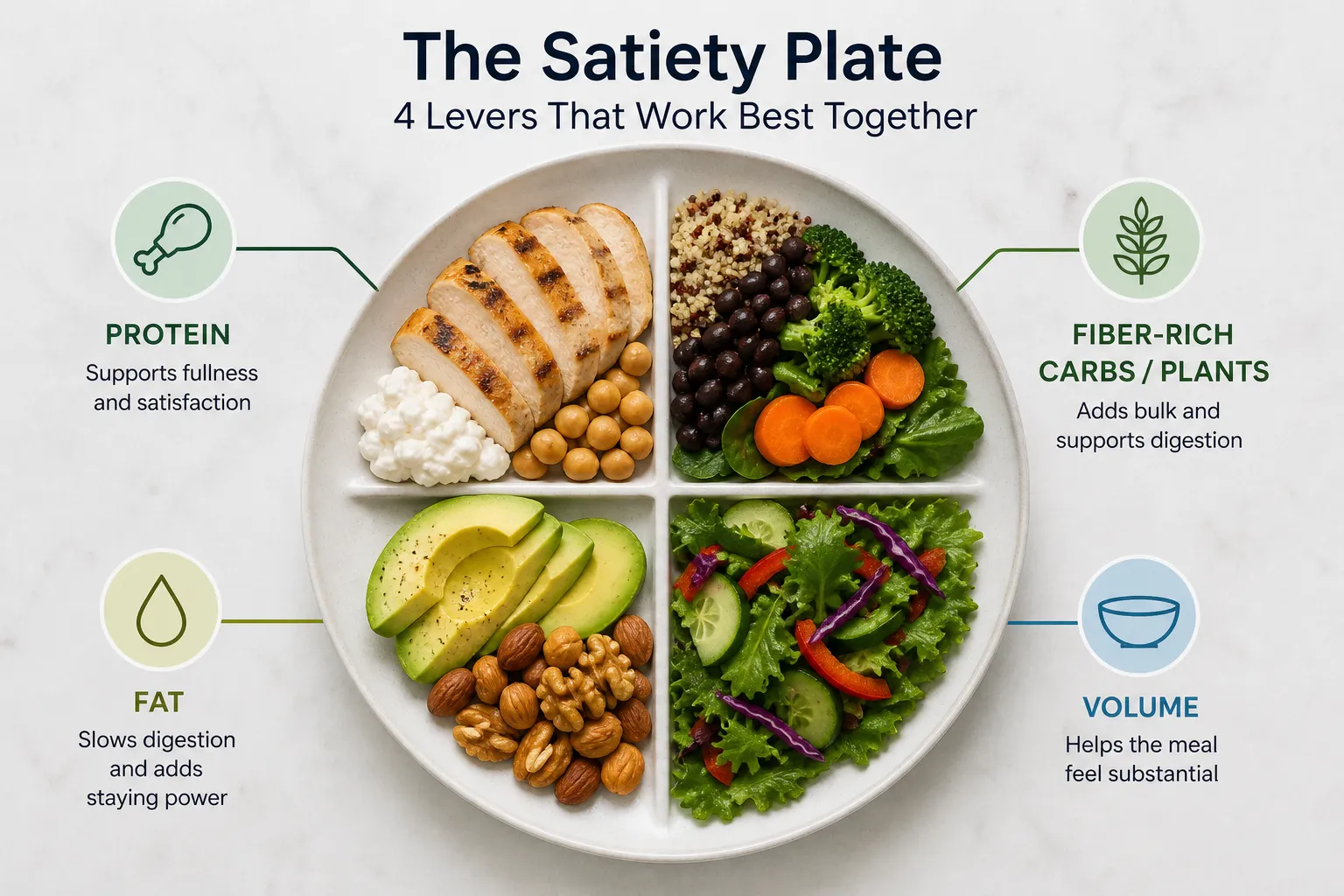
If your meal looks healthy but still leaves you scanning the kitchen an hour later, the problem may be meal balance, not a lack of willpower. Fiber, fat, and food volume all help with fullness, but they work best together rather than as stand-alone fixes.
Fiber helps by adding bulk and slowing digestion, especially when it comes from foods like beans, vegetables, fruit, and whole grains. Reader-friendly guidance from the Harvard T.H. Chan School of Public Health and physiological reference values from the European Food Safety Authority both support fiber’s role in normal digestive function and fullness.
But fiber alone is not a guarantee. A giant bowl of raw vegetables or a small serving of oatmeal can be nutritious and still feel incomplete if the meal is tiny or missing protein and fat.
Fat matters here too. It adds flavor, slows the meal down, and can give it more staying power, but it is not magic if everything else is too light. A teaspoon of dressing on a plate of lettuce does not turn it into a filling lunch.
Volume is the third piece. Your stomach responds not just to calories, but also to the physical amount of food that arrives. Still, a very large low-calorie meal can leave you unsatisfied if it does not provide enough total energy or enough protein and fat to match your hunger.
Fiber adds bulk, fat adds staying power, and volume helps the meal feel like a meal. Most satisfying meals need some combination of all three, not just one lever pulled as high as possible.
How to keep the healthy intent and make the meal more filling
You do not need to turn every meal into a heavy, high-fat plate. Usually, a few practical additions are enough:
- Before: smoothie bowl with fruit only. After: add Greek yogurt or tofu, oats or chia, and nuts or nut butter.
- Before: grilled vegetables with a little rice. After: add beans or lentils, tahini or olive oil, and a larger portion if needed.
- Before: plain low-fat soup. After: add potatoes, lentils, chicken or beans, plus olive oil or whole-grain bread.
Notice what changes in these examples. The meal is still built around vegetables, whole grains, or other fiber-rich foods, but it is no longer relying on fiber alone to do all the work.
If you want a deeper look at how fiber supports digestion, energy, and fullness, it helps to think of it as one part of satiety rather than the whole story. That is often why healthy meals not filling enough can be fixed with better construction, not by abandoning healthy foods.
The meal is too easy to drink, spoon, or swallow
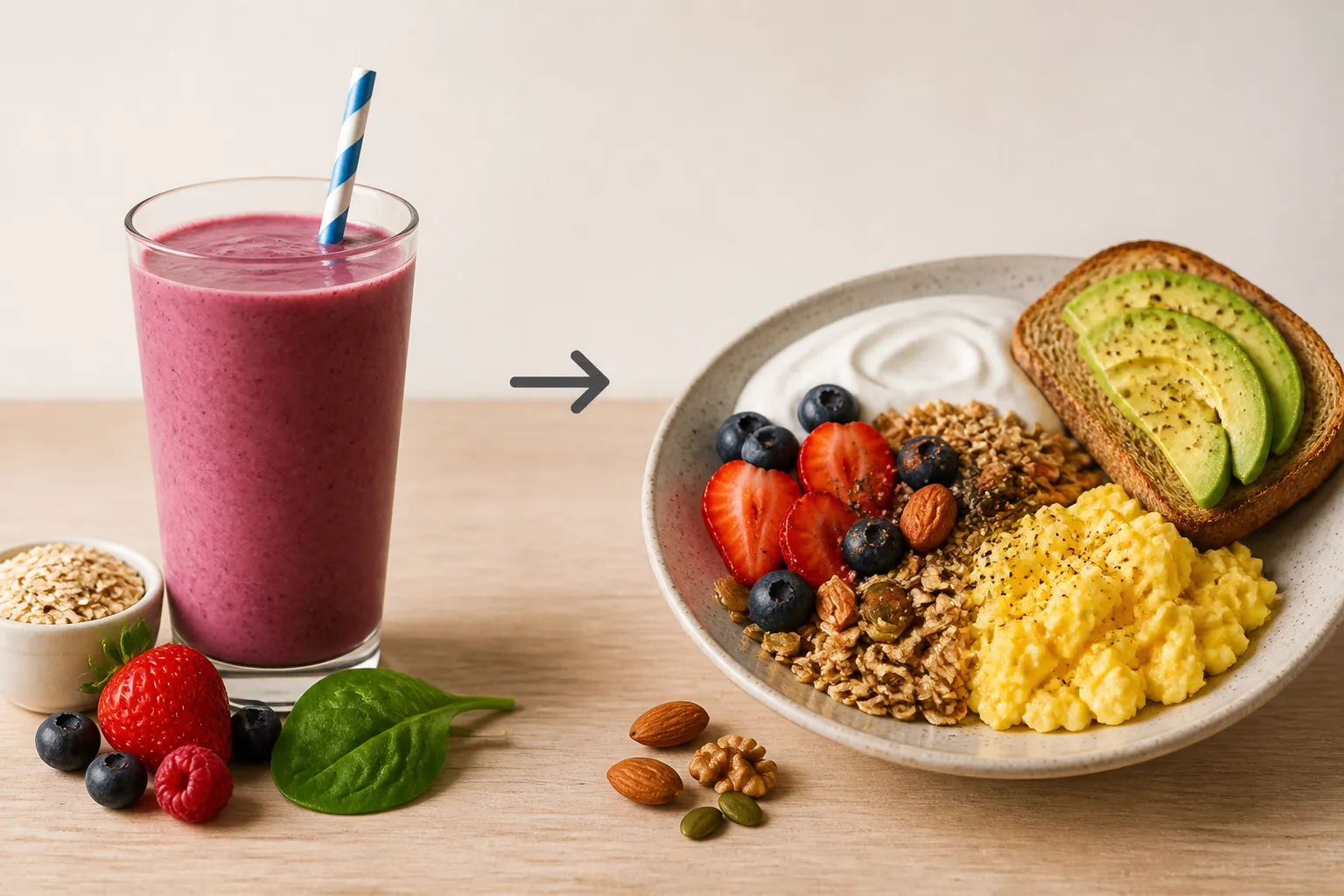
Sometimes the problem is not the ingredients. It is the form they come in. A meal built from fruit, oats, yogurt, or greens can look nutritious and still leave you hungry if it goes down fast with very little chewing.
Liquid calories are less satiating than solid calories.
That pattern shows up often in satiety research. Reviews and studies summarized in the literature suggest that liquid calories are often less filling than solid calories, even when the ingredients are similar.
Part of the difference is oral processing. Chewing, crunch, and thicker textures can slow eating and strengthen fullness signals, which is why researchers also look at chewing and texture as factors in satiety.
This is why a juice and granola bar may disappear quickly, while whole fruit, yogurt, nuts, and toast tends to hold people longer. The ingredients overlap, but the second version asks more of your mouth and usually gives you more structure.
The same idea applies to smoothies. A blended fruit-and-greens smoothie is not a bad choice, but for some people it works better as a snack, or as part of a meal with eggs, toast, or a yogurt bowl with chewable toppings.
Soft meals can also benefit from more texture. Oatmeal eaten quickly may not last long, while oats with nuts, seeds, berries, and a protein source often have more staying power because they add chew, slow things down, and make the meal feel more substantial.
Your carbs or timing are making hunger return faster
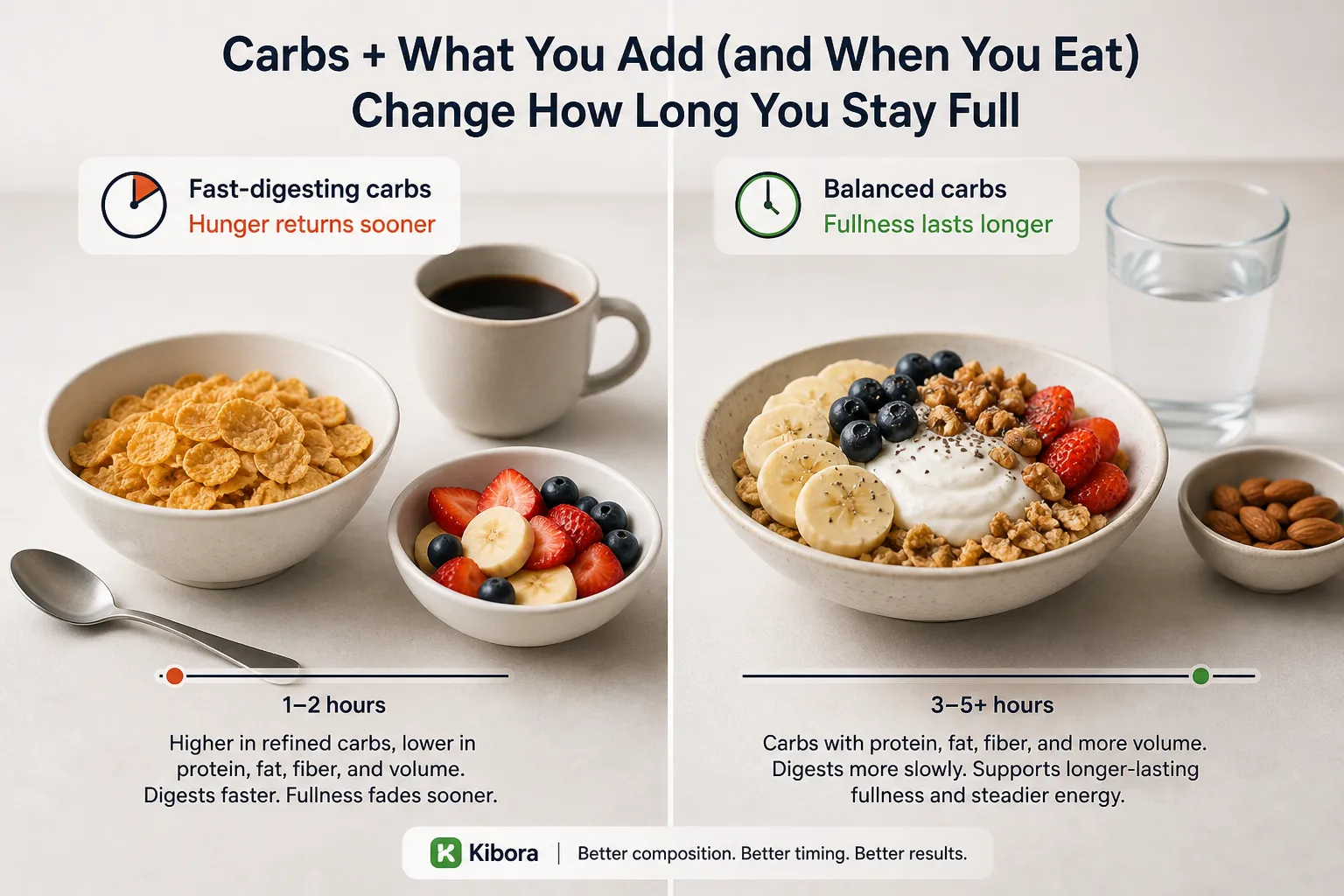
A carb-heavy meal is not automatically a problem. But if it is built mostly from refined or fast-digesting carbs and stays low in protein, fat, fiber, and food volume, it often does not keep you full for long.
That is why a breakfast of cereal, fruit, and coffee can fade fast, while that same cereal becomes more filling with Greek yogurt or milk, nuts or seeds, and fruit. The carbs are still there, but the meal now digests more slowly and does a better job supporting satiety.
Blood sugar can play a role in post-meal hunger, but it is only one piece of the picture. Reviews on glycemic response and appetite suggest that hunger is shaped by meal composition as a whole, not just whether carbs raise blood sugar quickly PubMed.
The timing piece matters just as much. If you arrive at a meal already ravenous, even a balanced plate may be playing catch-up. Research on meal timing and appetite supports the idea that long gaps, skipped meals, and under-eating earlier can change how satisfying the next meal feels PubMed.
You can see this in simple swaps. Toast with jam may leave you scanning the kitchen an hour later, while toast with eggs, peanut butter, cottage cheese, or tofu scramble plus fruit usually lasts longer.
The same pattern shows up later in the day. If dinner has to make up for a skipped lunch, hunger can feel urgent and hard to settle, which is why an afternoon snack with protein and fiber often helps more than trying to “be good” until dinner. If that sounds familiar, this guide on why hunger builds at night may help.
The fix is usually better composition and better timing, not cutting out carbohydrates entirely.
Build a meal that passes the two-hour test
The two-hour test is a signal, not a rule. If you get hungry soon after a meal once, that is normal. If it happens most days, your meal pattern probably needs a small adjustment.
The goal is not to make healthy meals bigger just for the sake of it. It is to make them complete enough to do the job you need them to do.
A satisfying meal usually covers five levers: enough total food, a clear protein source, fiber-rich plants or carbs, some fat, and enough texture or chewing. If the meal is mostly liquid or very soft, pair it with something solid. If hunger shows up after long gaps between meals, timing may be the lever to change instead.
Use this quick check before you eat:
- Is this enough food for this moment?
- Where is the protein?
- Where is the fiber?
- Is there some fat?
- Is there texture?
- Did I wait too long to eat?
Change one variable at a time so you can tell what actually helps. Hunger is feedback, not proof that you failed.
For example, a plain smoothie for lunch might leave you hungry fast. A more filling version could be Greek yogurt or a protein-rich smoothie plus whole fruit, nuts, and toast. A light salad can become a complete meal with chicken or tofu, beans or grains, dressing, and a satisfying side.
If you want more specific ingredient ideas after this framework, see these foods that keep you full longer. And if it helps to estimate protein or overall meal balance, Kibora can be a practical tool without turning meals into calorie anxiety.
- Key sources
- NHS - Food for thought: appetite and satiety
- Rolls BJ, Bell EA, Castellanos VH. 'The influence of energy density on energy intake and satiety.'
- Systematic review/meta-analysis on protein intake and appetite/satiety
- European Food Safety Authority (EFSA) - Scientific Opinion on Dietary Reference Values for carbohydrates and dietary fibre
- Harvard T.H. Chan School of Public Health - The Nutrition Source: Fiber
- Classic satiety literature summarized in research articles and reviews
- PubMed search on oral processing chewing satiety
- PubMed search on glycemic response hunger satiety review
- PubMed search on meal timing appetite satiety