- What you'll learn
- Why alcohol can shorten sleep latency without improving sleep quality
- How alcohol changes sleep architecture, especially REM and later-night awakenings
- Why dose and timing matter more than a simple one-drink rule
- How alcohol can affect HRV, resting heart rate, and wearable recovery scores
- Why snoring, breathing changes, late eating, and hydration can make the effect worse
- How to track your own pattern with a simple two-week comparison
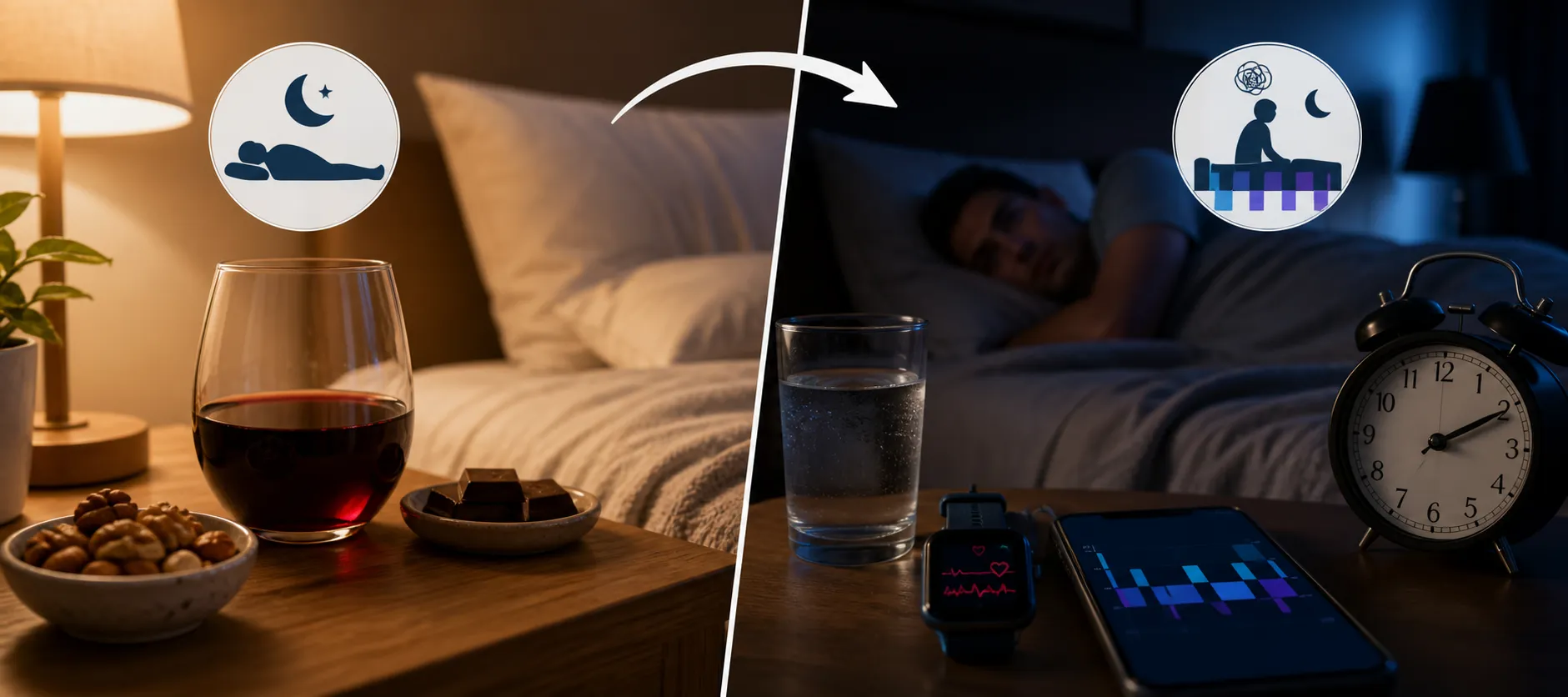
A glass of wine can make bedtime feel easier, then leave you staring at the ceiling at 3 a.m. or waking up oddly unrefreshed after a full night in bed. That is the nightcap illusion: alcohol may help you fall asleep faster, but that sedating effect is not the same as good sleep quality.
As the NIAAA notes, alcohol can promote sleepiness at first and disrupt sleep later. This article explains what changes overnight, from REM and awakenings to recovery signals, and how dose, timing, and simple tracking can help you read the pattern more clearly.
Alcohol can shorten the runway, then roughen the landing
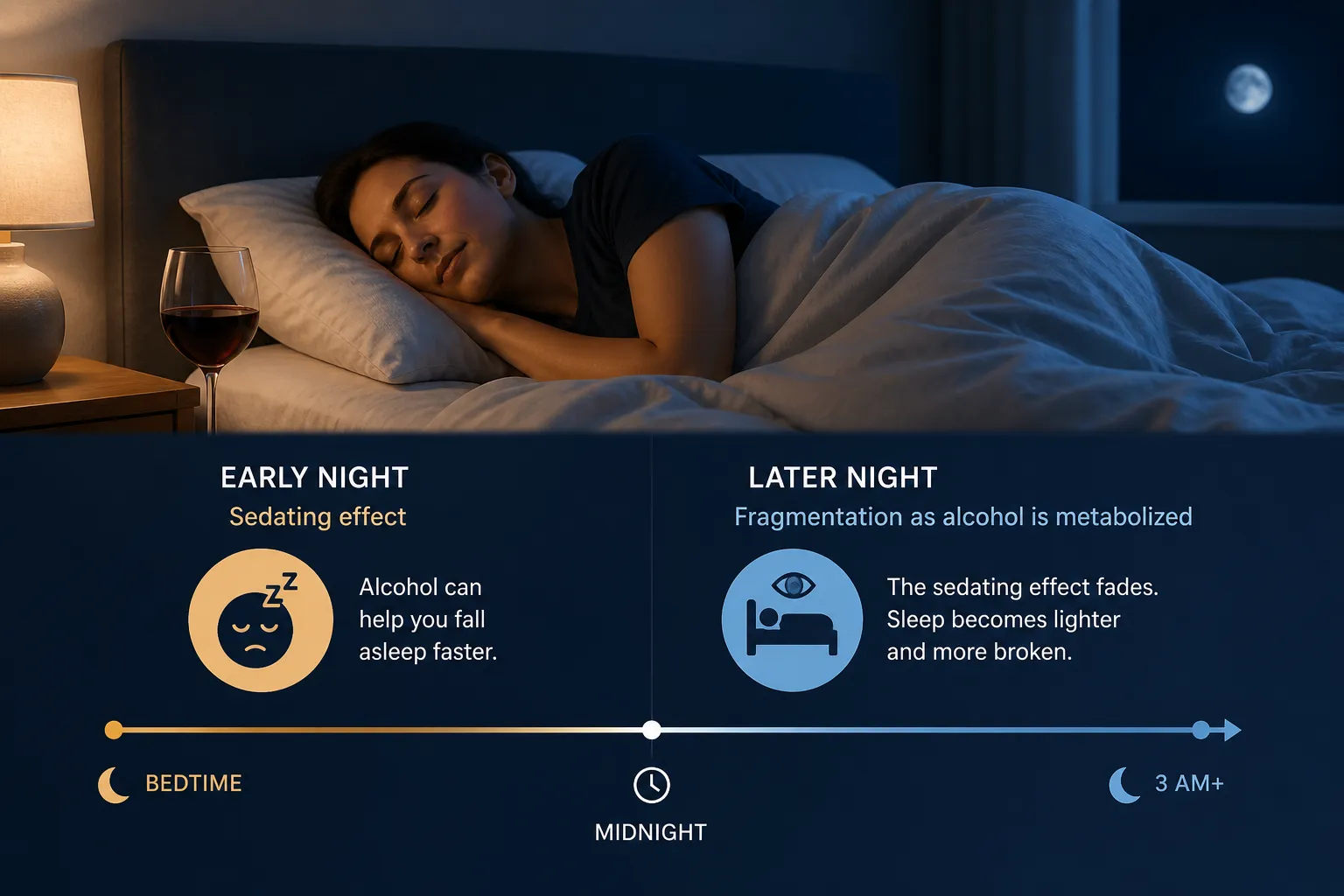
Alcohol can make bedtime feel easier because it is sedating. For some people, that means shorter sleep latency, which is just the time it takes to fall asleep after you get into bed. But falling asleep faster is not the same as sleeping better. NIAAA notes that alcohol may help with sleep onset while still disrupting sleep later in the night.
Alcohol’s first sleep effect is sedation; its second is often disruption.
The simplest way to think about it is as an overnight tradeoff. In the first part of the night, alcohol may make you feel drowsy and less aware of normal bedtime wakefulness. As your body metabolizes it over several hours, that calming effect fades, and sleep can become lighter, more broken up, and less continuous, according to both NIAAA and the Sleep Foundation.
That helps explain why a nightcap can seem effective at 11 p.m. but unhelpful at 3 a.m. You may still log plenty of total time in bed, yet have worse sleep continuity, meaning more awakenings, more tossing and turning, or a shallower second half of the night.
A useful rule of thumb is this: a nightcap can make sleep arrive faster without making sleep work better. The exact pattern depends on dose, timing, and the person, but the core reason is consistent: alcohol can quiet the path into sleep, then interfere with staying deeply asleep once that sedating effect wears off.
The biggest sleep-stage hit is usually REM
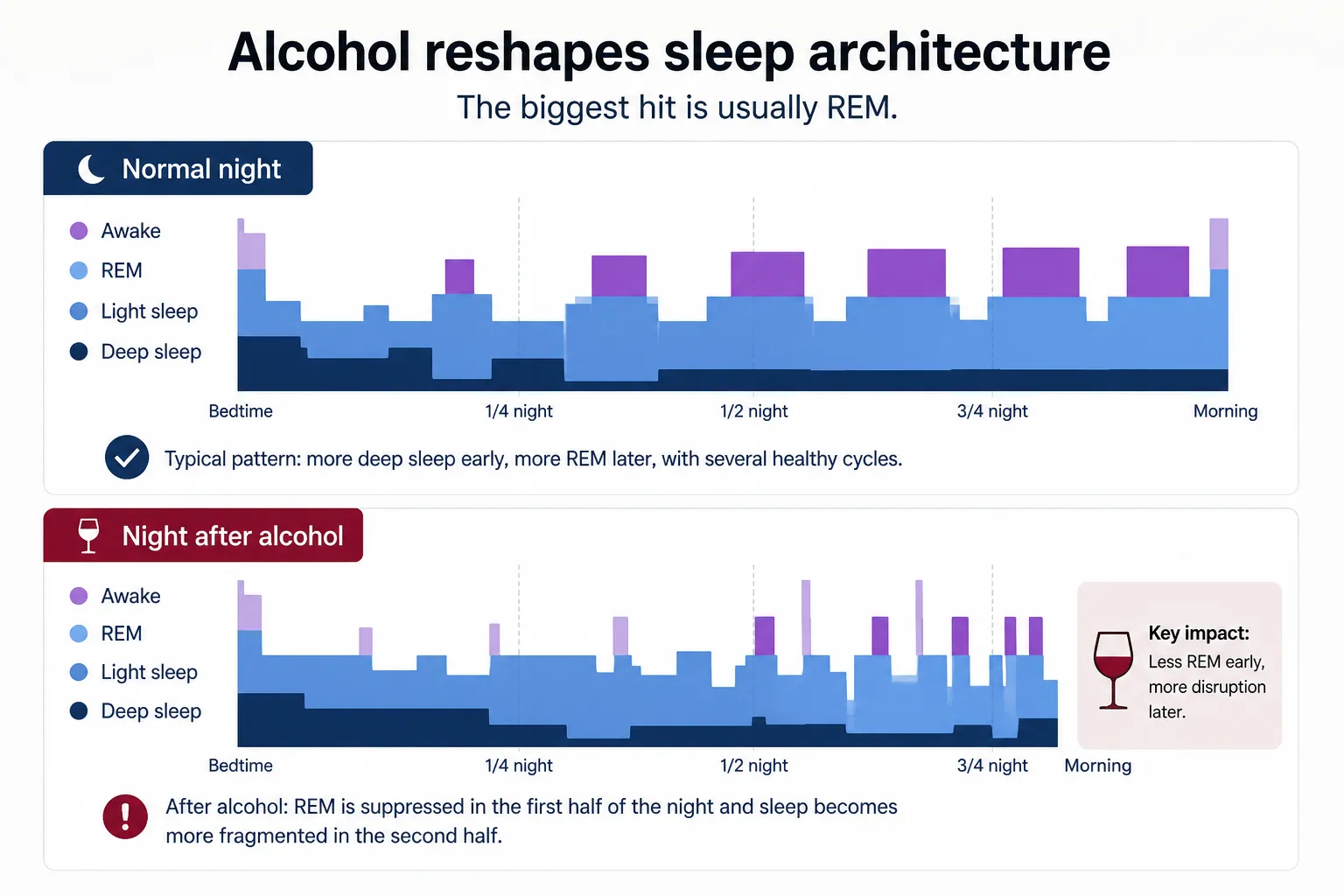
Alcohol does not just change how fast sleep starts. It can change the architecture of the night, meaning the pattern your brain normally follows as it cycles through lighter sleep, deep sleep, and REM. That matters because REM sleep is linked to dreaming, emotional processing, and parts of cognitive recovery, and alcohol often reduces REM in the first half of the night according to sleep research summarized in published alcohol and sleep studies.
In plain English, a typical night has a rhythm: more deep sleep earlier, more REM later, with several cycles from bedtime to morning. After drinking, that pattern can get rearranged. The first half of the night may look more sedated, but with less REM than usual, and the second half can become choppier as alcohol wears off.
That later stretch is where some people notice REM rebound. In practice, that can mean vivid dreams, lighter sleep, or waking more often closer to morning. So even if total sleep time looks decent, the mental side of recovery may feel incomplete the next day.
Deep sleep is trickier. Some studies suggest alcohol may increase deep sleep early on, while others show reductions or mixed effects depending on dose, timing, and how sleep is measured, so it is too broad to say alcohol uniformly destroys deep sleep. The cleaner takeaway is that sleep-stage disruption, especially around REM and later-night fragmentation, helps explain why a nightcap can leave sleep feeling less restorative.
Dose and timing determine how much sleep pays for it
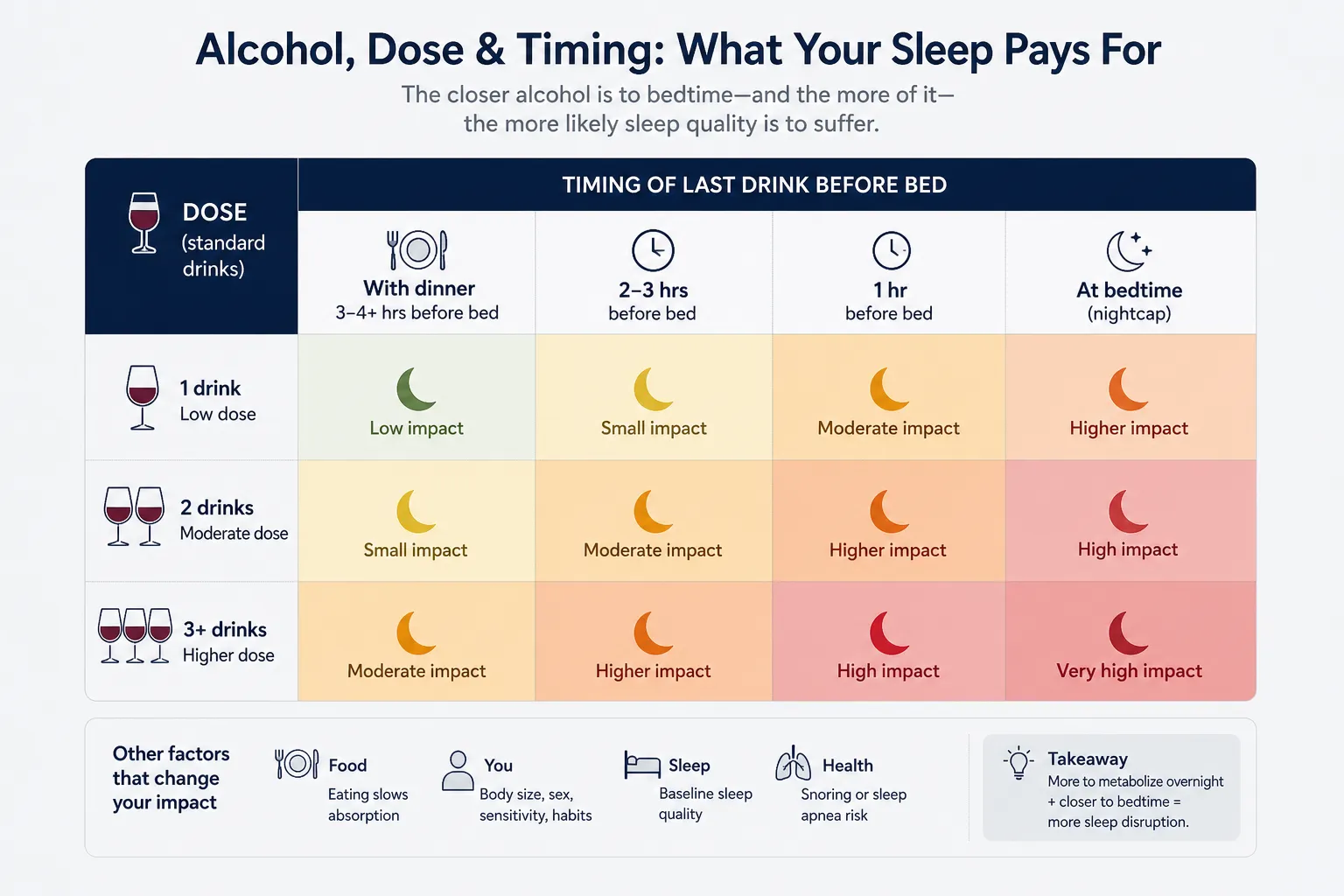
Whether “just one drink” matters depends on dose, timing, and the person. Research on alcohol and sleep shows a general pattern: higher intake tends to cause more sleep disruption, and drinking closer to bedtime raises the odds that alcohol is still being metabolized during the night, which can worsen fragmentation and REM changes according to published studies indexed by PMC.
A practical way to think about it is a simple matrix: how much you drank, how close it was to bed, whether it came with food or a late meal, and how sensitive you are to alcohol. The closer alcohol is to bedtime, and the more of it there is to metabolize overnight, the more likely sleep quality is to suffer.
Drinking earlier can help some people compared with a true nightcap, but it is not a guarantee of neutral sleep. A moderate evening intake may still affect sleep in someone who is smaller-bodied, more sensitive, not used to drinking, or already sleeping lightly.
Food matters too. Eating with alcohol can slow absorption, but a heavy late meal can create its own sleep issues, which is part of why broader before-bed food and drink choices often matter as much as the drink itself.
Population definitions from the CDC are useful for context, but they do not predict your exact response. Body size, sex, usual drinking habits, bedtime, baseline sleep quality, and snoring or sleep apnea risk can all change how noticeable the effect is on a given night.
Why your recovery score may look worse after drinking
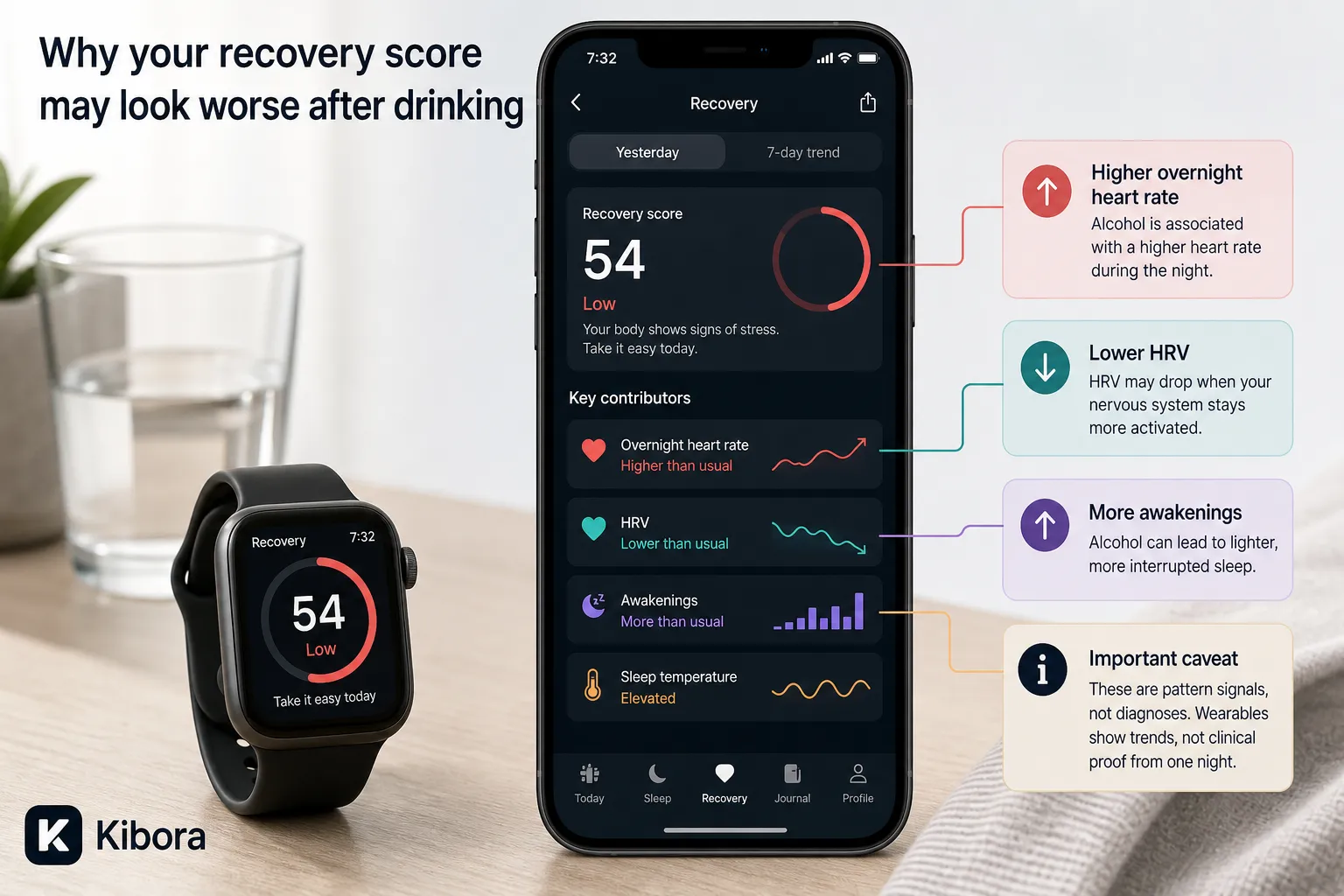
If you wear a sleep or recovery tracker, alcohol may show up the next morning even when your total sleep time looks decent. A common pattern is normal hours in bed but higher overnight heart rate, lower HRV, more awakenings, or a dip in your recovery score. Research on alcohol, sleep, and autonomic markers supports a cautious version of that pattern in some people, especially as alcohol is metabolized overnight across studies summarized here.
The useful way to read that data is as a clue, not a verdict. Wearables can help you spot trends, but sleep stages, HRV, and readiness scores are still estimates, not clinical proof of what happened in your body on one specific night.
A lower recovery score after alcohol is usually a signal to investigate a pattern, not a diagnosis from one night.
One reason recovery can look worse is autonomic. Alcohol can make recovery look worse through two routes at once: less stable sleep and a more activated overnight nervous system. In practice, that can mean a body that feels more "on" during the night, with less of the calm parasympathetic shift many apps associate with good recovery.
Thermoregulation may also play a role. Alcohol can change how your body handles heat, which may leave you feeling warm, sweaty, restless, or more likely to wake up and throw off the covers, even if you fell asleep quickly.
Breathing is another plausible reason a night looks worse on your tracker. Alcohol can relax the upper airway and worsen snoring or sleep-disordered breathing in susceptible people, which is one reason sleep can become more fragmented and less restorative according to the American Academy of Sleep Medicine. If you have loud snoring, witnessed breathing pauses, or significant daytime sleepiness, treat alcohol-related changes as a medical conversation, not just a wearable metric.
For active readers, the same night can affect exercise recovery too. Post-exercise alcohol, especially at higher intakes or when it shortens or fragments sleep, may interfere with parts of recovery such as glycogen restoration and overall readiness the next day, though one night does not erase your training as this research area suggests.
That is why the next-day picture can feel out of proportion to the number of drinks. The issue is not just sleep duration. It is the combination of lighter, more interrupted sleep, altered breathing or temperature regulation, and a body that may stay physiologically less settled overnight.
The sleep problem can start before bed and show up after breakfast
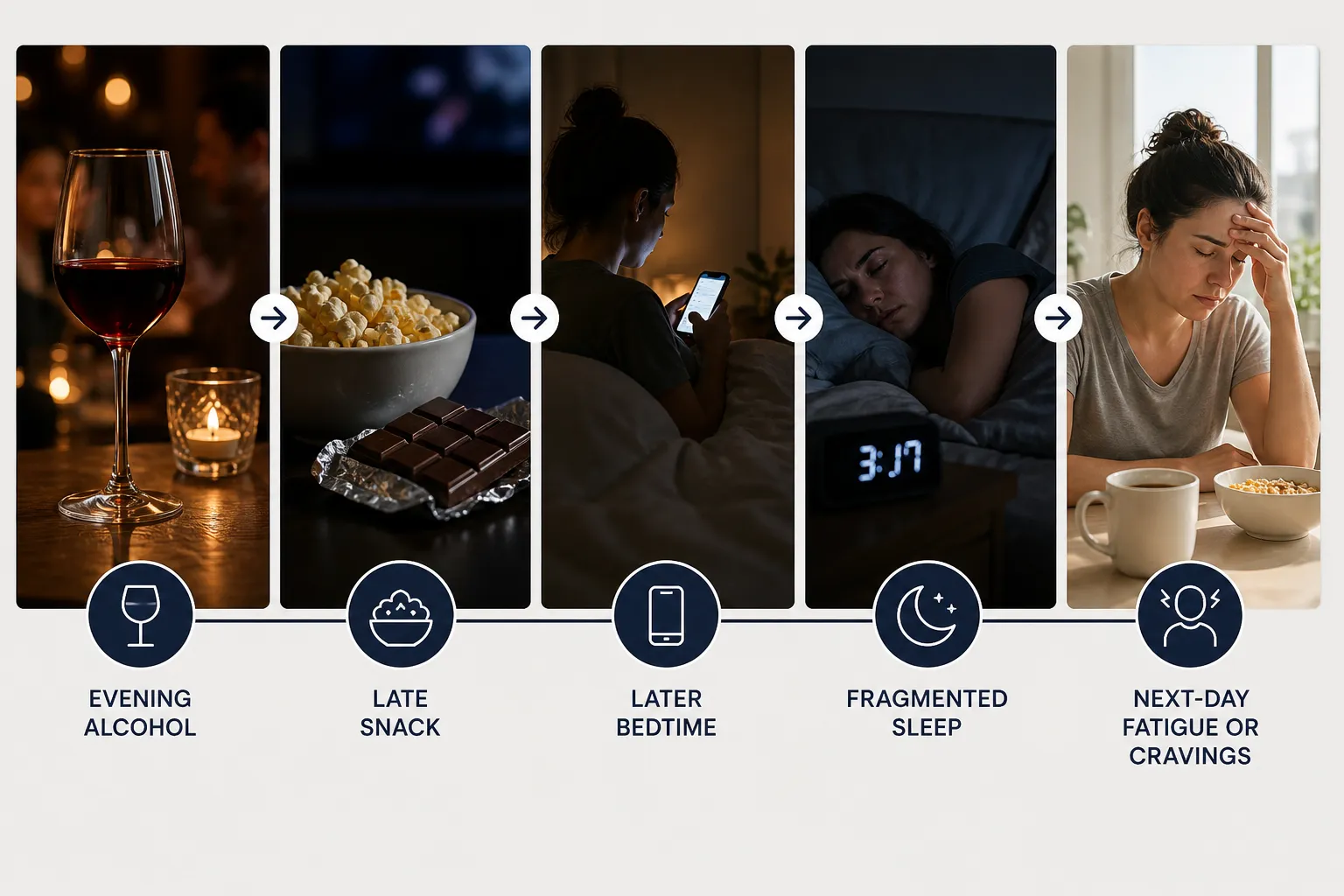
The sleep hit from alcohol often starts before your head hits the pillow. A couple of drinks can lower inhibition, make reward-seeking more likely, and stretch the night past your usual dinner or bedtime, which is one reason alcohol and sleep can go sideways in more than one way.
A common pattern is simple: drinks with friends turn into later food, later scrolling, later bedtime, then more awakenings and a rougher morning. If you want to understand the food side of that loop, this guide on eating late at night connects well with what alcohol can do to timing and appetite.
Hydration matters too, but it is not the whole story. Alcohol can leave you waking up thirsty, warm, or restless, and that discomfort may add to sleep disruption even when dehydration is only part of the picture.
There is also a glucose angle, especially for people with diabetes, insulin resistance, or metabolic risk. Alcohol can affect glucose regulation and next-day eating patterns, so the combination of a late meal, fragmented sleep, and a less structured morning may be more relevant than the drink alone, especially for higher-risk groups. The CDC recommends extra caution around alcohol’s broader health effects.
Alcohol rarely affects sleep in isolation; it often travels with later meals, later bedtimes, and harder next-day choices. That is why the next morning can feel harder too: more fatigue, more cravings, and less consistency with breakfast, hydration, movement, or the rest of your routine.
Test the pattern before you rewrite your whole routine
One rough wearable score is not a verdict. The useful question is not “Did alcohol ruin my sleep?” but “What pattern shows up when I drink this amount, at this time, in this routine?”
A simple way to answer that is a two-week comparison. Note nights with alcohol within about 3 hours of bed, then compare them with similar alcohol-free nights while keeping dinner timing, caffeine, and bedtime as consistent as possible. That practical framing lines up with common sleep guidance on alcohol and timing from the Sleep Foundation.
If you use a wearable, treat it as a pattern tool, not a diagnosis. Look for repeated changes in HRV, resting heart rate, sleep continuity, and how you actually feel the next day, especially if you also notice more awakenings, lower recovery, extra late-night snacking, or stronger hunger the next morning.
A short log is usually enough:
- Drink amount
- Drink timing
- Dinner timing
- Caffeine
- Bedtime
- Awakenings
- HRV and resting heart rate, if available
- Next-day energy
- Appetite
- Workout recovery
If the pattern is clear, reducing alcohol close to bedtime is a reasonable experiment, not a character test. And if alcohol seems to worsen snoring, breathing pauses, insomnia, or daytime sleepiness, that is a good reason to get medical guidance.
If you want a next step, connect your notes with meal timing, sleep, and hunger patterns so the changes you make are based on your data, not one off night.
- Key sources
- National Institute on Alcohol Abuse and Alcoholism (NIAAA) – Alcohol and Sleep
- Sleep Foundation – How Alcohol Affects Sleep
- PMC search index for alcohol sleep studies
- CDC – Alcohol and Public Health
- American Academy of Sleep Medicine resources
- PubMed search for alcohol HRV sleep wearable studies
- PubMed search for alcohol exercise recovery glycogen sleep