- What you'll learn
- How to build a meal that lasts longer using protein, fiber, volume, and slower carbs
- Which breakfast, lunch, and dinner combinations work better on high-hunger days
- Why bigger meals with vegetables, soup, beans, or potatoes can feel more satisfying than small “healthy” meals
- How to turn snacks into mini-meals that actually hold you over
- Which swaps help when fast-digesting carbs, liquid calories, or light salads leave you hungry again
- When constant hunger may point to sleep, activity, medication, or a medical issue instead of food choice
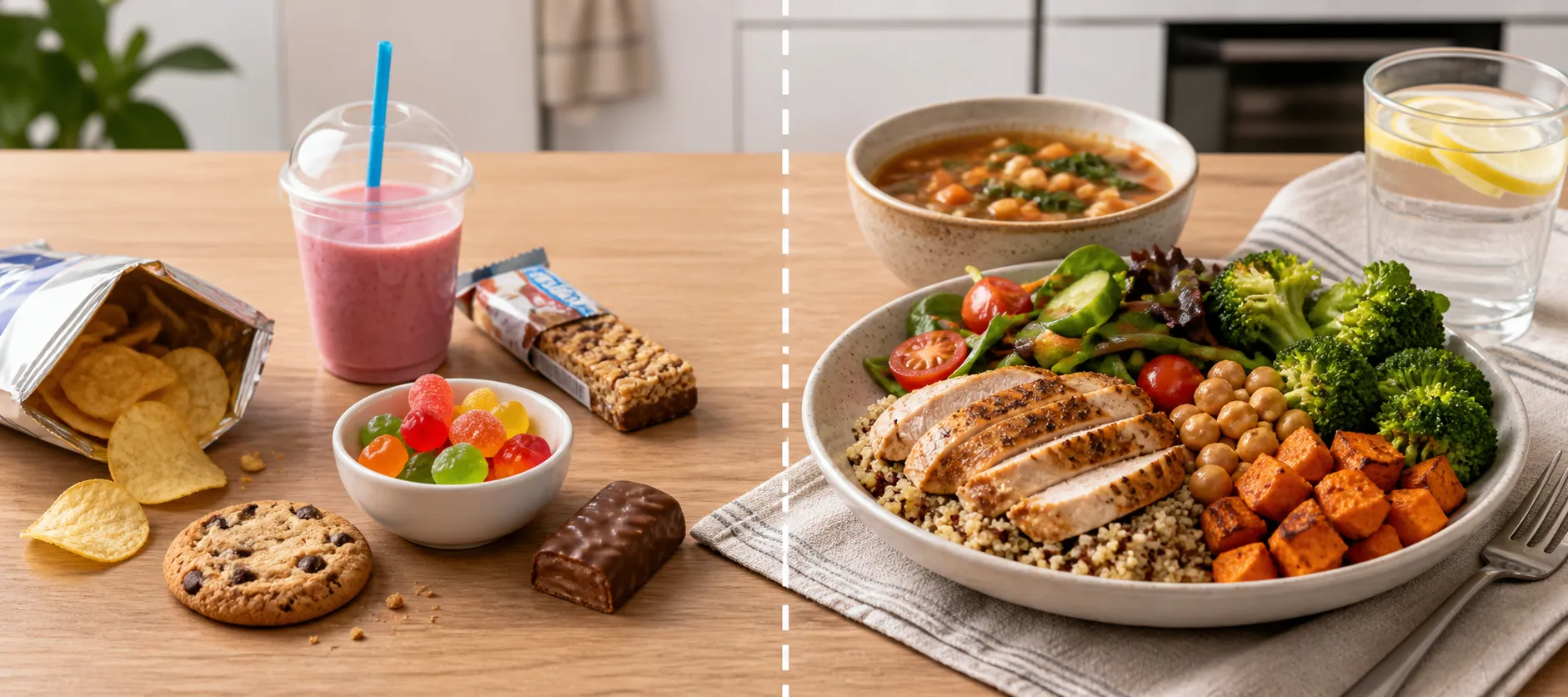
You eat, feel fine for a minute, then you are hungry again an hour later. That can be completely normal on active days, after poor sleep, after missed meals, or when you simply have not eaten enough. But if you are always hungry, start by upgrading meal structure before blaming appetite.
Many “healthy” meals do not do much satiety work. Think coffee and toast at breakfast, then a salad with barely any protein at lunch, followed by intense afternoon hunger.
This article will show you how to build meals that last longer with protein, fiber, volume, slower carbs, hydration, and planned snacks, plus when persistent hunger may point to something else.
Start with the meal formula that actually lasts
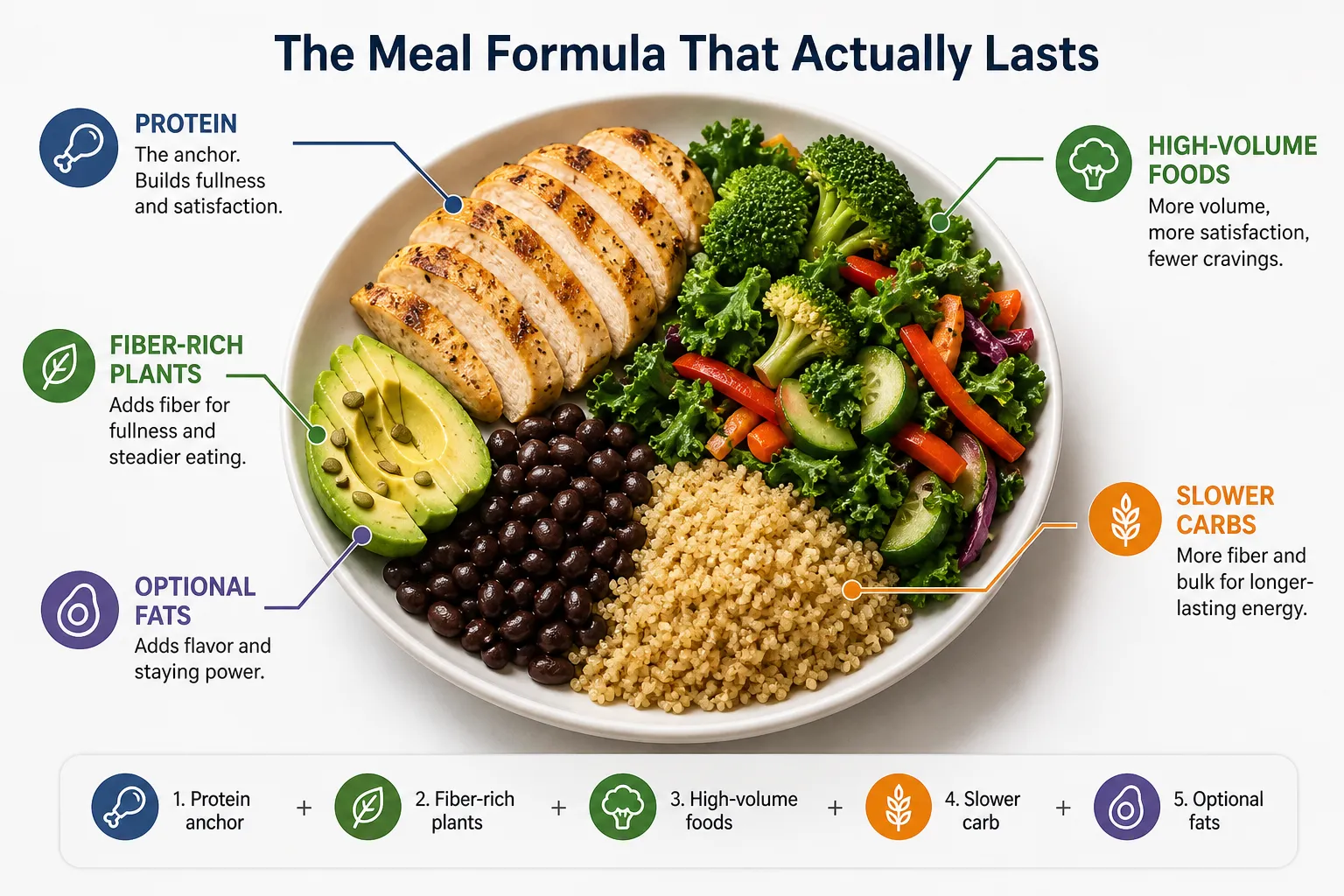
If you are wondering what to eat when always hungry, start here: build meals with protein + fiber-rich plants + high-volume foods + a slower carb. That formula is more reliable than trying to eat tiny portions of “healthy” food and hoping hunger goes away.
A high-satiety meal is not just healthy on paper. It has a protein anchor, a fiber source, enough volume to feel like a real meal, and a carbohydrate that does more than digest quickly.
Start with protein first. Eggs, Greek yogurt, cottage cheese, tofu, beans, lentils, fish, chicken, turkey, tempeh, and lean meat all work, and protein-rich foods are consistently part of more filling meals. If you want a deeper look at why this matters, here is a practical guide to protein and hunger.
Then add fiber-rich plants. Beans, lentils, vegetables, fruit, oats, potatoes with the skin, whole grains, nuts, and seeds help create meals that are slower, bulkier, and more satisfying, which is one reason fiber is linked to better fullness and steadier eating patterns. Think about adding, not restricting.
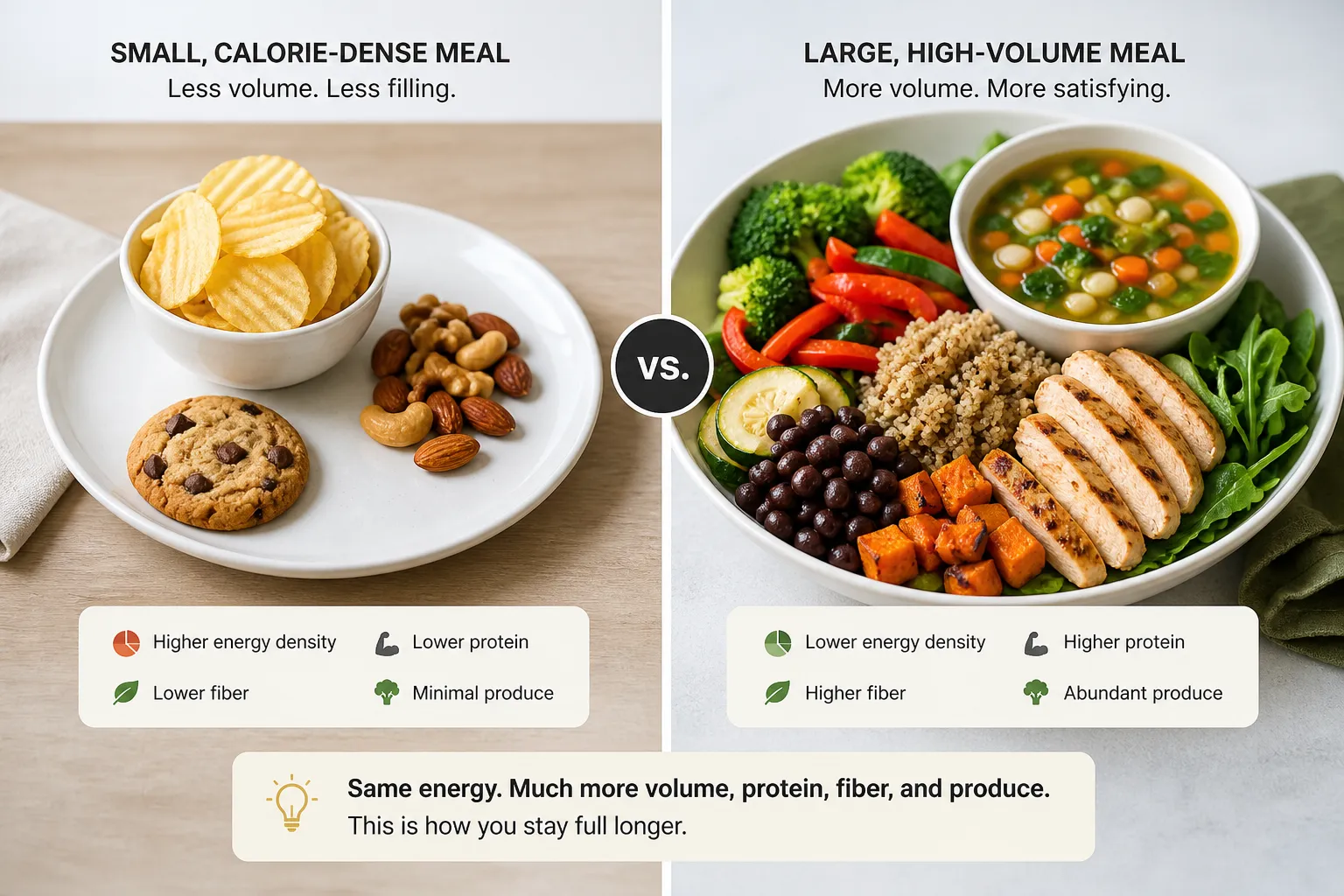
Volume matters too. A bowl with vegetables, fruit, potatoes, broth-based soup, or a hearty salad usually feels more satisfying than a small, dense meal with the same rough calories. This is where many “I ate but I’m still hungry” meals fall short.
For carbs, choose ones that bring fiber or bulk with them. Oats, beans, lentils, potatoes, quinoa, brown rice, whole-grain bread, and fruit usually last longer than fast, low-fiber carbs eaten on their own. Include some fat for taste and staying power, but do not expect fat alone to fix hunger if the meal is small and low in volume.
Use this plate-building shortcut
- Pick a protein anchor
- Add a generous fiber-rich plant or two
- Make the meal physically bigger with produce, soup, or potatoes
- Choose a slower carb instead of a quick one by itself
- Add a little fat for satisfaction
That can look very simple in real life. Instead of toast alone, have eggs or Greek yogurt, plus oats or whole-grain toast, plus fruit. Instead of a plain salad, add chicken, tofu, beans, lentils, eggs, tuna, or cottage cheese, and include a starchy carb if you still need more staying power.
The same fix works for dinner. Instead of pasta alone, build pasta with lean protein, vegetables, and beans, or have a side salad and fruit with it. The goal is not to cut portions smaller. The goal is to build meals that actually answer hunger.
When appetite is high, make the meal bigger the smart way
If you are wondering what to eat when always hungry, one useful lever is energy density. In plain language, some foods give you a lot more physical food for the same or fewer calories, which can help a meal feel more substantial and satisfying. Research on energy density and satiety shows that larger portions of lower-energy-dense foods can help people feel fuller without needing tiny, overly dense meals source.
Lower-energy-dense foods let you eat a larger portion for fewer calories.
This is not about replacing real meals with piles of lettuce. Volume works best when it supports protein and fiber, like adding a broth-based vegetable soup before or with lunch, or bulking up a rice bowl with roasted vegetables, beans, and chicken, tofu, or eggs.
Soups and mixed dishes are especially useful on high-hunger days because they combine fluid, bulk, protein, fiber, and slower digestion in one meal. Think bean-heavy chili, a stir-fry loaded with vegetables and protein, or a big salad that actually eats like a meal because it includes grains, beans, salmon, chicken, or cottage cheese.
Volume is not a gimmick; it is the difference between a meal that looks technically adequate and one that your stomach can register. A small handful of nuts may be nutritious, but it often will not feel as filling as a larger bowl of Greek yogurt with berries, oats, and chia, or a baked potato topped with beans or cottage cheese instead of a side of chips.
If you want more examples of foods that keep you full longer, it helps to think in combinations, not single foods.
Turn the formula into breakfast, lunch, and dinner
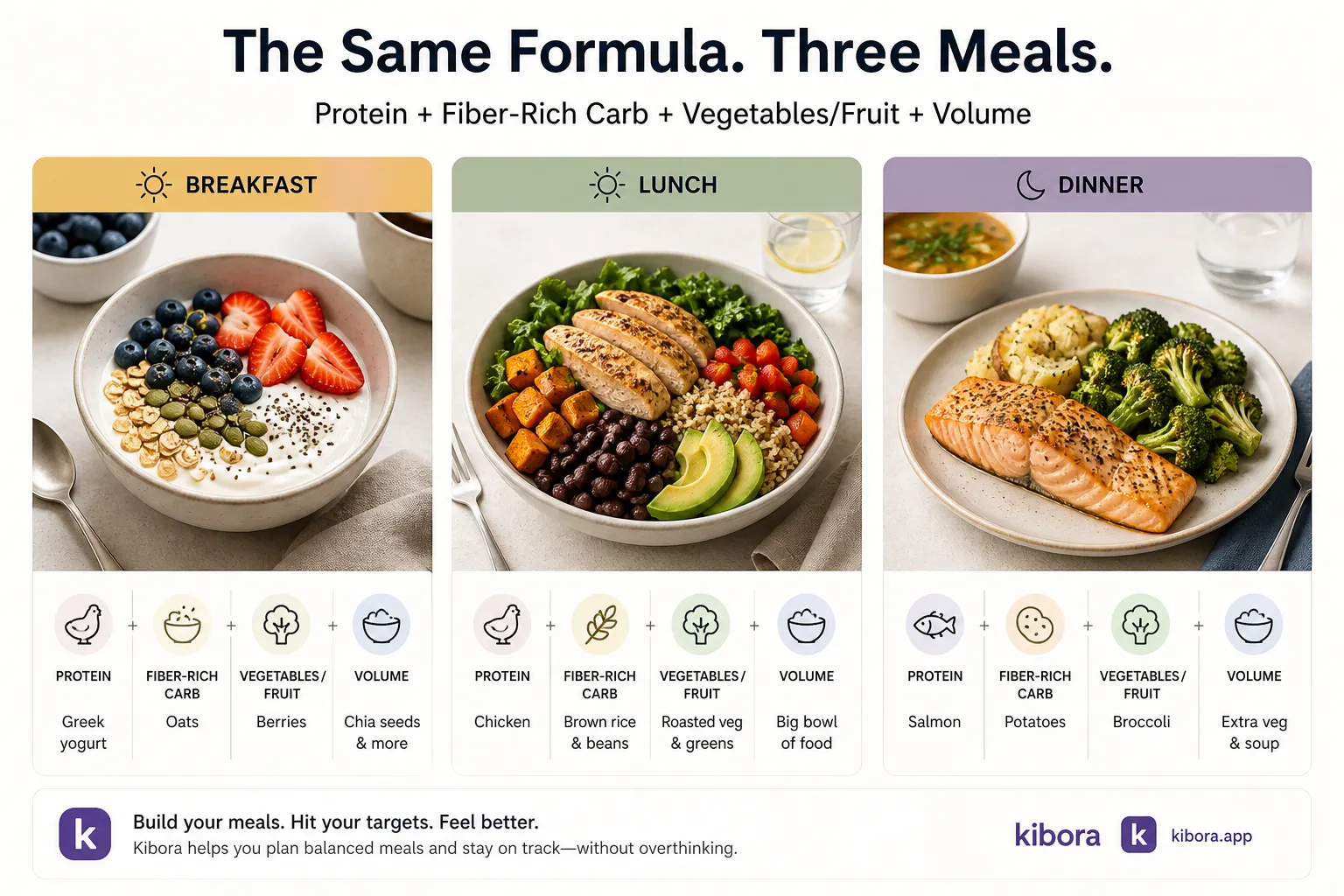
If you are wondering what to eat when always hungry, start by making each main meal do more work. The best filling meal is usually a template, not a recipe: protein plus a fiber-rich carb plus produce plus enough volume to feel like a real meal.
That structure lines up with broad nutrition guidance to include protein regularly and build meals around fiber-rich foods like beans, whole grains, fruit, and vegetables for better staying power Harvard’s protein guidance and fiber guidance. The goal is not a perfect plate. It is a repeatable meal pattern you can use on high-hunger days.
Breakfast: get protein in early
If you get hungry an hour or two after a toast, cereal, or pastry breakfast, the fix is usually not less food. It is more structure early, especially protein paired with fiber and some volume.
- Greek yogurt with oats, berries, and chia or pumpkin seeds
- Eggs with potatoes and vegetables, plus fruit if you need more staying power
- Cottage cheese with fruit and whole-grain toast
- Tofu scramble with beans and vegetables
These combinations tend to hold better than a mostly refined-carb breakfast because they slow the meal down and make it feel more complete. If you want a simple framework for balancing protein, carbs, and fats without overthinking it, this guide on how to balance macros can help.
Lunch and dinner: avoid meals that look healthy but do not satisfy
Lunch is where many people fall into the light salad trap. A bowl of greens with minimal protein can leave you raiding snacks by midafternoon, so add a real protein source, a fiber-rich carb, and enough food volume to count as lunch.
- Chicken or tofu grain bowl with beans, roasted vegetables, and greens
- Lentil soup with whole-grain bread and a side salad
- Tuna, egg, or chickpea salad sandwich with fruit and raw vegetables
Dinner can be filling without feeling heavy if you keep the same template. Build around protein, add vegetables generously, and include a slower carb like potatoes, beans, brown rice, or another whole grain.
- Salmon, chicken, tofu, or beans with potatoes and vegetables
- Turkey or lentil chili with extra beans and a side salad
- Stir-fry with tofu or chicken, vegetables, and brown rice
- Bean burrito bowl with salsa, greens, avocado, and extra protein if needed
On very high-hunger days, make the meal bigger on purpose. Add a broth-based starter soup, more vegetables, a piece of fruit, or an extra serving of protein instead of trying to white-knuckle your way to the next meal.
Plan snacks before hunger turns into grazing
If you can predict that hunger usually hits between meals, plan a snack on purpose instead of waiting until you are starving. That one move makes it easier to choose food that actually helps, rather than grabbing whatever is fast and ending up in low-satiety grazing.
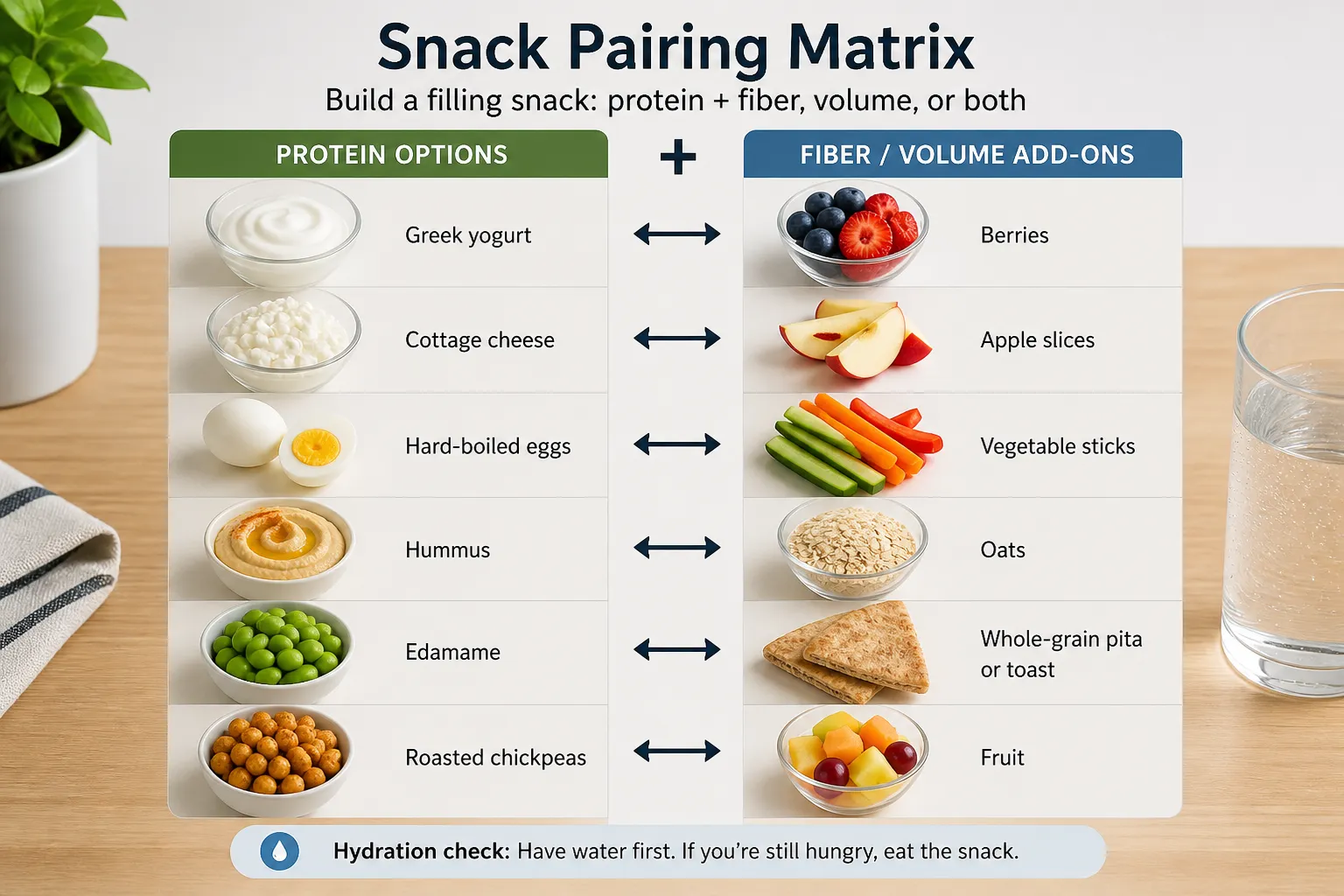
A filling snack is not a smaller treat. It is a mini-meal built from protein plus fiber, volume, or both. That usually looks like Greek yogurt with berries or oats, an apple with peanut butter or cheese, cottage cheese with fruit, or hard-boiled eggs with fruit or whole-grain toast.
Plant-based options work well too. Try hummus with vegetables and whole-grain pita, edamame, roasted chickpeas, bean dip, or a tofu-based snack that gives you some protein and something to chew.
Hydration still matters, but it is a cue check, not a replacement for food. If you are not sure whether you are thirsty or hungry, have some water first, since the CDC recommends water as a practical default drink. If hunger is still there, eat the snack.
Be careful with liquid calories if your goal is satiety. Sugary coffee drinks, juice, and low-protein smoothies often do not satisfy as well as solid food, so if you are hungry again soon after a smoothie, make it thicker, add protein, or switch to a solid meal or snack instead.
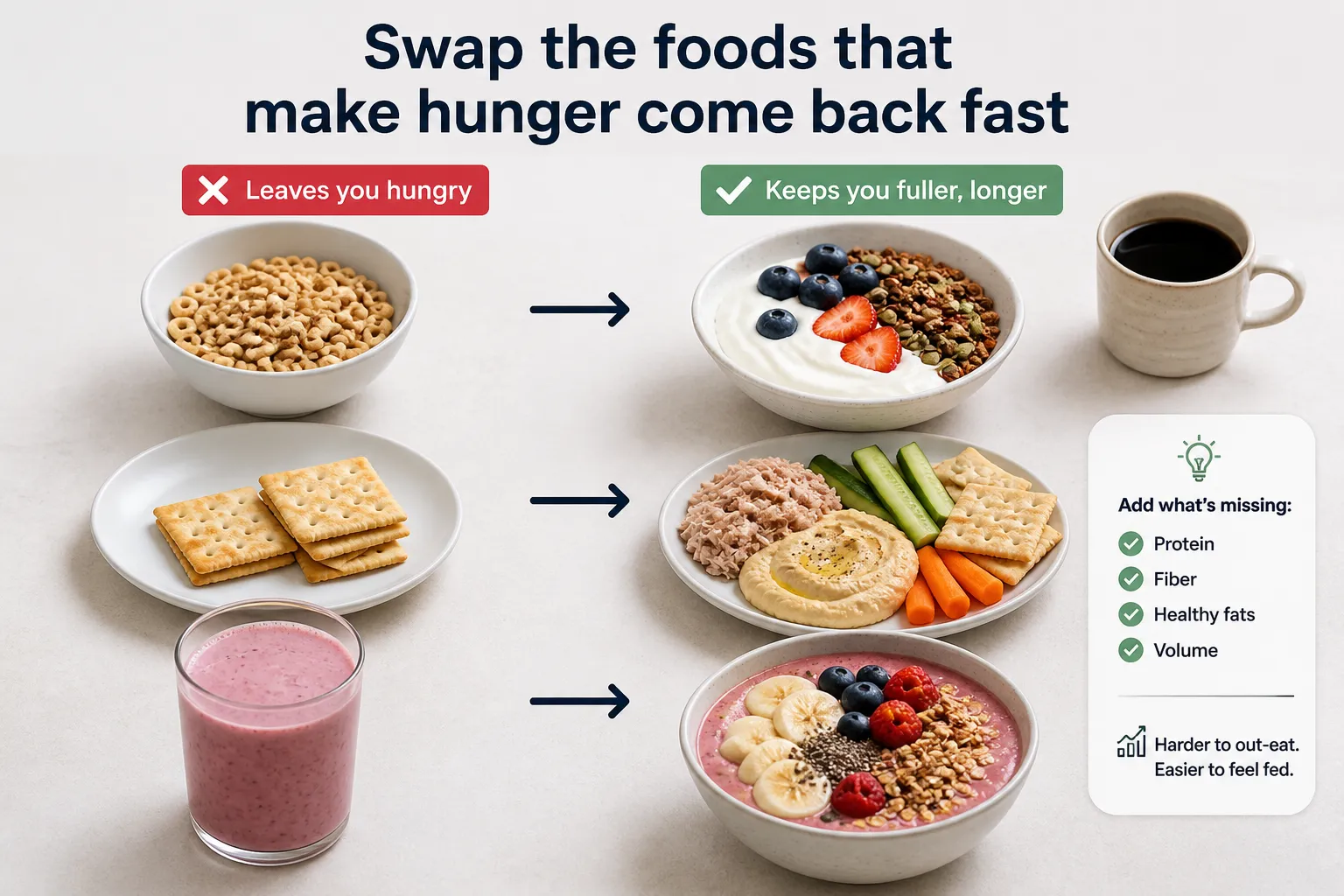
Swap the foods that make hunger come back fast
If you are hungry soon after eating, do not only ask what to remove. Ask what the meal was missing. Refined carbs on their own often digest quickly and leave you looking for more, while protein, fiber, and volume usually help a meal last longer.
A simple example is breakfast. Instead of cereal alone, keep the cereal and add Greek yogurt, berries, and nuts or seeds. The same idea works for snacks: crackers alone may disappear fast, but crackers with tuna, hummus, cottage cheese, or eggs tend to hold you better.
Liquid calories are another common trap. A light smoothie can go down quickly without much fullness, so swap it for a thicker smoothie bowl with Greek yogurt or protein, fruit, oats, and seeds. You are not making it “perfect.” You are making it harder to out-eat and easier to feel fed.
Very light lunches can backfire too. A tiny salad may look healthy, but a bigger salad bowl with chicken, tofu, beans, grains, avocado, and a side of soup or fruit is often a better answer on high-hunger days. If this pattern sounds familiar, this guide on healthy meals that still leave you hungry can help you spot what is missing.
And yes, chips, sweets, or packaged snack foods can fit. But ultra-processed foods can be easy to eat past fullness and may lead to higher intake with less durable satiety, as seen in controlled feeding research summarized here. Instead of making chips the whole snack, pair them with a protein-rich snack or meal if you still want them.
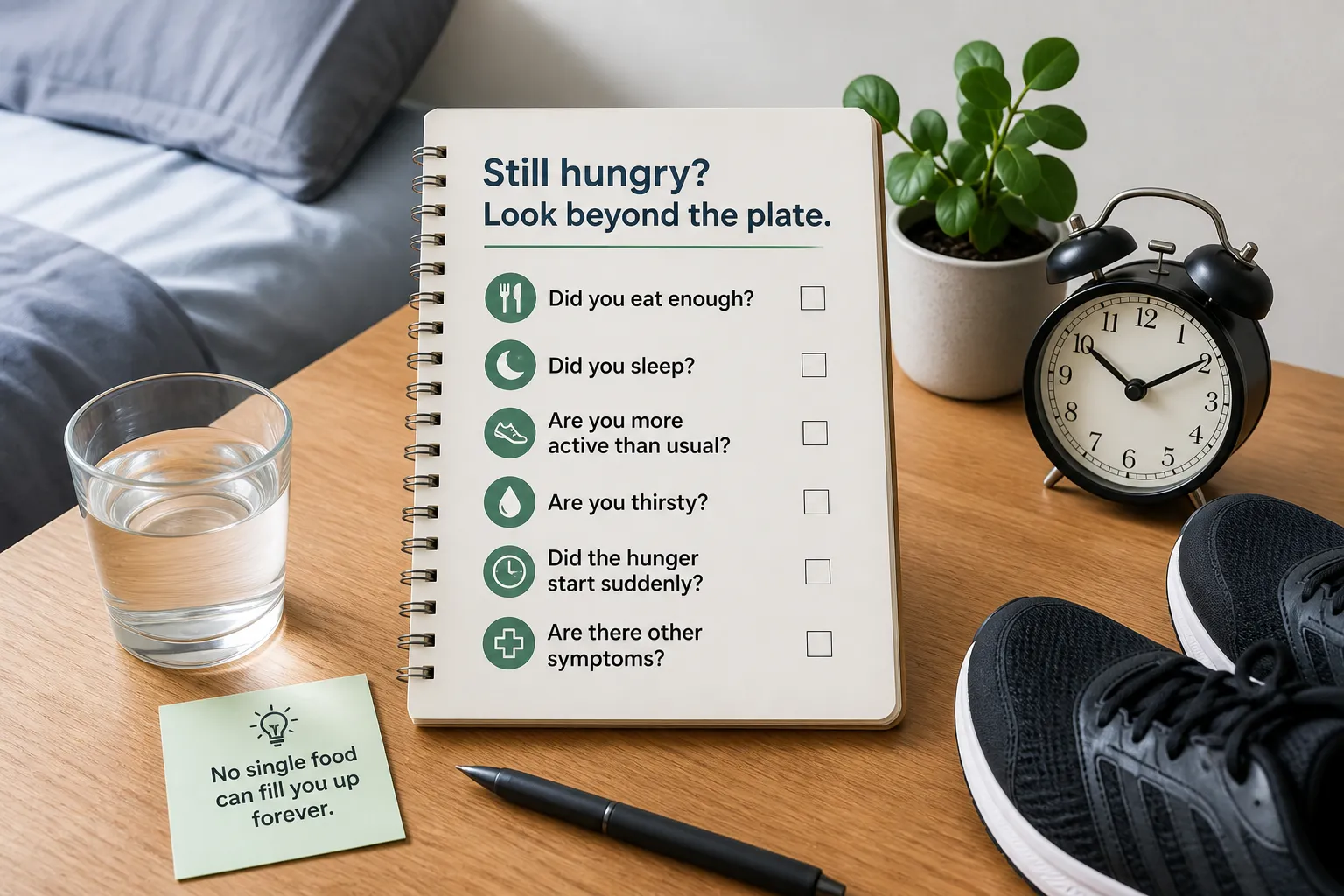
If you’re still hungry all the time, look beyond the plate
If your meals are more balanced and you still feel hungry all the time, the next step is to check the context around your eating. Hunger can be completely normal after missed meals, longer gaps between meals, dieting, growth, pregnancy, or a recent increase in activity.
A simple checklist helps: Did you eat enough? Did you sleep? Are you more active than usual? Are you thirsty? Did the hunger start suddenly? Are there other symptoms? A person who recently added workouts may need more total food, not just more vegetables.
No single food can fill you up forever.
Sleep matters more than people expect. Poor sleep is linked with increased appetite and cravings, so even solid meal planning may not work well if you are running on five hours a night. Mayo Clinic notes that hunger and fullness naturally shift day to day, and appetite is not perfectly constant from one day to the next.
Medications and health conditions can also drive persistent hunger. The NHS and Cleveland Clinic both list causes such as sleep loss, under-eating, stress, pregnancy, medication side effects, diabetes, and thyroid issues.
Food choices can reduce avoidable hunger, but sudden or extreme hunger with other symptoms is a health question, not a meal-planning challenge. Get medical advice if hunger is persistent or comes with unexplained weight change, excessive thirst, frequent urination, fatigue, dizziness, or other new symptoms. And if your hunger hits hardest at night, this guide on why you overeat at night may help you spot the pattern.
Feed high-hunger days on purpose
The goal is not to outsmart hunger; it is to build meals that answer it. Hunger is information, not failure. On high-hunger days, start by adding structure instead of trying to white-knuckle your way through it.
Begin with protein at each meal, then add a fiber-rich carb, plus fruit, vegetables, or soup for volume. Choose slower carbs that come with bulk or nutrients, like oats, potatoes, beans, lentils, or whole grain bread, and use planned snacks so you are not pushed into reactive grazing later.
If hunger still feels constant, zoom out. Check hydration, sleep, whether meals are simply too small, and whether any medical red flags need attention.
Your next step can be simple: at your next meal, build one plate with one protein, one fiber-rich carb, one fruit or vegetable, and one volume booster such as soup, salad, or extra vegetables. If tracking helps, Kibora can make it easier to spot whether your meals are missing protein, fiber, or structure.
- Key sources
- Harvard T.H. Chan School of Public Health - The Nutrition Source: Protein
- Harvard T.H. Chan School of Public Health - The Nutrition Source: Fiber
- Penn State / Barbara Rolls work on energy density and satiety
- CDC - Healthy Weight, Nutrition, and Physical Activity: Water and healthier drinks
- BMJ or similar controlled feeding research on ultra-processed foods
- Mayo Clinic - Hunger and fullness: What's normal?
- NHS - Feeling hungry all the time
- Cleveland Clinic - Why Am I Always Hungry?