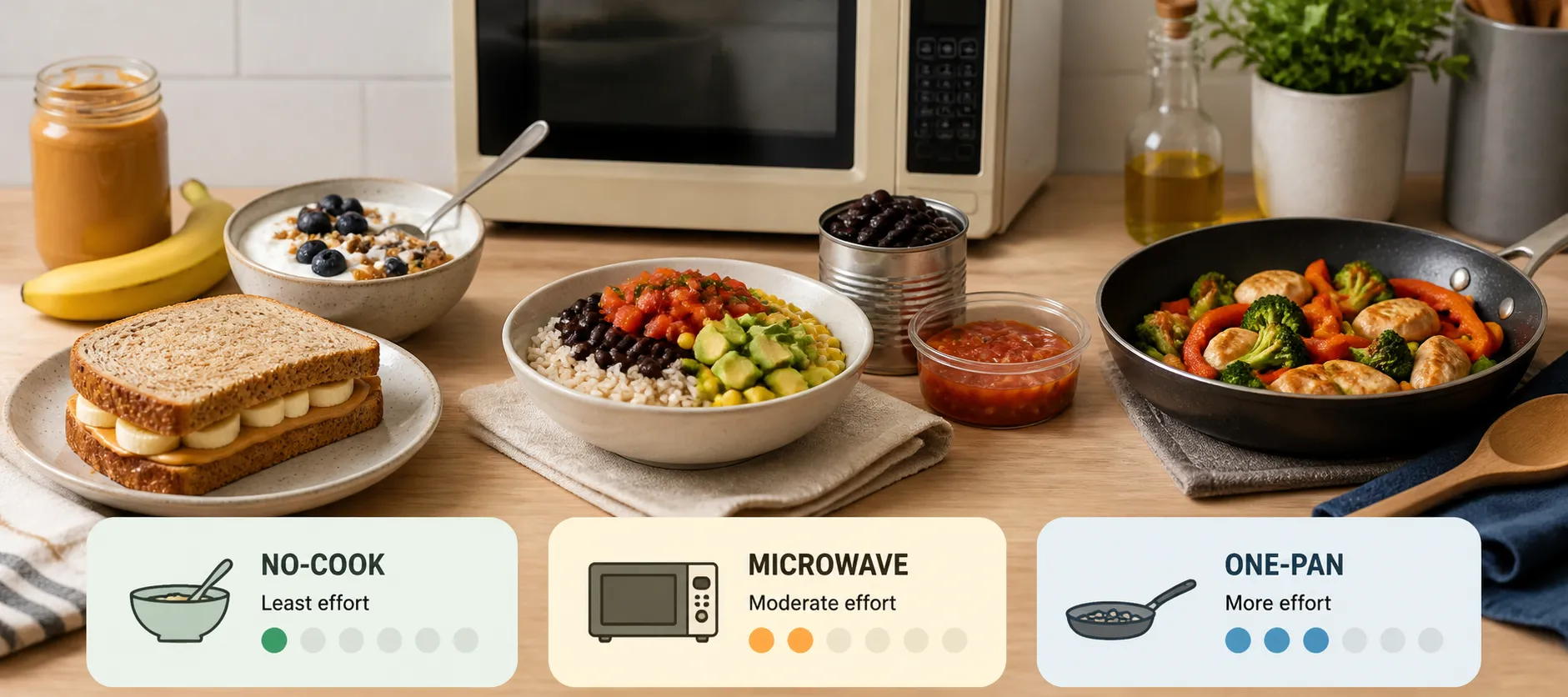
Too tired to cook, or looking for something substantial? Start with a peanut-butter sandwich and fruit, a yogurt-and-cereal bowl, or a frozen meal. The goal is food you can manage, not an impressive plate.
Here, “low energy” means your capacity to prepare food, not a low-calorie plan. This guide sorts meals by the effort you can manage today: assembling, microwaving, or cooking, without promising an energy boost. These suggestions support eating, not treating fatigue; if unexplained tiredness persists or affects daily life, seek medical advice.
Choose the meal that matches your capacity
Can you assemble food, use a microwave, or safely supervise a pan? Here, low energy means limited capacity, not a low-calorie eating plan.
Try a base plus protein plus fruit or vegetables, with sauce, spread, or fat where useful: bread, peanut butter, and a banana, for example. This flexible assembly pattern reduces decisions without macro calculations; it does not guarantee complete nutrition. A missing component should not stop you eating.
| Effort | Meal | Equipment |
|---|
| No-cook | Peanut-butter sandwich and fruit | Spreader |
| No-cook | Yogurt, ready-to-eat cereal, and fruit | Bowl and spoon |
| Microwave | Ready-cooked rice, canned beans, vegetables, and sauce | Microwave, microwave-safe bowl, possible can opener |
| Microwave | Commercially prepared frozen meal | Microwave; check packaging |
| One pan | Scrambled eggs with spinach and bread | Stove, skillet, utensil |
| One pan | Canned chickpeas, tomato sauce, spinach, and bread | Stove, pan, utensil, possible can opener |
Allow for opening packages, draining cans, washing produce when needed, and cleanup. Follow each component’s instructions, including separate heating if required; frozen vegetables are not necessarily cooked. Both pan options need active supervision.
Choose low-effort meals by opening, heating, supervision, and cleanup, not ingredient count alone. If you have bread, peanut butter, and a banana but cannot manage heating or dishes, choose the sandwich over an elaborate bowl.
If packaging or heat feels unmanageable, choose something easier to access or ask for help.
When cooking is too much, assemble one of these
These meals are for days when your capacity to prepare food is low, not for a low-calorie eating plan. Use amounts that suit your appetite and needs; neither combination is a fixed portion prescription.
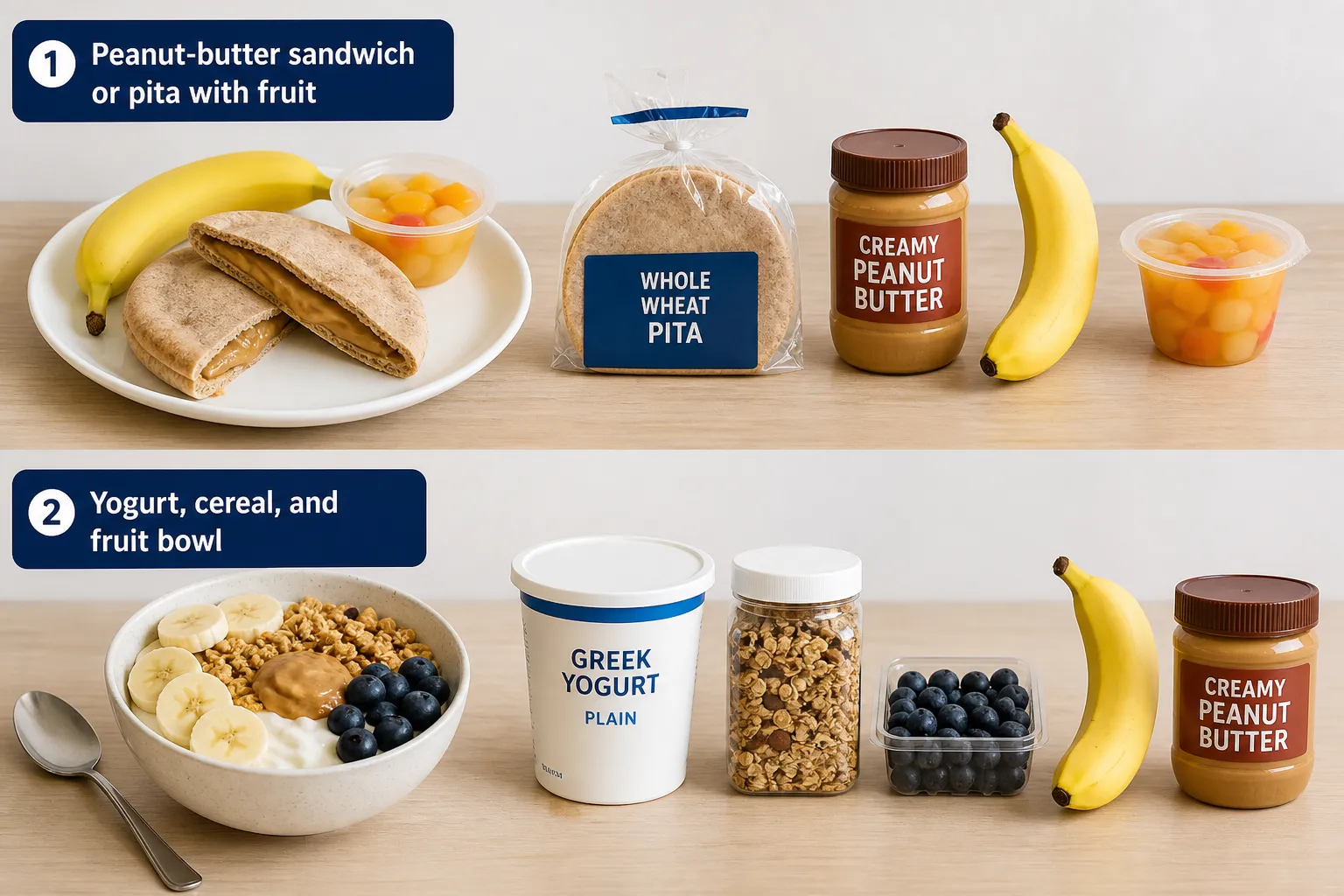
Peanut-butter sandwich or pita with fruit
You need bread or pita, peanut butter, and a banana or fruit cup. Spread the peanut butter, fold or close the bread, and have the fruit alongside. No toaster or fruit chopping is required. Community Healthcare Network includes a similar peanut-butter-and-fruit pita in its no-cook guide.
Equipment: a spreader and, if useful, a plate. The remaining work is opening the packaging, spreading the filling, and peeling the banana or opening the fruit cup when you are ready to eat.
The manufacturer has already baked the bread, roasted and ground the peanuts into butter, and prepared and packed the fruit if you use a fruit cup. If peanut butter does not suit you, use a tolerated seed butter or another ready-to-eat filling. The nutrition will differ, but you do not need to reproduce the original sandwich exactly.
Yogurt, cereal, and fruit bowl
Put Greek yogurt, ready-to-eat cereal or granola, and fruit in a bowl. Stir in peanut butter if wanted. These are among the convenient components highlighted by Duke Health; there is no assumption that you prepared overnight oats earlier.
Equipment: a bowl and spoon. Choose a banana or prepared fruit to avoid chopping; wash fresh fruit when needed. The manufacturer has already cultured the yogurt, processed the cereal so it is ready to eat, and prepared any packaged fruit.
Dairy-free yogurt can replace Greek yogurt, but its protein and other nutrients depend on the product. Use what works for you, and adjust the amount rather than treating the bowl as a universal serving.
For an optional label example, 170 g of FAGE Total 2% lists 120 calories and 17 g protein; 2 tablespoons (33 g) of Jif Creamy Peanut Butter lists 190 calories and 7 g protein. That is approximately 310 calories and 24 g protein for those two ingredients only, before cereal or fruit. These labeled portions are not a complete meal analysis, a target, or evidence of fatigue relief. Other products and amounts differ; you do not need to calculate a subtotal before eating.
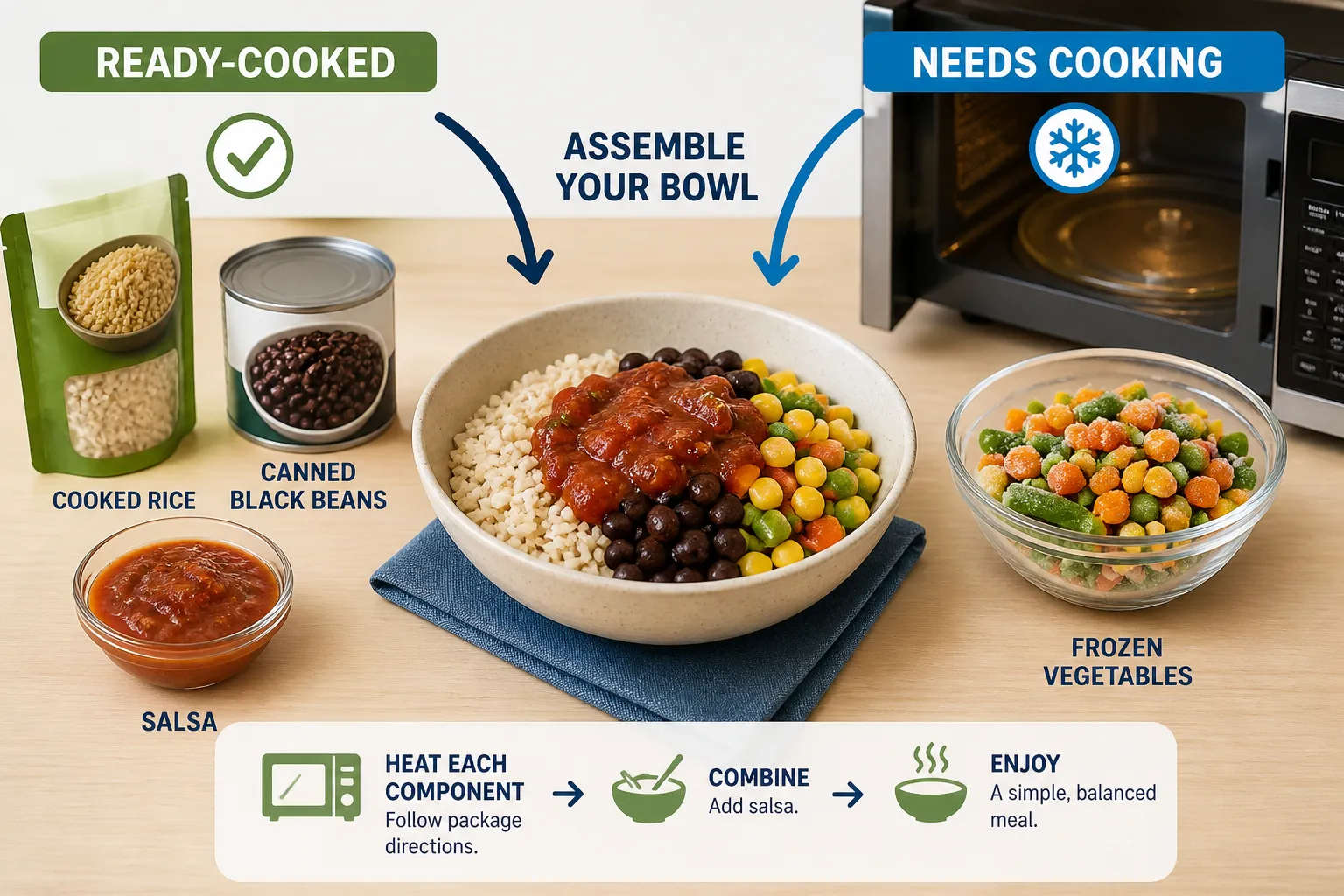
If you can use a microwave, let prepared food do the work
Assemble a rice, bean, and vegetable bowl
Combine ready-cooked rice, canned black beans, frozen corn or mixed vegetables, and salsa, adapting this USDA MyPlate combination. A cooked lentil pouch can replace the beans and may save you using a can opener.
The rice and beans are already cooked, and the vegetables are already cut. There is still some work: opening packages, possibly draining beans, heating components separately, and washing the dishes you use.
Heat each component according to its own instructions, then combine and add salsa. Frozen vegetables may need cooking, not just warming; follow any microwave directions for stirring and standing time, as FoodSafety.gov advises, rather than using one heating time for the assembled bowl.
Heat a ready meal and leave it at that
A frozen ready meal can be the whole meal: heat and eat as directed. It does not need an upgrade before it is acceptable to eat. Fruit, bread, or vegetables are optional additions if wanted and manageable, not another task required before eating.
For a quick label check, look at servings per package and how much you intend to eat. The FDA explains that nutrient amounts reflect the labeled serving, not necessarily the whole package. Protein, fiber, sodium, or nutrients relevant to you can help compare options, but there is no universal pass/fail threshold to clear before eating.
If a pan feels manageable, skip the chopping
These warm options avoid chopping, but they still need a pan, a utensil, a heat source, and stove supervision. Treat them as flexible assembly ideas rather than recipes with fixed quantities or cooking times.
Scrambled eggs, spinach, and bread
Soften a handful of spinach in a little oil in the pan. To skip washing, choose spinach labeled prewashed and ready-to-eat, rather than assuming every bagged leaf is ready to use.
Add the eggs and stir, scrambling until they are no longer runny. Serve with bread alongside; there is no need to make toast or manage another appliance.
Chickpeas, tomato sauce, and spinach
Combine canned chickpeas, jarred tomato sauce, and frozen spinach in a pan. Canned chickpeas are already cooked, but frozen spinach still needs the cooking treatment specified on its packaging; follow those instructions rather than stopping when the sauce feels warm.
Serve with bread for the sauce. The extra work includes opening the chickpea can, draining it if needed, stirring, supervising the heat, and washing the pan and utensil afterward.
If staying at the stove feels unsafe or too demanding today, choose a no-cook or microwave option instead. A pan meal is an option, not a requirement.
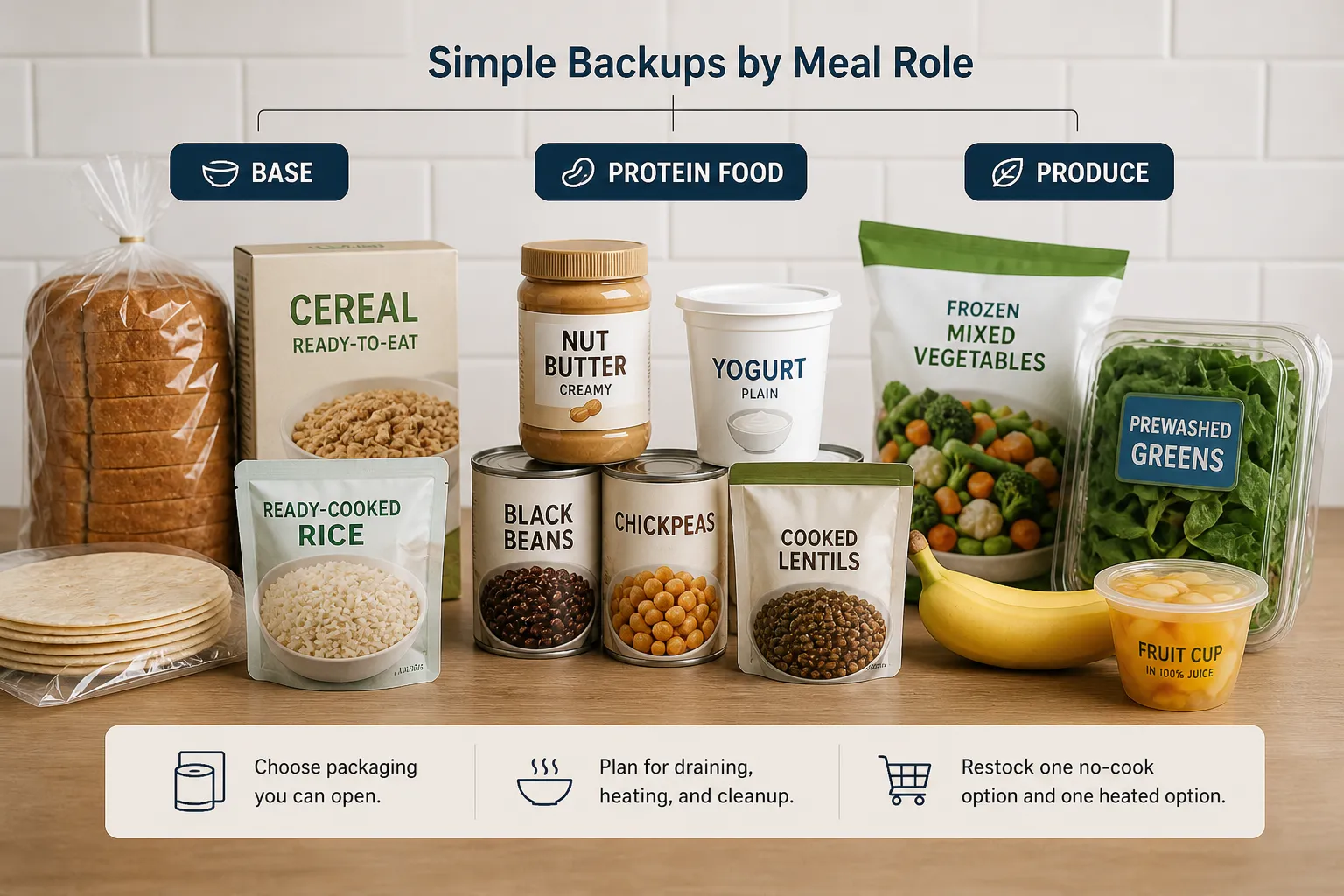
Swap what you have, and keep backups simple
Use what fits today’s meal, budget, allergies, and equipment:
- Base: bread, pita, tortillas, ready-to-eat cereal, or ready-cooked rice, as suits the meal.
- Protein food: tolerated nut or seed butter, yogurt, canned beans, or cooked lentils. These aren’t nutritionally identical; compare products if nutrient content matters.
- Produce: a banana, fruit cup, frozen vegetables prepared as directed, or ready-to-eat prewashed greens.
“Frozen and canned options can be just as healthy as fresh.” — USDA MyPlate, on fruit and vegetables
This guidance concerns produce, not every prepared food. MyPlate also recommends checking labels for sodium, saturated fat, and added sugars.
Choose packaging you can open and portions you can use or store. If a can opener is the barrier, a usable ring-pull can or cooked pouch may help; allow for draining, heating, and cleanup too.
If shopping later is possible, restock just one no-cook option and one heated option. One no-fridge fallback is bread or crackers, tolerated shelf-stable nut or seed butter, and an unopened shelf-stable fruit cup; follow storage labels after opening.
Make leftovers a safe fallback
Cooked leftovers can save you another cooking session when they are refrigerated promptly, used within three to four days or frozen, and reheated to 165°F throughout. Unopened commercial products follow their own storage instructions, not this leftover timetable.
Use this checklist, based on USDA storage guidance:
- Refrigerate promptly: Put perishables away within two hours, or one hour when the temperature is above 90°F.
- Keep the refrigerator at 40°F or below. Use refrigerated cooked leftovers within three to four days, or freeze them.
- Cool in shallow containers: Refrigerate the remaining cooked rice-and-bean mixture promptly rather than leaving the bowl out for later. Do not leave a large pot on the counter waiting to cool.
- Check reheating with a food thermometer: Leftovers must reach 165°F throughout. After microwaving, check the center and several other spots, not just a hot edge.
- Keep stirring and standing steps: Follow all package heating instructions, including standing times. A hot exterior does not establish safe heating throughout.
Ready-to-eat and ready-to-cook are different. No-cook does not mean shelf-stable: refrigerated ready-to-eat foods still need refrigeration. Frozen does not automatically mean cooked or ready-to-eat, so check the label before choosing a shortcut.
For today, choose the meal you can manage
Choose one available option that fits your capacity, eat an amount that suits your needs, and store any perishable leftovers safely. A sandwich you can eat now is a more usable choice today than a recipe whose preparation you cannot manage.
Success means the food was available, manageable to prepare, and eaten, with cleanup manageable too. It does not depend on tiredness disappearing or the meal being perfectly optimized. If opening packages, standing, supervising cooking, or washing dishes was too much, choose something simpler next time.
Speak with a healthcare professional if tiredness is persistent and unexplained, affects everyday life, or comes with other symptoms, rather than trying to diagnose it through food choices. If your question is specifically about dieting, read the separate guide to low energy on a diet.
- Key sources
- Community Healthcare Network — No Cook Meal Guide
- Duke Health — Healthy Convenience Foods that Require No Cooking or Prep Time
- USDA MyPlate — Planning for Healthy Eating and Savings: Fruits and Veggies Edition
- FDA — How to Understand and Use the Nutrition Facts Label
- FAGE USA — Total 2%
- Jif — Creamy Peanut Butter
- USDA FSIS — How do I handle leftovers safely?
- NHS — Tiredness and fatigue