


- What you'll learn
- How to use a short audit week to spot real eating patterns without committing to permanent tracking
- Which parts of your day matter most: breakfast, lunch, snacks, drinks, late eating, and weekend drift
- How to build meals with a simple plate method instead of counting every calorie
- Why protein and fiber are useful anchors for fuller, more steady meals
- How to turn repeat meals into better defaults with less decision-making
- When a lighter tool like fast logging and weekly insights can replace full-time calorie tracking
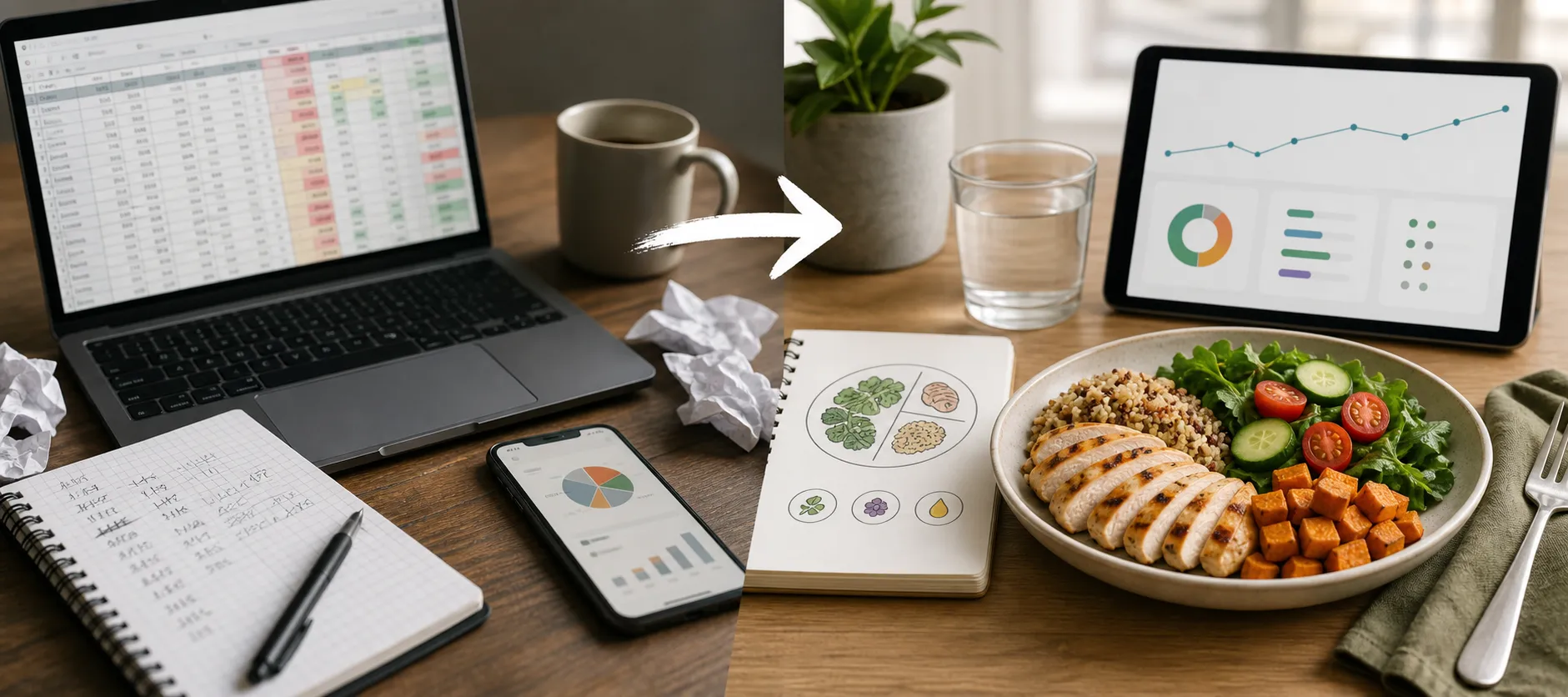
If you hate tracking, you are not lazy. But if you refuse all feedback, you are guessing.
That is the false binary this article rejects: either log every almond forever or eat on vibes alone. You do not need to turn food into a spreadsheet to eat better, but sustainable improvement usually does require some way to see what is actually happening.
The good news is the goal is not perfect data. It is better decisions repeated often enough to matter. A week of honest noticing can teach you more than months of vague intention, like realizing your weekday lunches are low in protein and your late snacks matter more than dinner.
This guide will show the middle path: audit, notice patterns, simplify, and recheck. Brief tracking, then better defaults.
Use tracking like a flashlight, not a leash
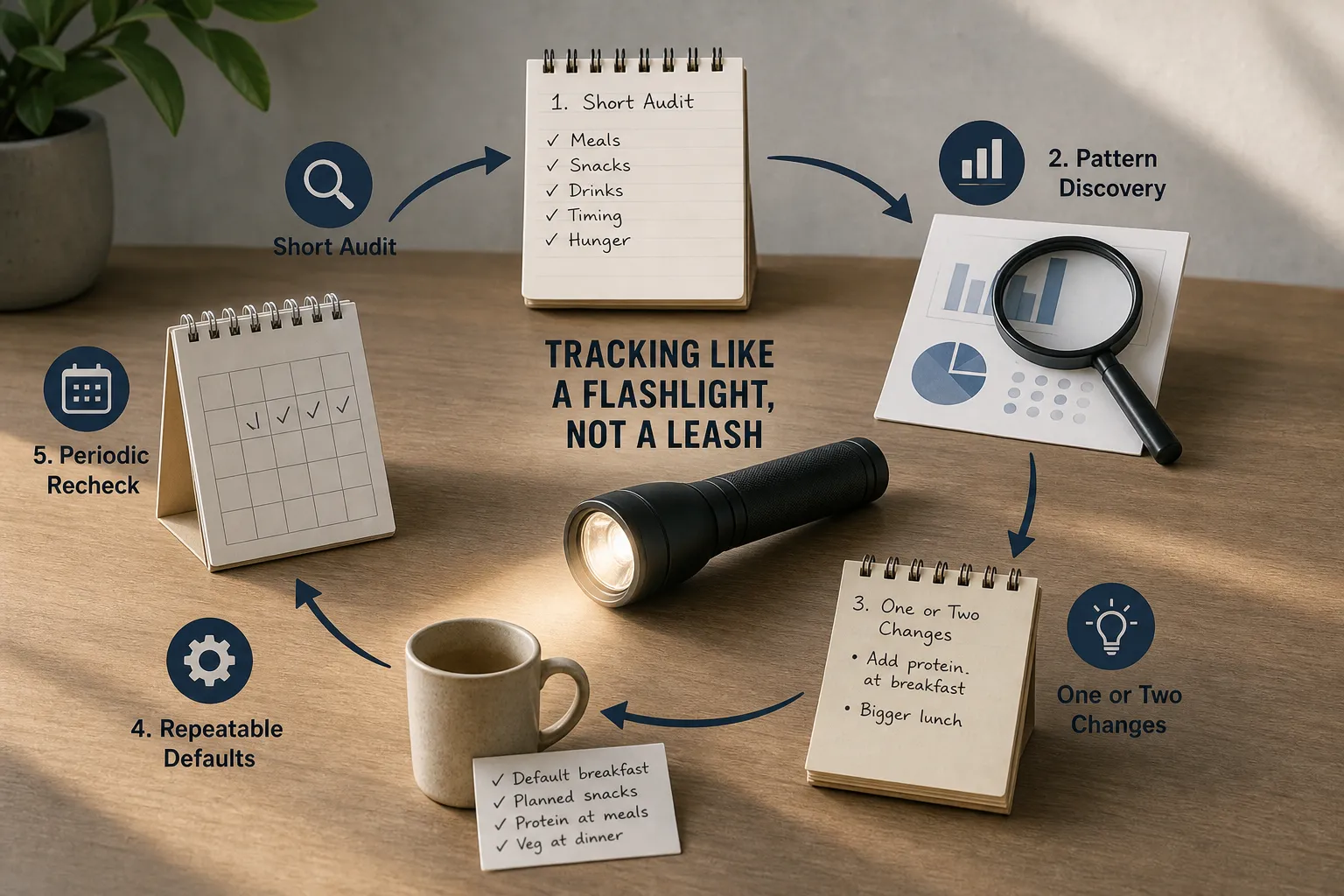
If you want to eat better without tracking calories forever, start with a short food audit. Not a new lifestyle. Not a clean-eating reset. Just 3 to 7 normal days of paying attention closely enough to see what is actually happening.
This is where tracking helps most. Self-monitoring tends to work because it creates feedback and awareness, not because every bite must be recorded for life. That basic idea shows up repeatedly in research on diet self-monitoring and behavior change, including reviews indexed on PubMed and guidance from the NIDDK.
The rule for the audit is simple: do not change your behavior yet. Eat your usual breakfast. Have the snack you normally grab. Go out on the weekend if that is part of real life. The point is diagnosis, not a performance review.
Perfect days will teach you almost nothing. Normal days will show you your defaults, and defaults are what drive most results.
What to track during the audit
You do not need lab-grade precision. You need enough detail to spot repeat patterns in meals, portions, hunger, snacks, drinks, and timing.
- What meals repeat most often?
- Where are you hungry again soon after eating?
- Which meals seem low in protein or light on fiber-rich foods?
- Where do vegetables show up consistently, and where do they disappear?
- What happens with sugary coffee, alcohol, juice, or other liquid calories?
- Which foods do you tend to underestimate, especially snacks and handful foods?
- What changes on weekends, at restaurants, or late at night?
The useful stuff is often hiding outside your main meals. You may realize dinner is fairly balanced, but breakfast is just coffee and lunch is too small, so by 9 p.m. you are roaming the kitchen. Or you may find that two glasses of wine, a sweet coffee, and casual snack grabs explain more than anything on your plate.
If you want a lighter way to do this, tools like Kibora can help because fast logging, favorites, history, and weekly insights make it easier to notice patterns without turning food into a spreadsheet. If you want a deeper take on where tracking helps and where it can backfire, this guide on when calorie tracking is useful is worth reading.
What to do after the audit
Do not try to fix everything at once. Pick one or two high-leverage changes based on what your audit revealed.
Maybe that means adding a real breakfast with protein, making lunch bigger so evenings calm down, or setting a default for snacks instead of eating from the bag. The audit is successful when it gives you a few honest answers and a simpler next move.
If you have diabetes, a history of eating disorders, are pregnant, or have kidney, GI, or other medical conditions, use clinician-guided nutrition advice instead of a DIY audit.
Build most meals from a plate, not a calculator
If you want the simplest default for portion control without counting calories, use the plate method. It is not magic, and it is not a perfect prescription, but it gives you a reliable way to build meals without weighing food or doing math.
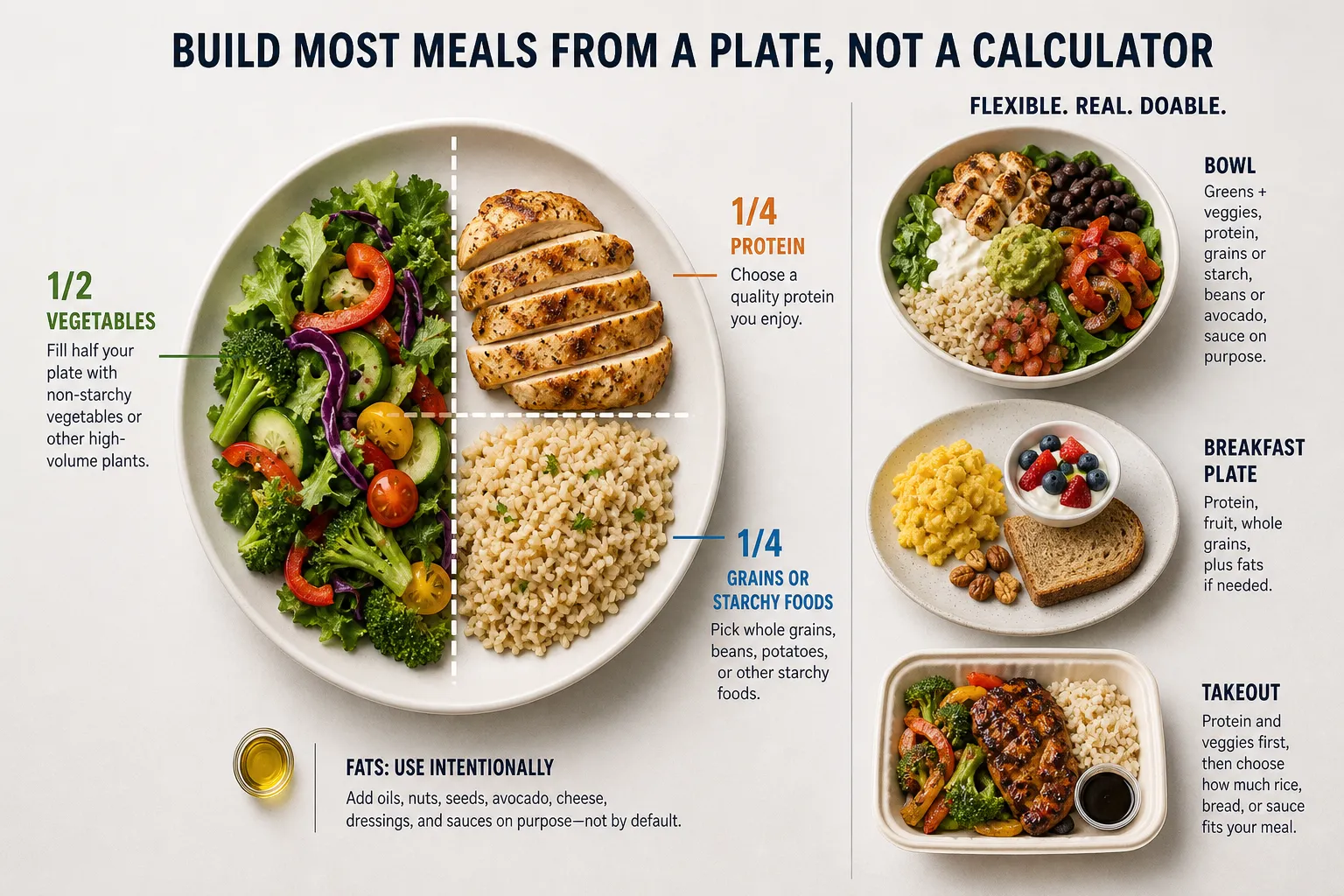
A practical starting point, supported by public health guidance from the CDC and the Harvard Healthy Eating Plate, is this: fill about half the plate with non-starchy vegetables or other high-volume plants, one quarter with protein, and one quarter with grains or starchy foods. Fats still matter, but use them intentionally instead of letting oil, cheese, dressings, and sauces quietly take over the meal.
This works because it answers the question that keeps coming up: what should this meal contain? You stop negotiating every lunch and dinner from scratch.
It also works for meals that do not look like a classic plate. A burrito bowl can be greens and fajita veg, chicken or tofu, rice or potatoes, beans or avocado, and a sauce you add on purpose rather than pour automatically. A breakfast plate can be eggs or Greek yogurt, fruit, oats or whole-grain toast, plus nuts or seeds if you actually need more staying power.
Takeout can follow the same logic. Order the protein and vegetables first, then decide how much rice, fries, bread, or sauce actually fits the meal instead of accepting the default pile.
Bowls, wraps, pasta, curry, sandwiches, and even restaurant meals can all be translated into the same structure. Then adjust from there based on hunger, training, goals, preferences, and any medical needs. If you have diabetes, kidney disease, GI issues, are pregnant, have a history of disordered eating, or need therapeutic nutrition, clinician-guided advice beats any generic plate template.
Anchor meals with protein and fiber so hunger does less negotiating
If you want to eat better without counting calories, protein and fiber are two of the highest-leverage anchors. They tend to make meals more satisfying and easier to regulate, which is one reason both are consistently linked with fullness in the research on protein and dietary fiber.
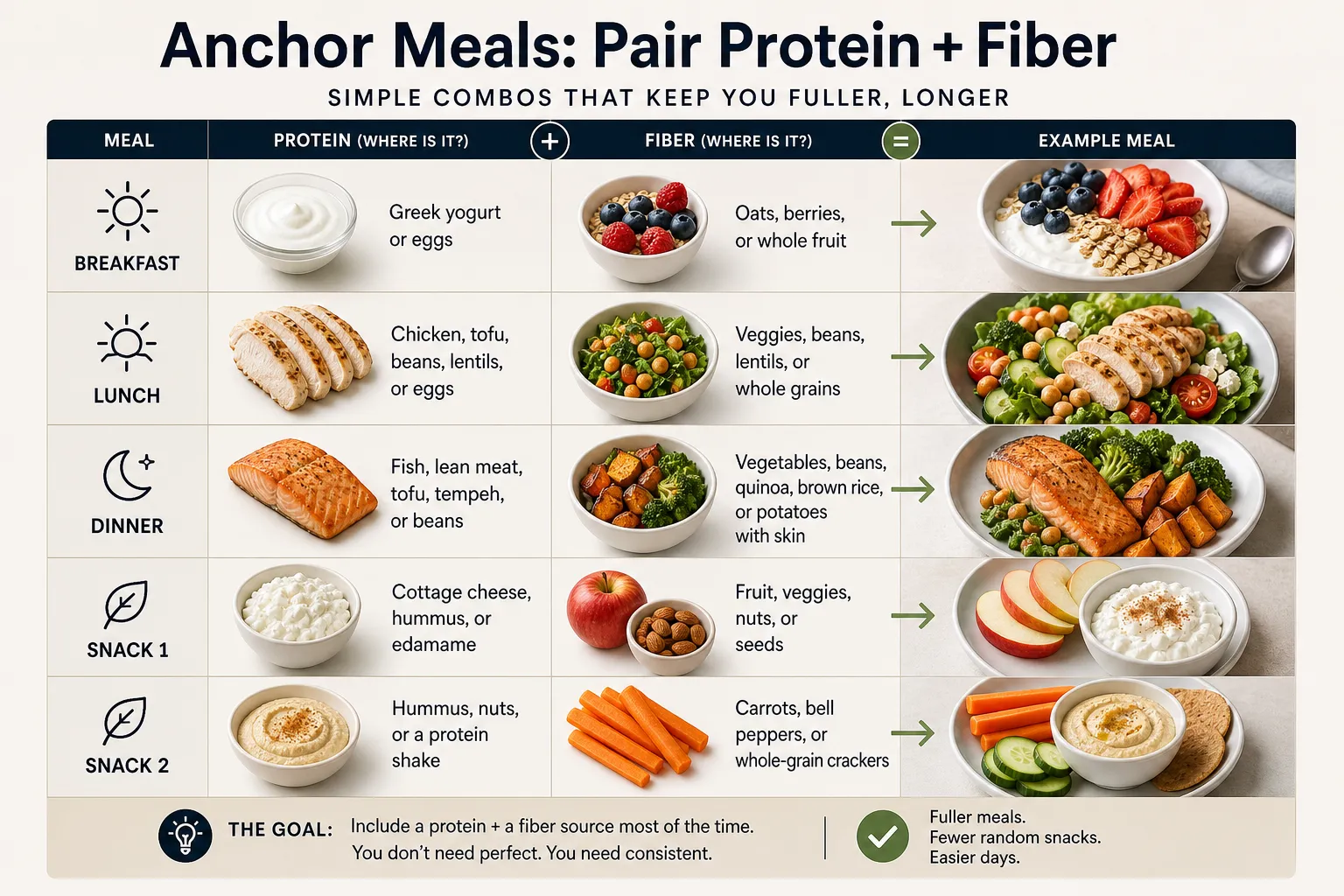
You do not need macro obsession here. Just ask two questions at most meals: Where is the protein? And where is the fiber?
Protein can come from eggs, Greek yogurt, fish, chicken, lean meat, tofu, tempeh, beans, lentils, cottage cheese, or protein-rich dairy and alternatives. Fiber is easier to cover when meals include beans, lentils, vegetables, fruit, oats, potatoes with skin, whole grains, nuts, or seeds.
The goal is not perfect numbers. The goal is consistency, so your breakfast is not coffee and a pastry one day, then a giant lunch because you were starving by 11.
A better breakfast might be Greek yogurt with berries and oats, or eggs with fruit and whole-grain toast. A better lunch salad is not just leaves and vegetables. Add chicken, tofu, beans, lentils, or eggs so it actually holds you through the afternoon instead of sending you toward random snacks at 3 p.m.
Plant variety helps here too, without turning into another rigid rule. If the same two vegetables show up every day, rotate in beans, fruit, herbs, whole grains, or just a different color produce across the week. More variety usually means better diet quality, and it is an easy pattern to notice without doing full calorie math.
Exact protein and fiber targets should vary based on body size, goals, preferences, and health needs. If you have diabetes, an eating disorder history, are pregnant, or live with kidney or GI conditions, this is the kind of thing worth personalizing with a clinician instead of copying from the internet.
Turn your usual meals into better defaults
Most people do not need more recipe inspiration. They need better autopilot meals. If you already rotate the same breakfasts, lunches, and snacks, that is good news because improving what repeats is far easier than inventing a whole new way to eat.
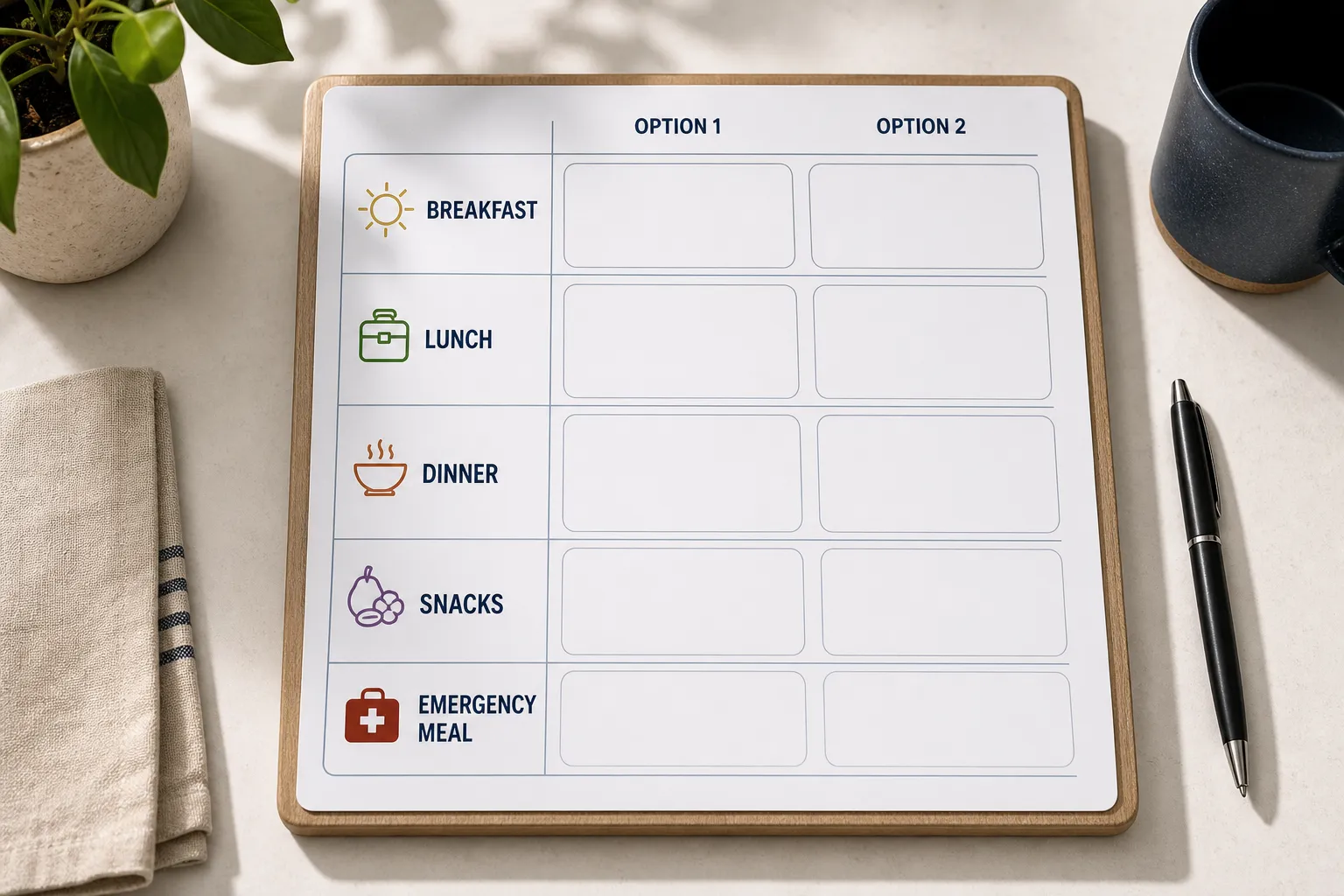
A practical rule is to choose two breakfasts, two lunches, two dinners, and two snacks that fit the protein and fiber logic from the last section. Think Greek yogurt with fruit and seeds, eggs with toast and fruit, a leftovers bowl, a bean-and-grain bowl, or hummus and vegetables with something more filling on the side.
This works because habits get easier when the cue and response stay familiar. Reviews on habit formation and healthy eating consistently point to repetition and environment as part of making behaviors stick PubMed.
Build a minimum viable meal
Healthy eating falls apart when it depends on motivation. Have one emergency meal for chaotic days, like rotisserie chicken or tofu, microwave rice, and a bagged salad with olive oil or sauce. It is not glamorous, but it beats the takeout-or-cereal spiral.
The same goes for snacks. Keep easy defaults visible and ready: fruit plus yogurt, portioned nuts, cottage cheese, boiled eggs, edamame. Make low-value grazing a little less automatic by putting it farther away, buying less of it, or not storing it in plain sight.
If you have ever tracked your food for a week, use that history to see which meals you already repeat and upgrade those first. Tools with favorites and meal history, including Kibora, can make that lighter by helping you save the meals that are actually worth repeating. The goal is fewer decisions, not endless variety, which is often what makes better eating realistic.
Do not ignore the stuff between meals
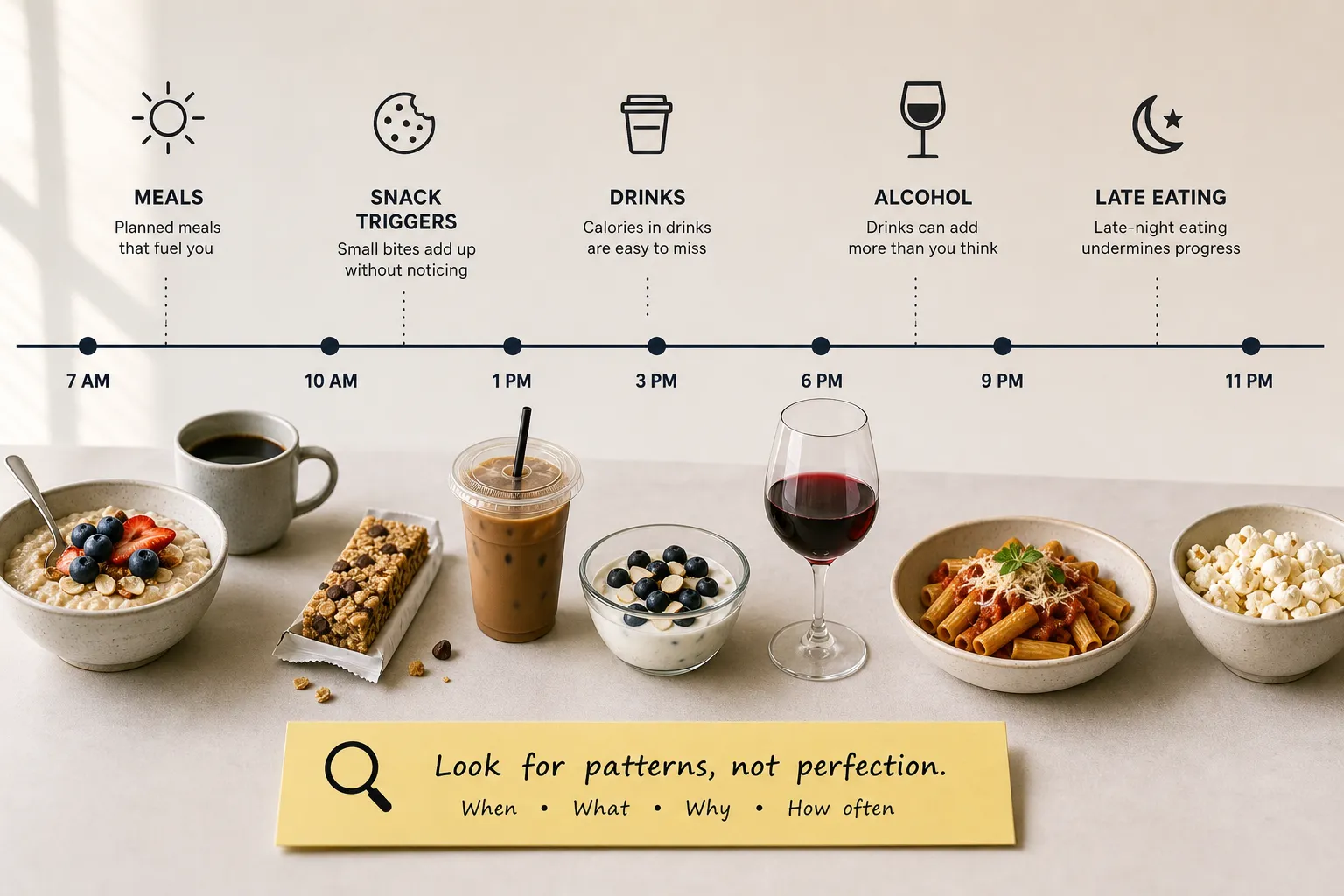
Most people do not blow up their progress at breakfast, lunch, or dinner. They do it in the untracked middle: handfuls of snacks, sugary coffees, juice, cocktails, sauces, bites while cooking, and late-night grazing that barely registers as “eating.”
That does not mean those foods are bad or off-limits. It means they are easy to miss because they happen automatically, socially, or when you are tired and less deliberate.
Your audit week should look for patterns, not perfection. Ask simple questions: When do snacks happen? Are they planned or reactive? Are drinks adding more than you thought? Does late eating show up after under-eating earlier in the day?
A 3 p.m. snack is often a lunch problem, not a willpower problem. If your lunch was mostly carbs and low in protein or fiber, that afternoon crash makes sense.
Late-night cereal or delivery can work the same way. Sometimes it is not “bad habits.” It is skipped breakfast, a too-light lunch, then hunger finally catching up at 9:30.
Drinks deserve extra attention because they are easy to underestimate. Coffee shop drinks, soda, juice, cocktails, and even frequent smoothies can add more than expected while being less filling than a solid meal.
Mindful eating can help you notice automatic eating, but it is not a magic fix or a guaranteed weight-loss system on its own. Reviews of the research suggest it can improve awareness and eating behaviors, with mixed results for weight outcomes according to systematic review evidence.
A better approach is a few rules of thumb you can actually keep: planned snacks, drink boundaries, a kitchen close time, or a protein-and-fiber snack before your highest-risk window. If late eating or alcohol seems tied to rough sleep and next-day hunger, this guide to meal timing, sleep, and hunger patterns can help you connect the dots.
If you have diabetes, a history of eating disorders, are pregnant, or have kidney, GI, or other medical conditions, nutrition changes may need clinician guidance.
Check in often enough to learn, not so often that you burn out
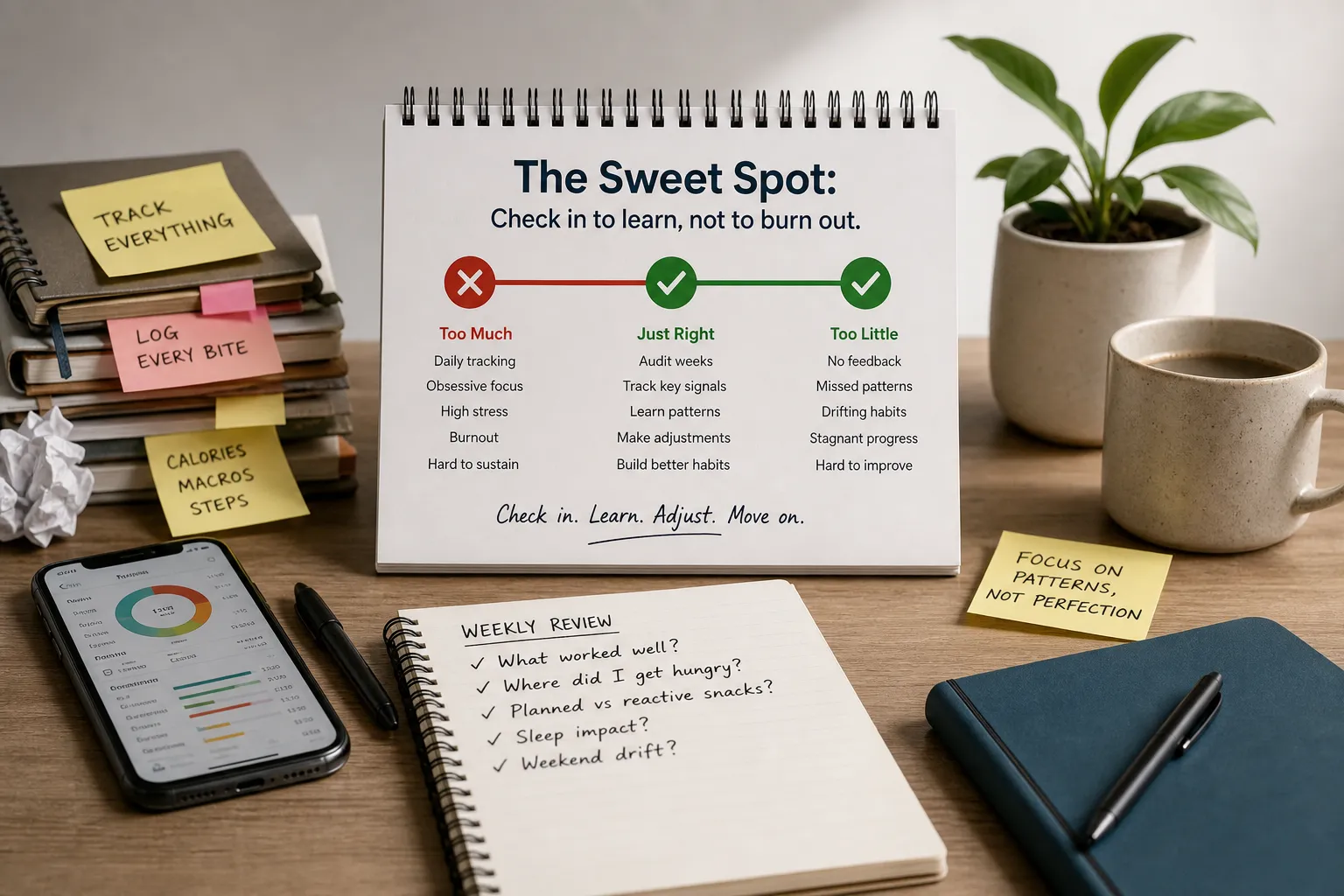
Once you have better defaults, the goal is not to keep logging forever. The goal is to keep just enough feedback to notice when your habits are helping and when they are quietly drifting.
That middle ground is more realistic than either extreme. Sustainable behavior change tends to work better when the system is doable in real life, not just in a highly motivated week, which is also how the NIDDK describes effective weight-management approaches.
So stop watching every detail and start watching a smaller set of signals. Good ones include hunger, energy, digestion, sleep, workouts, meal consistency, plant variety, whether snacks feel planned or reactive, and weight trend if that is relevant to your goal.
A weekly pattern review usually tells you more than daily judgment. One random dinner out means very little. A whole week of low-protein breakfasts, scattered snacks, and late eating after bad sleep tells you exactly where to adjust.
Use audit weeks, not permanent surveillance
A practical rhythm is simple: do one audit week, then spend four to eight weeks running your new defaults. If things are going fine, keep going. If something changes, run a short recheck instead of assuming you need to track every bite again.
Good times for a recheck are predictable. Your weight trend stalls or climbs unexpectedly, hunger ramps up, sleep worsens, training changes, travel throws off your routine, or weekends start looking very different from weekdays.
During a recheck, ask better questions than “Was I perfect?” Try prompts like these:
- Which meals worked well and kept me full?
- Which meal left me hungry an hour later?
- Which snack was planned, and which was reactive?
- Did late eating follow poor sleep?
- Did weekends drift from my weekday routine?
This keeps the focus on fixing patterns. If protein is low at breakfast three days in a row, fix breakfast instead of micromanaging dinner. If plant variety is low, add one bean, one fruit, and one different vegetable next week.
Make the feedback loop lighter
Self-monitoring can help, and research consistently links it with better outcomes, but that does not mean permanent, high-friction tracking is required for everyone across systematic reviews on self-monitoring. The smarter move is to use the least intrusive system that still teaches you something.
That is where a lighter workflow helps. Tools like Kibora can make audit weeks less annoying with fast logging, favorites, history, weekly insights, sleep outlook, plant variety, and science-based takeaways, so you can notice patterns without turning food into a spreadsheet. That approach also fits the bigger problem covered in this blog on why rigid diet app habits often fail long term.
If logging starts to feel obsessive or punitive, do not push harder. Narrow the feedback loop. Review the week, fix one obvious issue, and move on. If you have diabetes, a history of eating disorders, are pregnant, or have kidney, GI, or other medical conditions, use clinician-guided nutrition advice instead of a generic tracking system.
Better defaults beat perfect records
You can absolutely eat better without counting calories forever. But you cannot eat better by paying attention to nothing. The goal is not to become a full-time tracker. The goal is to stop flying blind long enough to see what your real patterns look like.
Use tracking as a short audit, not a lifestyle. Log three normal days or run one quick audit this week, then look for the most obvious thing: the breakfast that leaves you starving by 10, the snack loop every afternoon, the drinks that quietly pile up, or the late-night eating that keeps repeating.
Then simplify. Pick one meal to improve and one between-meal pattern to tighten up. Build a better default with a clearer plate, a little more protein or fiber, a planned snack, or a repeat meal that makes the good choice easier.
That is the real takeaway: better eating usually comes from better defaults, not better willpower. Run the audit this week, make two small changes, and review them once a week. If your needs are medical or more complex, get clinician-guided advice instead of guessing.
- Key sources
- NCBI / PubMed - Systematic reviews on self-monitoring and weight loss
- NIH / NIDDK - Choosing a Weight-Loss Program
- CDC MyPlate / Healthy Eating Plate guidance
- Harvard T.H. Chan School of Public Health - The Nutrition Source
- PubMed search - protein satiety review
- PubMed search - dietary fiber satiety review
- PubMed search - habit formation and healthy eating
- PubMed search - mindful eating systematic reviews


