


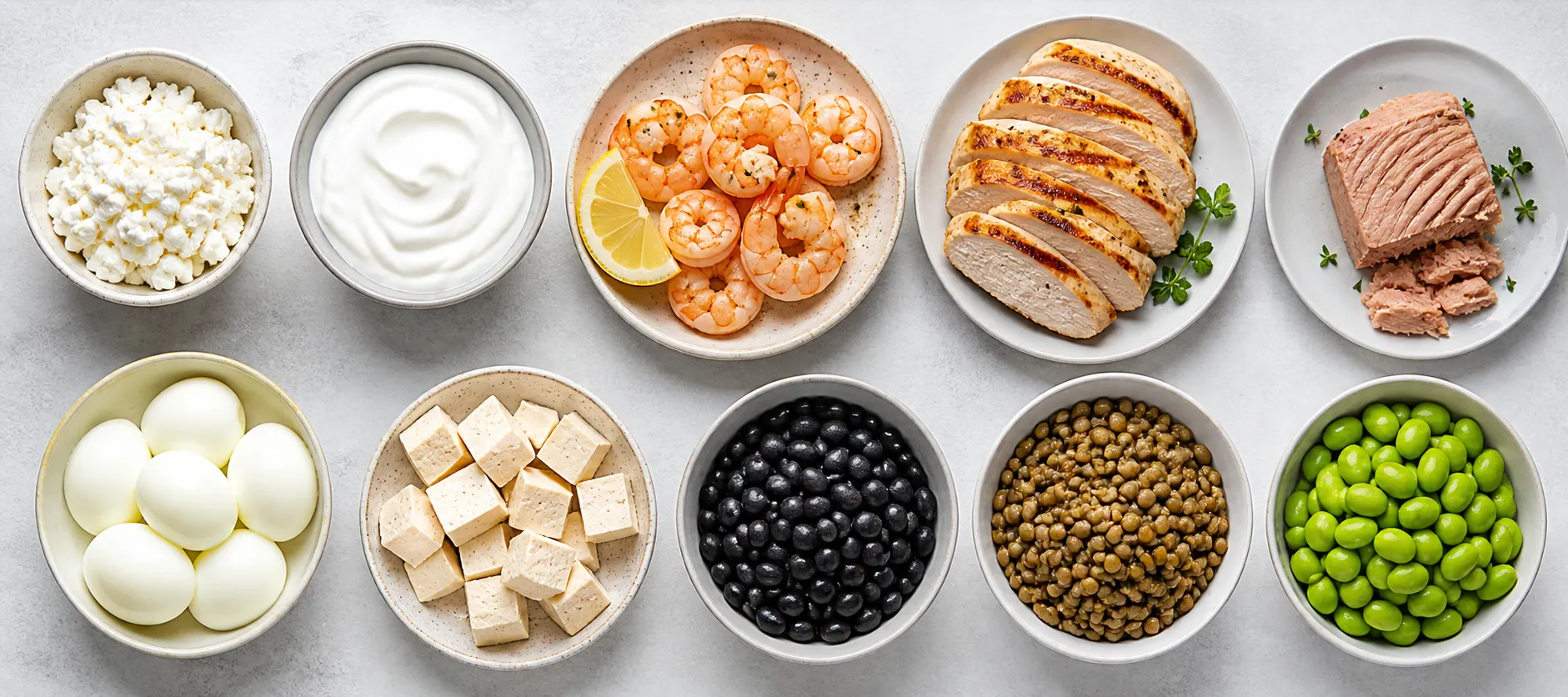
- What you'll learn
- How protein per calorie gives a fairer ranking than protein per serving
- Which foods rise to the top when you compare egg whites, tuna, shrimp, chicken, and Greek yogurt
- Why fat level, cooking method, and food form change the calorie count so much
- Where tofu, tempeh, seitan, beans, and lentils fit in a lean-protein list
- Which high-protein foods are easy to overrate because they are more calorie-dense than they seem
- Simple ways to build meals around one lean protein and add volume without piling on calories
Protein grams and calories rarely pull in the same direction. Many foods get labeled high-protein, but that does not mean they are low-calorie or efficient sources of protein.
This guide ranks foods by protein per calorie first, then filters for satiety, prep ease, and how well they fit real meals. That is why chicken breast, canned drained tuna, egg whites, and nonfat Greek yogurt often beat cheese, nuts, full-fat yogurt, or fatty meats for low-calorie eating.
Protein can help with fullness and weight management within an overall eating pattern, not by itself, according to the NIH Office of Dietary Supplements. This is not a muscle-building target article or a full diet plan. If you want more on protein and appetite, read this breakdown of protein, hunger, and weight loss.
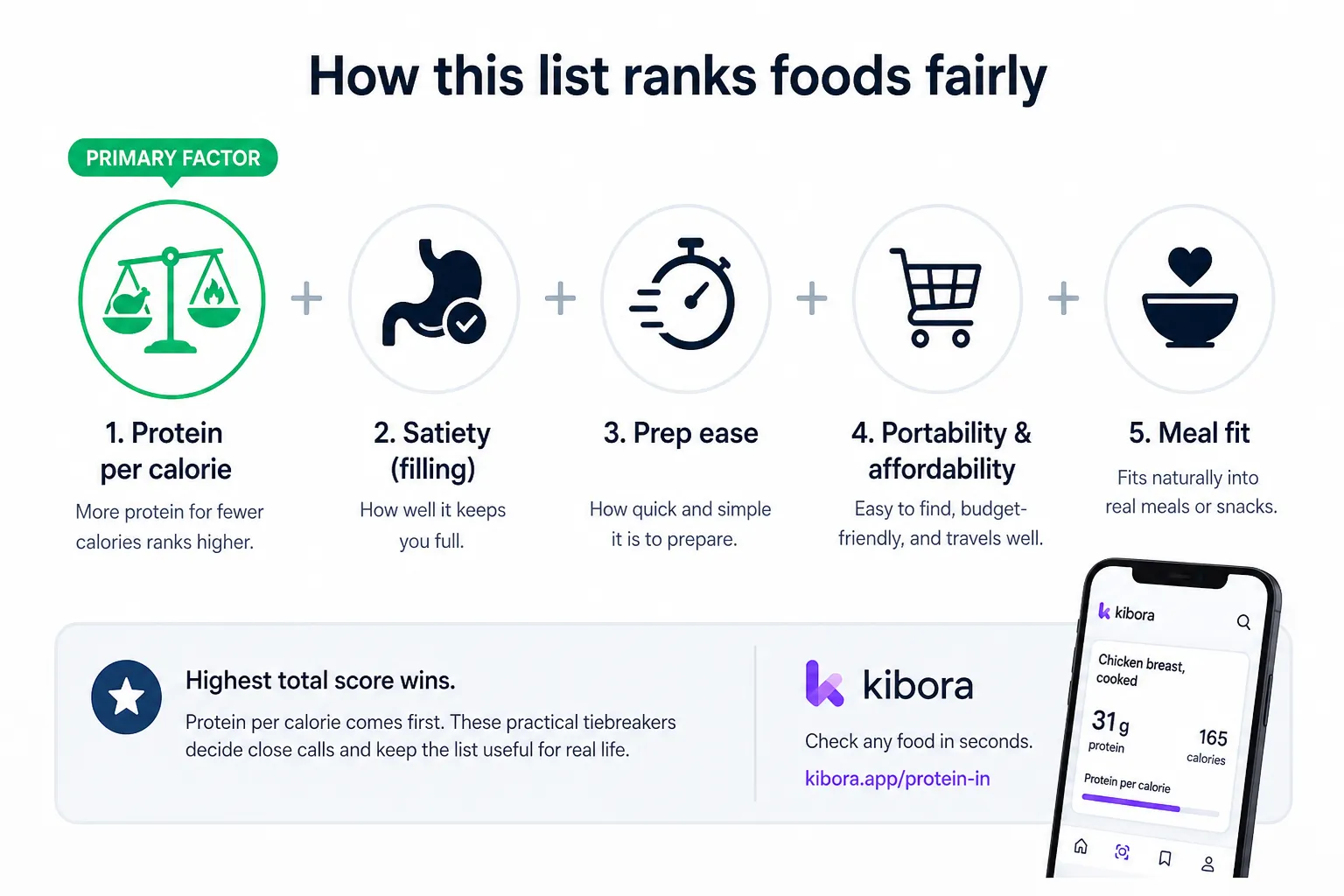
How this list ranks high-protein foods fairly
This ranking starts with protein per calorie, not just protein per serving. That is the cleanest shortcut for comparing foods fairly because it shows whether a food is truly protein-efficient or just served in a large portion.
To keep the comparisons consistent, the numbers are based on standardized forms from USDA FoodData Central: cooked lean meats, canned and drained seafood, cooked legumes, nonfat or low-fat dairy, and clearly identified tofu or tempeh forms. Food form matters. Cooked chicken breast is not the same as fried chicken, and drained tuna is not the same as tuna packed with added oil or sauce.
After protein per calorie, the tiebreakers are practical: how filling the food is, how easy it is to prepare, how affordable and easy to find it is, whether it travels well, and whether it fits naturally into real meals or snacks. That is why this list favors whole or minimally processed foods instead of leaning on protein powders.
A few examples show how this works in practice. Egg whites rank differently from whole eggs because the yolk adds calories from fat. Nonfat Greek yogurt is usually more protein-efficient than full-fat Greek yogurt. Beans and lentils are nutritious and useful, but they usually deliver less protein per calorie than lean fish, chicken breast, or nonfat dairy.
One more caveat: cooking method can change a food’s place on the list fast. Breading, frying, heavy oil, creamy sauces, and full-fat versions can raise calories enough to weaken an otherwise lean option. If you want to check a specific food, compare protein amounts here before you build your meal.
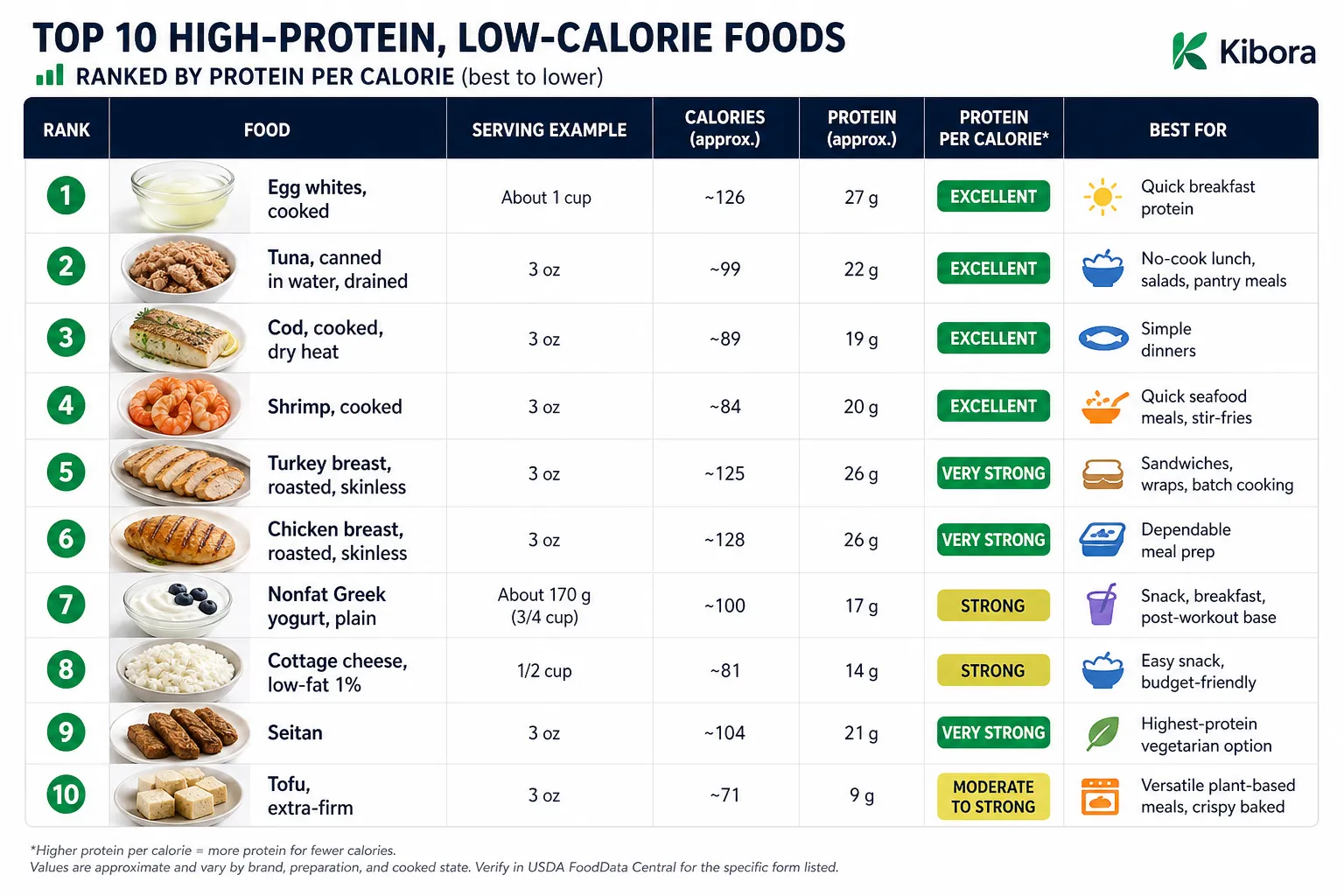
The strongest protein-per-calorie picks
Here are the strongest overall options if your goal is more protein for fewer calories. This ranking favors foods that are lean, easy to use in real meals, and consistently strong on protein density, but exact order can shift a bit based on cooked state, brand, and serving size. Nutrition values should be verified in USDA FoodData Central for the specific form listed.
The most useful high-protein, low-calorie foods are usually lean, water-rich, or low-fat, which is why egg whites, lean seafood, poultry breast, nonfat dairy, and a few plant proteins keep showing up near the top.
- 1. Egg whites, cooked (about 1 cup): roughly 126 calories, 27 g protein. Protein-per-calorie impression: excellent. Best for: quick breakfast protein with very little added fat.
- 2. Tuna, canned in water, drained (3 oz): roughly 99 calories, 22 g protein. Protein-per-calorie impression: excellent. Best for: no-cook lunch, pantry meals, and fast salads.
- 3. Cod, cooked, dry heat (3 oz): roughly 89 calories, 19 g protein. Protein-per-calorie impression: excellent. Best for: best white fish option for simple dinners.
- 4. Shrimp, cooked (3 oz): roughly 84 calories, 20 g protein. Protein-per-calorie impression: excellent. Best for: quick seafood meals and stir-fries.
- 5. Turkey breast, roasted, skinless (3 oz): roughly 125 calories, 26 g protein. Protein-per-calorie impression: very strong. Best for: sandwiches, wraps, and batch cooking.
- 6. Chicken breast, roasted, skinless (3 oz): roughly 128 calories, 26 g protein. Protein-per-calorie impression: very strong. Best for: dependable meal prep. For a deeper breakdown, see this guide to protein in chicken breast.
- 7. Nonfat Greek yogurt, plain (about 170 g or 3/4 cup): roughly 100 calories, 17 g protein. Protein-per-calorie impression: strong. Best for: snack, breakfast, or post-workout meal base.
- 8. Cottage cheese, low-fat 1% (1/2 cup): roughly 81 calories, 14 g protein. Protein-per-calorie impression: strong. Best for: easy snack and budget-friendly protein.
- 9. Seitan (3 oz): roughly 104 calories, 21 g protein. Protein-per-calorie impression: very strong. Best for: highest-protein vegetarian option if you eat gluten.
- 10. Tofu, extra-firm (3 oz): roughly 71 calories, 9 g protein. Protein-per-calorie impression: moderate to strong. Best for: versatile plant-based meals and crispy baked prep.
A few practical notes matter more than tiny ranking differences. Tuna should be packed in water and drained, poultry entries should be skinless and cooked, and tofu can vary a lot by firmness and brand. That is why the best choice is not always the #1 food on paper, but the one you will actually keep in rotation.
If you want a simple rule, start with one pick from each lane: a fast breakfast protein like egg whites or Greek yogurt, a no-cook option like tuna or cottage cheese, and a meal-prep staple like chicken, turkey, shrimp, or cod.
Lean meats and seafood usually give the biggest protein return
Lean animal proteins dominate most protein per calorie rankings for a simple reason: they pack a lot of protein with relatively little fat. Chicken breast and turkey breast are the dependable standards here, while tuna, shrimp, cod, haddock, pollock, and other lean fish often match or even beat them for pure protein efficiency.
A practical rule: lean seafood is often the most calorie-efficient choice, but poultry is usually easier to batch cook and use across multiple meals. That is why canned tuna in water works so well as a pantry staple, shrimp is handy as a fast freezer option, and chicken or turkey breast still wins for meal-prep bowls, wraps, and sandwiches.
White fish also shows the tradeoff clearly. Cod, haddock, and pollock are typically lower in calories than salmon for a similar amount of protein, while salmon brings more fat and nutrients, so it is still a strong food choice, just not always the lowest-calorie one. The Dietary Guidelines for Americans also support including seafood as part of a healthy dietary pattern.
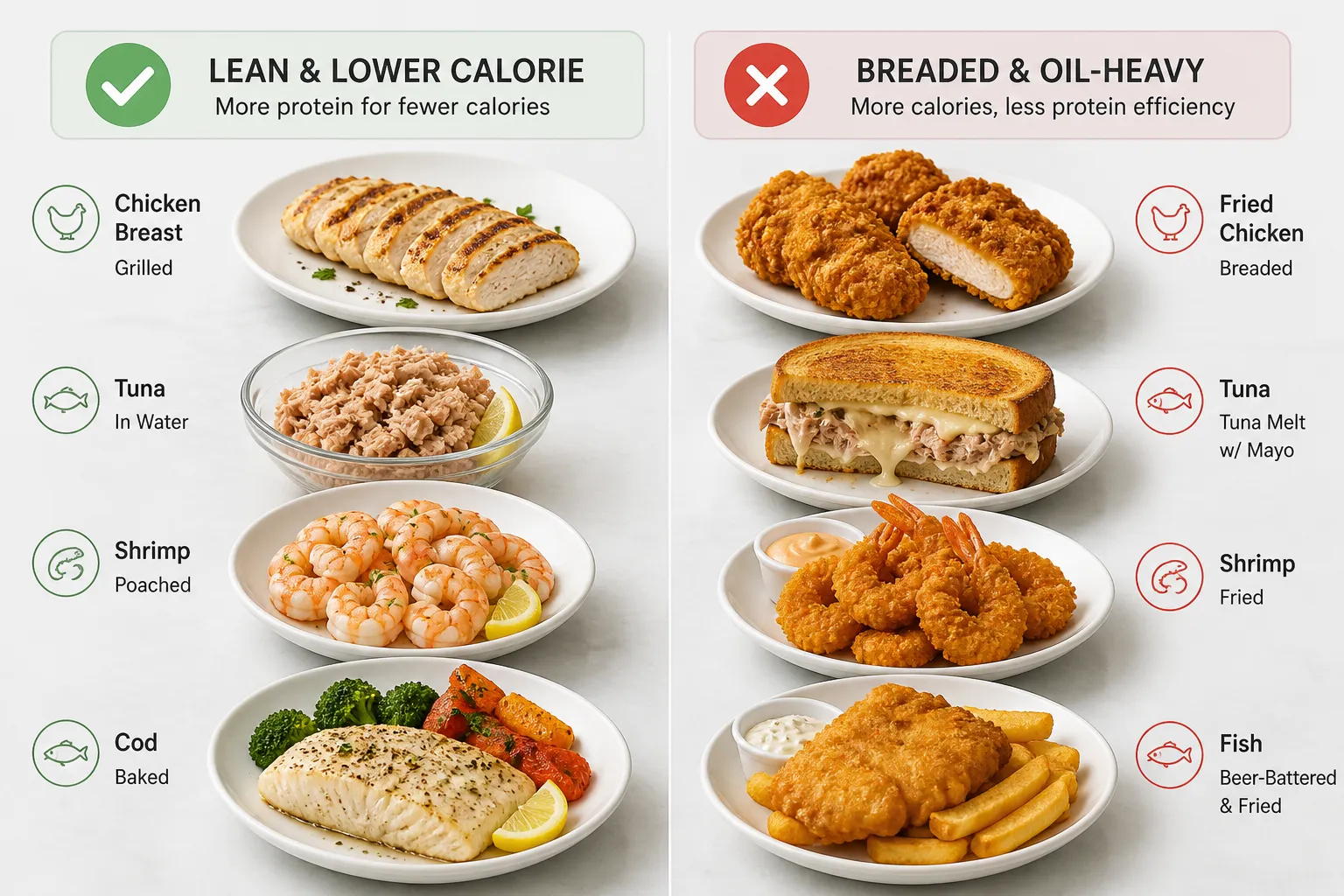
How you cook these foods matters almost as much as which one you buy. Grilled, baked, poached, canned in water, or air-fried versions keep calories lower than breaded, heavily oiled, or deep-fried versions.
- Chicken breast in a grain or salad bowl
- Tuna lettuce wraps or a quick tuna salad
- Shrimp stir-fry with vegetables
- Cod with potatoes and roasted vegetables
- Turkey slices in a high-volume sandwich
Eggs and dairy are powerful, but fat level changes everything
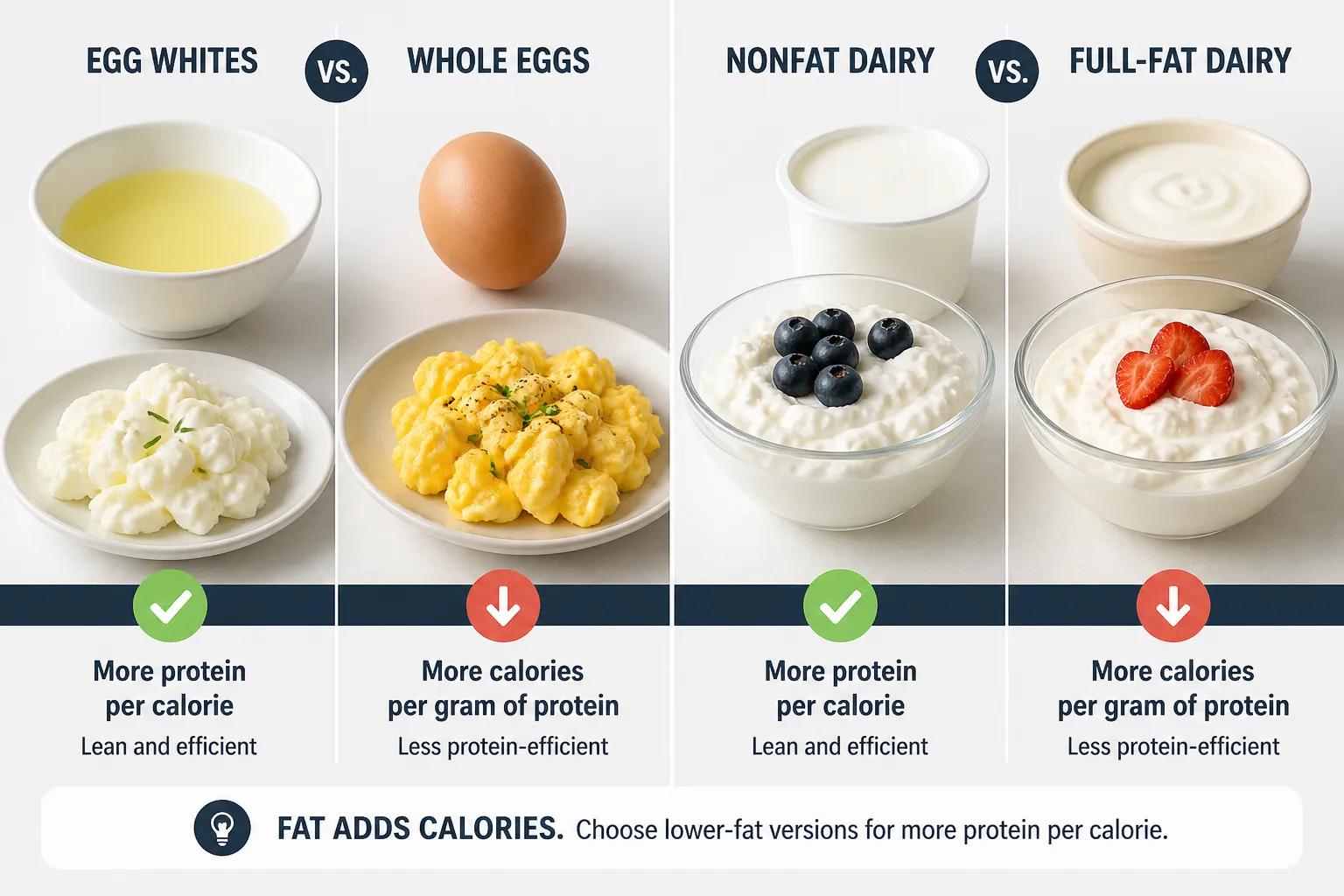
Eggs and dairy can absolutely belong on a list of high protein low calorie foods, but the version you buy matters a lot. Egg whites, nonfat Greek yogurt, and low-fat cottage cheese are usually far more efficient for protein per calorie than whole eggs, full-fat yogurt, or full-fat cottage cheese.
The clearest example is eggs. According to USDA FoodData Central, egg whites give you protein with very few calories, while whole eggs add the yolk’s fat and therefore more calories per gram of protein. If you want a quick reference, this breakdown of egg protein helps show why egg whites rank better for protein density even though whole eggs can still be a solid breakfast food.
The same pattern shows up in yogurt. Nonfat Greek yogurt is usually one of the best lean protein foods for breakfast or snacks because it packs a lot of protein into a relatively small calorie budget, while full-fat Greek yogurt can be satisfying but is less protein-efficient.
Cottage cheese is another food where labels can mislead. A low-fat or reduced-fat version can be a strong snack with fruit or tomatoes, but a full-fat version with the same serving size will usually carry noticeably more calories. With eggs and dairy, the word after the food often matters as much as the food itself.
For practical meal fit, think simple: an egg-white scramble with vegetables, a nonfat Greek yogurt bowl, cottage cheese with fruit, or a yogurt-based sauce in place of something richer. Skim milk can help, too, but it is usually less protein-dense than Greek yogurt or cottage cheese.
The best plant-based options are useful, even when they are not the leanest
Plant-based proteins deserve a fair ranking, not a pity mention. Some are genuinely strong on protein per calorie, while others earn their place because they bring fiber, minerals, and better meal satisfaction, a distinction also supported by Harvard’s guidance on judging protein foods by the full package.
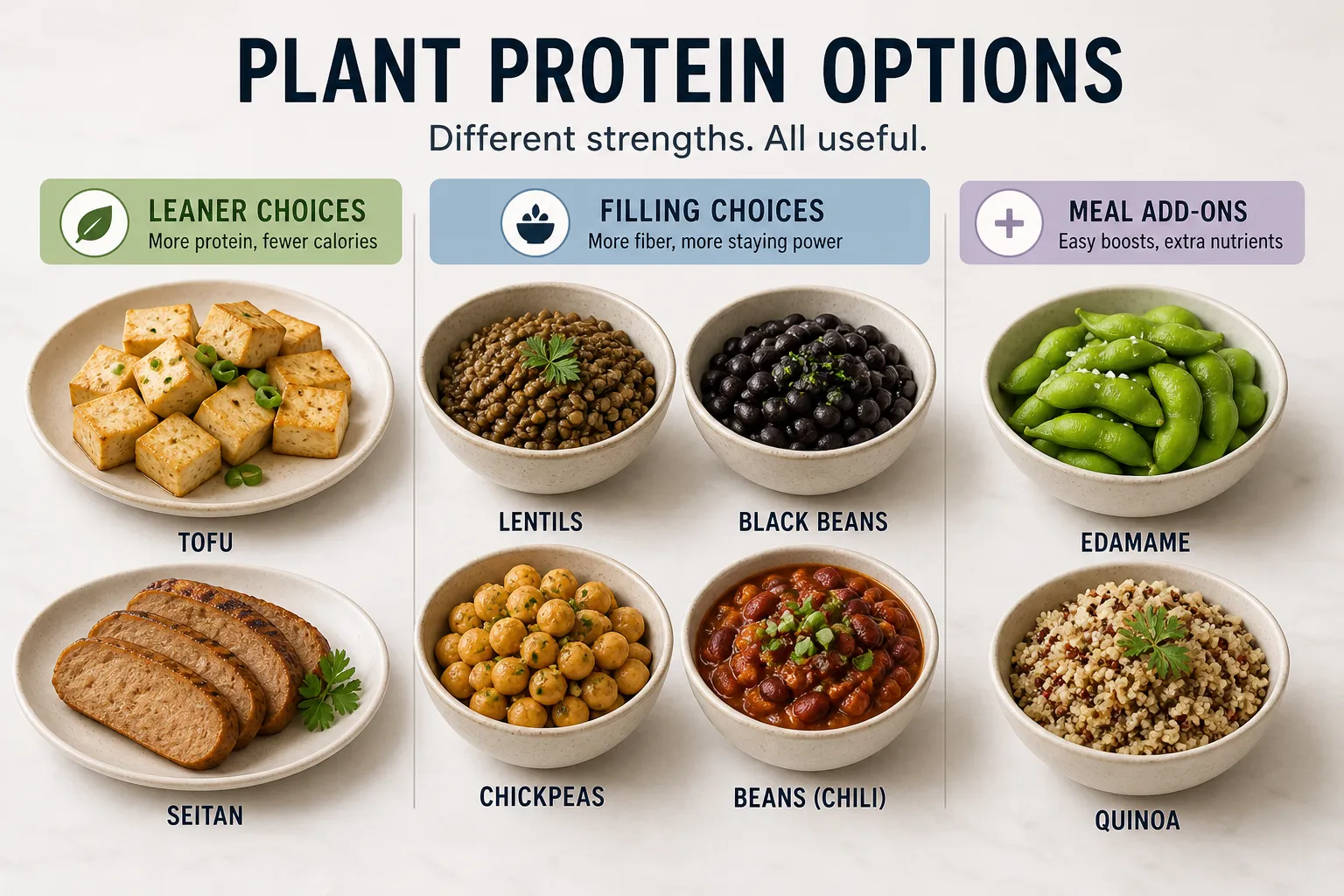
Extra-firm tofu is one of the better plant-based options if calories matter, especially when baked, air-fried, or stir-fried with minimal oil. Compared with beans, tofu usually gives you more protein for fewer calories, which is why it tends to rank higher on a lean-protein list.
Tempeh is a little different. It packs more protein than tofu, but it is also more calorie-dense, so it may rank well for overall nutrition and fullness without landing near the very top for leanness.
Seitan can be one of the most protein-dense plant-based choices for people who tolerate gluten. But edamame, lentils, black beans, chickpeas, and even beans more broadly usually offer a different tradeoff: less protein density, more fiber, and often better staying power in a meal.
Plant proteins often win on the full food package rather than pure protein density: tofu and seitan can be lean, while beans and lentils add fiber and staying power. Quinoa fits here too. It is a useful higher-protein grain, not a top low-calorie protein source.
- Tofu stir-fry with vegetables
- Tempeh lettuce bowls
- Lentil soup
- Bean chili
- Edamame snack plate
High-protein foods that are easier to overrate
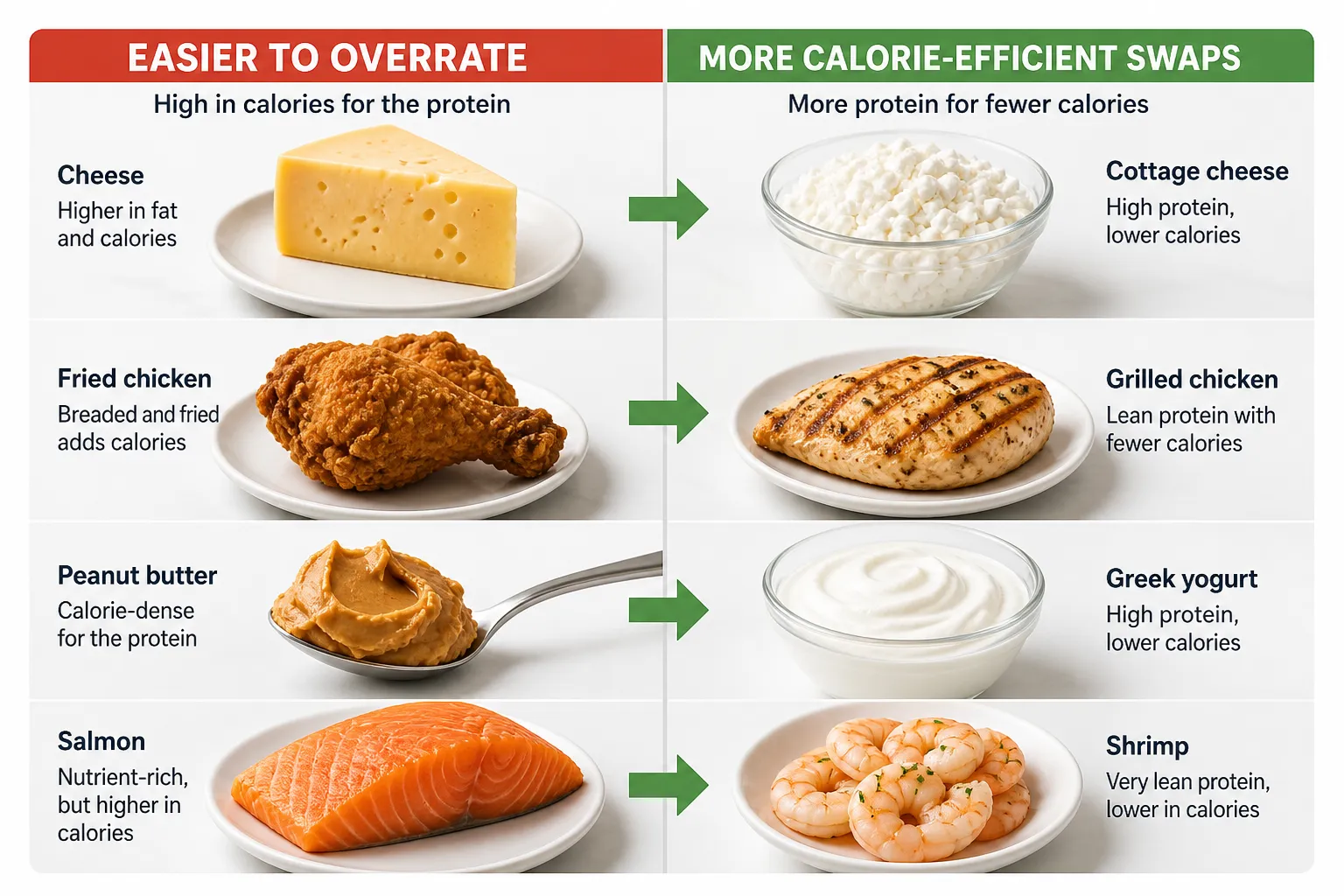
Some foods earn a “high-protein” reputation but still do not rank especially well on protein per calorie. That does not make them bad choices. It just means they are not always the most calorie-efficient pick if your goal is more protein for fewer calories.
High-protein does not automatically mean low-calorie; fat level, cooking method, and serving size decide whether a protein food is actually calorie-efficient. That is why a food can be nutritious, filling, and worth eating without belonging near the top of a lean-protein list.
Cheese is a good example. Many cheeses provide solid protein, but they also bring enough fat that calories rise quickly, especially compared with low-fat cottage cheese or nonfat Greek yogurt. If you want the nuance, this breakdown of protein in cheese helps show why dairy foods can vary so much.
Nuts and nut butters have protein too, but they are mostly fat-dense foods, not lean protein foods. A spoonful of peanut butter is usually much less protein-efficient than a serving of Greek yogurt, even if both sound like “protein snacks.”
Seafood has the same issue. Salmon is nutrient-rich and useful, but it is not as low-calorie as white fish like cod or very lean options like shrimp, largely because fattier fish contain more calories per ounce, according to USDA FoodData Central.
Beans, lentils, chickpeas, and quinoa also deserve context. They contribute protein, but they are better understood as mixed protein-carb foods than pure lean proteins. And once a lean option gets breaded, fried, or coated in creamy sauce, grilled chicken and fried chicken stop being comparable foods in calorie terms.
Build meals around one lean protein, then add volume
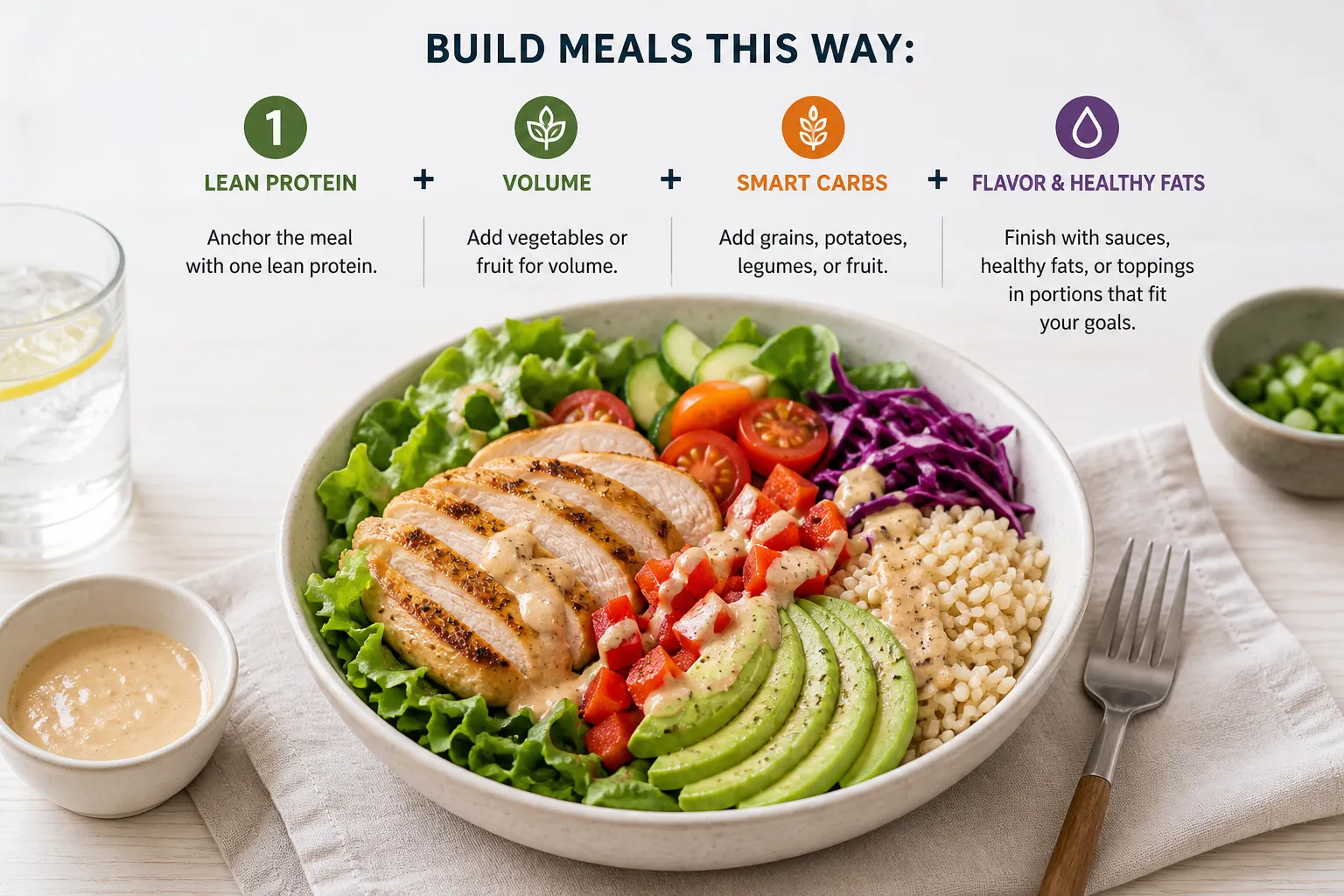
The simplest way to use high protein low calorie foods is not to eat plain lean protein all day. It is to anchor the meal with one lean protein, add vegetables or fruit for volume, then include grains, potatoes, legumes, or sauces in portions that match your goals.
A healthy dietary pattern includes a variety of protein foods.
That variety matters, and it aligns with the Dietary Guidelines for Americans. Chicken can work, but so can shrimp, cod, tuna, Greek yogurt, cottage cheese, tofu, tempeh, beans, and lentils. Rotating them makes meals easier to stick with and usually more balanced.
The easiest meal formula is protein anchor plus volume: start with a lean protein, add produce or fiber-rich foods, then spend calories deliberately on carbs, fats, and sauces. A chicken breast can become a rice bowl, chopped salad, wrap, or broth-based soup without changing the basic framework.
- Breakfast: egg-white scramble with vegetables, nonfat Greek yogurt with berries, or cottage cheese with fruit.
- Lunch: tuna salad lettuce wraps, a chicken bowl with rice and vegetables, or a tofu vegetable stir-fry.
- Dinner: shrimp tacos with slaw, cod with potatoes and vegetables, turkey chili, or a tempeh grain bowl.
- Snacks: Greek yogurt, cottage cheese, tuna packets, edamame, turkey slices, or hard-boiled eggs if they fit your day.
Sauces and fats can make lean protein much more satisfying, but they add up fast. A spoon of peanut sauce, olive oil, mayo, pesto, or ranch can be worth it, just add it on purpose instead of letting it quietly double the meal’s calories.
If you want a simple next step, this guide on balancing macros in real meals can help you turn the list into plates you will actually want to eat.
Choose the option you’ll actually use
If your goal is maximum protein per calorie, start with egg whites, lean seafood, poultry breast, nonfat Greek yogurt, low-fat cottage cheese, and a few efficient plant options. That ranked list is useful, but it is only the first filter.
Use protein per calorie to narrow your choices, then use preference and meal fit to make them sustainable. The best high-protein, low-calorie foods are the ones you will buy, prep, and eat consistently without making meals feel repetitive or joyless.
A practical shortlist is usually enough. Pick three to five go-to proteins that cover your usual routine: Greek yogurt for breakfast, chicken or tofu for lunch, shrimp or white fish for dinner, and cottage cheese or edamame for snacks.
That also leaves room for foods that are not always the leanest choices but still make sense in real meals, like salmon, beans, lentils, and full-fat dairy. A smart approach is to rotate options across meat, seafood, dairy, eggs, and plants so you can balance efficiency, taste, budget, and sustainability without over-optimizing every bite.


