- What you'll learn
- How protein affects hunger and why it can make a calorie deficit easier to maintain
- What satiety means and why protein tends to keep meals satisfying for longer
- Why the thermic effect of protein matters, but only as a small bonus
- How protein helps preserve lean mass during weight loss, especially with resistance training
- How much protein is a practical target for many people trying to lose weight
- When to be careful with higher protein intake, especially if you have kidney disease
You can eat a meal that looks “healthy” and still be hungry an hour later. That gap is where protein often matters most: compared with a snack-style meal, one built around a clear protein source, fiber-rich carbs, and produce tends to feel more satisfying and easier to stick with.
That does not mean protein magically causes fat loss. Protein can support weight loss by improving fullness, slightly raising the energy cost of digestion, and helping preserve muscle in a calorie deficit, but it works best when it makes the deficit easier to live with. Calories, meal quality, training, and individual context still shape the result.
Protein helps most when hunger is what breaks the diet
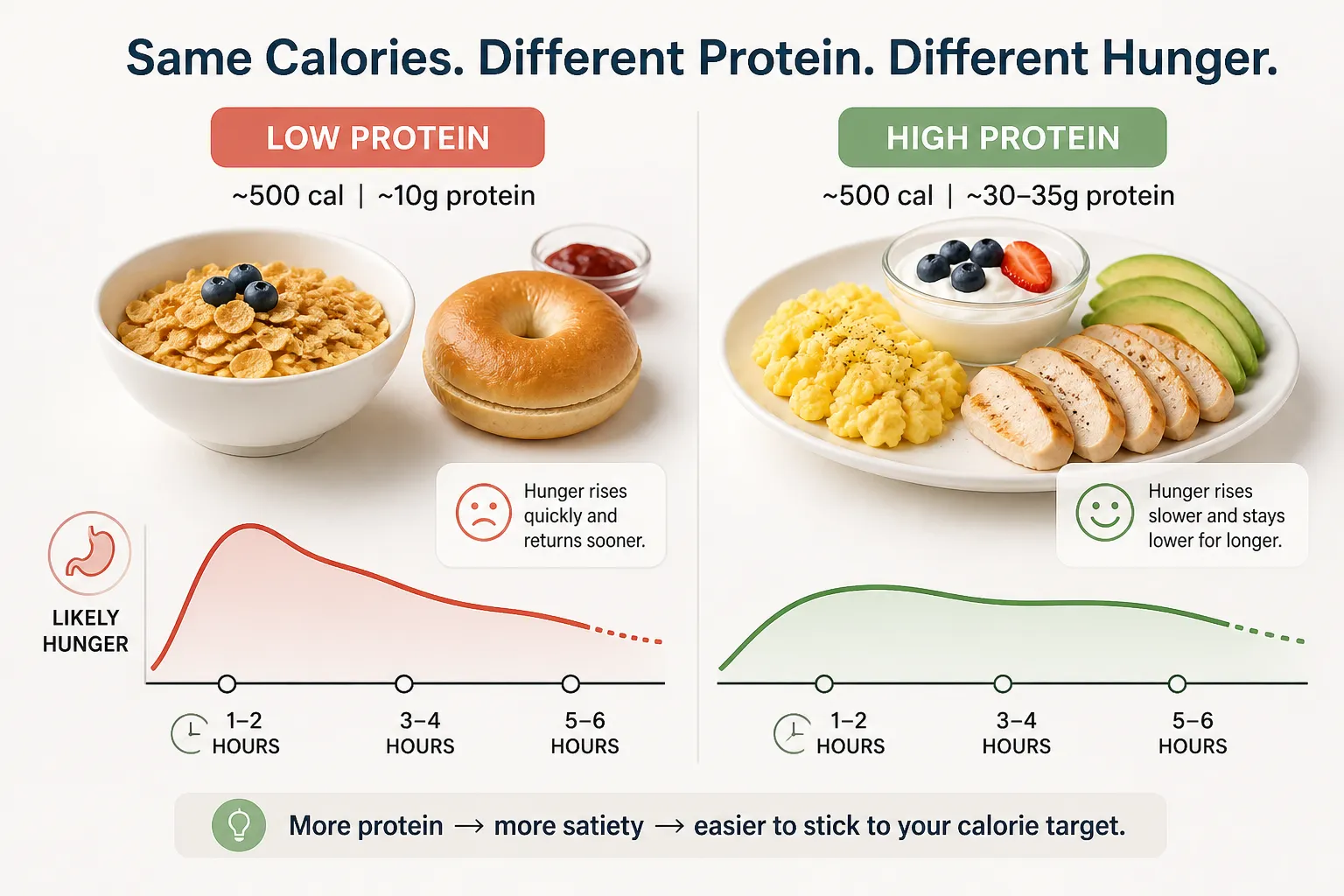
Yes, protein can reduce hunger for many people. But its weight-loss value usually comes from behavior, not a direct fat-burning effect: if meals are more filling, people may eat fewer calories without feeling as restricted. Research reviews suggest higher-protein eating patterns often increase satiety and can reduce spontaneous energy intake, with modest benefits for weight loss in some cases (PubMed: protein and satiety) (PubMed: high-protein diets and weight loss).
This matters because hunger is one of the main reasons calorie targets fail. Protein does not replace a calorie deficit; it can make the deficit less hungry. That is a small but important difference, especially for people who can follow a plan for a few days but struggle once appetite ramps up.
A simple example is breakfast. A meal built mostly from refined carbohydrates may leave someone hungry again fairly quickly, while a breakfast that includes eggs, Greek yogurt, tofu, fish, lean meat, or legumes plus fiber often feels more satisfying and may make the next eating decision easier.
The effect is useful, but it is not magic. If total intake still stays above what the body uses, more protein will not cancel that out.
Appetite also varies from person to person. Sleep, stress, meal composition, food environment, and personal preference all shape how full a meal feels, which is why some readers may also relate to why healthy meals can still leave you hungry.
Why protein keeps you fuller than most calories
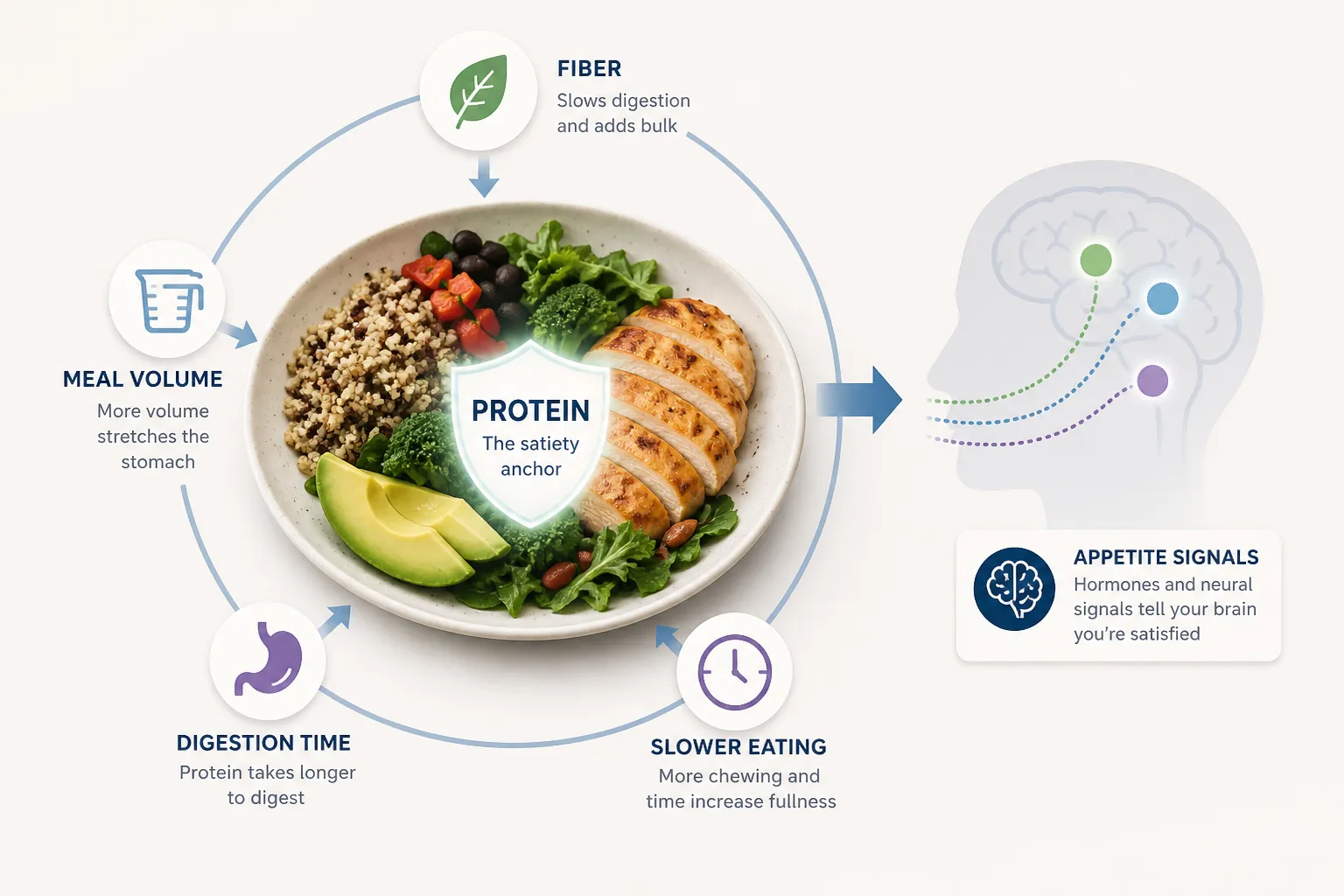
Satiety means the feeling of fullness after eating, but it is not just about having a full stomach. It is part of a larger fullness system that includes digestion speed, brain signals, appetite hormones, meal texture, food volume, and even what you expected the meal to do.
Protein tends to support that system better than many other calories. Research reviews suggest higher-protein meals can increase fullness and may help reduce later energy intake for some people, though the effect varies by person and by meal context according to the evidence base.
Part of the reason is simple: protein-rich foods often take longer to digest and can produce stronger “meal is still being processed” signals. That does not mean protein flips one hunger switch. It works through several overlapping pathways, which is why the same grams of protein can feel very different in real life.
A protein shake by itself can help, but it often feels less satisfying than a meal with chicken, tofu, yogurt, or eggs plus beans or whole grains, vegetables, and some fat. Protein is more filling when it is part of a satisfying meal, not just added as a number on a label.
This is also why a highly processed protein snack may not control hunger as well as a minimally processed meal with similar protein. For appetite, protein usually works best when the rest of the plate also adds fiber, chewing, volume, and a slower eating experience.
The calorie-burning effect is real, but easy to overstate
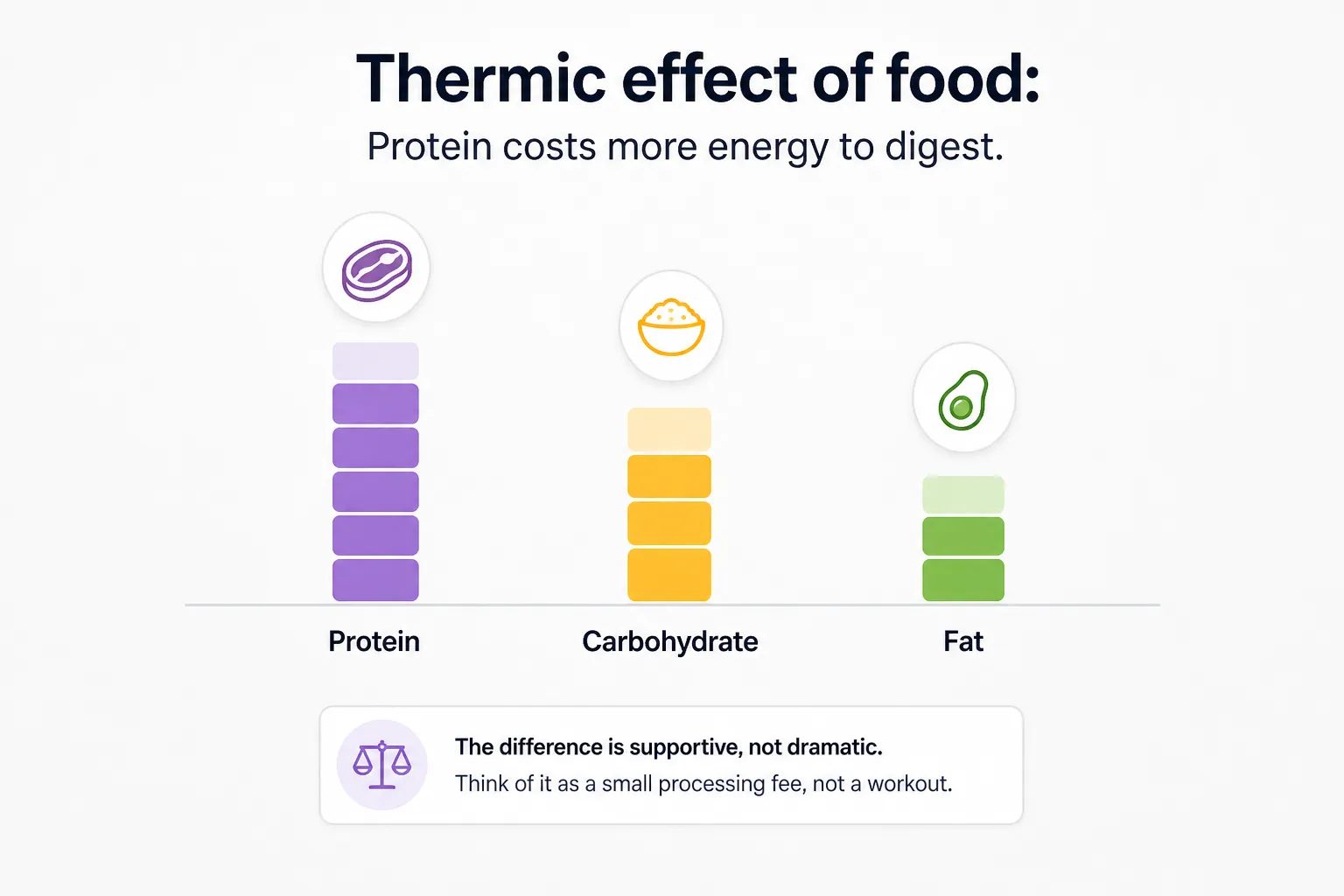
Your body does use energy to digest, absorb, and process food. That is called the thermic effect of food, and protein creates a bigger “processing cost” than carbohydrate or fat.
The thermic effect of protein is higher than that of carbohydrate and fat.
The basic mechanism is real, and the NIH Office of Dietary Supplements notes this clearly. A more accurate way to say it is that protein costs more energy to digest, not that protein “burns fat.”
In practice, this can nudge total daily energy expenditure a bit higher when protein replaces some lower-protein calories. Think of it like a small processing fee, not a workout. You still have to be in a calorie deficit to lose body fat, which is why calories still matter even when food quality changes how hungry you feel.
Protein’s thermic effect is a metabolic nudge, not a metabolic loophole. It can support weight loss around the edges, but it is not large enough to erase overeating or make “unlimited protein” a smart strategy.
That perspective matters because the main reason protein helps with weight loss is usually appetite and adherence. The thermic effect is best treated as a useful bonus, not the headline benefit.
Protein protects the weight you want to keep
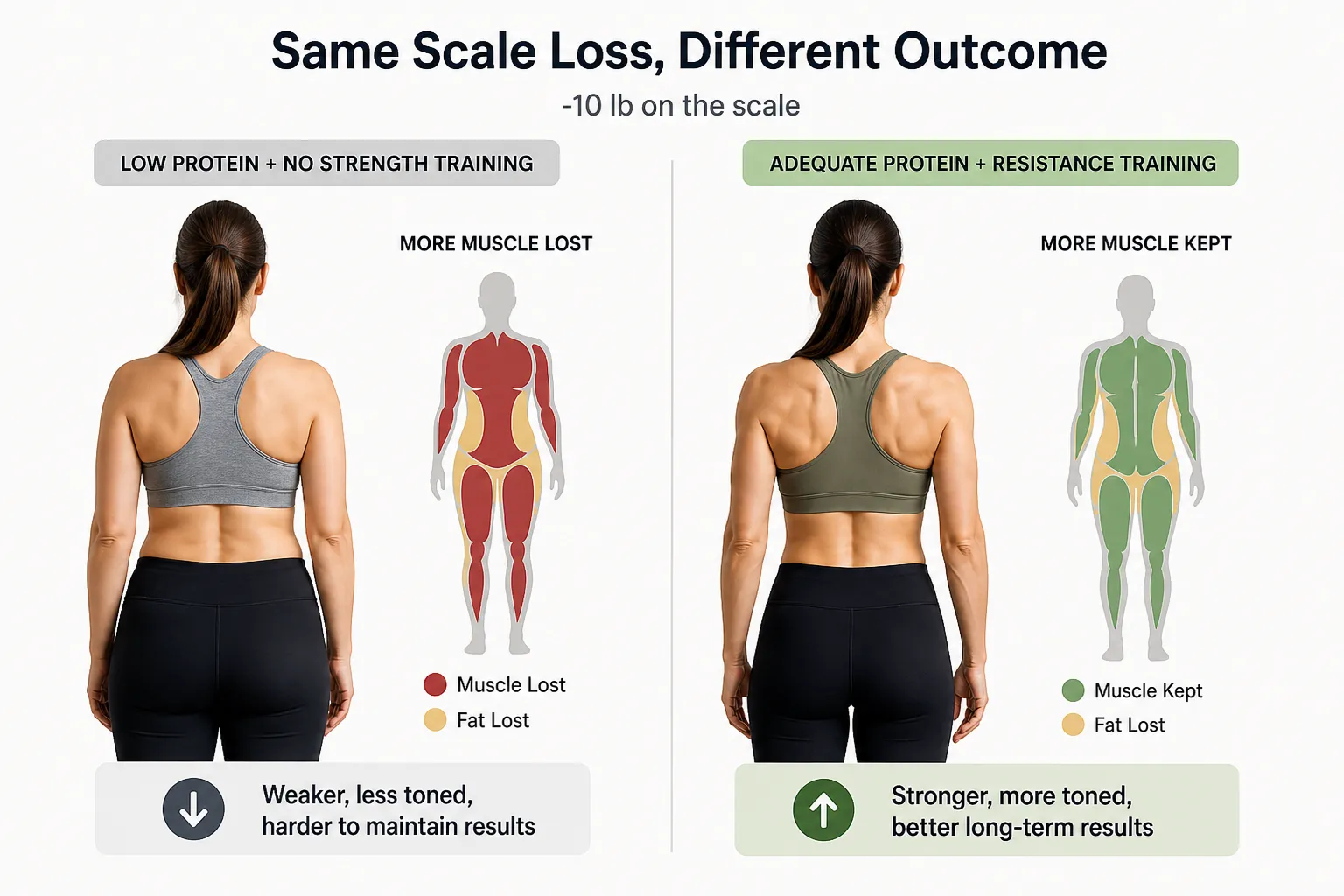
Scale weight does not tell the whole story. During weight loss, you can lose fat, water, and lean mass, and the usual goal is to push that loss toward fat while keeping as much muscle as possible.
That is why same scale loss, different outcome matters. Two people can both lose 10 pounds, but the one who keeps more lean tissue will usually come out stronger, more functional, and better positioned for long-term weight maintenance.
Protein helps here most when calories are reduced. Research and position stands from the Academy of Nutrition and Dietetics, Dietitians of Canada, and ACSM and later sports nutrition consensus literature support higher protein intake during training and calorie restriction to help preserve muscle-related tissue.
Resistance training strengthens this effect because muscle needs two things: a reason to stay, and the raw materials to do it. Training provides the signal, and protein provides amino acids. One without the other is less effective.
The best weight-loss plan is not just the one that lowers weight; it is the one that helps you lose more fat and less muscle. That tradeoff affects strength, daily function, resting energy use, and how your results look and feel, not just what the scale says.
This is especially important for older adults, who tend to be more vulnerable to losing muscle during a calorie deficit. If your main goal is building muscle rather than managing weight, see our guide on how much protein to build muscle.
How much protein is enough for weight loss?
The RDA for protein is a useful floor, not always the best target for dieting. The current RDA is 0.8 grams per kilogram of body weight per day, which is meant to prevent deficiency in most healthy adults, not necessarily to optimize satiety, training recovery, or muscle retention during a calorie deficit, according to the NIH Office of Dietary Supplements.
That is why, for weight loss, the better question is often not “What is the bare minimum?” but “What amount helps me stay full while preserving lean mass?” For many adults trying to lose weight, a practical range is about 1.2 to 1.6 g/kg/day. People who are very active, very lean, or in a more aggressive dieting phase sometimes use more than that with appropriate guidance, especially when resistance training is part of the plan, which aligns with sports nutrition guidance from the Academy of Nutrition and Dietetics, Dietitians of Canada, and ACSM.
If kilograms are not intuitive, the quick conversion is simple: body weight in pounds divided by 2.2 equals kilograms. So a 176-pound person weighs about 80 kilograms, and a 1.2 to 1.6 g/kg target would land around 96 to 128 grams of protein per day.
Some groups should pay closer attention. Older adults often benefit from higher protein intakes than younger adults because maintaining muscle becomes harder with age, a point reflected in geriatric nutrition guidance such as consensus recommendations for older adults. People with kidney disease or other medical conditions should not guess their target and should follow advice from their clinician.
How to spread protein through the day
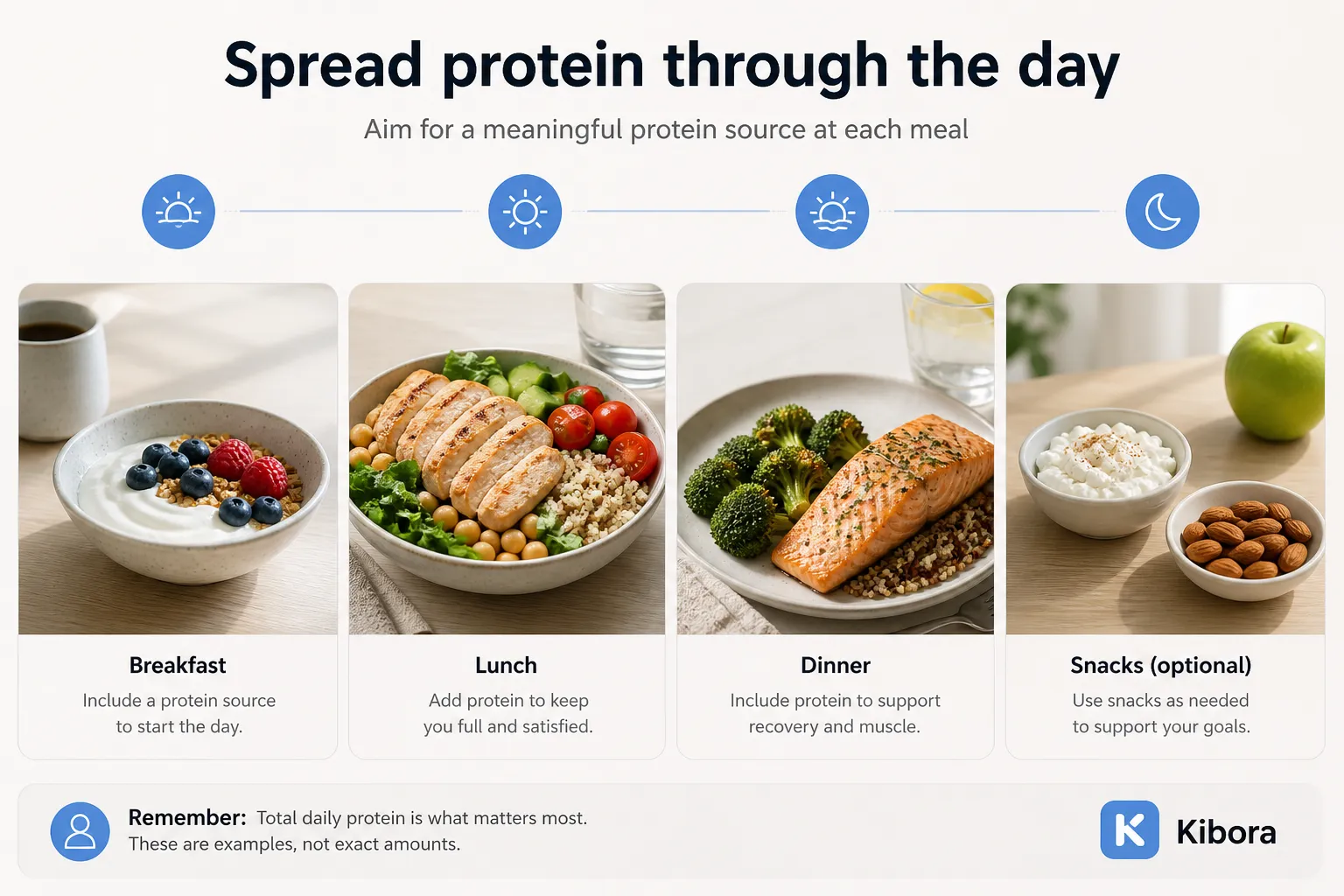
Meal timing matters less than total daily intake, but distribution can still help. Spreading protein across meals may improve fullness and support muscle protein synthesis, while eating very little protein all day and most of it at dinner is often less practical.
A simple pattern is to include a meaningful protein source at breakfast, lunch, and dinner, then adjust snacks as needed. That might look like eggs or yogurt in the morning, chicken or tofu at lunch, and fish, beans, or lean meat at dinner, without chasing a supposedly perfect grams-per-meal rule.
Your best intake depends on body size, activity, age, total calories, how aggressive the diet is, and medical history. If you want a realistic way to monitor intake without obsessing over every number, this guide on how to track macros can help you spot patterns and make small adjustments.
A higher-protein diet still has to be a good diet
Hitting a protein number is not the same as eating well. A protein target helps most when the foods used to hit it also make the diet more filling, nutritious, and repeatable.
Protein source matters, but not in a simplistic animal-good, plant-bad way. Animal foods can provide high-quality protein, and plant foods like soy, tofu, tempeh, and especially legumes can support fullness while also adding fiber and other nutrients, which matters for both appetite and long-term diet quality. Harvard’s protein overview emphasizes looking at the whole eating pattern, not just the macro.
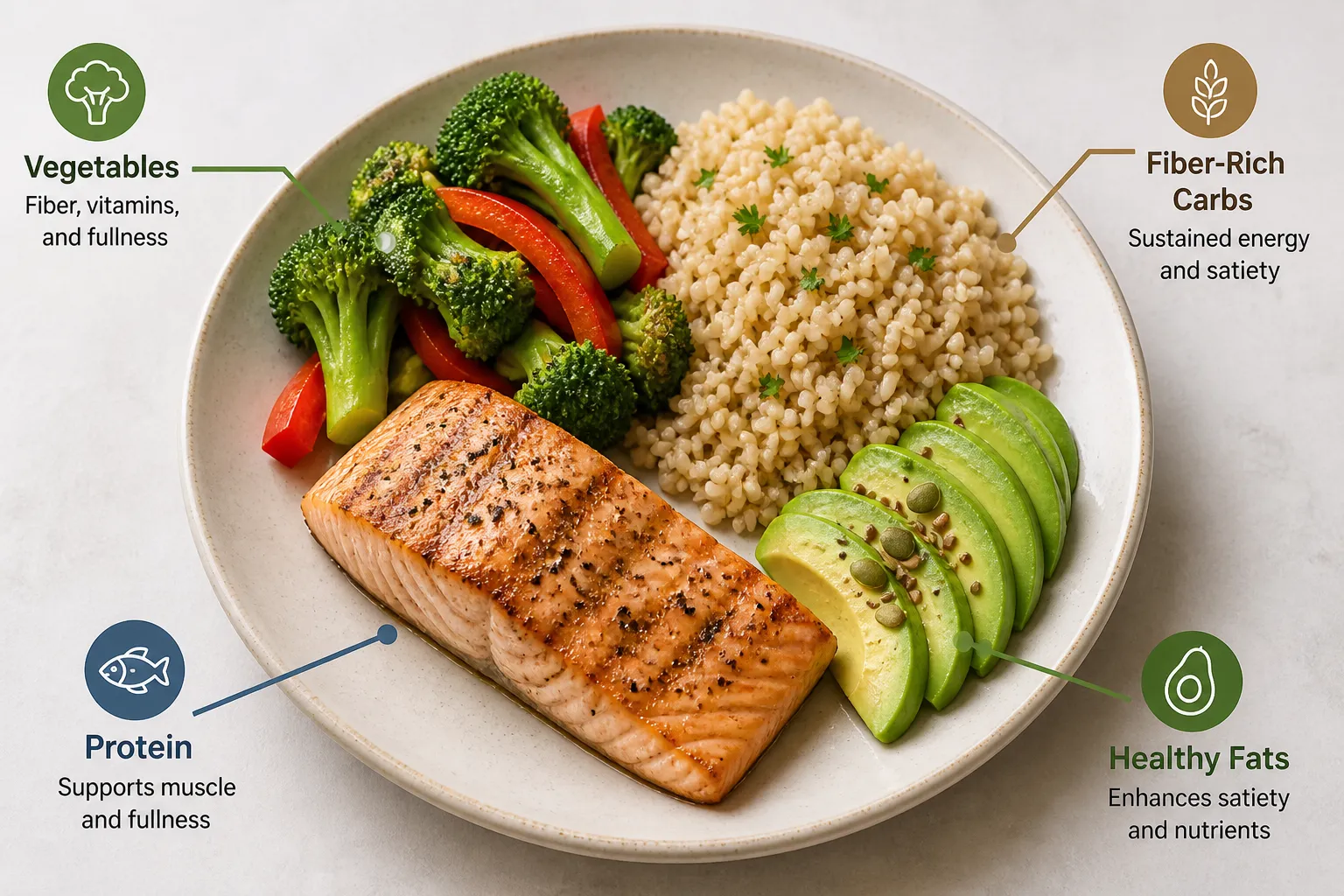
Meal composition changes how satisfying protein feels in real life. A plate with salmon or tofu, vegetables, and potatoes or rice will usually do more for fullness than a protein bar eaten quickly while distracted, even if the grams look similar on paper.
That does not make bars or powders bad. They can be useful when convenience is the main problem, but they are optional tools, not a requirement for weight loss, and they do not automatically improve satiety if the rest of the diet is low in fiber or easy to overeat.
Highly processed high-protein foods can also create macro tunnel vision. If adding more protein mostly means extra calories, less produce, and fewer minimally processed foods, hunger may not improve much and adherence can get worse.
A practical approach is to build meals around protein plus fiber-rich carbs, produce, and satisfying fats, then adjust portions to fit your calorie needs. If you want help comparing options, this guide to protein amounts in common foods can make meal planning easier.
Who should be careful about increasing protein
Higher protein is a nutrition strategy, not a universal prescription. For many healthy adults, increasing protein can be a practical way to improve fullness and support weight-loss adherence. But it is not something everyone should self-prescribe, especially if you have a medical condition or a complicated health history.
The clearest example is chronic kidney disease. Protein needs can differ by disease stage, lab values, and whether someone is on dialysis, so a “high-protein diet” that fits one person may be inappropriate for another. The National Kidney Foundation and the NIDDK both recommend individualized nutrition guidance for people with kidney disease.
That does not mean protein is harmful for everyone with kidney concerns, and it does not mean people should avoid protein altogether. It means the right amount depends on the person, the condition, and the treatment plan.
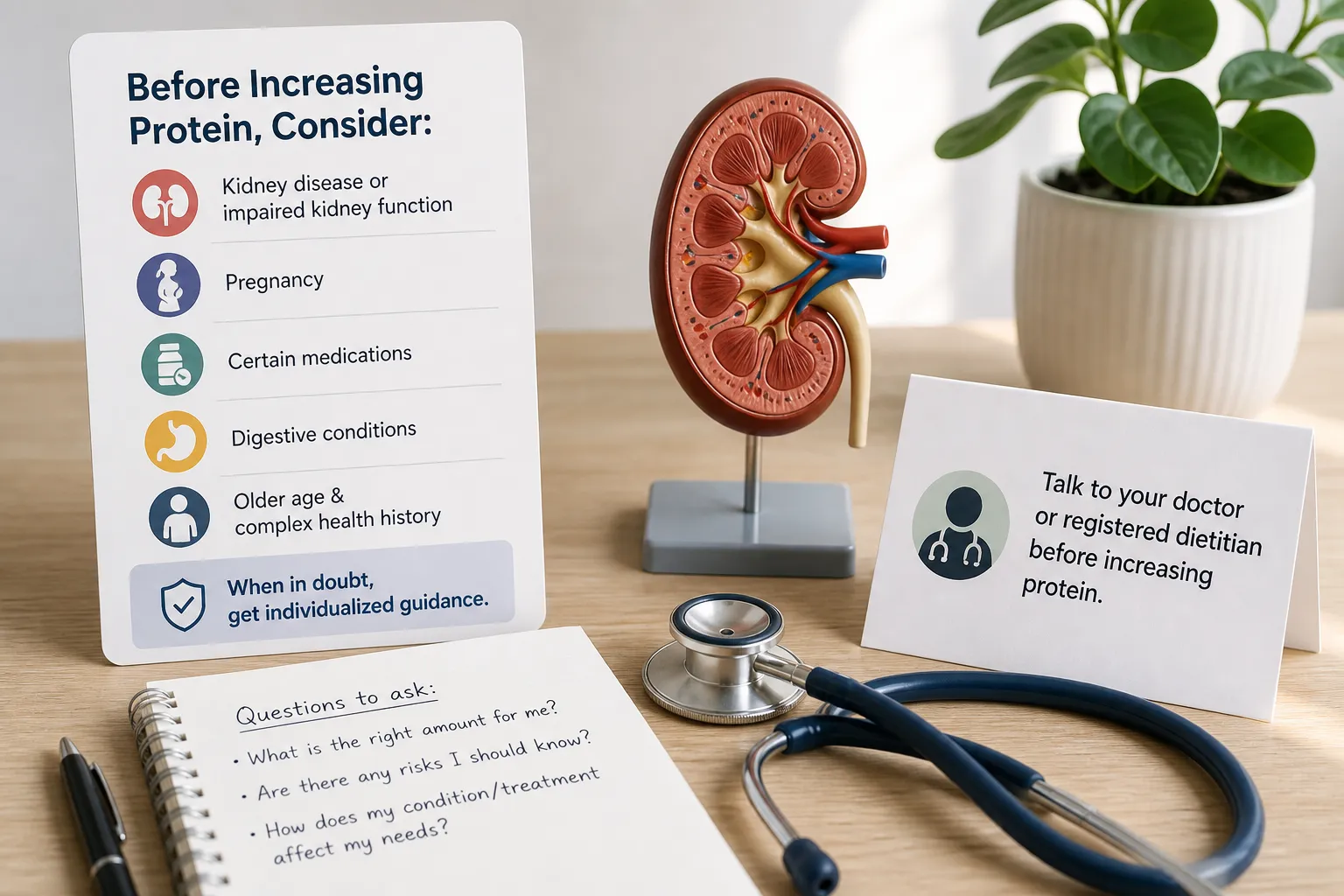
Other situations can also change protein needs, including pregnancy, older age, certain medications, digestive conditions, and complex medical histories. If any of those apply to you, talk with a physician or registered dietitian before making a major protein increase.
A simple rule: if you have diagnosed kidney disease, advanced kidney impairment, or another relevant medical condition, get individualized guidance instead of following general high-protein advice from the internet.
Use protein as a lever, not a loophole
Protein is most useful when it helps you stay fuller on fewer calories and hold onto lean mass while losing weight. That makes it a tool for adherence and body composition, not a shortcut around the need for a calorie deficit.
The best protein target is the one that supports fullness, muscle retention, and consistency without crowding out the rest of a healthy diet. In practice, that usually means pairing protein with fiber-rich foods, keeping calories reasonable, and adding resistance training when you can.
More is not automatically better, and the right amount depends on your appetite, body size, activity, age, and preferences. A sustainable plan beats a perfect one you cannot repeat.
Start with one simple audit: look for the meal after which hunger comes back fastest, then test a higher-protein version of that meal for a week. If protein helps you feel satisfied, preserve lean mass, and stick with your plan more easily, it is doing exactly what it should.
- Key sources
- NIH Office of Dietary Supplements: Protein Fact Sheet for Health Professionals
- Academy of Nutrition and Dietetics, Dietitians of Canada, and ACSM Position Stand on Nutrition and Athletic Performance
- American College of Sports Medicine / sports nutrition consensus literature on protein for training and recovery
- Systematic review/meta-analysis on protein intake, satiety, and energy intake
- Systematic review/meta-analysis on higher-protein diets and weight loss
- European Society for Clinical Nutrition and Metabolism or similar geriatric protein guidance
- Harvard T.H. Chan School of Public Health: Protein overview
- National Kidney Foundation: Protein and CKD guidance
- NIDDK nutrition guidance for kidney disease