- What you'll learn
- Why calorie counting is useful for energy balance but still incomplete in real life
- How protein, fiber, and food volume change fullness at the same calorie level
- Why ultra-processed, low-fiber, and energy-dense foods can make overeating easier
- How sleep, caffeine, alcohol, and meal timing affect hunger and consistency
- Where calorie tracking is most vulnerable to estimation errors and tracking fatigue
- How to use calories as a boundary check while tracking the factors that drive adherence
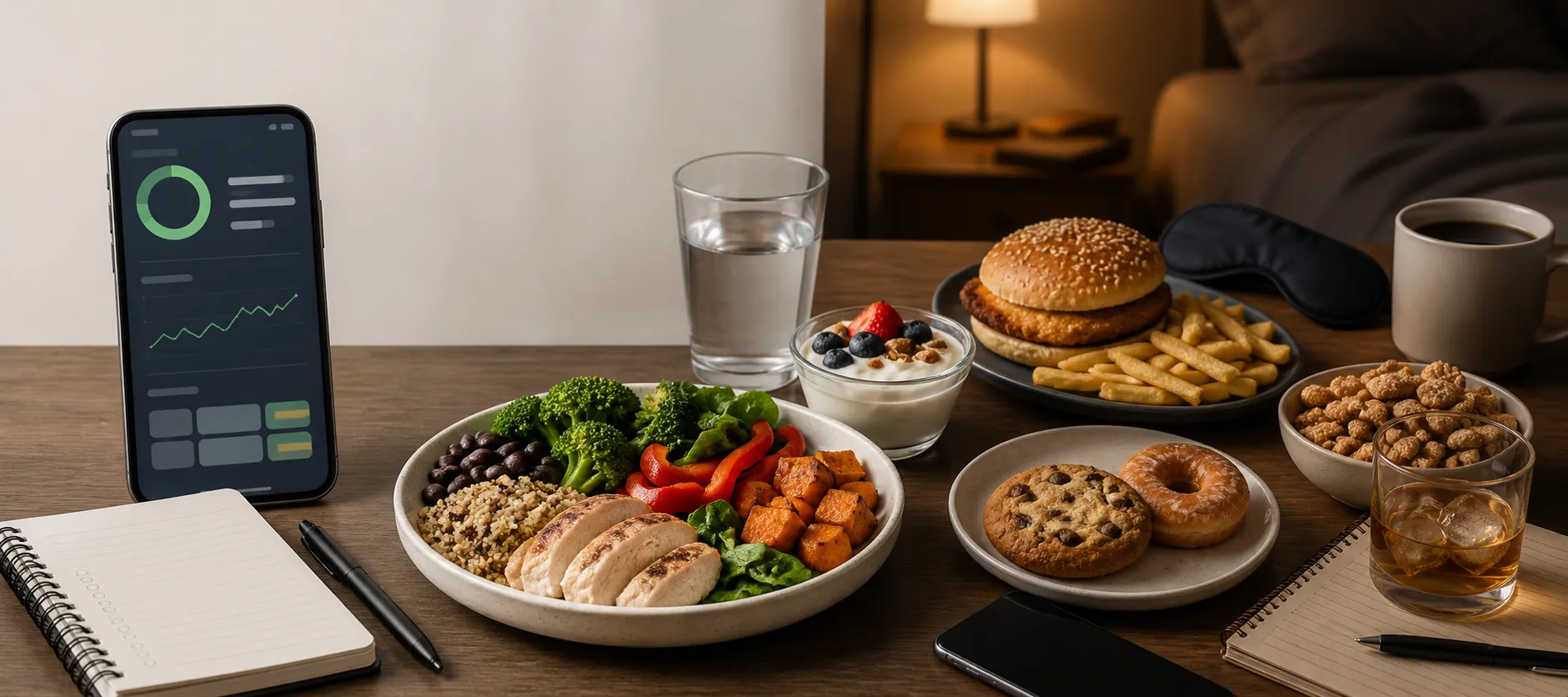
Calorie counting is not fake science. The problem is that people treat it like it can answer questions it was never built to answer. If your number looks right but the diet still falls apart because of hunger, cravings, poor sleep, low energy, weekend alcohol, low protein meals, or plain logging fatigue, that is not a mystery.
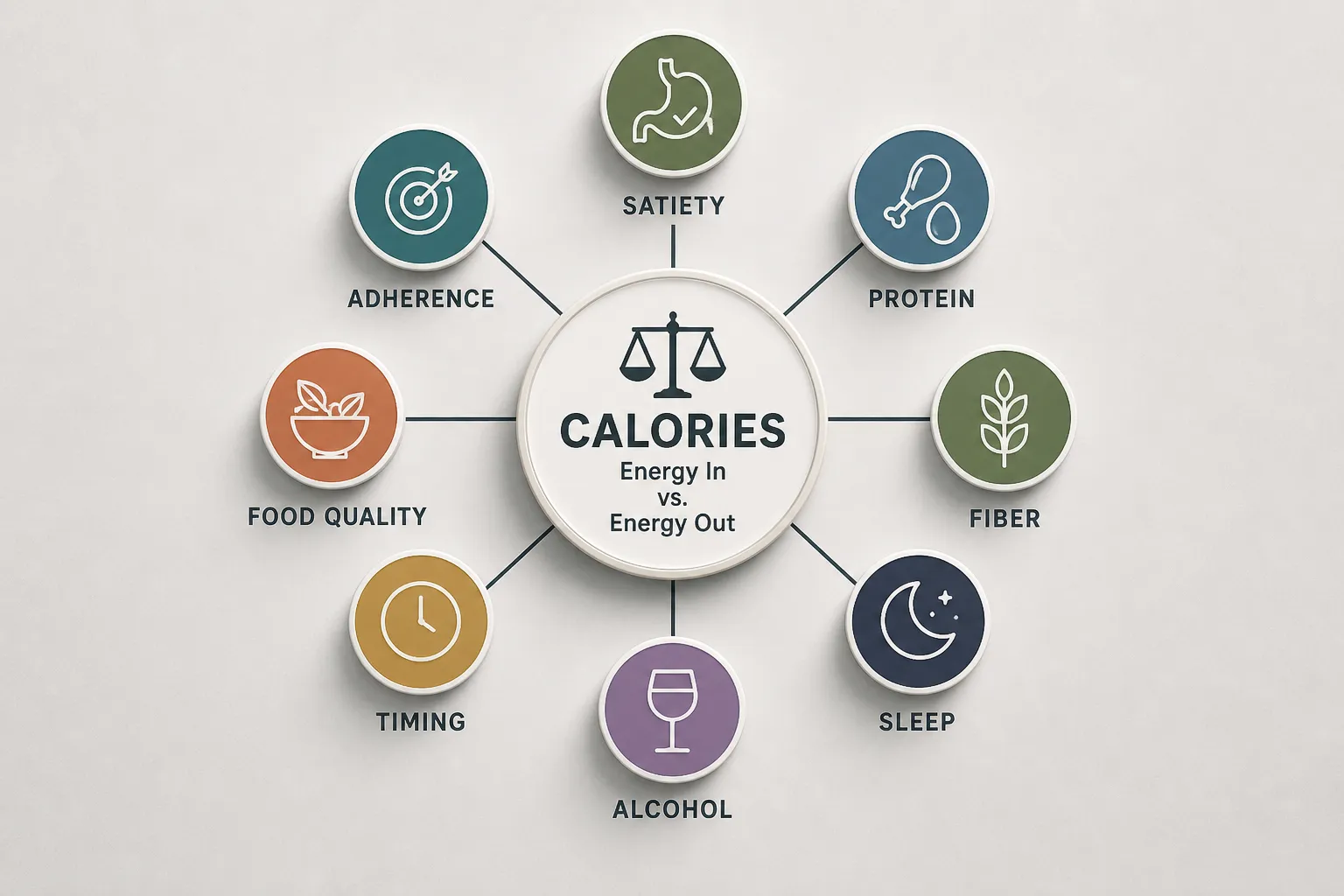
Calories are the accounting system of weight change, not the full experience of eating. A 500 calorie meal of lean protein, potatoes, and vegetables can feel very different from 500 calories of chips and a sweet drink, and you can still hit your target and be starving by 9 p.m. Counting calories isn't enough because it can be technically correct and still practically incomplete.
Calories answer one question, not every question
Calories are not fake, optional, or diet culture propaganda. They are a measure of energy, and over time body weight is tied to energy balance. That is the part many calorie skeptics get wrong.
But calorie devotees often make the opposite mistake. They act like the calorie number explains everything, when it really answers one narrower question: how much energy you ate, relative to what your body uses over time.
That still matters a lot. Counting calories can reveal patterns, portion creep, liquid calories, and the gap between what you thought you ate and what you actually ate. It can also be a useful reality check if your goal is fat loss, maintenance, or gain.
What it cannot tell you is why one plan feels easy and another feels unbearable. A calorie target does not directly measure satiety, nutrient density, cravings, sleep quality, gym performance, or whether your eating pattern is realistic enough to repeat next week.
Picture two people both aiming for the same daily intake. One builds meals around protein, higher-fiber foods, and decent timing, so they stay reasonably full. The other hits the same calories with snack-heavy meals and long gaps between eating, so they feel distracted, hungry, and primed to overeat later.
The calorie number tells you how much energy you ate; it does not tell you how hard that intake will be to sustain. That is the real limitation of counting calories.
So yes, use calories as a constraint. Just do not mistake the constraint for a complete strategy. And if even the logging process keeps breaking down, this breakdown of why calorie tracking gets hard explains the friction better than blaming yourself.
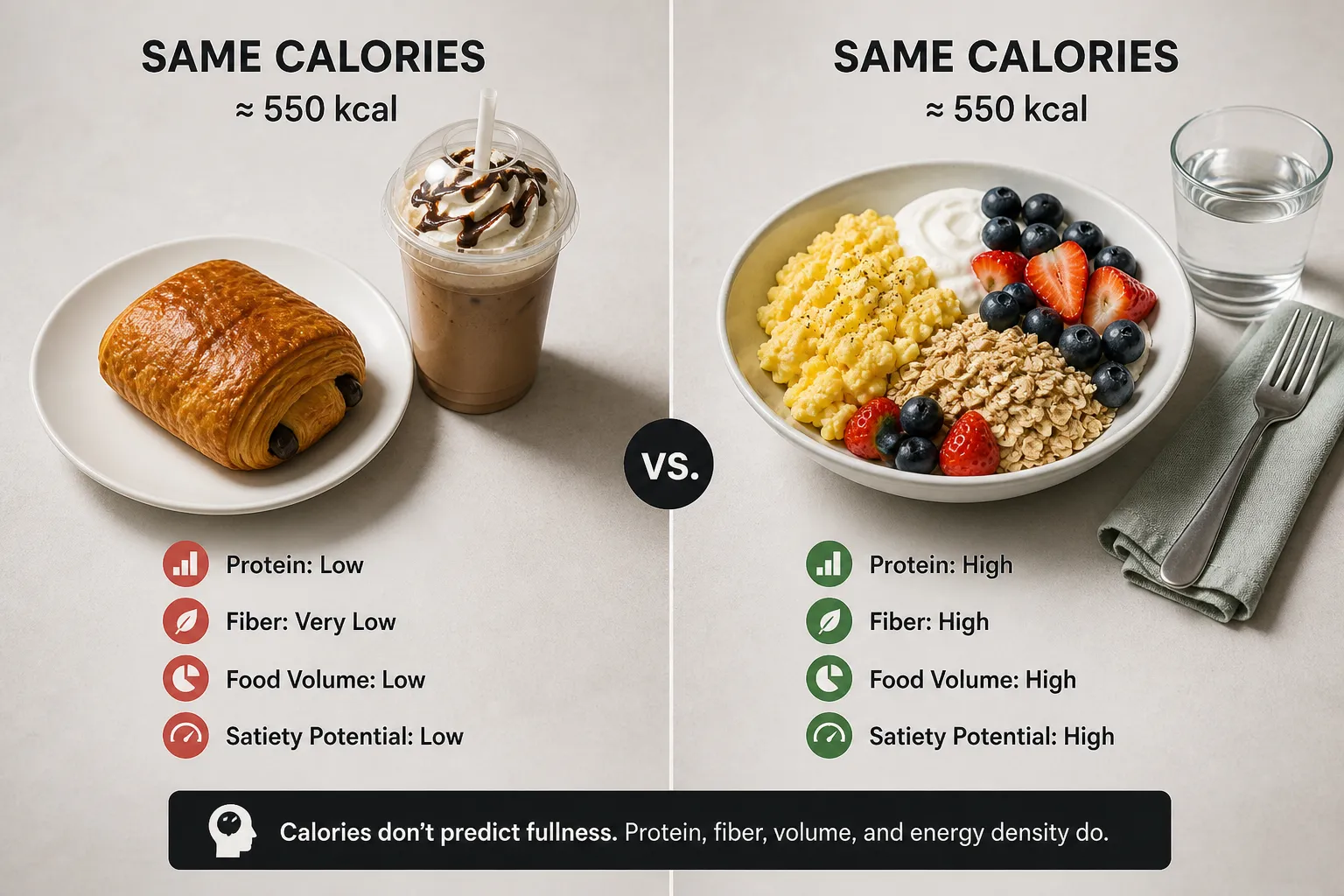
The same calories can leave you full or hunting for more food
This is where counting calories isn’t enough becomes obvious in real life. Two meals can fit the same calorie budget and create completely different afternoons, because calories do not predict fullness very well unless you also look at protein, fiber, food volume, and energy density.
Protein is not a diet-culture accessory. It generally improves satiety and helps preserve lean mass during weight loss, which is one reason higher-protein diets often feel easier to stick to than low-protein ones at the same calories according to systematic reviews summarized on PubMed.
Fiber is not there to make a label look healthy. It adds bulk, slows the eating experience, supports fullness and digestion, and tends to come packaged with foods that improve overall diet quality as the American Heart Association explains. If you want the practical version, this is why fiber-rich meals often feel more stable and satisfying than low-fiber ones.
Same calories, different experience
Take breakfast. A pastry and a sweet coffee might land in the same calorie range as eggs or Greek yogurt with fruit and oats, but the second meal usually gives you more protein, more fiber, and more actual food on the plate. One feels gone in ten minutes. The other has a better chance of carrying you to lunch without the mental drag of being half-hungry all morning.
The same thing happens later in the day. A small portion of chips, cookies, or other refined snack foods can burn through 400 calories fast and barely register as a meal. A plate with lean protein, beans or whole grains, vegetables, and fruit can hit a similar calorie total while giving you more chewing, more volume, and a clearer stop signal.
This is the practical value of energy density, or calories per gram of food. Research associated with Barbara Rolls has repeatedly shown that lower-energy-density foods let people eat a larger volume for fewer calories, which can make hunger easier to manage without ignoring energy balance in NIH-indexed reviews on energy density and satiety.
A calorie target becomes easier to live with when more of those calories come packaged with protein, fiber, water, and food volume. That is why liquid calories, low-protein meals, and energy-dense snack foods can make a reasonable target feel tiny, while a better-composed meal can make the exact same math feel manageable.
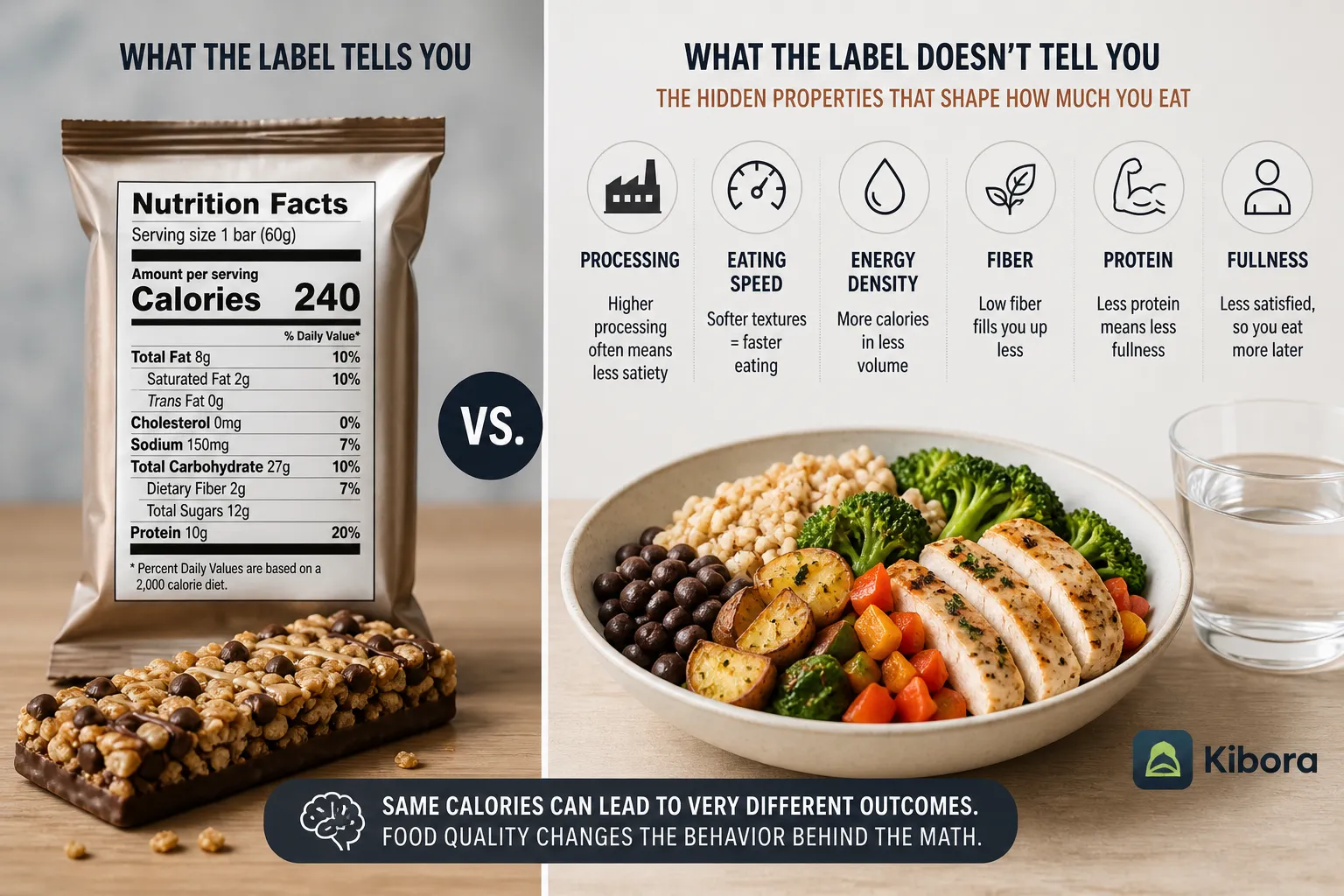
Food quality changes the behavior behind the math
The strongest argument against simplistic calorie thinking is not that calories stop mattering. It is that food quality changes how many calories people end up eating. Appetite, eating speed, reward, and fullness all shift before the math on your app catches up.
That point was tested directly in a tightly controlled inpatient trial by Kevin Hall and colleagues. Participants were given either an ultra-processed diet or an unprocessed diet for two weeks, then switched to the other pattern, with meals designed to be matched for presented calories, sugar, fat, fiber, and macronutrients as much as possible. Even in that controlled setting, people ate about 500 more calories per day on the ultra-processed diet and gained weight, while they lost weight on the unprocessed diet Hall et al., Cell Metabolism.
“Ultra-processed diets caused excess calorie intake and weight gain.”
That does not mean every packaged food is a problem. It means a dietary pattern built mostly around soft textures, low chewing demand, high energy density, and highly rewarding combinations of salt, sugar, and fat can make passive overconsumption more likely. People often eat those foods faster, feel less full for the calories, and overshoot intake without deciding to binge.
Compare two days that both “fit your calories.” One leans on pastries, chips, sweetened coffee drinks, protein bars, frozen entrees, and takeout. The other uses foods that are still convenient but more filling: Greek yogurt, eggs, potatoes, beans, fruit, lean protein, vegetables, oats, and higher-fiber meals. On paper, both can hit the same calorie target. In real life, the second day usually asks for less restraint.
This is the practical point: food quality matters because it changes the odds of overeating before the calorie total ever shows up in your log. That is why counting calories is often not enough. Your log records the result, but food form and processing help shape the result.
Food quality also covers things calorie counting cannot grade well on its own. A diet can technically “work” for calories while staying low in fiber, light on micronutrients, rough on digestion, and weak for long-term health. If digestion is an issue, noticing which foods leave you bloated can be more useful than checking calories alone. One simple upgrade beyond calorie math is tracking plant variety, such as aiming for more plants across the week, because it nudges meals toward fiber and nutrient density without pretending calories disappeared.
Convenience foods can absolutely fit. The problem is not the existence of packaged food. The problem is pretending a calorie label tells you everything important about how that food behaves in your body and in your routine.
Your calorie target does not know you slept badly
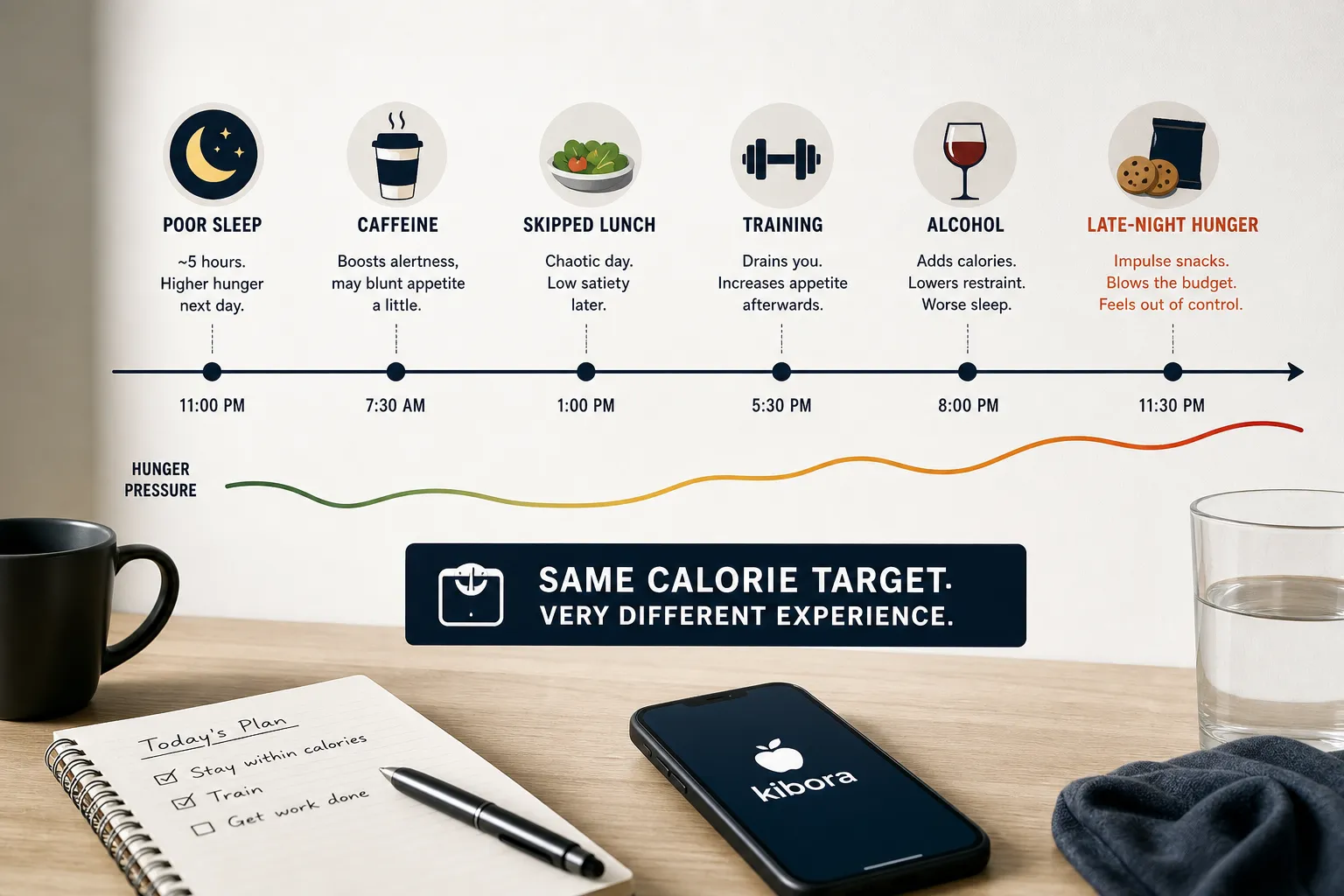
A spreadsheet assumes a stable human. Real life is messier. Calories set the budget, but sleep, alcohol, caffeine, and timing often determine how easy it is to stay inside it.
Sleep is the bluntest example. Research reviews consistently link sleep restriction with higher hunger, appetite changes, and greater energy intake, even though the laws of energy balance do not change (PubMed: sleep, appetite and energy intake).
You have probably lived this pattern already. You sleep five hours, use coffee to drag yourself through the morning, skip a real lunch because work is chaotic, and then spend the evening suddenly starving and negotiating with snacks you were never planning to eat.
That does not mean bad sleep “breaks your metabolism” in some mystical way. It means a calorie-only plan often ignores the conditions that shape hunger, impulse control, and how much friction it takes to make decent food choices.
Caffeine helps alertness, not necessarily adherence
Caffeine is where online advice gets sloppy. It may improve alertness, training output, and sometimes blunt appetite a bit, but the evidence does not support treating it as a reliable fat-loss lever (PubMed: caffeine, appetite and weight).
The bigger issue is indirect. If your caffeine timing pushes into the afternoon or evening, it can hurt sleep for some people, which then makes next-day eating harder. If that is your pattern, it is worth looking at how caffeine timing affects sleep, because the appetite problem may start the night before.
Alcohol and meal timing change the game without changing the math
Alcohol is another calorie blind spot. It adds energy on its own, gets undercounted all the time, and can lower restraint in the moment, which is a bad mix for anyone pretending drinks “do not count” on weekends (NIAAA).
The damage is often not just that night. A few social drinks can turn into poor sleep, greasy breakfast decisions, extra snacking, and training that feels terrible the next day. The calories matter, but so does the behavioral spillover.
Meal timing deserves the same nuance. Reviews on time-restricted eating and meal timing do not show that timing is magic for fat loss, but they do suggest it can affect hunger, routine, and adherence depending on the person and setup (PubMed: time-restricted eating and weight loss).
Some people do perfectly well eating their first meal later. Others call it discipline, then spend the evening inhaling calories because their schedule never gave them a real chance at satiety. The plan on paper can be identical, while the lived experience is completely different.
The number in your app is less precise than it looks
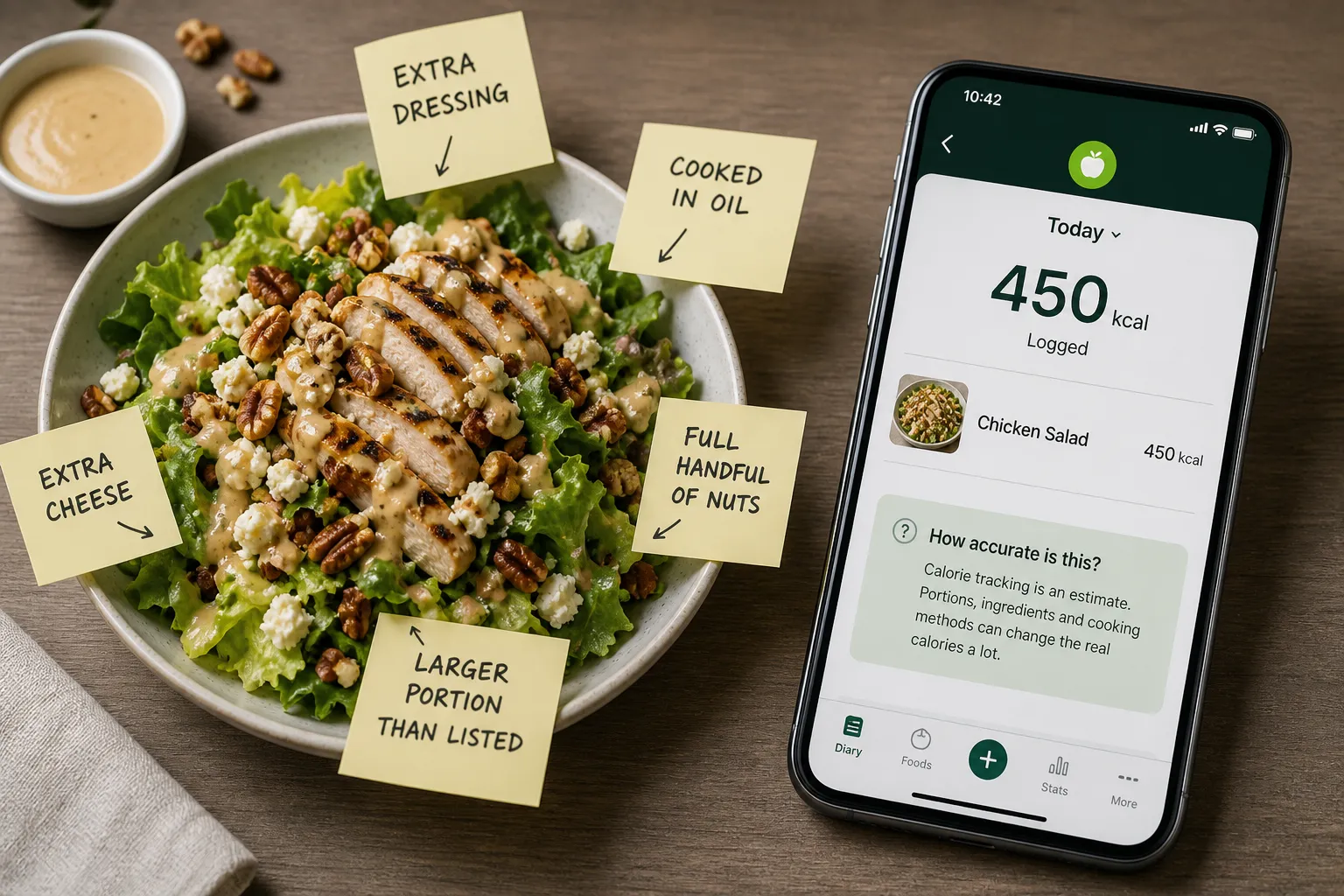
Calorie tracking can absolutely help. Self-monitoring often improves awareness, and awareness usually beats guessing. But the number in your app is not a lab result. A calorie log is usually directionally useful, not perfectly precise.
That gap matters because the inputs are messy. Portion estimates drift, food databases contain duplicates and bad entries, nutrition labels are rounded, and restaurant counts are often educated guesses. Add forgotten bites, a heavy pour of cooking oil, a couple drinks, or fuzzy weekend memory, and a “precise” daily total starts looking a lot less exact.
A simple example: you log a salad as 450 calories. Seems clean and controlled. Then the dressing was poured generously, the chicken was cooked in oil, the nuts were a full handful, the cheese portion doubled, and the serving was bigger than the menu photo suggested. That same salad may land much higher without looking dramatically different.
This is the practical weakness of calorie tracking. Even when the data is useful, it is often noisy, estimated, and tiring to maintain. Logging every bite with perfect diligence sounds disciplined for a week. Trying to do it for months is where tracking fatigue shows up, and that is usually when the omissions start.
The fix is not to give up and declare that calories do not matter. It is to stop pretending every day’s total is laboratory-grade data. Use the log to spot patterns, compare weeks, and make better decisions. If you want a saner way to work with imperfect nutrition data, this guide on using food data for better decisions is a good next step.
A better plan tracks what calories cannot tell you
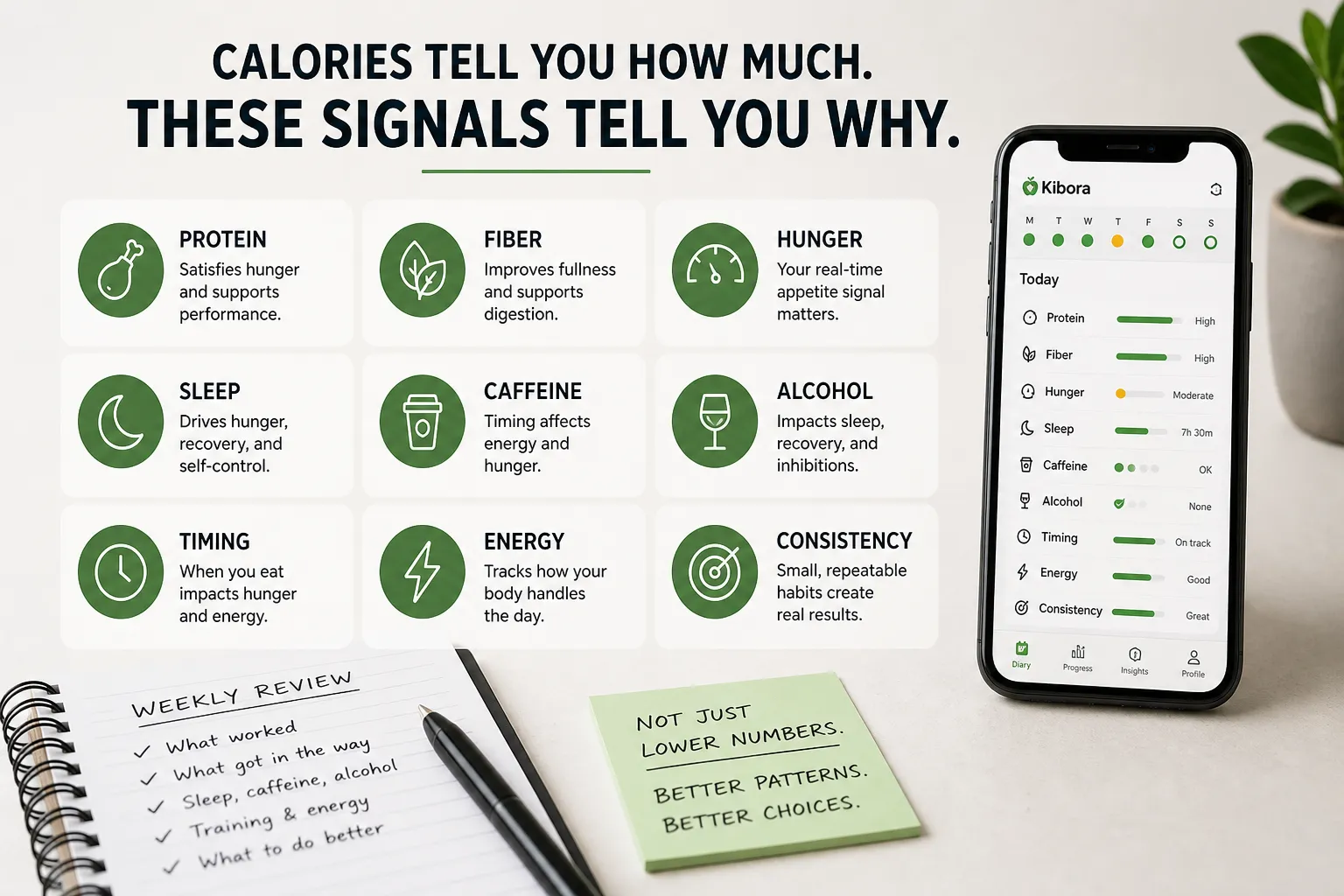
If counting calories helps you stay aware, keep doing it. Just stop treating the calorie total like the only score that matters, because counting calories isn't enough to explain why one day feels easy and the next turns into a snack spiral.
A better system keeps calories in the picture but adds the variables that actually shape adherence: protein per meal, fiber or plant foods, meal timing, hunger, energy, training performance, sleep, caffeine timing, alcohol, and how consistent your routine felt. Those are the details that tell you why the same calorie target can feel manageable on Tuesday and impossible on Friday.
The smartest question is not only “How many calories did I eat?” but “What made those calories easy or hard to repeat?” That is where useful nutrition tracking starts, because the goal is not just lower numbers. It is patterns you can live with.
Use calories as a boundary check, not the whole strategy
A simple rule of thumb works well here: build meals around protein plus fiber, then use calories as a boundary check. If you want a practical next step, learning how to track macros can make calorie tracking more useful by showing whether your meals are actually set up for satiety and performance, not just mathematical compliance.
This is also the reframe most people need. Instead of “I failed my calories,” ask better questions: Was I under-slept, under-proteined, low-fiber, or eating too late to manage hunger well? That shift sounds small, but it turns tracking from self-judgment into problem-solving.
Run a short weekly review
You do not need a dashboard with 40 metrics. A five-minute weekly review is enough if you focus on the patterns that actually matter:
- Identify the two meals that kept you fullest for the longest.
- Identify the two situations where overeating was most likely.
- Notice which days had worse sleep, late caffeine, or alcohol.
- Check whether your training or afternoon energy dropped on low-protein or low-fiber days.
- Ask what made tracking easier to repeat, not just what lowered calories fastest.
This is where better tools can help, including Kibora, but the principle is bigger than any app. The best nutrition data points you toward better choices, not just lower numbers.
And that usually means prioritizing repeatable meals and routines over perfect daily math. If breakfast reliably keeps you full, lunch supports your training, and a few known trigger situations stop surprising you, you have built something far more valuable than a neat calorie streak.
Use calories as a compass, not a cage
The real lesson is not that counting calories is useless. It is that counting calories isn't enough. Calories can teach awareness and expose blind spots, but they cannot fully explain why you are ravenous at 9 p.m., why your weekends unravel, or why a plan that works on paper feels impossible to repeat.
That is why the number can be right while the plan is wrong. You can hit your target and still ignore the factors that shape real-world outcomes: protein, fiber, food quality, meal structure, sleep, caffeine, alcohol, and the routines that make adherence easier instead of harder.
Calories are necessary information, but not sufficient information. They matter for energy balance, but they are not a complete map of health, appetite, performance, or consistency. Treating them like they can answer every nutrition question is what creates tunnel vision.
A smarter approach keeps the part of tracking that builds honesty and discards the part that turns eating into narrow arithmetic. Use calories to orient yourself, then pay equal attention to the patterns that actually determine whether a plan is sustainable.
The practical shift is simple. Calorie-only tracking asks, “Did I hit the number?” Better tracking asks, “What pattern helps me feel, perform, and eat better consistently?”
That is the balanced way to think about nutrition tracking. Use calories as a compass, not a cage: helpful for direction, useless as a moral score, and never enough on their own. Keep the awareness, lose the obsession, and build around repeatable behaviors because sustainable nutrition depends on more than accurate arithmetic.
- Key sources
- National Institute of Diabetes and Digestive and Kidney Diseases (NIDDK) – Body Weight Planner
- Systematic review on protein, satiety, and body composition (PubMed search hub)
- American Heart Association – Dietary fiber and health information
- NIH author pages / related reviews by Barbara Rolls on energy density and satiety
- Hall KD et al. Ultra-Processed Diets Cause Excess Calorie Intake and Weight Gain: An Inpatient Randomized Controlled Trial of Ad Libitum Food Intake. Cell Metabolism (2019)
- Review on sleep restriction, appetite, and energy intake (PubMed search hub)
- NIAAA – Alcohol Facts and Statistics / standard drink and calories
- PubMed search hub for caffeine appetite and weight
- PubMed search hub for time-restricted eating / meal timing reviews