- What you'll learn
- Why late-night eating is more about timing, portion size, and food type than a hard cutoff
- How circadian rhythm can change glucose tolerance and insulin sensitivity later in the day
- Why large, high-fat, high-sugar, spicy, or alcohol-containing meals are more likely to cause problems at night
- How lying down soon after eating can increase reflux and digestive discomfort
- When late eating may affect sleep, and when a small snack may be neutral or even helpful
- Why shift workers and people with reflux or blood sugar concerns need a more individualized approach
Worried you ruined your sleep or metabolism by eating late? Not necessarily. Late-night eating is not automatically harmful, but your body can handle food differently later in the day, especially around blood sugar, digestion, and sleep.
The bigger question is what you ate, how much, how close it was to bed, whether alcohol was involved, whether you tend to get reflux, and what your usual schedule looks like. A small yogurt or protein-rich snack at 9:30 p.m. is not the same as a large takeout meal plus drinks right before lying down.
That is why there is no universal “never eat after X” rule. Late-night eating is less a single rule than a context problem, because the same hour can affect glucose response, reflux, appetite, and sleep very differently depending on the meal, the person, and how soon sleep follows.
The clock matters, but it is not the only thing that matters
Late-night eating is not one single behavior. It can mean a planned bedtime snack, a delayed dinner after a long commute, grazing while half-asleep on the couch, a full meal after a night shift, or food that follows a few drinks. Those situations do not affect the body in the same way, so it helps to avoid reading the rest of this article as a blanket ban on eating late.
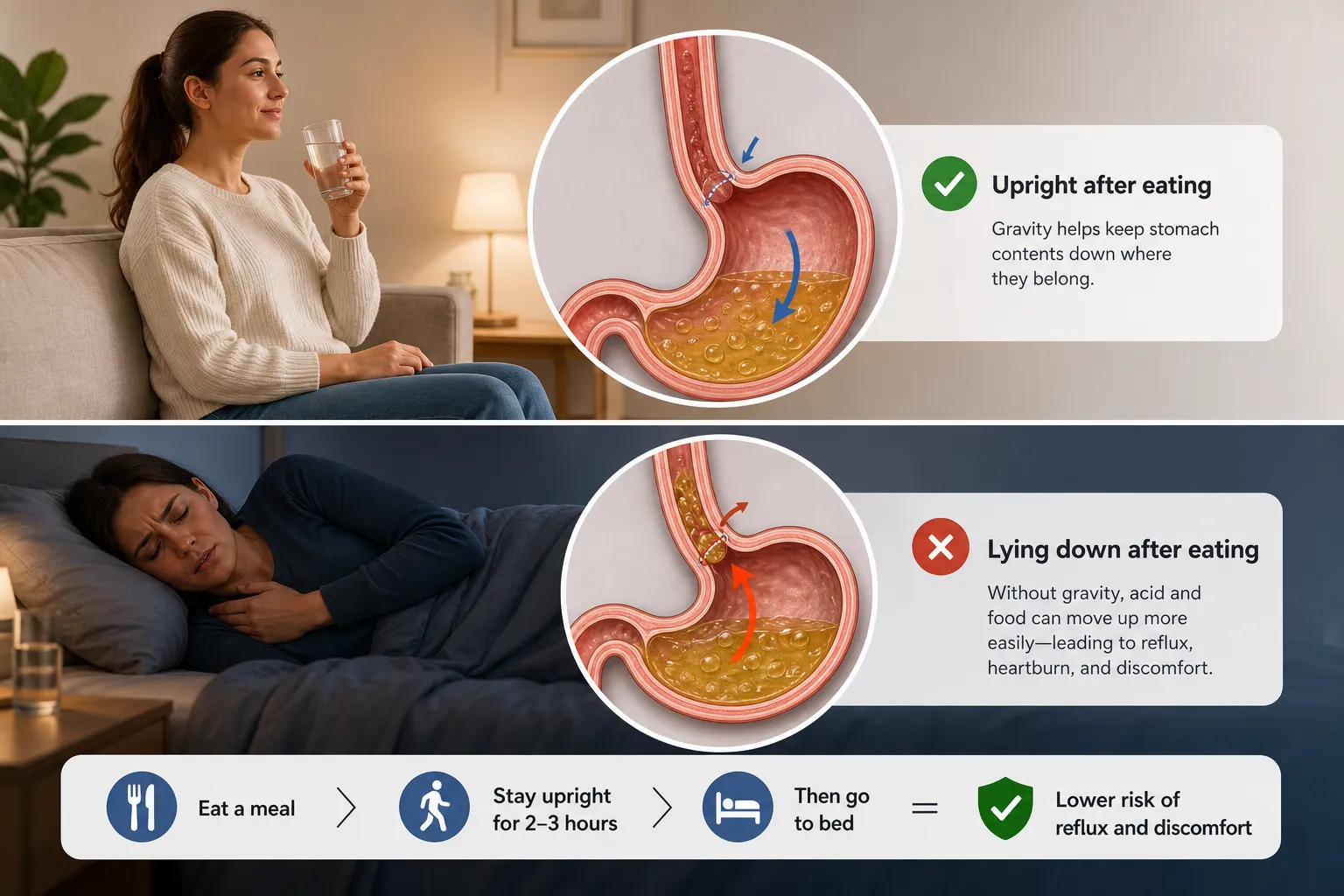
The more useful framework is simple: timing, portion, composition, and susceptibility all shape the risk. A late meal is more likely to be disruptive when it is large, heavy, high-fat, high-sugar, spicy, or paired with alcohol. A small snack is usually a very different physiological event than a full dinner eaten right before bed.
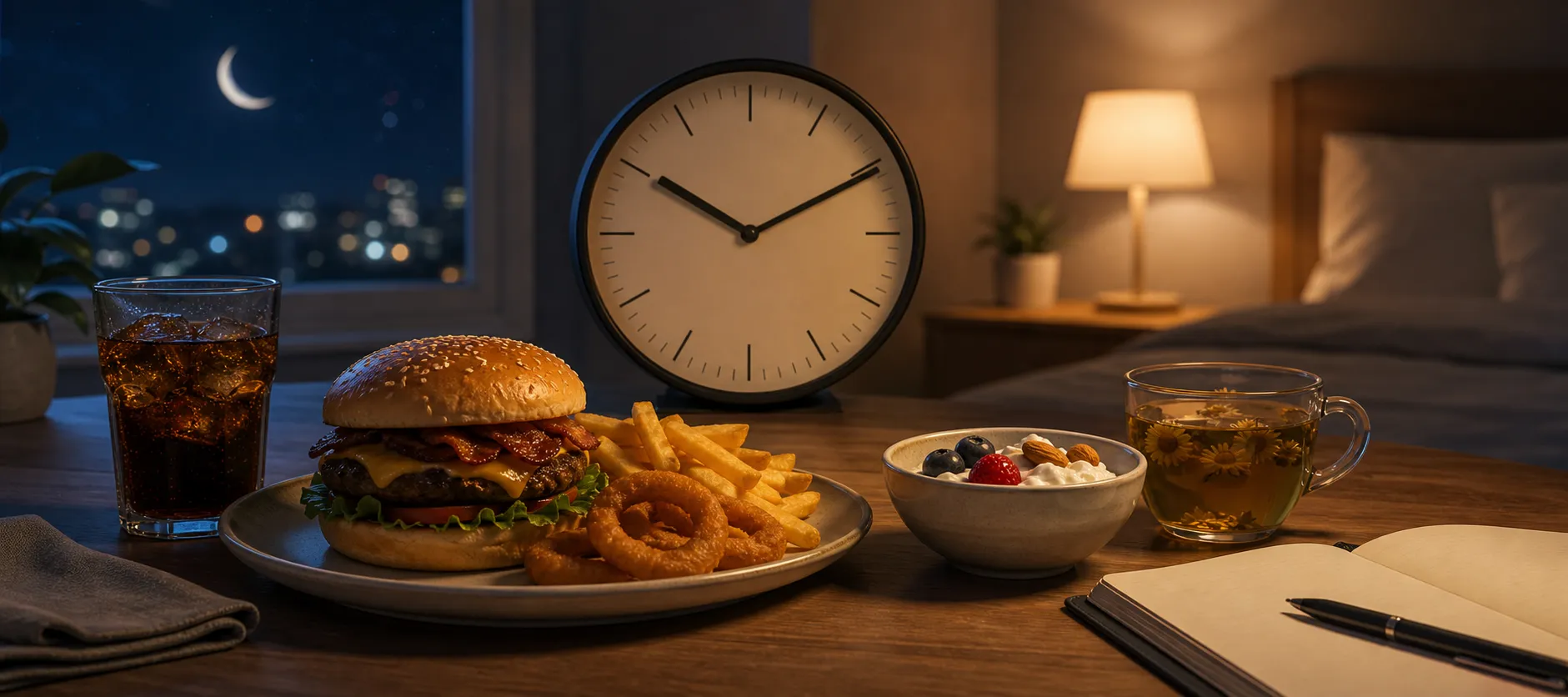
A practical comparison makes this clearer. A banana with peanut butter two hours before bed is not the same as pizza and beer 20 minutes before lying down. The second meal is bigger, slower to digest, closer to bedtime, and more likely to affect reflux, comfort, and sleep.
A useful late-night eating rule starts with three questions: how big was the meal, what was in it, and how soon did you lie down? Body position matters because digestion and reflux can feel worse once you are horizontal. That is one reason “eating before bed” is too broad to be very helpful on its own.
Individual context matters too. Someone with GERD, blood sugar concerns, or fragile sleep may notice stronger effects, while shift workers may need to think in relation to their own sleep window rather than the clock on the wall.
Research does link later eating patterns with weight and cardiometabolic outcomes, but those findings need context because late eaters may also differ in sleep habits, alcohol use, shift work, snacking patterns, and total calorie intake. Reviews of meal-timing research suggest the association is real enough to pay attention to, while also showing that the long-term picture depends heavily on study design and lifestyle context according to systematic review evidence.
Your body may handle the same meal differently at night
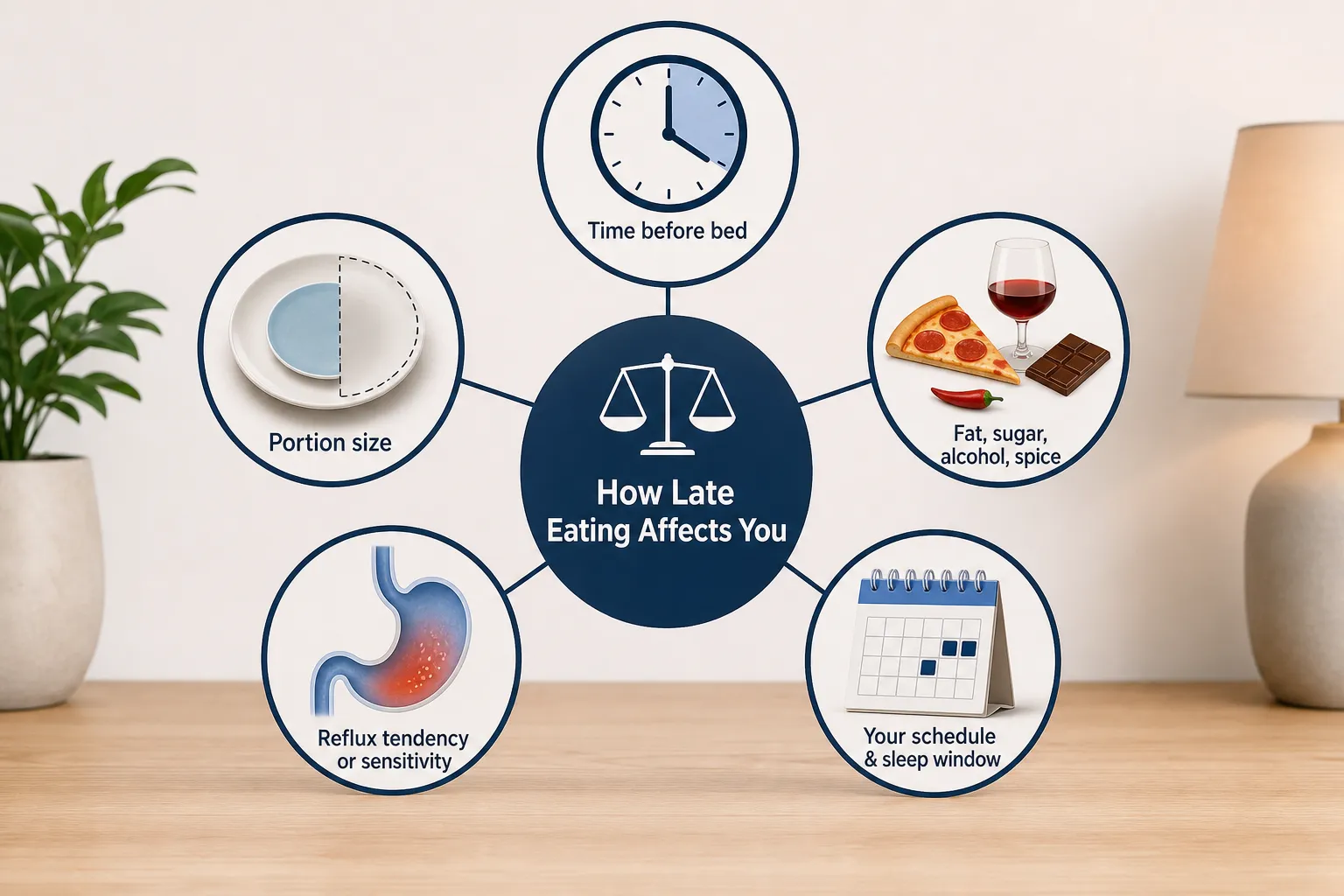
Your body clock does more than shape sleep. It also helps coordinate digestion, hormone release, body temperature, and metabolism across the day, which is why circadian rhythm and metabolism are closely linked according to a major review in the New England Journal of Medicine.
A simple way to think about it is workload. The same task can feel easier at one time of day and harder at another, and your body often handles food the same way. A meal eaten late at night is not automatically harmful, but it may be processed in a less efficient metabolic window.
Two useful terms here are glucose tolerance and insulin sensitivity. Glucose tolerance means how well your body manages the rise in blood sugar after you eat. Insulin sensitivity means how effectively your cells respond to insulin, the hormone that helps move sugar out of the bloodstream and into tissues for use or storage.
Later in the day, both of these tend to be lower for many people. That means the same dinner or snack can lead to a higher blood sugar rise, or blood sugar that stays elevated longer at night than it would earlier in the day, as described in circadian metabolism research from the NEJM review.
“Circadian misalignment can impair glucose tolerance.”
This is the key nuance: late meals can hit differently because nighttime is often a lower-efficiency window for glucose handling, not because food magically becomes fat after dark. One late snack does not mean someone is headed for diabetes or weight gain. It means timing is one factor that can change the body’s short-term response.
Researchers have tested this idea in controlled studies of early time-restricted feeding, where people eat within an earlier daily window. In one randomized trial, shifting meals earlier improved insulin sensitivity and some appetite-related markers even without intentional weight loss, suggesting meal timing can matter beyond calories alone Sutton et al..
That said, these studies usually change the entire eating schedule, not just whether someone has a small bedtime snack. They help explain why earlier eating windows sometimes look metabolically favorable, but they do not prove that every instance of eating late at night is harmful or that everyone should follow the same schedule.
The bigger picture is that short-term blood sugar responses and long-term health outcomes are not identical. Meal timing can influence metabolic markers in the lab, while real life health effects also depend on total intake, food quality, sleep, activity, and whether a person’s schedule is regular or shifted.
Lying down after eating changes the digestion story
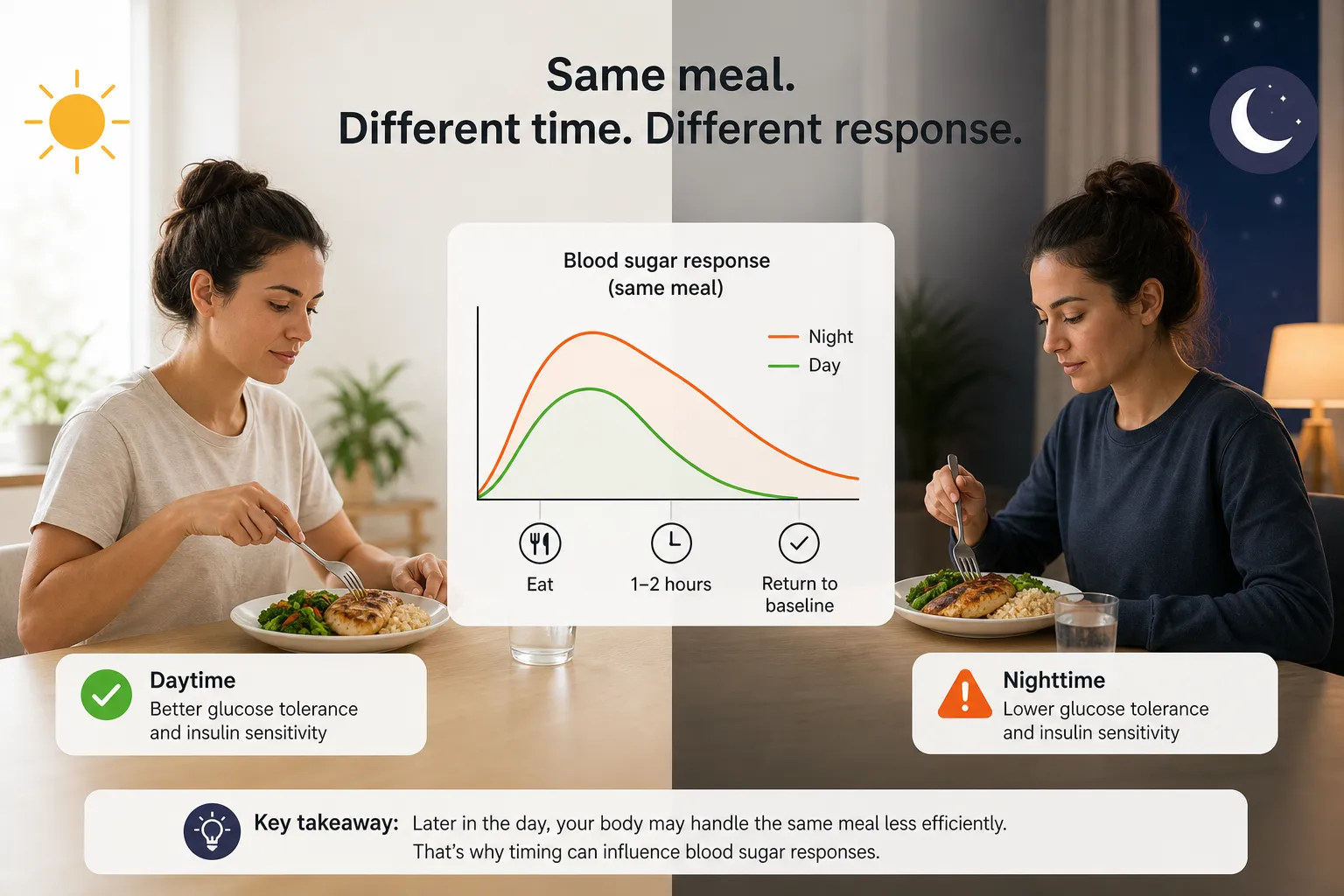
Digestion does not shut off at night. Your stomach still works while you sleep, but body position changes the equation. If you eat dinner, stay upright, and move around a bit, gravity helps keep stomach contents where they belong. If you eat and lie down soon after, acid and partially digested food can move upward more easily.
That is why reflux and digestive discomfort are some of the clearest practical reasons late-night eating can backfire. For reflux, the issue is often not midnight itself; it is a full stomach plus gravity working in the wrong direction. People with GERD, frequent heartburn, or nighttime reflux are especially likely to notice this pattern, according to NIDDK and the American College of Gastroenterology.
“Avoid meals within 2-3 hours of bedtime.”
That 2 to 3 hour gap is best understood as a reflux-oriented rule of thumb, not a universal metabolic law. It matters most if you are prone to heartburn, a sour taste in the mouth, coughing at night, chest burning, pressure, bloating, or waking up uncomfortable.
Meal size and composition matter too. Large meals and high-fat foods can slow gastric emptying, which may leave you feeling heavier for longer and may raise reflux risk in susceptible people. Spicy foods, alcohol, and very large portions can also make symptoms worse for some readers.
If late dinners often leave you feeling off, it can help to notice whether the trigger is timing, the food itself, or both. A simple place to start is tracking which foods tend to cause bloating or digestive discomfort when eaten close to bed.
Sleep effects are real for some people, but not guaranteed for everyone
Late-night eating can affect sleep, but the relationship is conditional, not automatic. A small snack that keeps you from waking up hungry is different from a large late dinner that leaves you hot, bloated, thirsty, or reflux-prone.
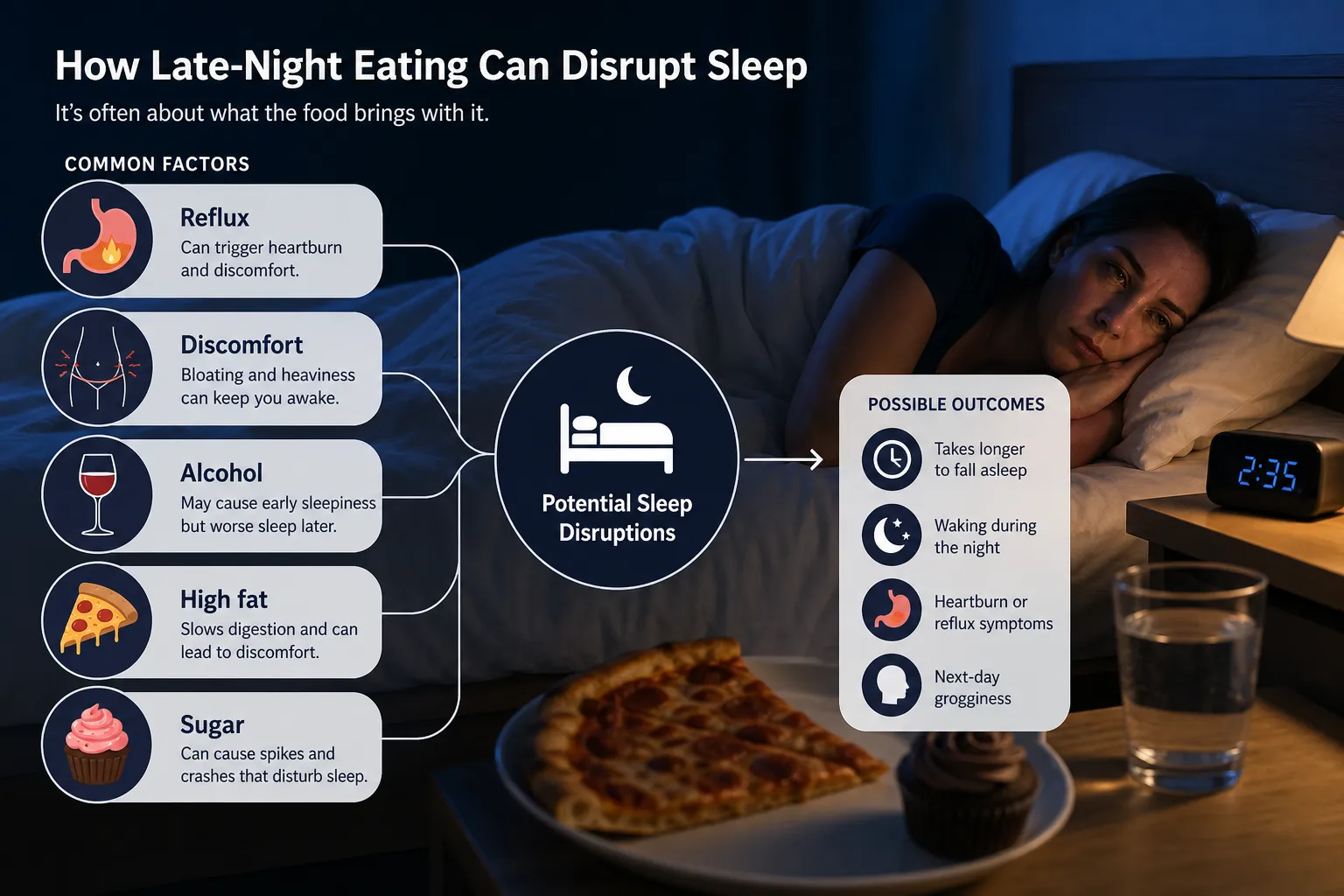
The clearest reason late food can disrupt sleep is not just the hour. Late food usually disrupts sleep through what it brings with it: reflux, heaviness, alcohol, heat, thirst, or discomfort, not simply because the clock says it is late.
That is why meal size and composition matter. Large, fatty, spicy, or sugary meals are more likely to delay comfort at bedtime, while a lighter option may have little effect or even help if hunger itself is keeping you awake. If you want practical examples, see these foods and drinks that are more likely to backfire before bed.
Alcohol is a major modifier here. It can make you feel sleepy at first, but it tends to worsen sleep quality later in the night, and it can also increase reflux risk while lowering restraint around food, which makes a heavy bedtime meal more likely.
The broader research is mixed. A systematic review on meal timing and sleep found heterogeneous results, which means the evidence does not support a simple rule that any food before bed ruins sleep for everyone.
A useful way to judge your own response is to look for patterns after late meals:
- taking longer to fall asleep
- waking during the night
- heartburn or reflux symptoms
- next-day grogginess
If those patterns show up consistently, timing may be part of the problem, especially when alcohol or heavy meals are involved.
Late eating can make overeating easier, even if timing is not the whole cause
Eating before bed does not automatically cause weight gain. Body weight still depends heavily on overall energy intake over time, and late meals do not become uniquely fattening if they simply replace calories you would have eaten earlier.
The bigger real-world issue is behavior. Late eating is more likely to affect weight when it becomes an extra eating occasion, not when it simply shifts the same balanced meal later. Research on eating windows and cardiometabolic outcomes suggests timing can matter, but changes in energy intake often explain part of the effect too source.
Physiology and behavior are not the same thing
Physiology may play a small role because appetite, satiety, and glucose handling can shift across the day. But in everyday life, behavior and environment often matter more: people are tired, stressed, distracted, less inhibited, and more likely to reach for convenient foods, alcohol, or screen-time snacks at night.
A common pattern looks like this: you skip breakfast, barely eat lunch, get through the afternoon on coffee, then feel intensely hungry at 10 p.m. That late hunger is not a personal failure. It is often the predictable result of under-eating earlier.
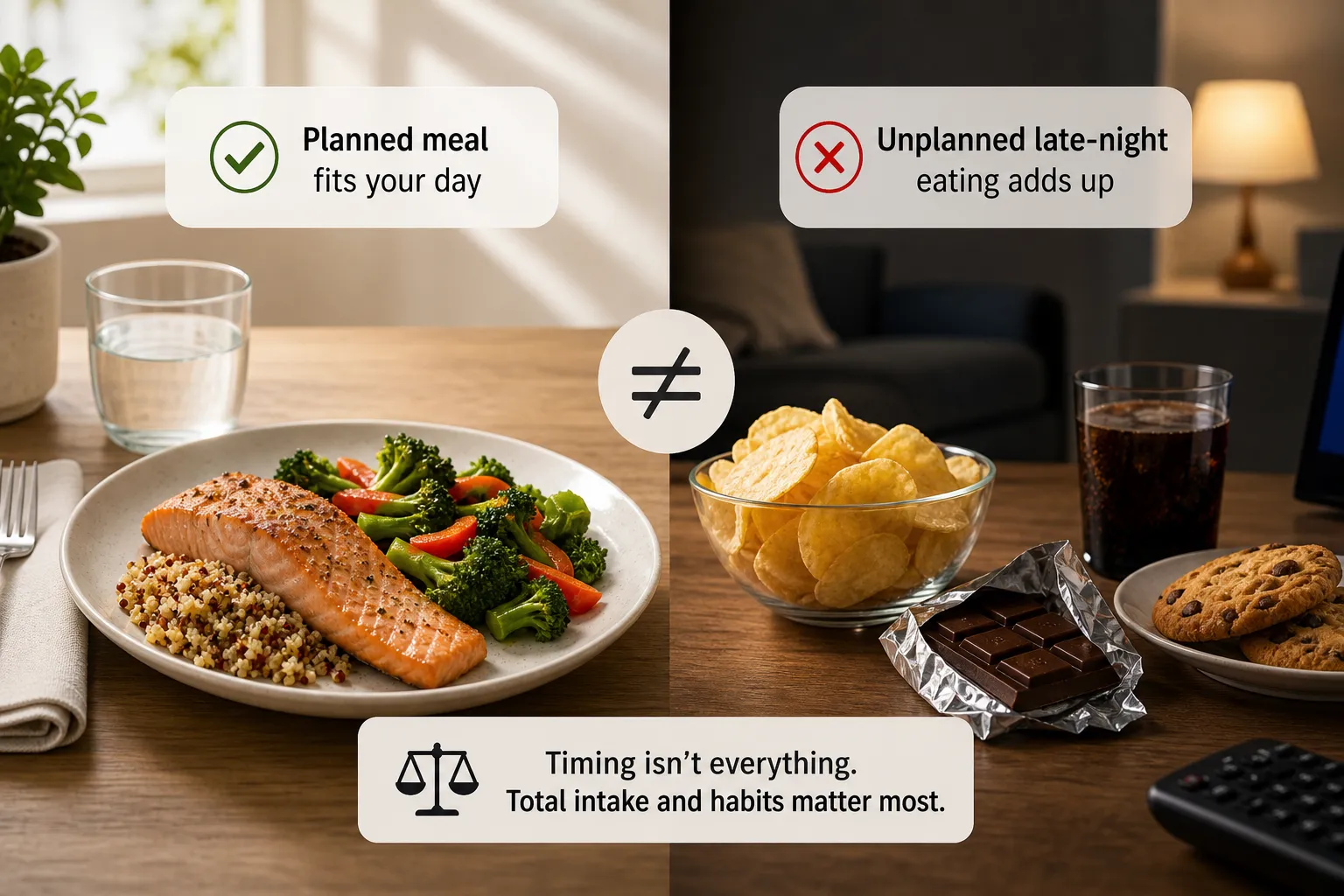
There is also a difference between a planned dinner at 9 p.m. and unplanned grazing after dinner while watching TV. One may fit your schedule just fine. The other can quietly add several hundred calories without much awareness or satisfaction.
That is why observational studies are tricky to interpret. People who eat late often differ in sleep habits, work schedules, stress, alcohol use, and total daily calories, so timing alone is rarely the full explanation. If this pattern feels familiar, it can help to explore the behavioral reasons late-night overeating happens.
Some people have more reason to pay attention than others
Late-night eating does not affect everyone the same way. The more your schedule, reflux, sleep, or blood sugar is already under strain, the more late-night eating deserves attention.
People with GERD, frequent heartburn, or reflux symptoms often have the clearest reason to be cautious. If food is still sitting heavily in the stomach when you lie down, a bigger gap between dinner and bed may matter more than the clock time itself.
People with prediabetes, diabetes, or ongoing blood sugar concerns may also want to look more closely at late high-carbohydrate or sugary meals. Glucose handling can change across the day, so this is a good area for individualized advice from a clinician rather than a rigid internet rule.
If sleep is already fragile, test whether late meals, alcohol, or heavy snacks line up with worse nights. For some people, the problem is not any bedtime eating, but large, rich, or very late meals that leave them uncomfortable or restless.
Shift work needs a different lens
Shift workers deserve a separate framing. A nurse eating a post-shift meal before daytime sleep is not in the same situation as an office worker having chips and dessert at midnight after a normal day schedule.
Shift work can create circadian disruption and practical eating challenges, which is why standard “just eat earlier” advice often falls short. The CDC notes that nonstandard work schedules can affect sleep and health, and reviews on circadian misalignment and shift work help explain why one-size-fits-all meal timing advice is limited.
For shift workers, a more realistic goal is often consistency, meal composition, and avoiding very heavy meals right before sleep. If you want a practical next step, track meal timing, food type, reflux symptoms, sleep quality, and morning hunger for one to two weeks. That kind of pattern awareness, including with tools like this guide to meal timing, sleep, and hunger patterns, can be more useful than following a blanket cutoff.
A better rule than “never eat after 8”
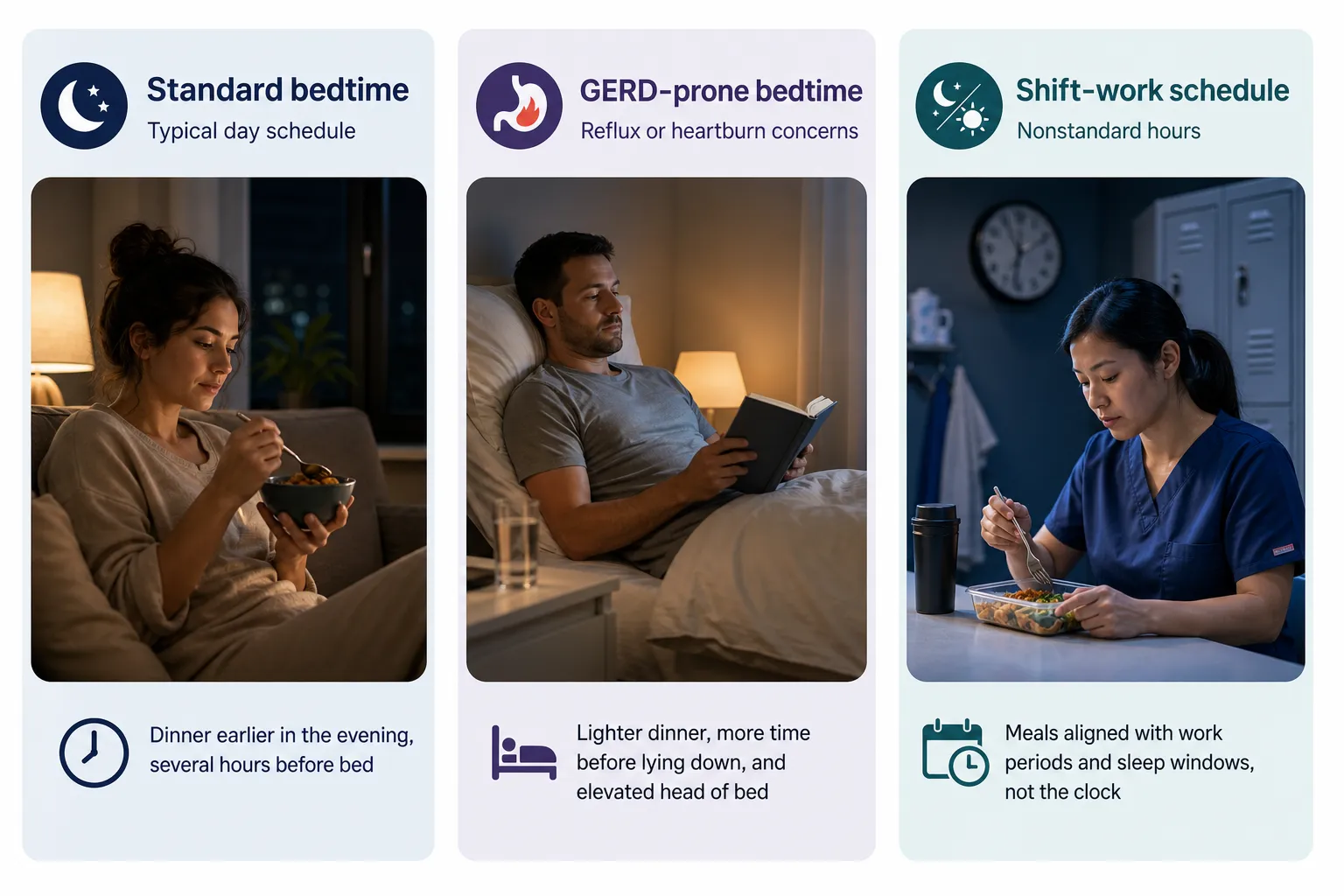
A more useful rule is simple: avoid late, large, heavy meals when better sleep, less reflux, or steadier blood sugar is the goal. The problem is usually not the clock alone. It is the combination of timing, portion size, food type, and how soon you lie down.
If you can, try not to make your biggest meal the one closest to bedtime. “Late and light” is very different from “late, large, and immediately followed by lying down,” especially if alcohol, fried foods, desserts, or oversized portions are part of the meal.
For people who deal with reflux, leaving a 2 to 3 hour buffer between a full meal and bed is often a practical place to start. If you are genuinely hungry near bedtime, a small balanced snack is usually a better choice than going to bed ravenous or eating a second dinner.
A good way to make this real is to run a short experiment. For one week, move dinner 60 to 90 minutes earlier, or keep the timing the same but make the late meal lighter, then notice your sleep quality, reflux, morning hunger, energy, and blood sugar if that is something you monitor.
The goal is flexibility, not fear. Your schedule, symptoms, and appetite matter more than an arbitrary cutoff, and pattern tracking can help you spot what actually works for your body.
Use this quick decision framework:
- Move larger meals earlier when possible.
- Leave a buffer before bed if reflux or sleep are issues.
- Keep late snacks small and balanced.
- Watch patterns over time instead of obeying a fixed hour.
- Key sources
- NEJM/NIH-style review on circadian metabolism and meal timing
- Randomized trial of early time-restricted feeding (Sutton et al.)
- Systematic review/meta-analysis on time-restricted eating and cardiometabolic outcomes
- National Institute of Diabetes and Digestive and Kidney Diseases (NIDDK) - Gastroesophageal Reflux Disease (GERD)
- American College of Gastroenterology Clinical Guideline: Diagnosis and Management of GERD
- Systematic review on meal timing and sleep
- CDC or NIH materials on shift work and circadian disruption
- Review on circadian misalignment, shift work, and metabolic health