- What you'll learn
- Why diet adherence matters more than short bursts of motivation
- How hunger and low-satiety meals can make a calorie deficit hard to sustain
- Why rigid restriction and all-or-nothing thinking often turn small slips into bigger setbacks
- How your food environment and social routines quietly shape eating choices
- When tracking helps, and when it becomes too burdensome to keep up
- How to build a simpler plan that can survive busy days, weekends, and lapses
You start a diet with real intent, stay on track for a week or two, then hunger hits, Friday dinner runs long, or one off-plan snack turns into, “I blew it.” That pattern is frustrating, but it is usually not a character flaw.
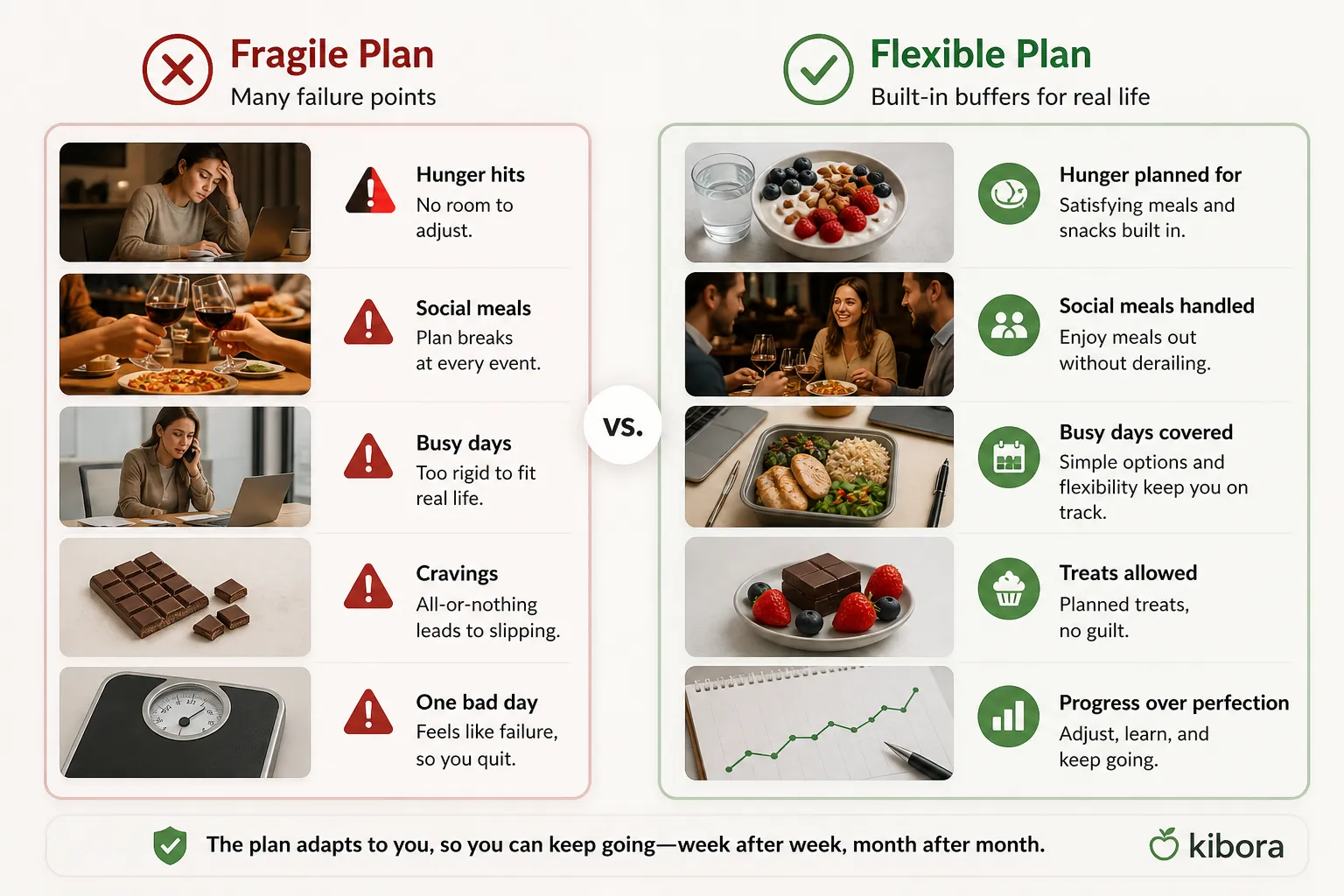
More often, the plan is too hard to repeat in normal life. Hunger, restriction, boredom, social friction, perfectionism, and tracking burden can all pile up fast. A diet does not fail only when the calories are wrong; it fails when the plan asks for a version of your life you do not actually live.
This article will show why that breakdown happens and how to make your approach easier to stick with.
The real problem is adherence, not motivation
Most people can follow a strict plan for a few days. The harder skill is doing a good-enough version of that plan for months, during work stress, weekends, travel, cravings, and normal social life.
That is what diet adherence really means. It is how well a plan fits your appetite, schedule, food preferences, budget, social routines, and your tolerance for tracking over time. A diet can be nutritionally sound on paper and still fail in real life because it asks too much, too often.
A simple example: a rigid 1,200-calorie meal plan may “work” for three days, then fall apart after one dinner out or one exhausting week. A more flexible structure with regular meals, higher-satiety foods, planned treats, and a strategy for restaurant meals often looks less impressive on paper, but it creates fewer points of failure.
Diet adherence means the plan works not just in your most motivated week, but in your average week. That is also why the best diet is usually not the one with the most rules. It is the one you can repeat without needing perfect conditions.
This matters even more after the initial weight-loss phase. According to NIDDK guidance on weight-loss maintenance, keeping weight off is a separate challenge that depends on ongoing habits, monitoring, and adjustments, not a short burst of willpower.
NIDDK also notes that sustainable programs focus on long-term behavior change rather than unrealistic promises or extreme rules. If your plan keeps breaking, that does not automatically mean you are failing. It may mean the plan is too fragile, and it needs fewer rules, more flexibility, and a better system for adjusting over time, like changing calories based on real progress instead of forcing a rigid target.
Hunger can overpower even good intentions
If you feel hungry all the time on a diet, that is not a character flaw. It is often a sign that the plan is asking too much of your biology. A calorie deficit is necessary for weight loss, but if the deficit is too aggressive, adherence gets harder fast.
This is one reason people say, “why can’t I stick to a diet,” even when they are trying hard. Energy restriction can increase hunger and food thoughts, especially when meals are small, low in protein, low in fiber, or built mostly around foods that do not keep you full. The CDC recommends changes you can sustain, not extremes you white-knuckle for a week.
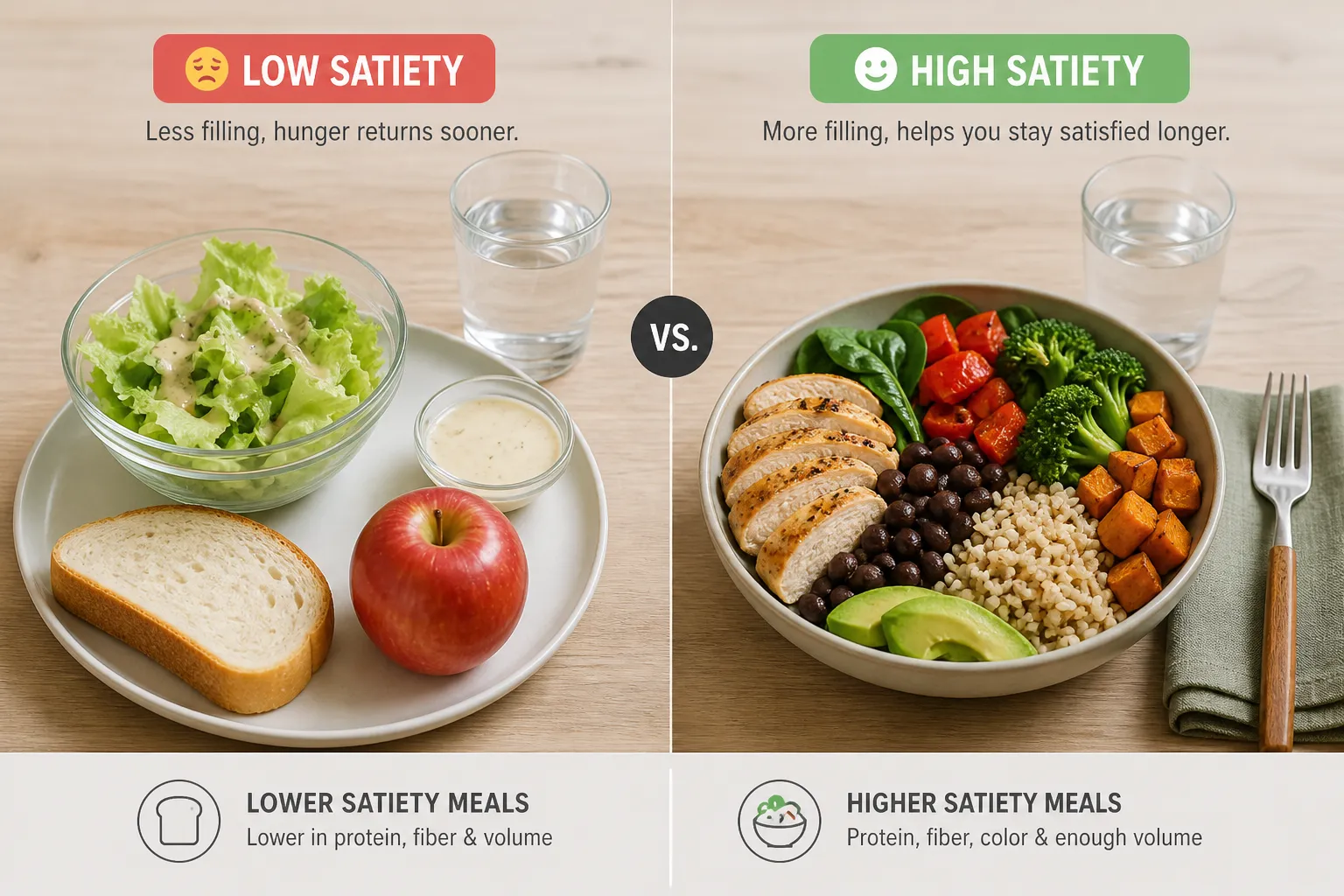
Satiety is one of the first levers to fix. A salad made mostly of lettuce and dressing may look “healthy,” but it may be far less filling than a bowl with chicken or tofu, beans, vegetables, and potatoes or whole grains. Practical guidance from Harvard’s Nutrition Source also points toward higher-quality, more satisfying foods like protein, legumes, fruits, vegetables, and whole grains.
Some meal patterns also make hunger worse for certain people. Liquid calories, tiny portions, and snacky meals may not feel like enough food, and skipping breakfast to save calories can backfire if it leads to intense evening hunger.
A sustainable diet should create a calorie deficit without making hunger the main event of your day. That does not mean you will never feel hungry. It means your plan should not rely on constant deprivation to work.
If your “healthy meals” keep leaving you unsatisfied, it helps to look at what actually makes a meal filling. Often, better meal structure works better than trying to be more disciplined.
Rigid restriction makes small slips feel like failure
Some structure helps. Planning meals, setting portions, or deciding how often you want treats can make diet adherence easier because you are not negotiating every choice in the moment.
But structure turns unhelpful when it becomes rigid restraint. Dietary restraint simply means consciously limiting or controlling food intake. That is not automatically bad. The problem starts when the plan creates forbidden foods, constant deprivation, or the sense that one imperfect choice means you are off the rails.
Researchers often pair restraint with another term, disinhibited eating, which in plain English means eating more than you meant to after your control gets disrupted. Reviews on restrained eating suggest this relationship is nuanced, not universal, but rigid, low-flexibility dieting can increase the risk of rebound eating for some people, especially under stress, hunger, fatigue, or around highly palatable foods like fries, pizza, or desserts (PubMed: dietary restraint and disinhibition).
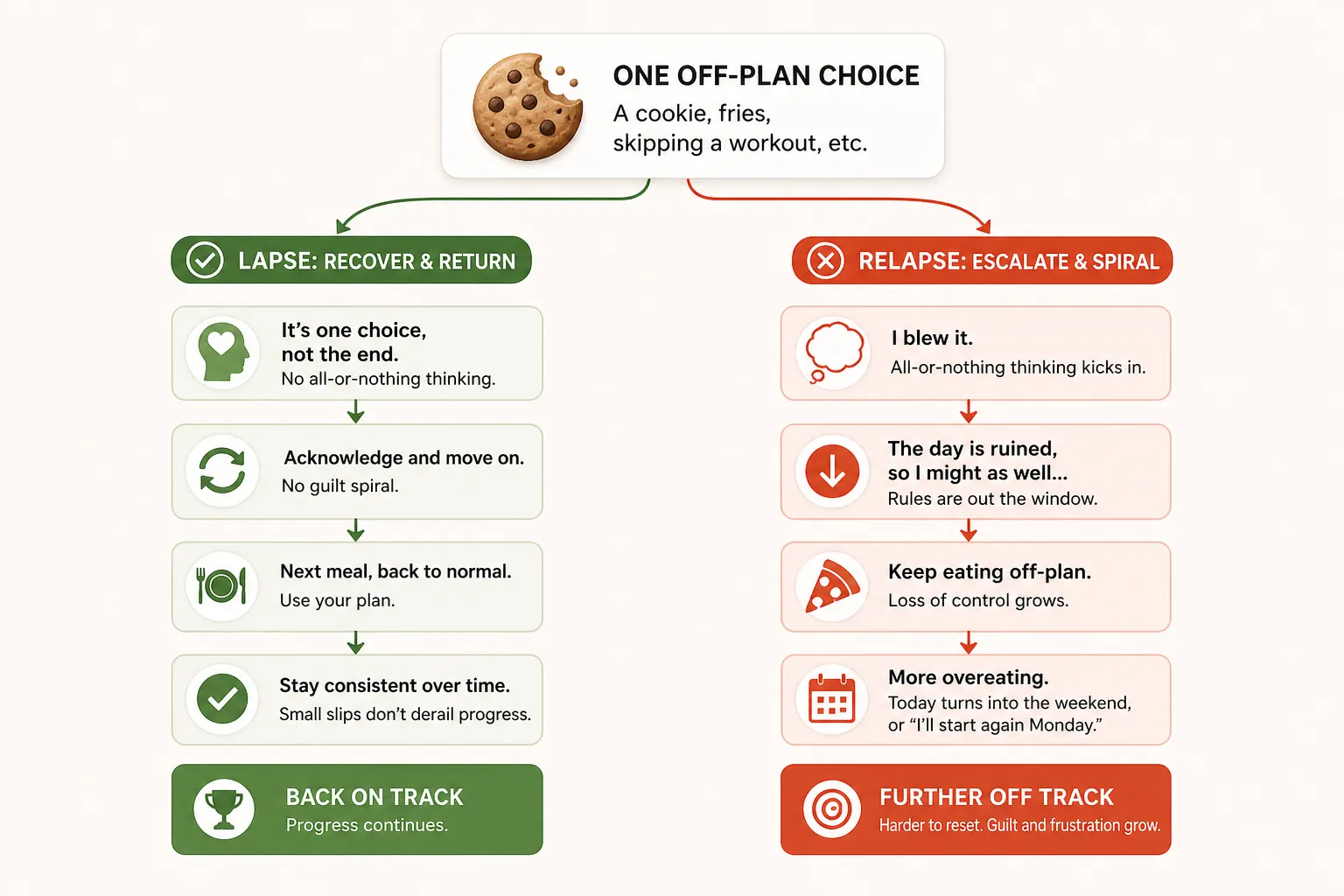
This is where all-or-nothing thinking does real damage. You eat one cookie, miss one workout, or have fries at lunch, and the thought becomes: “I blew it, so today is ruined.” The slip is small, but the meaning attached to it is huge.
The problem is rarely the slip itself; the bigger problem is treating the slip as proof that the whole diet is over. That is how one off-plan moment becomes a full night of overeating or a whole weekend of “starting again on Monday.”
A common version looks like this: you try to be perfect all week, feel drained by Friday, then eat one “bad” food on Saturday. Once the rule is broken, the weekend can feel like lost time, so restraint drops and eating swings hard in the other direction. That rebound pattern is less about weak willpower and more about a brittle system that leaves no room for normal life.
A more sustainable approach is guardrails, not hard walls. Instead of “I can never have dessert,” it might be “I plan dessert once or twice a week.” Instead of “I ruined the day,” it becomes “That was one choice; the next meal can be normal.”
That shift matters because relapse prevention works better when you expect lapses and practice recovery, rather than demanding perfection. Behavioral maintenance research consistently points toward self-regulation and recovery skills as part of long-term success (PubMed: maintaining weight loss).
Try this reframe: a lapse is data, not a verdict. It tells you something useful about hunger, timing, stress, or your plan's rigidity. If weekend eating is where things unravel, a simple recovery plan for overeating can help you reset without turning one lapse into a relapse.
Your food environment is doing more work than you think
Most diets are written as if you eat in a controlled lab. Real life is coworkers bringing donuts, family dinners, birthdays, travel days, late nights, stress, and food that is built to be convenient and rewarding. If you keep wondering, why can’t I stick to a diet, the answer is often not weak motivation. It is that your environment keeps asking for hard choices when your energy is low.
Willpower works best when the environment has already removed half the decisions. That is one reason public health guidance tends to emphasize realistic habits you can repeat, not heroic daily restraint over time. Motivation is usually weakest at the exact moments when convenience matters most: 2 p.m. with no lunch plan, 9 p.m. on the couch, or after a long commute.
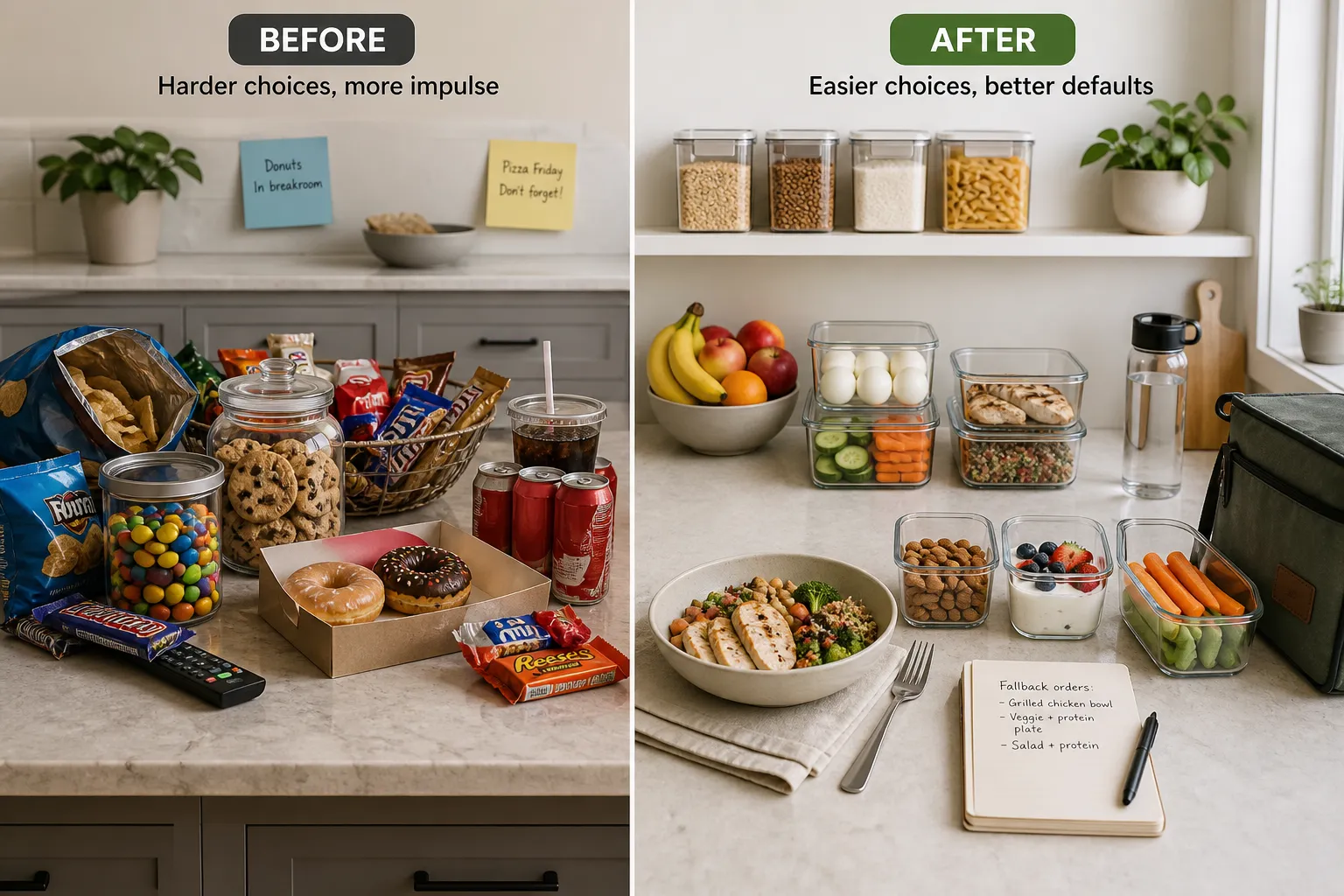
Availability quietly shapes repetition. If chips are on the counter and fruit is hidden, the easier option wins more often. If you have no default lunch, you are more likely to eat whatever is fastest, not whatever best fits your intentions. Practical nutrition advice often comes back to this same idea: make the better choice visible, easy, and familiar in your routine.
Social situations add another layer of friction. A rigid plan can feel fragile when it has no way to handle birthdays, work dinners, or Friday takeout. Refusing food, estimating portions, or explaining your diet in public takes effort, and habits usually break where the plan creates the most social strain.
Better defaults reduce decision fatigue:
- Prep one or two staple meals you actually like
- Keep filling foods visible and easy to grab
- Portion foods that are easy to overeat
- Choose a few restaurant fallback orders in advance
That shift matters. Instead of blaming yourself for every lapse, look at the cues, convenience, and routines around the lapse. The couch snack, the office candy bowl, the commute coffee, and the takeout habit are often stronger than intention unless the environment changes with you.
Tracking helps only when it lowers the burden
Self-monitoring is one of the better-supported tools in weight management. Reviews of the research suggest it can help people notice patterns and make more consistent decisions, and ongoing monitoring is also common among many long-term maintainers in the National Weight Control Registry and in systematic reviews on self-monitoring. But the practical question is not whether tracking can work. It is whether you can keep doing it without it turning into a drain.
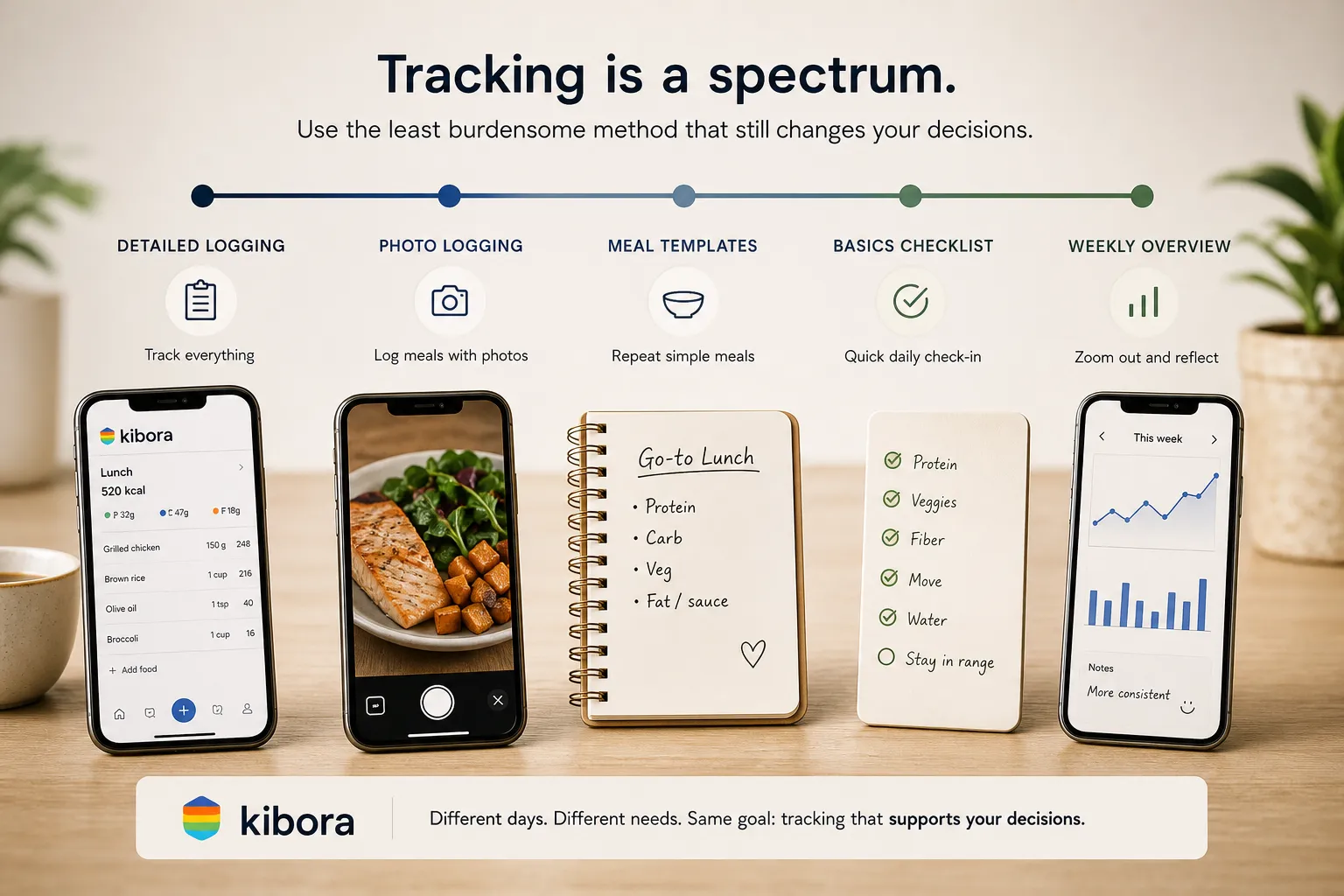
That is why the best tracking method is not the most detailed one. It is the least burdensome method that still changes your decisions. For some people, that means detailed calorie or macro logging during a learning phase. For others, it means photo logging, repeated meals, simple weigh-ins, hunger notes, or a quick checklist asking, “Did I follow my basics today?”
Tracking sits on a spectrum, not in two camps of “log everything” or “track nothing.” Someone might track closely for two weeks to learn portions, then switch to a meal template and weekly averages. Someone else might log a restaurant meal approximately, because rough awareness is usually more helpful than quitting because the entry is not perfect.
The downside shows up when tracking starts to feel like homework, punishment, or a test of accuracy. A missed log can trigger the same all-or-nothing spiral as an off-plan meal, especially if perfectionism creeps in. If you want a deeper look at that pattern, this guide on why calorie tracking feels hard breaks down the friction points.
A lower-friction tool can help, including an app if it makes logging faster and less stressful. But if the method makes you more obsessive, avoidant, or exhausted, the lesson is simple: fit matters more than detail.
The plan has to survive your worst day
A workable diet is not the one you can follow on a calm, well-planned Monday. It is the one that still holds together when you are tired, busy, hungry, and eating with other people. Design your diet for the hard day, not the ideal day, because long-term adherence depends more on repeatability than intensity, a point echoed in maintenance guidance from NIDDK.
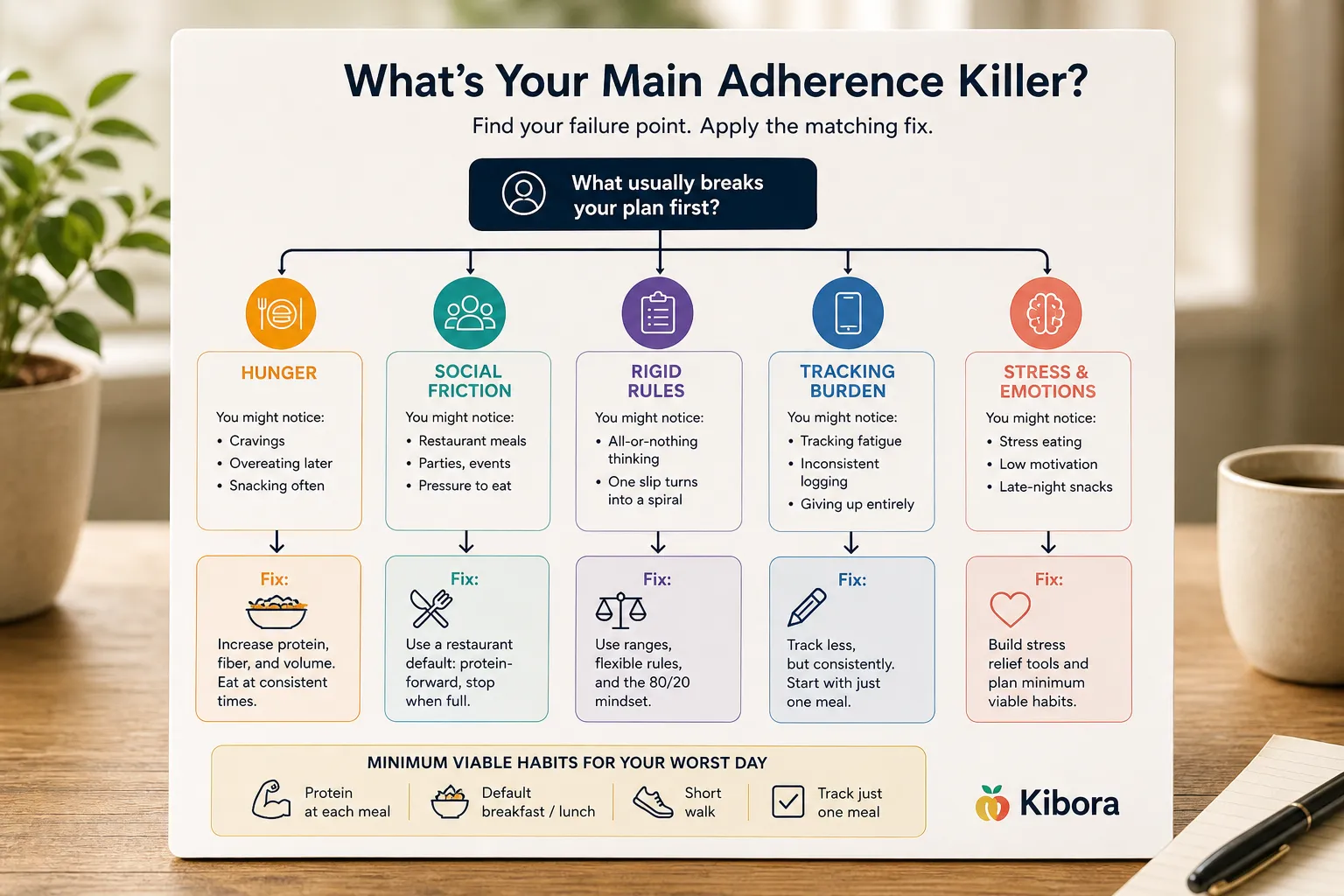
Start by asking a simple question: what usually breaks first? For some people it is hunger. For others it is boredom, restaurant meals, tracking fatigue, stress eating, or all-or-nothing thinking that turns one off-plan meal into a lost weekend.
Once you know the failure point, change one variable before changing everything. If hunger is the issue, increase protein, fiber, meal volume, or meal timing before cutting calories further. If social meals are the issue, decide on a restaurant default like ordering a protein-forward meal and stopping when comfortably full, instead of banning restaurants and then rebounding.
This is also where minimum viable habits help. On low-motivation days, your plan might shrink to a few non-negotiables:
- protein at each meal
- a default breakfast or lunch
- a short walk
- tracking only one meal instead of none
Those are not loopholes. They are recovery tools. Research on maintenance-focused behavioral strategies consistently points toward self-regulation, relapse prevention, and practical routines that can resume quickly after lapses, rather than perfection-only rules that collapse under stress PubMed.
Use ranges, defaults, and repeatable routines more often than rigid rules. A diet you can restart at the next meal is usually more sustainable than one that demands a flawless streak.
Make the diet smaller before you make it stricter
If you keep thinking, “why can’t I stick to a diet,” take that as feedback, not a verdict. When a diet keeps breaking, the answer is usually not more willpower. It is removing the failure points that keep asking for it.
“Weight management is about a lifelong change in behavior.”
That framing from NIDDK matters because it shifts the goal from perfect days to repeatable ones. A plan that reduces hunger, leaves room for real life, and gives you a recovery path after lapses is usually the plan you can actually keep.
Your next step is simple: identify the first point of failure and make that part easier this week. Choose one: make breakfast more filling, plan a restaurant fallback, loosen one rigid rule, or simplify tracking.
You do not need a tougher diet. You need a plan that fits your life well enough to survive it.
- Key sources
- NIDDK – Choosing a Safe and Successful Weight-loss Program
- NIDDK – Weight-loss and Maintenance in Adults
- CDC – Losing Weight
- National Weight Control Registry
- Systematic review on self-monitoring and weight loss (example entry point via PubMed)
- Systematic review on restrained eating and disinhibition (example entry point via PubMed)
- PubMed search on weight-loss maintenance behavioral interventions
- Harvard T.H. Chan School of Public Health – The Nutrition Source