


- What you'll learn
- Why the scale can jump after a salty, high-carb, or alcohol-heavy weekend
- Why skipping meals, crash dieting, or extra cardio usually backfires
- How to build a simple reset meal with protein, fiber, and fluids
- Which habits help reduce bloating and “heavy” feelings fast
- How sleep changes appetite and makes Monday cravings feel worse
- When repeated weekend overeating may point to a bigger pattern that needs support
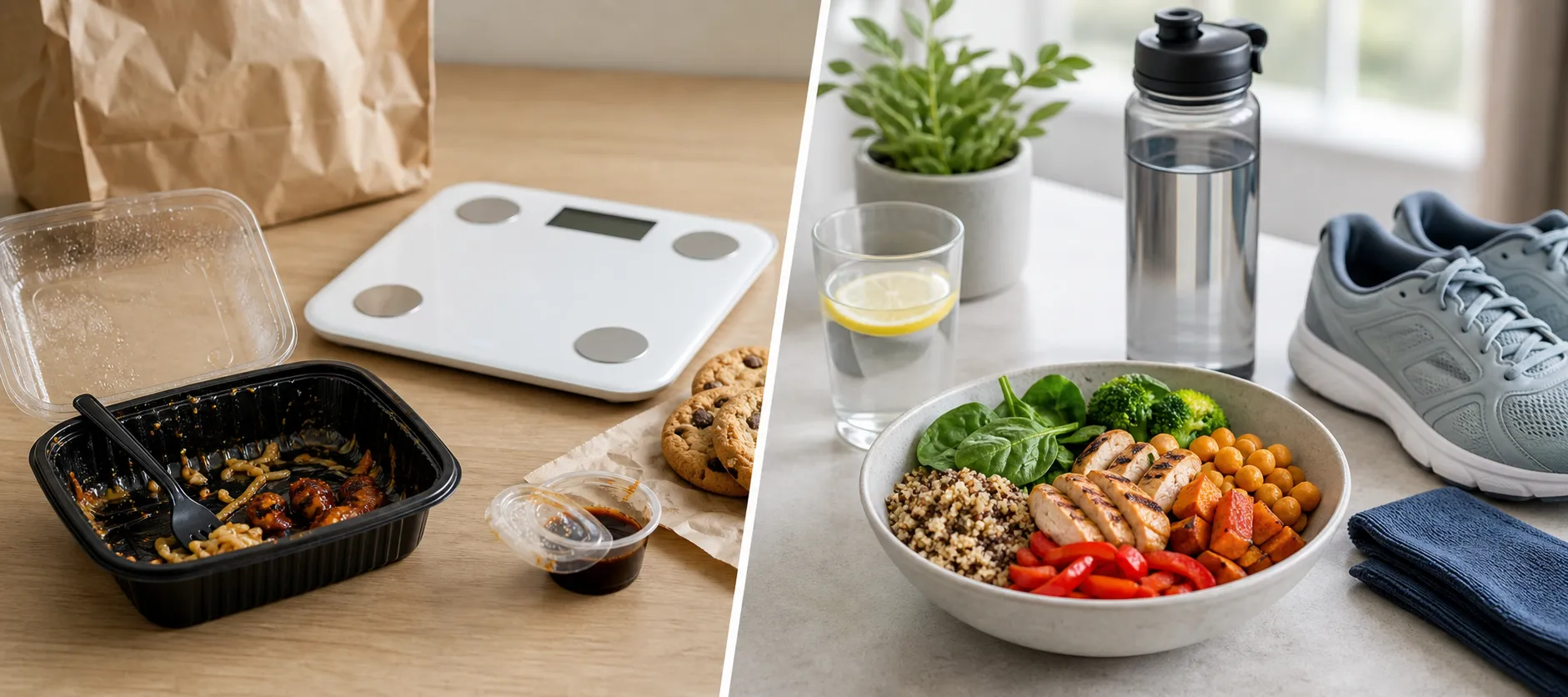
It is Monday. The scale is up, your jeans feel tighter, digestion feels off, and the first instinct is to skip breakfast or try to outrun the weekend with a punishing workout.
Pause there. A weekend of pizza, brunch, restaurant meals, dessert, salty snacks, late nights, or alcohol can leave you bloated, sluggish, and anxious, but it does not mean you ruined your progress. Much of that quick jump is often tied to water, sodium, glycogen, and gut contents before any meaningful fat gain occurs.
Treat the weekend as data, not damage: the next best step is not punishment, but a fast return to the routines that already support your goals. This guide will show you what likely happened and exactly how to get back to normal without making the binge-restrict cycle worse.
First, understand why the scale jumped
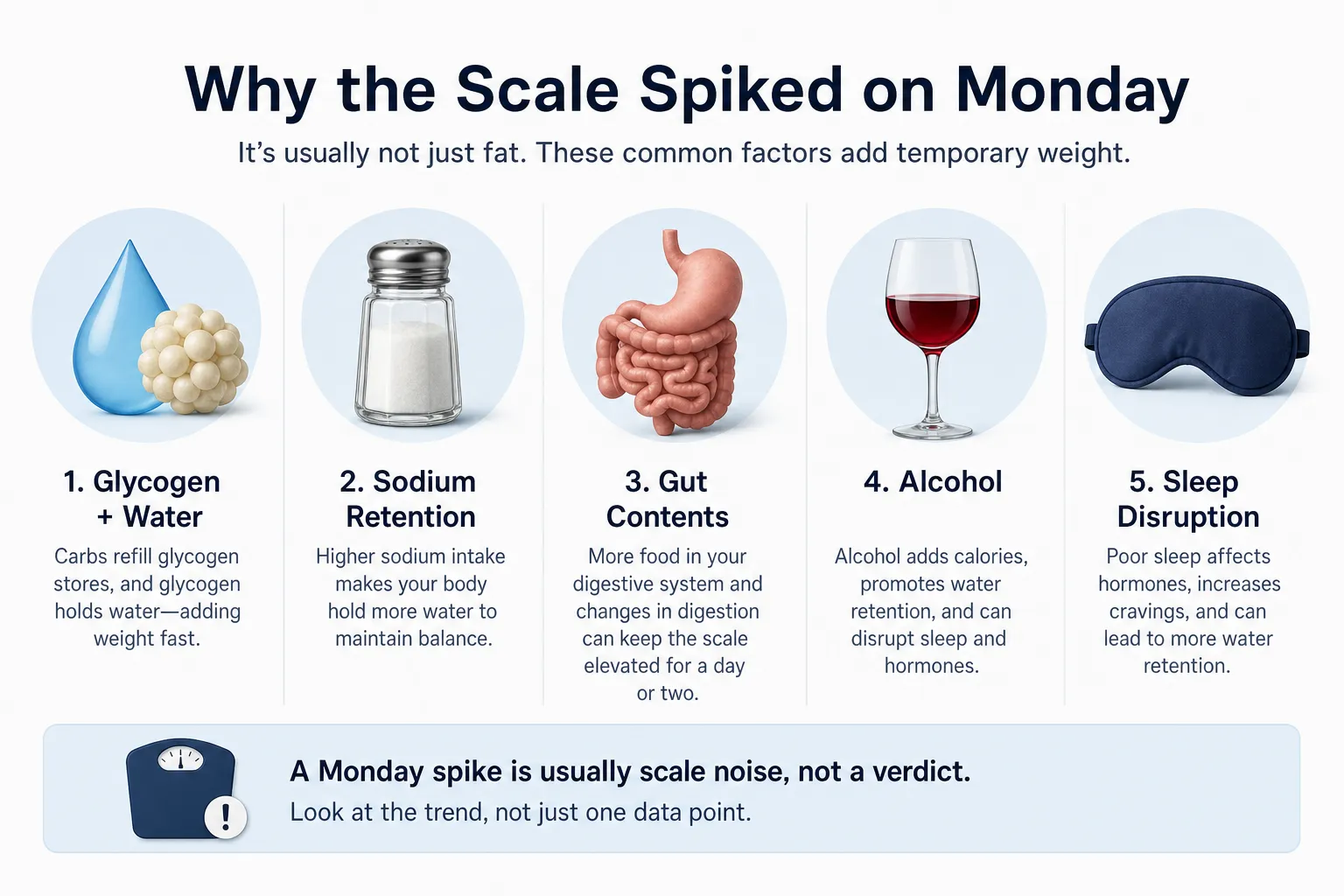
If the scale shot up after the weekend, the number may be real, but it is not a clean reading of fat gained. A post-weekend scale spike is usually a mixed signal: some calorie surplus may be real, but much of a fast jump often comes from glycogen, sodium, water, gut contents, alcohol, and poor sleep.
Start with carbs. When you eat more carbohydrate than usual, your body refills glycogen stores, and glycogen is stored along with water, which can raise body weight quickly even before any meaningful fat gain shows up. This is a normal part of physiology, not a sign that your body suddenly changed overnight. Research on glycogen storage consistently supports this glycogen-plus-water effect here.
Sodium adds another layer. Restaurant meals, takeout, sauces, deli foods, chips, and other processed foods are often high in sodium, and higher sodium intake can increase short-term fluid retention as your body holds onto more water to keep fluid balance steady according to the American Heart Association.
Then there is simple food volume. If you ate more than usual, that food does not vanish when the weekend ends. More food moving through your digestive system, plus constipation if your routine changed, can leave the scale elevated for a day or two even though that weight is not body fat.
Alcohol can also make the picture messier. A weekend with pizza, fries, drinks, dessert, and less sleep can stack carbs, sodium, alcohol, and gut volume all at once, which creates a lot of scale noise. Alcohol may also disrupt sleep and routine, and poor sleep can affect appetite, cravings, and next-day food choices, making Monday feel worse than it really is.
None of this means fat gain is impossible. Fat gain depends on an actual calorie surplus, and short-term overfeeding can contribute to that, but a dramatic overnight spike is usually not pure fat. Short-term weight change is influenced by multiple factors at once, which is why a single weigh-in is noisy data, not a reason for a drastic diet decision as overfeeding research suggests.
If you want a deeper breakdown of why weight can rise without a true jump in body fat, this explanation of non-fat scale changes helps. The key point for now is simple: do not treat one Monday weigh-in like a verdict. Treat it like feedback from a noisy system.
Do not make Monday a punishment day
The biggest mistake after overeating is trying to erase the weekend in one day. The better goal is to make the next normal choice as soon as possible.
Do not skip meals because you ate a lot yesterday. Skipping breakfast and lunch often feels “disciplined” at first, but severe restriction can ramp up hunger, increase food fixation, and set you up for another overeating episode at night.
Do not slash calories to an extreme level either. Both the NIDDK and the NHS recommend balanced, sustainable habits over crash dieting, because extreme compensation is harder to maintain and more likely to backfire.
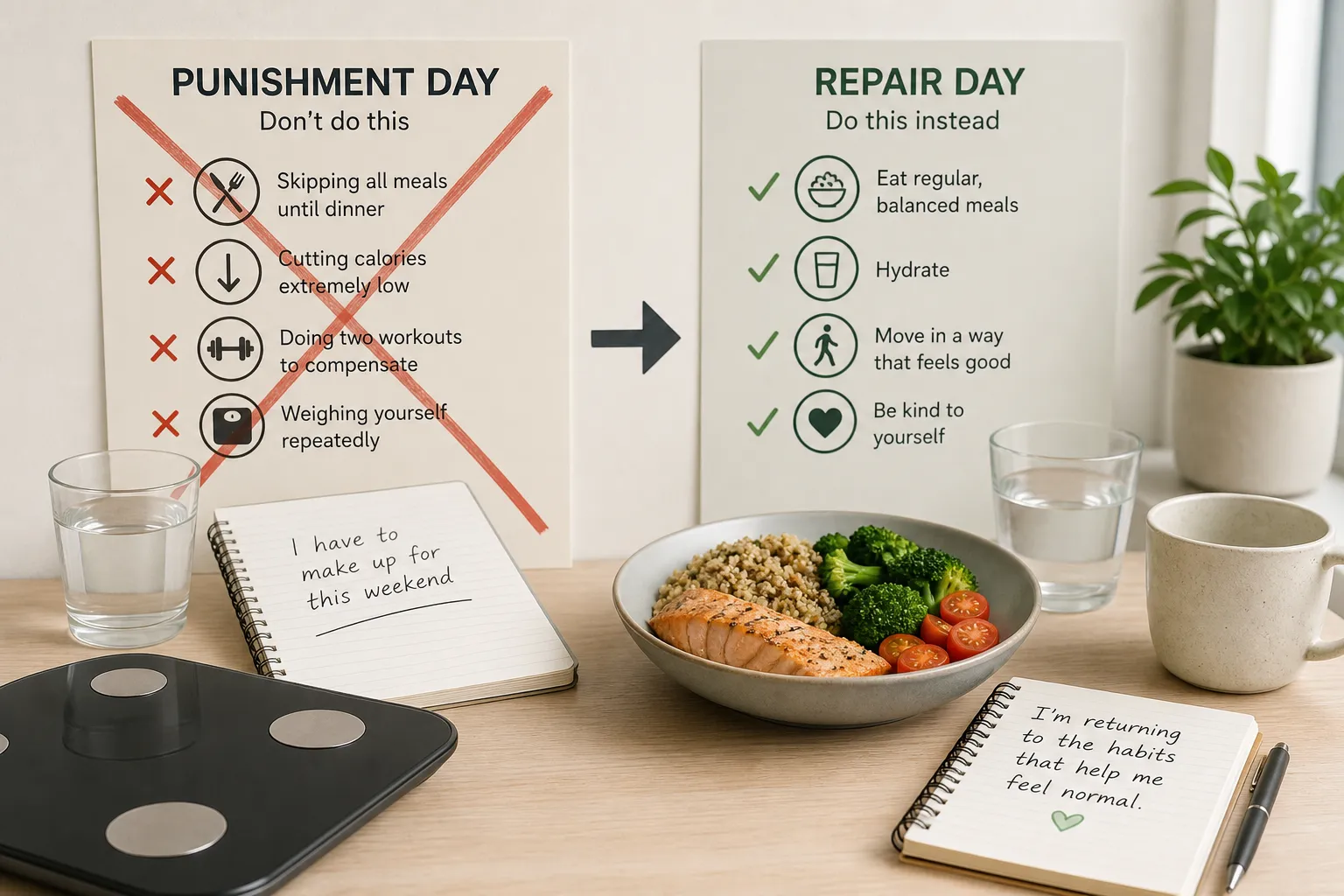
It helps to name the mindset shift. Punishment says, “I must pay for what I ate.” Repair says, “I am returning to the habits that help me feel normal.” One creates a cycle. The other breaks it.
That means avoiding common forms of overcorrection like these:
- Skipping all meals until dinner
- Cutting calories extremely low
- Doing two workouts to compensate
- Weighing yourself repeatedly throughout the day
Exercise is another place people overcorrect fast. A guilt-driven workout may give temporary relief, but it can reinforce the idea that food must be earned or burned off, which is not a stable way to recover.
Checking the scale over and over does not help either. It usually increases stress and keeps your attention locked on “undoing” the weekend instead of returning to routines that actually move you forward.
A normal day is the recovery strategy, not giving up. If you want a little structure without turning the day into compensation, this guide on eating better without tracking calories can help.
Build your next meals around protein, fiber, and fluids
Your next step is a real meal, not a punishment-sized one. A good post-weekend reset meal is not tiny or ultra-clean. It is a normal meal with protein, fiber-rich carbs or plants, and enough fluid to help hunger and digestion stabilize.
This approach is more useful than trying to "make up for it" with restriction. Both the Academy of Nutrition and Dietetics and the NHS emphasize steady, balanced habits over extremes, which is exactly what helps after a weekend of overeating.
Protein helps with satiety, which can make it easier to stop the all-day grazing that often follows indulgent weekends. Fiber from vegetables, fruit, beans, oats, whole grains, or potatoes can also help meals feel satisfying while supporting more normal digestion and steadier energy.
Fluids matter too, especially if the weekend included salty restaurant food, takeout, or alcohol. You do not need to chug water, but drinking consistently through the day can help you feel more human again and make it easier to notice true hunger instead of thirst or general sluggishness.
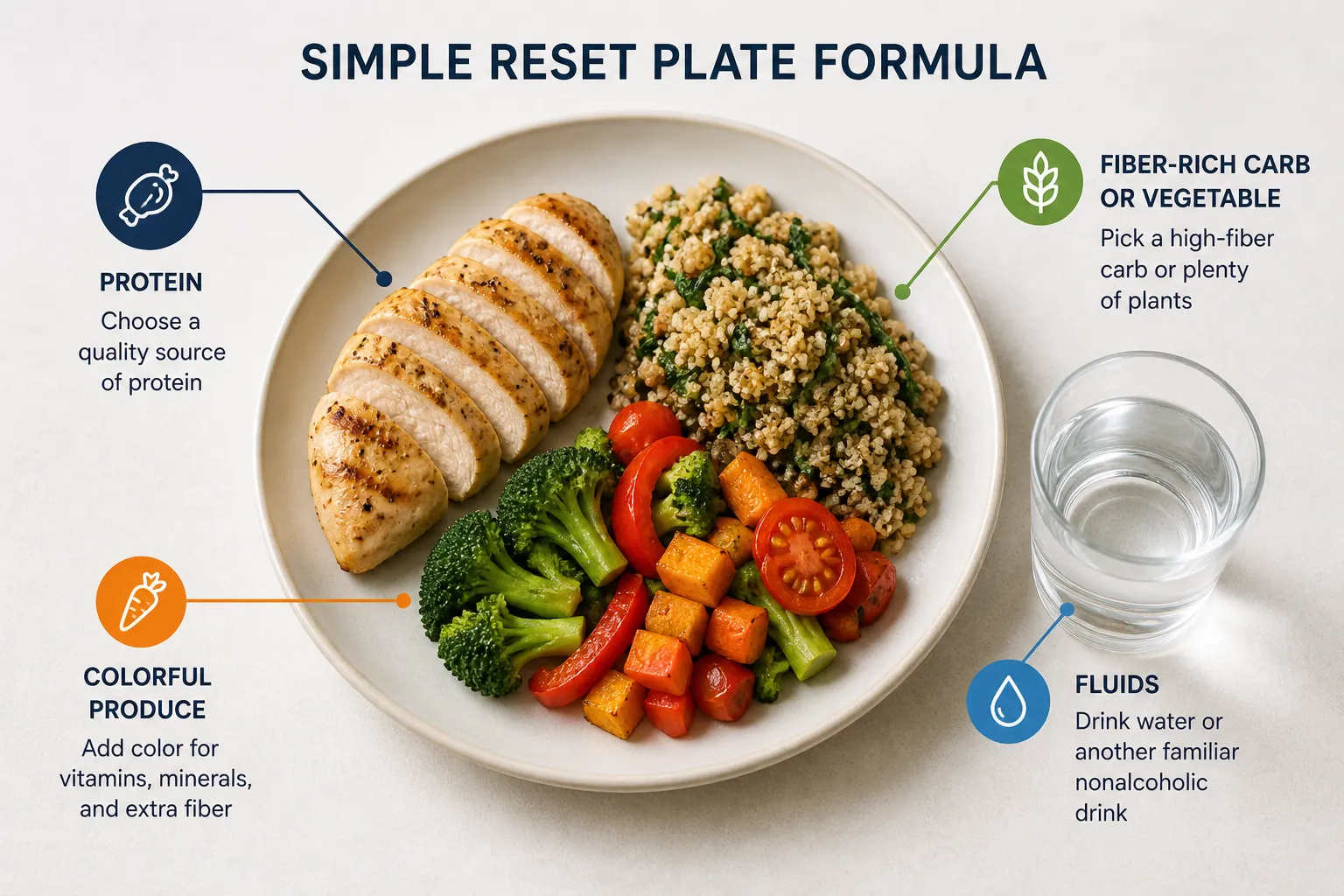
Use a simple plate formula
Keep it easy: pick one protein, one high-fiber carb or plant food, and a drink. If you want more structure, this guide to foods that keep you full longer can help you build meals that feel steady rather than restrictive.
- Protein: eggs, Greek yogurt, chicken, turkey, tofu, beans, lentils, fish, cottage cheese
- Fiber-rich carbs or plants: fruit, oats, potatoes, rice and vegetables, beans, whole-grain bread, salad, roasted vegetables
- Fluids: water, sparkling water, milk, tea, or another familiar nonalcoholic drink
What that looks like in normal meals
Breakfast can be eggs with whole-grain toast and fruit, Greek yogurt with berries and oats, or a tofu scramble with vegetables. These are filling enough to settle the "I should be good today" mindset that often backfires by midmorning.
Lunch can be a chicken or bean bowl with rice, vegetables, salsa, and avocado, a turkey sandwich with fruit, or lentil soup with a salad. Dinner can be salmon or tofu with potatoes and vegetables, chili with beans, or a stir-fry with lean protein and rice.
Snacks should follow the same logic, not become random extras. Good options include fruit with yogurt, cottage cheese, hummus and vegetables, or a protein-rich smoothie.
If your stomach feels off, bland and simple foods can be a smart bridge for a meal or two. Toast, oatmeal, bananas, rice, soup, eggs, or yogurt may sit better, but the goal is still to return to normal eating, not to cleanse, detox, or restrict.
Use hydration, walking, and sleep to clear the noise
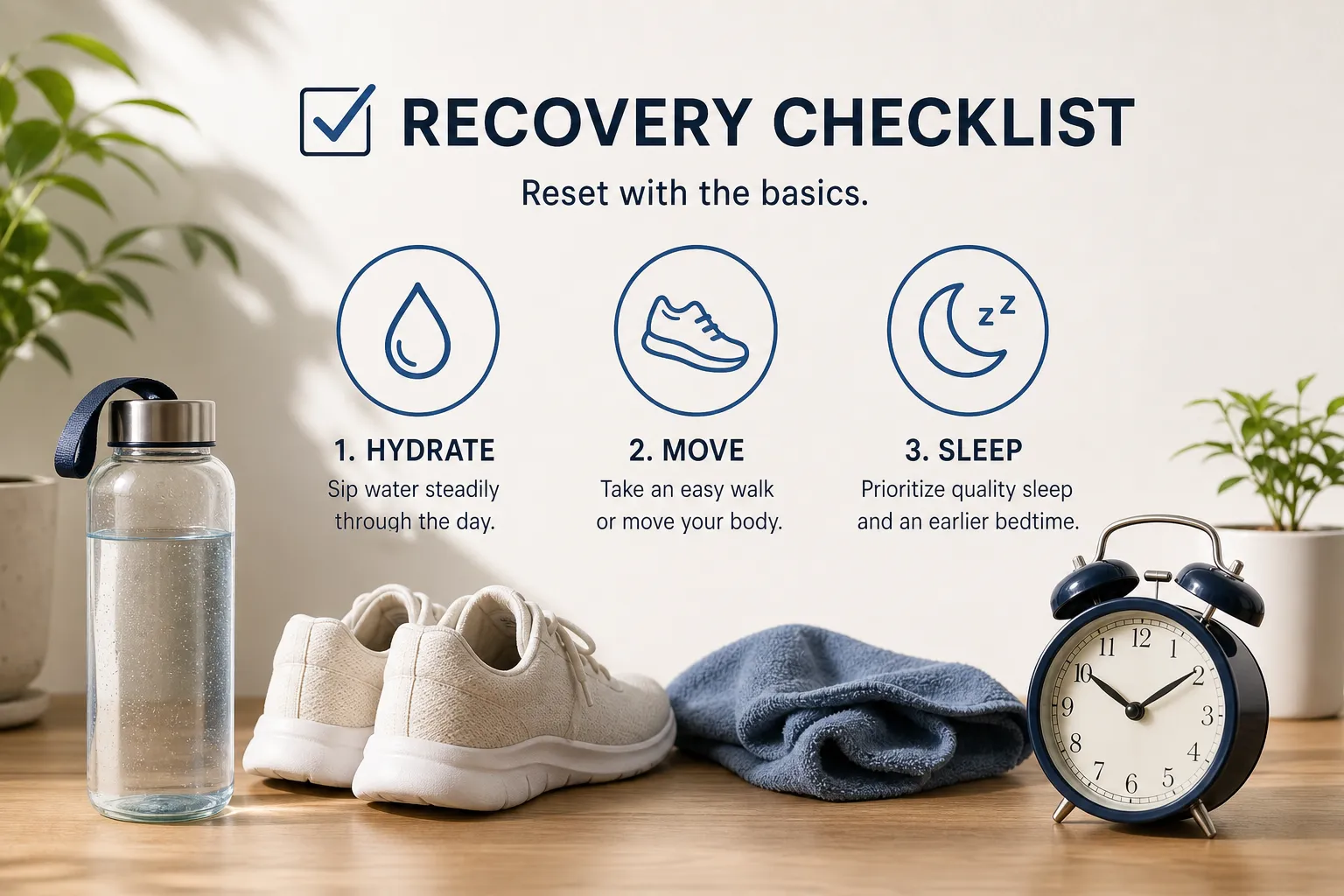
After a big weekend, focus on the basics that calm things down instead of trying to undo anything. Sip water steadily through the day, have a glass with meals, and keep a bottle nearby so hydration happens by default, not as a frantic fix.
If digestion feels off, pair that water with your usual meals, fiber, and a little movement. For many people, hydration plus fiber plus walking does more for bloating and sluggishness than panic restriction ever will.
A short walk can help you feel more normal fast. Think 10 to 30 minutes after a meal, easy cycling, mobility work, or your regular workout at normal intensity if you feel good. Movement after a high-calorie weekend should restore rhythm, not repay a debt.
That matters for routine as much as calories. An easy walk gets you out of the all-or-nothing mindset, supports digestion, and can take the edge off that heavy, stuck feeling without turning recovery into punishment.
Alcohol interferes with your sleep.
That is not just an annoyance. The CDC includes avoiding alcohol before bed as part of good sleep hygiene, because it can disrupt sleep quality and next-day recovery CDC. Short or broken sleep is also linked with higher appetite and energy intake, which can make cravings feel louder than they really are PubMed.
If the weekend included drinks, an earlier bedtime may help more than another “clean-up” rule. Prioritizing sleep supports mood, appetite regulation, and getting back to your normal routine the next day CDC.
Wait for the trend before you change the plan
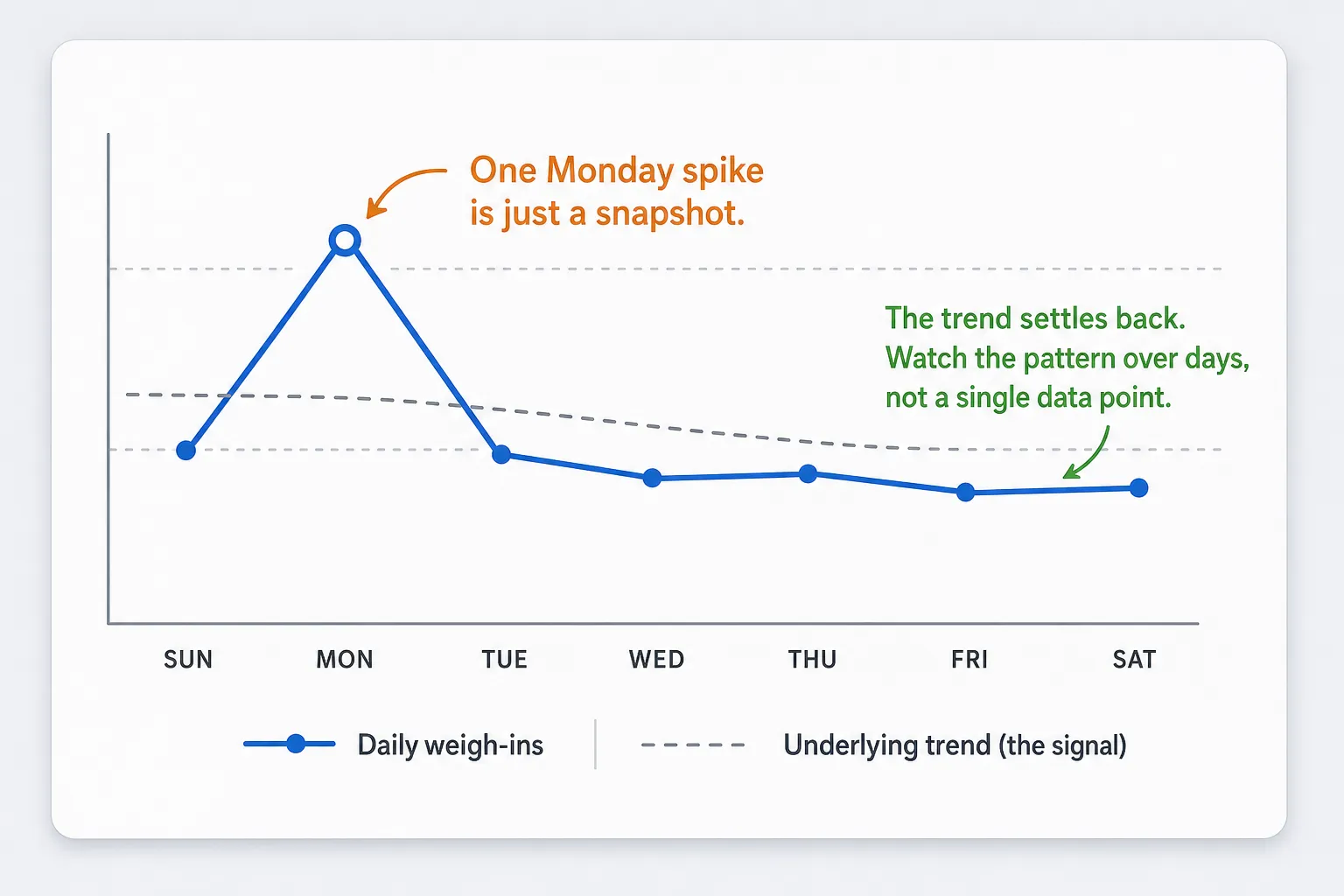
Do not change your calorie target because of one Monday weigh-in. One weigh-in is a snapshot; your trend is the signal. After a weekend of salty food, alcohol, later meals, and less sleep, the scale can be noisy for a few days.
The better move is to return to your normal plan and watch what happens over the next several days. If your weight drifts back toward baseline by midweek or later, that tells a very different story than a trend that has been creeping up for a month.
If you track food, log the weekend and Monday honestly enough to learn from it. Do not try to “balance the books” with aggressive cuts, skipped meals, or punishment. Tracking works best as neutral information, not a guilt tool.
If you do not track, use a few simple anchors instead: regular meals, protein, fiber, steps, and sleep. Those habits give you enough structure to settle things down without reacting to one noisy data point.
This matters because the pattern often explains more than the spike. Five highly restricted weekdays followed by two uncontrolled weekend days can keep someone stuck, so the useful question is not “How do I erase this?” but “What pattern does this reveal?”
If the trend is still moving the wrong way after several normal days, then adjust calmly and sustainably, which aligns with NIDDK guidance on weight management. If you want a practical way to read that data, this guide on adjusting calories based on progress can help you decide when a real change is warranted.
If every weekend needs a reset, fix the pattern
A one-off weekend is different from a weekly cycle. If you need a dramatic reset every Monday, the real issue may be the weekday routine that keeps setting the weekend up, not the weekend itself.
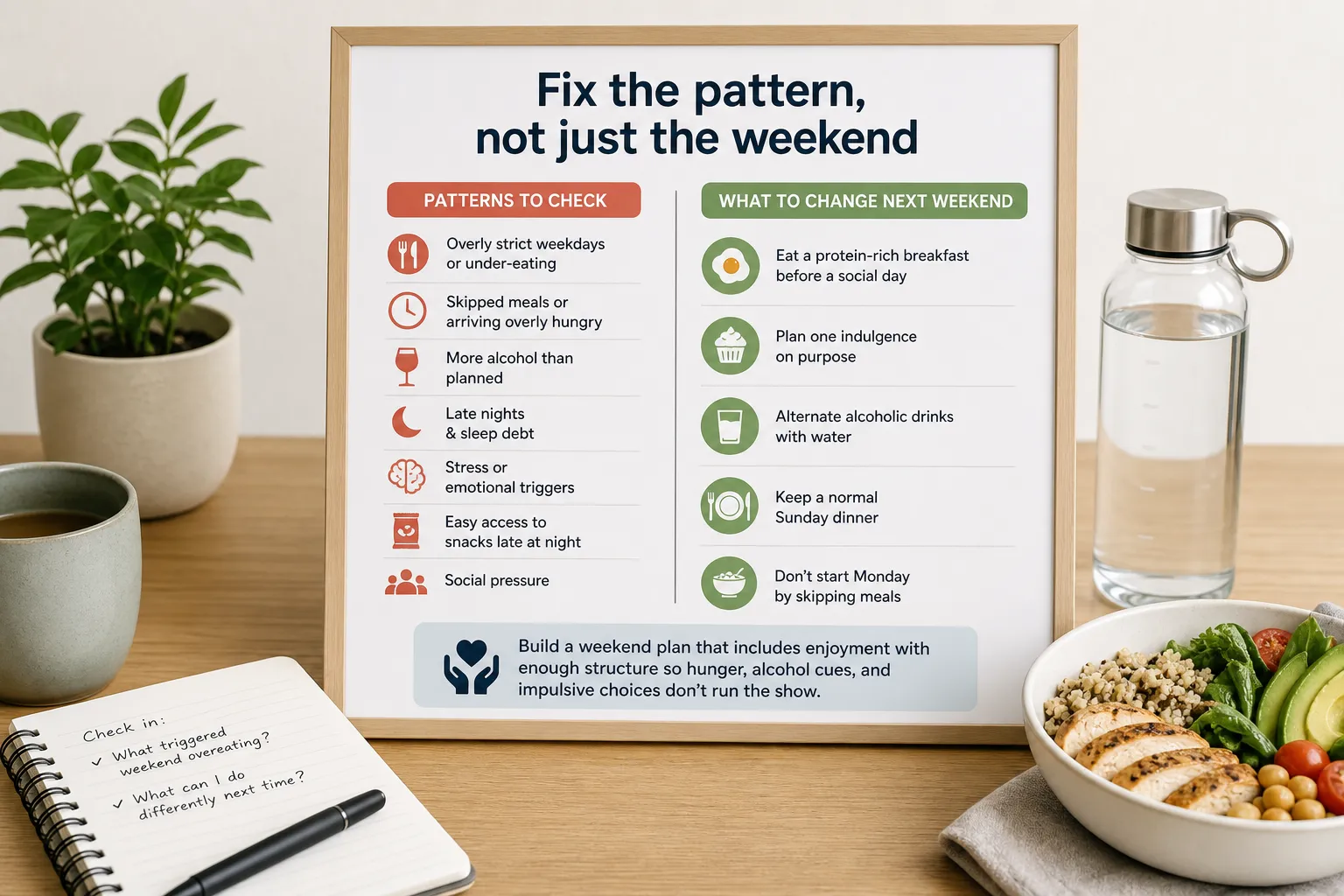
Look at repeated weekend overeating with curiosity, not judgment. Ask what actually drove it: overly strict weekdays, skipped meals before dinner, not enough protein or fiber earlier in the day, more alcohol than planned, late nights, social pressure, stress, sleep debt, or easy access to snack foods after midnight.
Restriction is a common setup. If Friday arrives after a week of “being good,” under-eating, or pushing through hunger, the weekend can feel like a release valve, which is why sustainable patterns matter more than heroic short-term correction according to NIDDK guidance on weight management.
What to change next weekend
- Eat a protein-rich breakfast before a social day so you do not arrive overly hungry.
- Plan one indulgence on purpose instead of relying on all-or-nothing rules.
- Alternate alcoholic drinks with water, especially if late-night eating tends to follow drinking.
- Keep a normal Sunday dinner instead of “making up for it” by restricting.
- Do not start Monday by skipping meals.
The best weekend plan is not brittle. It should include enjoyable food on purpose, along with enough structure to keep hunger, alcohol cues, and impulsive choices from running the show.
If overeating feels frequent, distressing, secretive, or out of control, that is not a character flaw or a willpower failure. A registered dietitian, therapist, or medical professional can help you sort out the pattern and build a steadier approach.
The reset is getting back to normal
You do not need to punish a weekend of overeating, and you do not need to erase it. Most dramatic Monday weigh-ins are noisy and temporary, not a verdict on your progress. The useful response is simple: get back to your usual routine and let the trend settle.
A normal reset works better than an extreme one because it lowers the odds of another rebound. Progress is not defined by never overeating; it is defined by how quickly you return to the habits that make overeating less likely next time. That also gives you better information about what actually happened, whether it was less sleep, more alcohol, unplanned meals, or just a break in structure.
If you want a next step, keep it short:
- Eat your next normal protein- and fiber-rich meal
- Drink water
- Move normally or take a walk
- Plan dinner
- Go to bed on time
- Check the trend later, not the panic now
The weekend does not need to be erased. Eat a normal protein- and fiber-rich meal, drink water, move normally, sleep, and wait for the trend. Consistency is built by returning to the plan quickly, not by never having off-plan meals.
- Key sources
- American Heart Association sodium guidance
- Review literature on carbohydrate storage and glycogen-associated water
- PubMed search for overfeeding studies and short-term weight change
- National Institute of Diabetes and Digestive and Kidney Diseases (NIDDK) weight management guidance
- NHS Healthy weight and weight loss guidance
- Academy of Nutrition and Dietetics
- CDC Sleep and Sleep Hygiene resources
- CDC sleep hygiene guidance
- PubMed search for sleep restriction appetite and energy intake
- PubMed search for alcohol appetite food intake weekend eating


