



- Kaj boš izvedel/-a
- Kako začeti s konkretnim vprašanjem, da te dnevnik hrane pripelje do odločitve, ne samo do še več številk
- Katere signale se splača beležiti za lakoto, trende teže, beljakovine, vlaknine, čas obrokov in energijo za trening
- Zakaj so dnevniki hrane ocene in kako počistiti šum v podatkih, preden vlečeš zaključke
- Kako brati dnevnik skozi ponovljive vzorce, namesto da reagiraš na en visokokaloričen dan ali eno zgrešeno tarčo
- Kako testirati eno majhno spremembo naenkrat in preveriti, ali ti dejansko izboljša naslednji obrok ali naslednji teden
- Kdaj so lažje metode beleženja, tedenski pregledi ali neštevilčni zapiski boljša izbira, posebej če ti podrobno beleženje povečuje tesnobo
Zabeležiš teden obrokov, kalorij, makrov, fotk ali vnosov v aplikacijo, potem pa gledaš v ekran in se sprašuješ, kaj naj bi ti vse to povedalo za naslednjo izbiro. Beležiti hrano je lahko. Vedeti, kaj narediti s podatki, je težje.
Koristen premik je, da podatkov o hrani nehaš jemati kot dnevno oceno in jih začneš uporabljati kot sistem povratnih informacij. Poanta ni popolno beleženje. Poanta je opaziti, kaj očitno vpliva na lakoto, energijo, napredek in doslednost, kar se ujema s širšo vlogo samospremljanja pri spremembi vedenja, kot jo opisuje CDC.
Torkov seštevek 2.300 kalorij ti lahko pove manj kot vzorec, da zajtrki z malo beljakovin vodijo v popoldansko prigrizkanje. Ena pozna večerja je samo en dan, štiri pozne večerje, po katerih slabše spiš in si zjutraj lačen/-a, pa so mogoče že vredne testa.
Ta članek te pelje čez preprost potek: postavi boljše vprašanje, počisti signal, poišči vzorce, naredi eno majhno spremembo in pregleduj trende namesto posameznih dni.
Začni z odločitvijo, ki jo želiš s podatki izboljšati
Široko beleženje zveni temeljito, ampak pogosto ustvari več šuma kot jasnosti. Poln dnevnik hrane lahko nabere kup podrobnosti, ne da bi ti pomagal odgovoriti na tisto eno stvar, ki jo dejansko želiš spremeniti.
Prvi korak je bolj enostaven: definiraj vprašanje, preden se odločiš, kaj boš beležil/-a. Tako podatki o hrani ostanejo povezani z odločitvijo, namesto da se spremenijo v prazen ukaz, da moraš zapisati vse.
Dobro vprašanje je konkretno in praktično. Ne “Kako naj jem boljše?”, ampak “Zakaj sem lačen/-a ob 16.00?” ali “Zakaj se trend moje teže ne premakne?” ali “Zakaj so treningi nekatere dni čisto brez energije?”
Ko je vprašanje jasno, se metoda beleženja običajno zmanjša. Za veliko ljudi je delno beleženje dovolj, če ujame signale, ki odgovorijo na vprašanje.
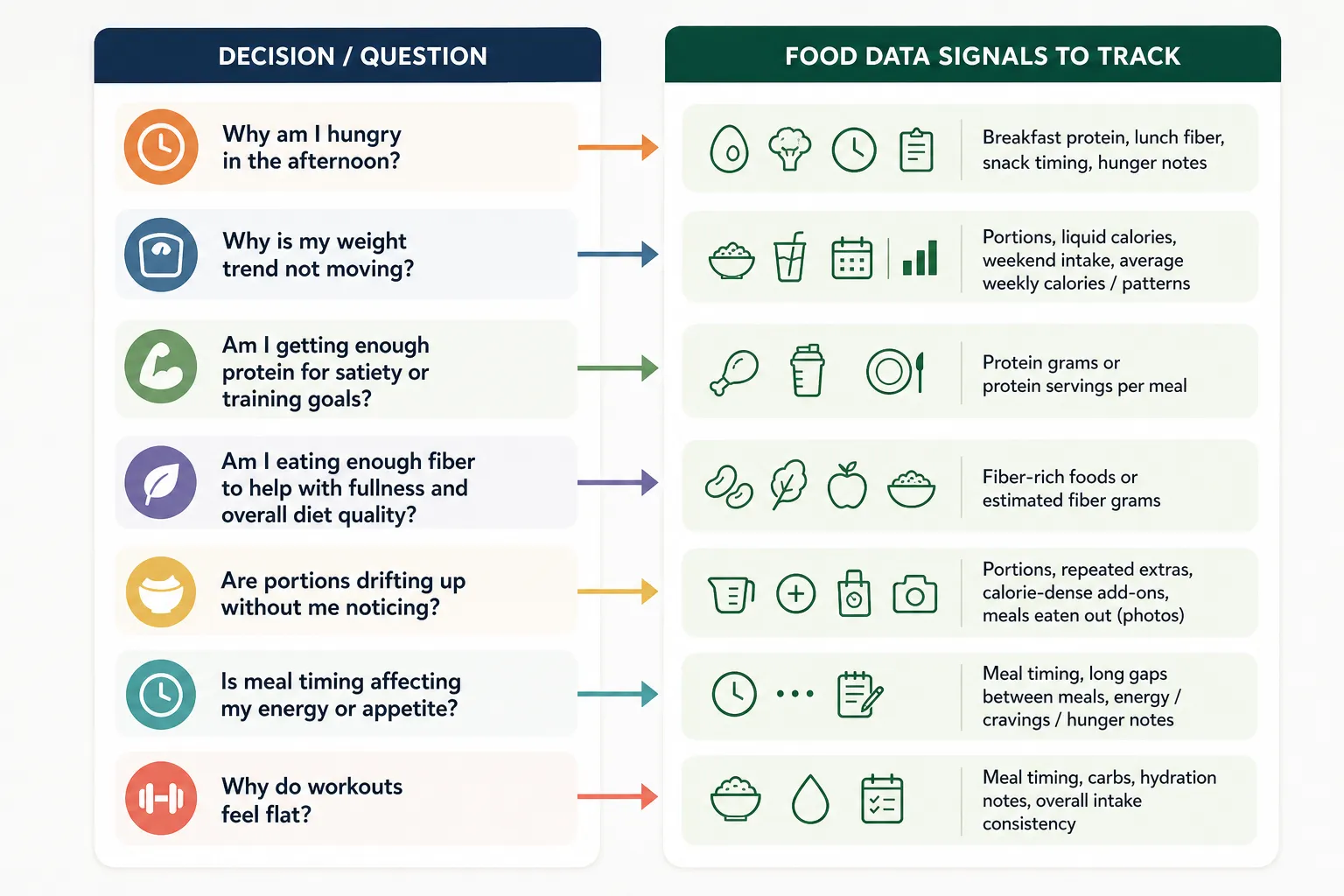
Tukaj je preprost meni vprašanj, usmerjenih v odločitve, in podatkovnih točk, ki pašejo zraven:
- Zakaj sem popoldne lačen/-a?
Nekaj dni beleži beljakovine pri zajtrku, vlaknine pri kosilu, čas prigrizkov in par zapiskov o lakoti. Ne rabiš popolnega dnevnega zapisa kalorij, da preveriš, ali te zgodnejši obroki pustijo premalo nahranjenega/-o. - Zakaj se trend moje teže ne premika?
Beleži približne porcije, tekoče kalorije, vikend vnos in povprečne tedenske kalorije ali vzorce vnosa. Tedenski trendi so ponavadi bolj uporabni kot reakcija na en visokokaloričen dan ali en obrok v restavraciji. - Ali dobim dovolj beljakovin za sitost ali cilje treninga?
Beleži grame beljakovin ali še bolj enostavno, porcije beljakovin na obrok. Če je cilj doslednost, ti lahko grobo štetje pri zajtrku, kosilu in večerji pove več kot zelo podroben dnevnik, ki ga ne moreš držati. - Ali pojem dovolj vlaknin za sitost in boljšo kakovost prehrane?
Beleži živila z veliko vlakninami, kot so fižol, zelenjava, sadje, polnozrnata žita in prigrizki z veliko vlakninami, ali pa ocenjene grame vlaknin, če se ti to zdi izvedljivo. Poanta je videti, ali se obroki z malo vlakninami ujemajo z manjšo sitostjo ali manj doslednosti. - Ali se porcije večajo, ne da bi opazil/-a?
Beleži približne porcije, ponavljajoče dodatke, kalorično goste dodatke in obroke zunaj doma. Fotke lahko tukaj dobro delujejo, če so ti številke nadležne. - Ali čas obrokov vpliva na mojo energijo ali apetit?
Beleži čas obrokov, dolge razmake med obroki in kratke zapiske o energiji, željah po hrani ali lakoti. To je bolj uporabno kot sklepati, da ena pozna večerja sama po sebi karkoli dokazuje. - Zakaj so treningi brez energije?
Beleži čas obrokov, obroke z ogljikovimi hidrati, zapiske o hidraciji in splošno doslednost vnosa. Nekaj dni konteksta lahko pokaže, ali gre za premalo goriva, dolge razmake brez hrane ali kaj drugega, kar se splača prilagoditi.
Tak pristop se ujema s praktičnimi smernicami za spremembo vedenja od National Institute of Diabetes and Digestive and Kidney Diseases, ki poudarja trajnostne navade in samospremljanje, ki podpira odločitve v realnem življenju. Cilj ni popolno merjenje. Cilj je dobiti dovolj signala, da lahko testiraš razumen naslednji korak.
Če želiš več o tem, kako z beleženjem ustvariti vpogled in ne samo zbirati številk, ti lahko pomaga ta članek o tem, kdaj je beleženje kalorij uporabno. Orodja, kot je Kibora, lahko pomagajo povezati zabeležene obroke z znanstveno podprtimi predlogi za naslednje korake, ampak okvir deluje tudi z aplikacijo za zapiske, fotkami obrokov ali kratkim seznamom za odkljukat.
Pomembna niansa: če ti beleženje povečuje tesnobo, perfekcionizem ali neurejene prehranske vzorce, so manj intenzivne metode pogosto boljše. Ožje vprašanje, manj podatkovnih točk ali neštevilčni zapiski ti še vedno lahko pokažejo vzorce, brez da se proces spremeni v stalno nadzorovanje.
Počisti signal, preden zaupaš številkam
Dnevniki hrane niso natančni zapisi. So ocene, in to je pomembno, ker deklaracije, vnosi v bazah, ugibanje porcij in samoporočan vnos vsi nosijo realno napako, posebej ko pridejo zraven restavracijski obroki in spomin, glede na raziskovalno literaturo o samoporočanju prehrane.
To ne pomeni, da je beleženje neuporabno. Pomeni, da svoj dnevnik uporabljaj kot nepopolne, a informativne podatke: super za opaziti trende, manj super za razglašati, da je imel en dan točno 1.842 kalorij ali da en nizek dan dokazuje, da je problem tvoj metabolizem.
Domač obrok, ki ga vsakič odmeriš podobno, je pogosto bolj zanesljiv kot restavracijski vnos iz baze v aplikaciji. Skleda, ki jo vedno napolniš do polovice, isti lonček jogurta ali piščanec, stehtan na isti način vsak teden, lahko skozi čas omogočijo boljše primerjave kot lepo videti številka, pripeta na jed z menija.
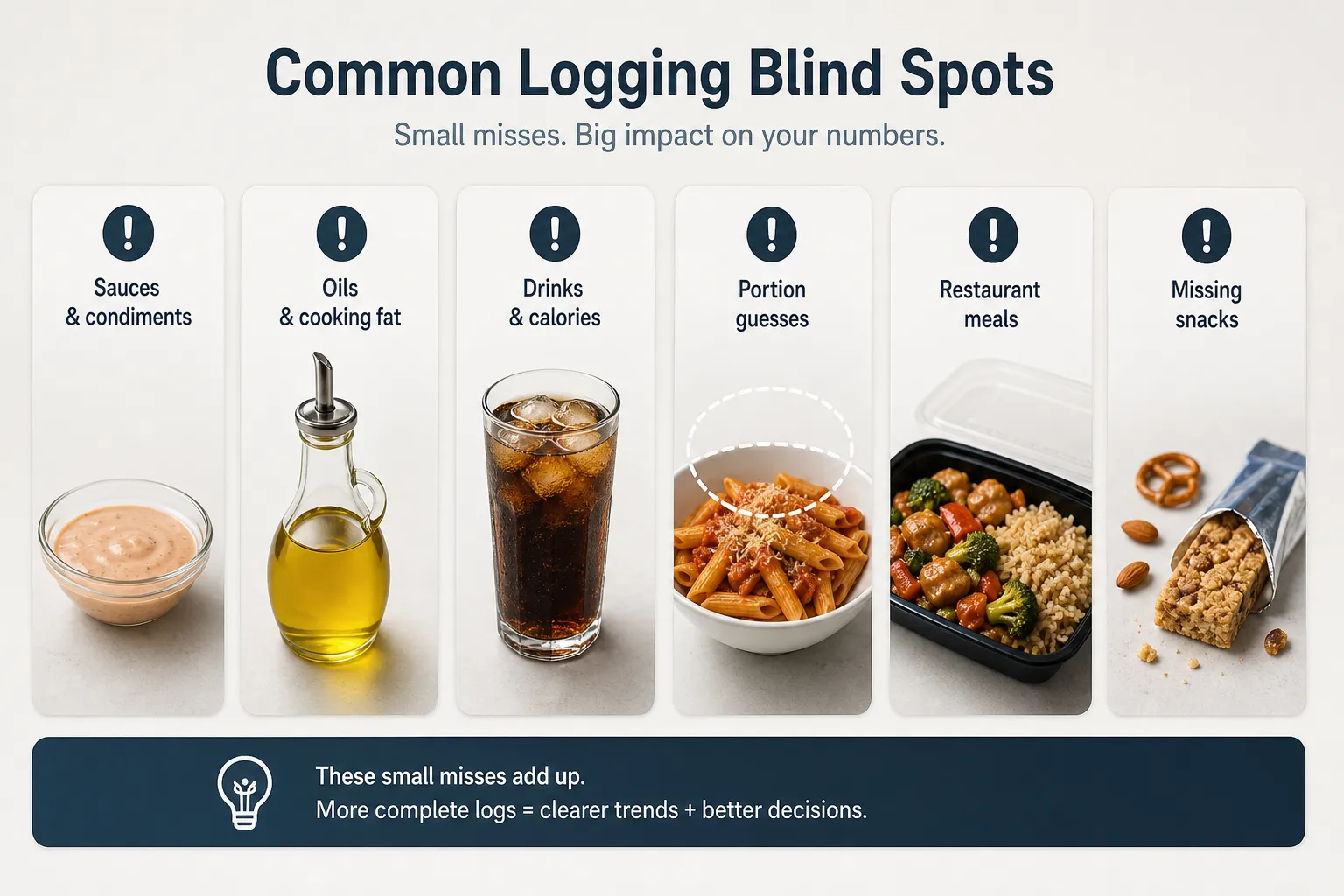
Pogosta izkrivljanja so dolgočasna, ampak močna: nezabeleženi grižljaji med kuhanjem, olja, omake, pijače, vikend obroki, skupne jedi in porcije, ki si jih ugibal/-a, ko si bil/-a v gužvi. Če so trije dnevi videti nizkokalorični, ampak vsi trije vključujejo pozabljene prigrizke ali dodatno maščobo za kuhanje, so podatki preveč nepopolni za velik zaključek.
Cilj ni popolno beleženje. Cilj je dovolj dosledno beleženje, da lahko podatki odgovorijo na vprašanje, s katerim si začel/-a.
Nekaj navad izboljša zanesljivost, brez da beleženje postane druga služba:
- Ponavljaj isto metodo za porcije, naj bo to tehtanje hrane, merjenje nekaterih osnovnih živil ali vedno ista vizualna ocena.
- Dodaj hitre opombe, ko je zaupanje nizko, na primer ocena restavracije, pozabljen prigrizek ali ugibana porcija.
- Označi obroke, ki so verjetno manj natančni, posebej dostavo, družabne obroke in vse, kar je sestavljeno iz generičnih vnosov v aplikaciji.
- Zabeleži manjkajoče stvari, namesto da se pretvarjaš, da je dan popoln. Opomba pijače niso zabeležene je bolj uporabna kot lažna natančnost.
Če ti pomaga, razvrsti vnose po zaupanju: zanesljivo, ocenjeno ali manjkajoče. Taka preprosta oznaka ti prepreči, da bi preveč bral/-a v šumeče dneve, in olajša primerjanje podobnega s podobnim.
Posebej previden/-a bodi pri kaloričnih ciljih v aplikacijah. To so izhodi modelov, ne resnice, zato lahko jemanje majhnega odstopanja nad ali pod ciljem kot nekaj pomembnega ustvari lažne alarme. Boljše vprašanje je, ali se tvoje tedensko povprečje in ponavljajoči vzorci ujemajo s ciljem, lakoto, energijo ali potrebami treninga.
Zato en dan redko sme voditi veliko odločitev. Raje glej razpone, povprečja in ponavljajoče situacije: pozno popoldansko lakoto med delovniki, vikende z veliko restavracijami ali padec beljakovin, ko preskočiš zajtrk.
Neurejeni podatki so lahko še vedno uporabni, če veš, kaj ti lahko in česa ti ne morejo povedati. Mogoče ti ne bodo dali popolnoma točnega kaloričnega seštevka, lahko pa pokažejo, da je tvoje restavracijske obroke težje oceniti, da so delovniki bolj dosledni kot vikendi ali da ti vnos vlaknin pade, ko potuješ.
Če želiš bolj poglobljen sistem za zmanjšanje šuma, preden ukrepaš na podlagi številk, ti lahko pomaga ta vodič za izboljšanje natančnosti beleženja. Ključno ni loviti popolne podatke, ampak se izogniti samozavestnim zaključkom iz nepopolnih podatkov.
V dnevniku beri signale, ki dejansko spremenijo obroke
Uporaben dnevnik hrane ni redovalnica. Je način, da opaziš nekaj ponovljivih signalov, ki ti pomagajo sprejeti odločitev za naslednji obrok z manj ugibanja.
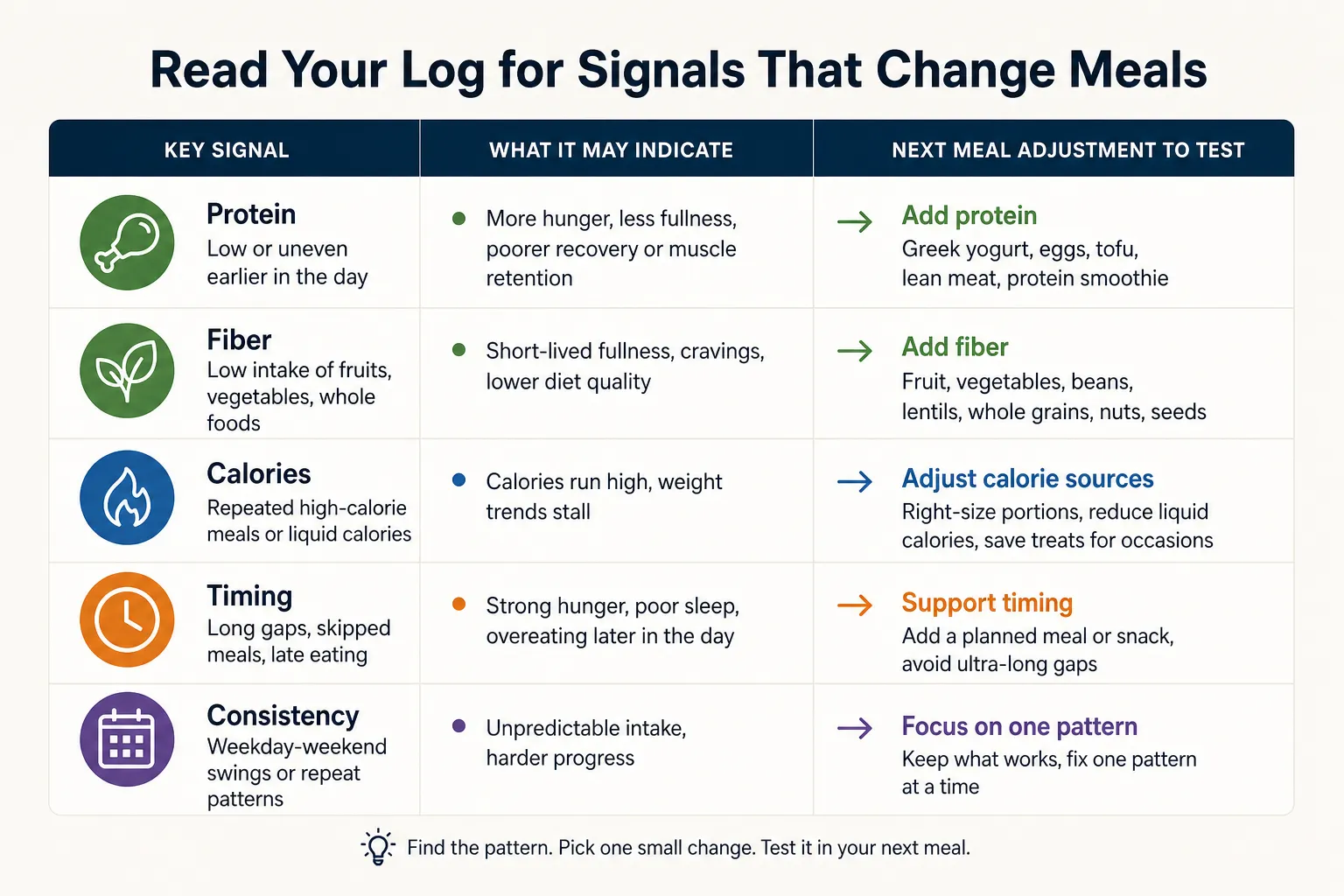
Začni z vzorci, ki najpogosteje spreminjajo apetit, kakovost hrane in tedenski vnos: beljakovine, vlaknine, kalorije, čas obrokov in doslednost. Ne rabiš popolnih številk, da so ti koristni. Rabiš trende, ki se pokažejo dovolj pogosto, da lahko testiraš majhno prilagoditev.
Beljakovine in vlaknine so pogosto prvi vzvodi
Če so lakota, regeneracija ali ohranjanje mišic del tvojega cilja, preglej dnevnik za obroke z malo beljakovinami, posebej zajtrk in kosilo. Vnos beljakovin in njihova razporeditev čez dan lahko vplivata na sitost in telesno sestavo, zato so ti obroki pogosto dobra prva mesta za pogledati, glede na stališča športne prehrane.
Pogost vzorec je kava in toast ob 8.00, potem pa huda lakota že ob 11.00. Naslednji test ni popolna prenova prehrane. Lahko je samo dodatek grškega jogurta, jajc, tofuja ali smutija z več beljakovinami in opazovanje, ali je dopoldne lažje.
Vlaknine so še en zelo vreden signal, ker pogosto sledijo tako sitosti kot splošni kakovosti prehrane. Če dnevnik pokaže malo sadja, zelenjave, fižola, polnozrnatih žit, oreščkov ali semen, lahko to pomaga razložiti, zakaj obroki hitro popustijo ali zakaj te kasneje močno zagrabijo prigrizki; informativni list NIH o vlakninah in Dietary Guidelines for Americans podpirata prednostno vključevanje teh živil.
Praktičen primer je kosilo z malo vlakninami, zgrajeno okoli rafiniranih žit in malo zelenjave, ki mu sledi popoldansko prigrizkanje. Boljša odločitev za naslednji obrok je lahko enostavna: dodaj fižol ali lečo, zamenjaj za polnozrnato možnost ali dodaj sadje in zelenjavo, preden spreminjaš karkoli drugega.
Kalorije, čas in doslednost uporabi kot kontekst
Kalorije so pri trendih teže še vedno pomembne, ampak so običajno bolj uporabne kot vzorec kot pa razsodba o enem obroku. Išči ponavljajoče visokokalorične obroke, velike porcije, pogoste tekoče kalorije ali prigrizke, ki veliko dodajo, ne da bi te dolgo držali sitega/-o.
Vzorce tekočih kalorij je posebej lahko spregledati, ker jih pogosto doživljamo ločeno od hrane. Če dnevi z višjim vnosom vključujejo tudi sladke pijače ali alkohol, je naslednji test lahko manjša pogostost, manjša porcija ali prihraniti te pijače za določene priložnosti, namesto da poskušaš odrezati vse naenkrat.
Čas obrokov se splača pregledati, ampak ne zato, ker obstaja en idealen urnik za vse. Pomembno je, ali se tvoj časovni vzorec povezuje s preskočenimi obroki, dolgimi razmaki, slabim spanjem, močnimi željami po hrani ali kasnejšim prenajedanjem.
Klasičen primer je preskočeno kosilo, potem pa večerno grizljanje. V tem primeru uporabna odločitev ni pravilo “jej prej”. Je testiranje načrtovanega popoldanskega obroka ali prigrizka in opazovanje, ali sta večerja in večerno prehranjevanje lažje obvladljiva.
Nazadnje poglej doslednost skozi teden. Nihanja med delovniki in vikendom, ponavljajoče preskočeni obroki ali nekaj obrokov, ki zanesljivo držijo preostanek dneva v redu, so pogosto bolj informativni kot dnevna povprečja.
Če ti en zajtrk vedno znova olajša kosilo, je to močan signal, ki ga je vredno obdržati. Če se vsaka sobota začne s preskočenimi obroki in konča z dostavo ter grizljanjem, je tudi to signal, ne neuspeh. Poanta je najti vzorec, ki predlaga eno praktično spremembo, ki jo lahko narediš naslednjo, in jo potem preneseš v eksperiment v naslednjem delu.
Spremeni en vzvod, potem opazuj, kaj se zgodi
Ko imaš vzorec, naslednji korak ni popoln reset. Je majhna sprememba, ki jo lahko testiraš in dovolj dolgo ponavljaš, da se iz nje kaj naučiš.
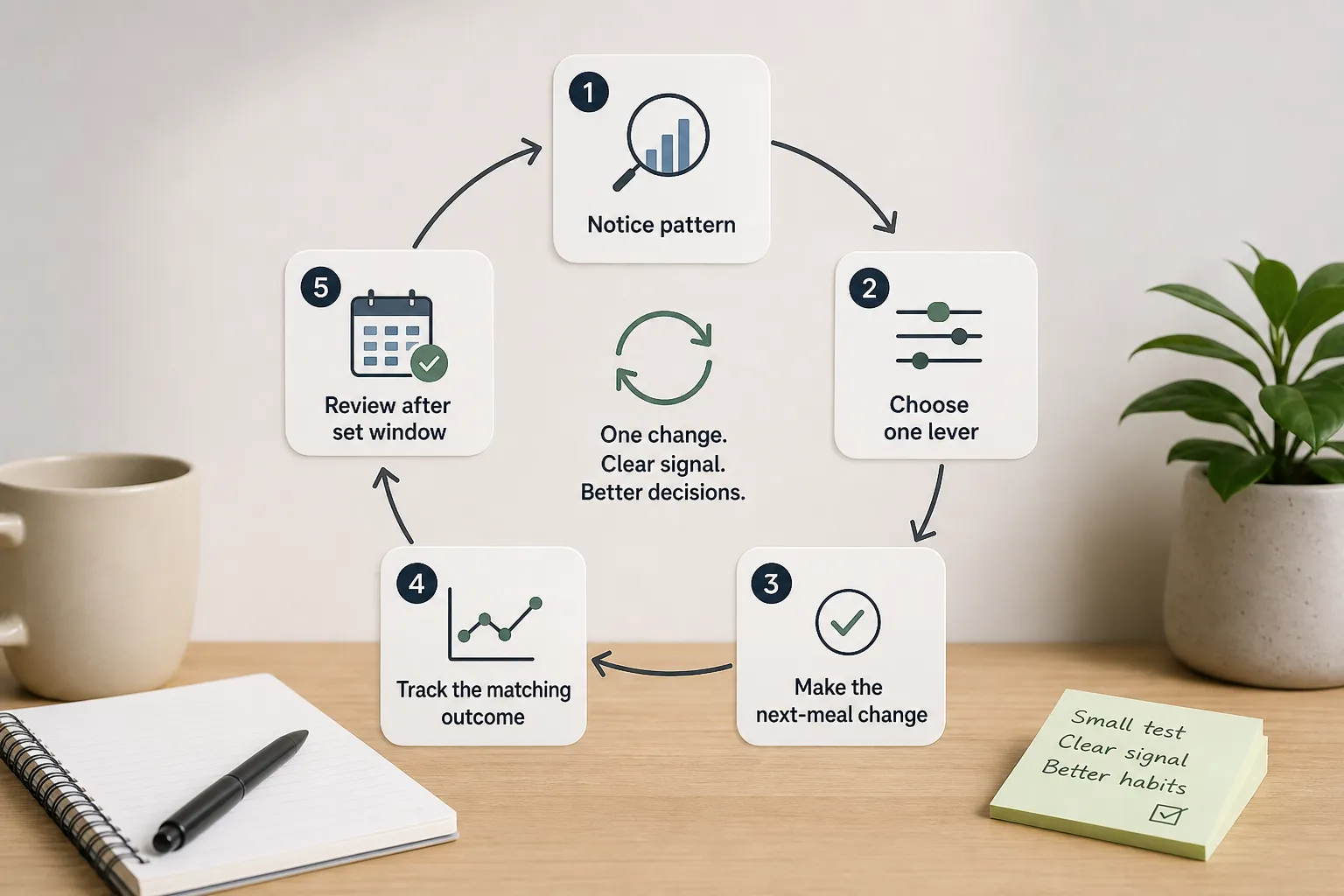
Najlažja struktura je preprosta: izberi en vzorec, izberi en vzvod, določi dejanje za naslednji obrok ali naslednji teden, izberi, kaj boš opazoval/-a, potem pa naredi pregled, ko mine dovolj časa. Če spremeniš beljakovine, čas obrokov, porcije, prigrizke in vadbo vse naenkrat, je veliko težje ugotoviti, kaj je dejansko naredilo razliko.
Uporaben vzvod je nekaj konkretnega, kar lahko ponoviš z malo trenja. To so lahko beljakovine pri zajtrku, vlaknine pri kosilu, velikost porcije ob večerih z dostavo, načrtovan popoldanski prigrizek, manj tekočih kalorij ali en korak priprave obrokov, ki ti olajša privzeto izbiro.
Preprosta struktura eksperimenta
- Izberi en vzorec: nekaj, kar se pokaže več kot enkrat, ne en naključen dan.
- Izberi en vzvod: beljakovine, vlaknine, velikost porcije, čas obrokov, strukturo prigrizkov, tekoče kalorije ali pripravo obrokov.
- Določi dejanje: naj bo dovolj konkretno za naslednji obrok ali naslednjih 7 do 14 dni.
- Odloči se, kaj boš opazoval/-a: lakoto, energijo, želje po hrani, prebavo, uspešnost treninga, doslednost obrokov ali trend teže, odvisno od vprašanja.
- Preglej po koncu obdobja: obdrži, če pomaga, ali zamenjaj vzvod, če ne.
Na primer, če dnevnik pokaže zajtrk z malo beljakovinami in si lačen/-a že ob 11.00, testiraj eno spremembo sedem zajtrkov. Dodaj vir beljakovin, ki ga boš dejansko jedel/-a, potem pa spremljaj lakoto pred kosilom, namesto da poskušaš oceniti cel dan.
Če kalorije rade poskočijo ob večerih z dostavo, ne rabiš čez noč sestaviti čisto nove rutine. Naroči isti najljubši obrok z eno spremembo porcije ali najprej dodaj zelenjavno prilogo in poglej, ali to spremeni sitost ali skupni vnos čez teden.
Če večerno prigrizkanje vedno sledi preskočenim kosilom, testiraj zgodnejši del verige. Načrtuj kosilo ali dodaj popoldanski prigrizek z več vlakninami za en do dva tedna, potem pa opazuj pozno večerno lakoto in želje po hrani.
Ista logika velja, če je trend teže že več tednov raven. Zmerna prilagoditev na podlagi dejanskega napredka je običajno bolj informativna kot reakcija na eno tehtanje z agresivnim rezom, kar se ujema z javnozdravstvenimi smernicami, ki poudarjajo samospremljanje in postopno spremembo vedenja namesto hitrih rešitev od CDC. Če želiš praktičen okvir za tako odločitev, ti lahko pomaga vodič o prilagajanju vnosa glede na napredek.
Cilj tukaj ni najti popolno pravilo. Cilj je dnevnik hrane spremeniti v povratno zanko: testiraš eno idejo, opazuješ signal, ki se ujema z vprašanjem, in šele potem odločiš, ali nadaljevati, izpiliti spremembo ali poskusiti drugačno razlago.
Trende pregleduj tedensko, namesto da sodiš vsak obrok
Dnevnik hrane postane uporaben, ko ga obravnavaš kot povratno zanko, ne kot redovalnico. Prehranjevanje iz dneva v dan je polno šuma, posamezne obroke pa oblikujejo stres v službi, družabni plani, spanje, potovanja in čisto navadna naključnost.
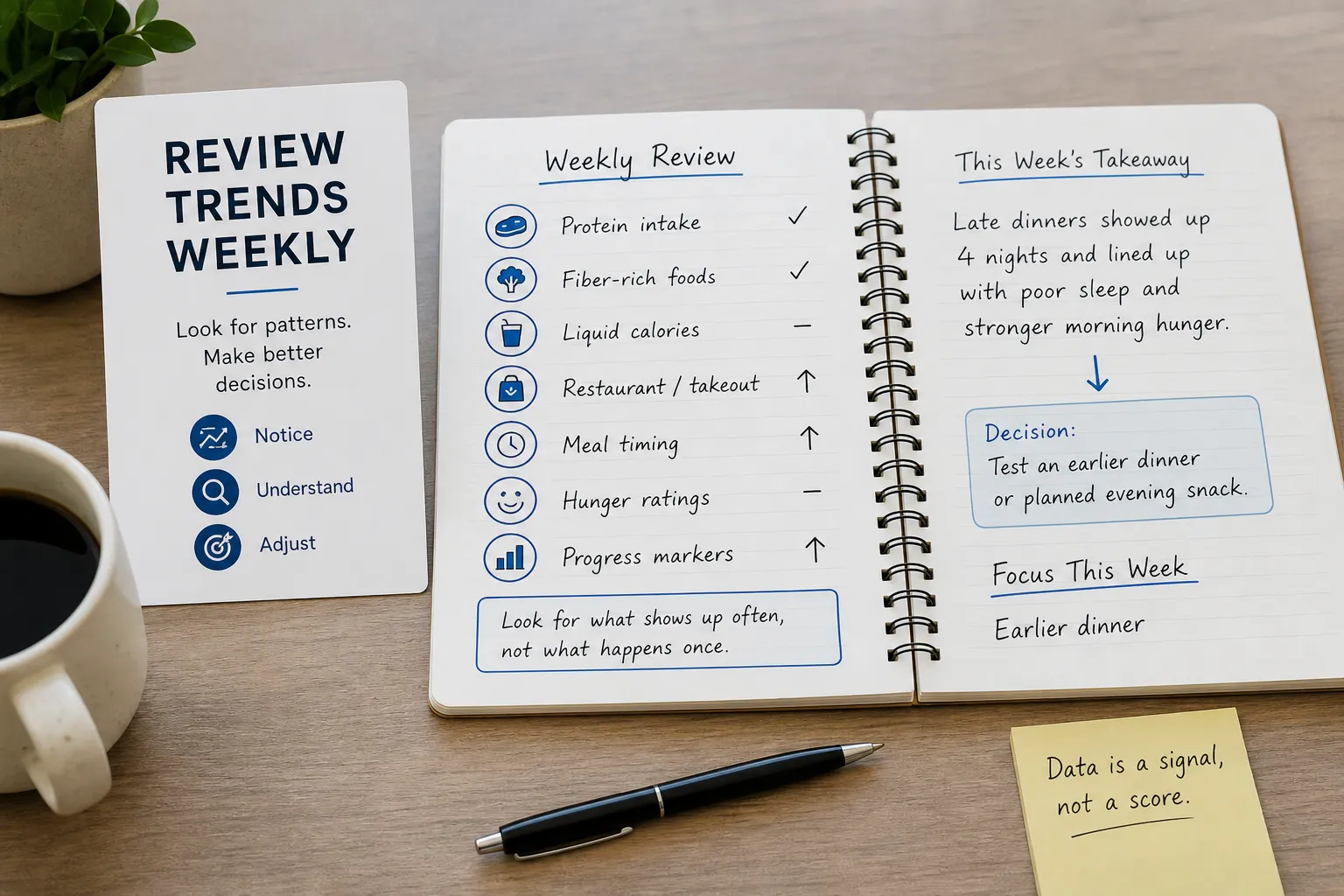
Zato je tedenski pregled običajno bolj informativen kot stalno obsojanje. Ne sprašuješ se, ali je bil torek popoln. Sprašuješ se, ali se isti signali pojavljajo dovolj pogosto, da upravičijo spremembo.
Tak pristop tudi zmanjša tesnobo. Če se vsak visokokaloričen obrok ali zgrešena tarča beljakovin zdi kot dokaz, da je plan zanič, boš stalno spreminjal/-a smer, še preden imaš dovolj podatkov, da se kaj naučiš.
Kaj pregledati vsak teden
Pregled naj bo enostaven in vezan na vprašanje, ki ga testiraš. Išči povprečja, ponavljajoče situacije in povezave, ki se pojavijo več kot enkrat.
- Kako dosleden je bil vnos beljakovin čez teden
- Kako pogosto so obroki vključevali živila z veliko vlakninami
- Ali so se tekoče kalorije pojavljale redno
- Ali so se restavracijski obroki ali dostava kopičili na določene dni
- Vzorci časa obrokov, posebej če se povezujejo s spanjem, lakoto, željami po hrani ali energijo
- Ocene lakote pred ali po obrokih, če jih beležiš
- Oznake napredka, kot so trend telesne teže, obseg pasu, uspešnost treninga ali nadzor apetita
Sproti samospremljanje je ponavadi bolj koristno, ko podpira doslednost skozi čas, kar se ujema s tem, kar National Weight Control Registry že dolgo opaža pri ljudeh, ki uspešno ohranjajo izgubo teže. Uporaben del ni popolno beleženje. Uporabno je pregledati dovolj informacij, da opaziš ponovljive vzorce in ostaneš v procesu.
Kako razumeti slab dan
En visokokaloričen dan, ena pozna večerja ali ena zgrešena tarča je običajno samo šum. Ukrepati se splača šele, ko se ponavlja in poveže z izidom, ki ti je pomemben.
Na primer, če ješ pozno enkrat, ignoriraj. Če se to zgodi štiri večere v enem tednu in se ujema s slabim spanjem ali močnejšo jutranjo lakoto, je to vzorec, ki ga je vredno testirati, mogoče z zgodnejšo večerjo ali načrtovanim večernim prigrizkom.
Čas obrokov sledi istemu pravilu. Raziskave o časovno omejenem prehranjevanju kažejo, da lahko okna hranjenja nekaterim ljudem v nekaterih okoljih pomagajo, ampak niso univerzalno odločilna, zato je bolj smiselno čas obrokov ocenjevati kot vzorec v svojem življenju kot pa kot pravilo, ki mu morajo slediti vsi, na podlagi širših dokazov. Če želiš bolj poglobljen primer, poglej, kako se lahko čas obrokov poveže s spanjem, lakoto in ponavljajočimi vzorci.
Ista logika velja za vikende in nihanja na tehtnici. Če vikend vnos vedno znova izniči stabilne delovnike, je odgovor mogoče načrtovati en fleksibilen vikend obrok, ne še bolj zategniti delovnikov. Če teža dnevno skače gor in dol, štiritedenski trend pa se še vedno premika v želeno smer, plana morda sploh ni treba spreminjati.
Dober tedenski pregled se običajno konča z eno od treh odločitev: nadaljuj, poenostavi ali prilagodi. Nadaljuj, če trend deluje, poenostavi, če beležiš več, kot potrebuješ, ali prilagodi en vzvod, če se isti vzorec stalno pojavlja. Tako podatki o hrani ostanejo v pravi vlogi: vir signalov, ne sprožilec za pretirano reakcijo.
Uporabi najlažjo metodo beleženja, ki še vedno odgovori na vprašanje
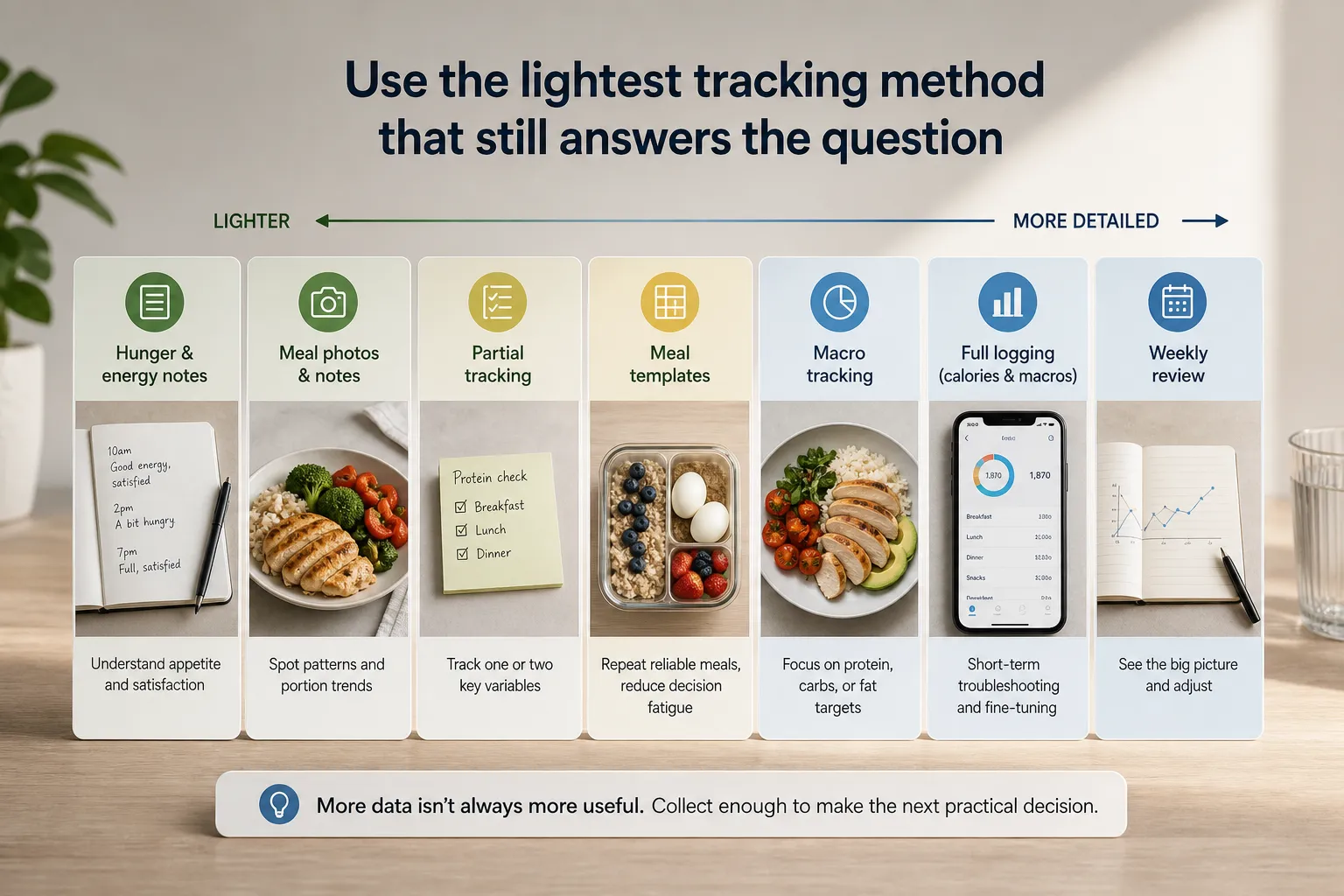
Več podatkov ni vedno bolj uporabno. Cilj je zbrati dovolj informacij, da sprejmeš naslednjo praktično odločitev, ne da za vedno dokumentiraš vsak grižljaj.
Prava raven beleženja je odvisna od človeka in vprašanja. Če poskušaš ugotoviti, zakaj si lačen/-a ob 16.00, ti lahko teden fotk obrokov in zapiskov o lakoti pove več kot popoln kalorični dnevnik. Če rešuješ zastal napredek pri hujšanju, lahko kratko obdobje bolj polnega beleženja pomaga odkriti težave s porcijami, beljakovinami ali vzorci obrokov, preden se vrneš na lažjo metodo.
Metodo prilagodi problemu
Različna vprašanja zahtevajo različne vrste podatkov. Beleženje lahko povečaš ali zmanjšaš glede na to, kaj se želiš naučiti.
- Polno beleženje: Uporabno za kratkoročno razčiščevanje, ko potrebuješ boljšo oceno kalorij, porcij ali makrov.
- Beleženje makrov: Pomaga, če je tvoje glavno vprašanje, kako spremljati beljakovine, ogljikove hidrate ali maščobe, brez da za vedno beležiš vsako prehransko podrobnost.
- Beleženje s fotkami: Enostavna možnost za opaziti vzorce obrokov, drsenje porcij ali preskočene obroke.
- Delno beleženje: Beleži samo eno spremenljivko, na primer beljakovine pri vsakem obroku ali dnevni seznam vlaknin.
- Predloge obrokov: Ponavljaj nekaj zanesljivih zajtrkov ali kosil, da zmanjšaš utrujenost od odločanja in olajšaš primerjave.
- Zapiski o lakoti in energiji: Uporabni za beleženje hrane pri nadzoru apetita in za videti, ali te obroki nasitijo.
- Tedenski pregledi: Boljši kot reakcija na eno pozno večerjo, en restavracijski obrok ali eno zgrešeno tarčo.
Na primer, nekdo s ciljem za beljakovine lahko preprosto šteje porcije beljakovin pri obrokih, namesto da beleži vsako sestavino. Nekdo, ki se osredotoča na vlaknine, lahko uporabi hiter dnevni seznam za fižol, sadje, zelenjavo in polnozrnata žita.
Tukaj je pomembna tudi vzdržnost. Podrobno beleženje kalorij in makrov je lahko koristno za nekatere cilje, ampak postane nepotrebno, ko je vzorec jasen, posebej če te lažji sistem naredi bolj doslednega/-o.
Beleženje naj informira, ne kaznuje
Dobra metoda beleženja ti mora pomagati opaziti signale in izbrati naslednji korak. Ne sme ti dati občutka, da vsak obrok potrebuje oceno.
Če ti beleženje začne povečevati tesnobo, krivdo, omejevanje, prenajedanje, kompulzivno preverjanje ali perfekcionizem, je mogoče napačno orodje zate. Ljudje z zgodovino motenj hranjenja ali tesnobo, povezano z beleženjem, se bodo morda morali podrobnemu beleženju čisto izogniti in poiskati strokovno podporo. National Eating Disorders Association ponuja informacije in podporne vire o teh tveganjih.
Za nekatere ljudi je neštevilčna metoda varnejša in bolj uporabna. Fotke obrokov, kratki zapiski o lakoti ali energiji ali delo s klinikom oziroma dietetikom lahko dajo povratne informacije, ne da se hrana spremeni v stalno matematično nalogo.
Če želiš pomoč pri pretvarjanju zabeleženih obrokov v praktične prehranske vpoglede, je Kibora eno od možnih orodij, ki lahko te vzorce prevede v usmeritve za naslednje korake, pri čemer fokus ostane na odločitvah, ne na popolnih številkah. Njene funkcionalnosti lahko pogledaš, če bi ti taka podpora naredila beleženje bolj uporabno za ukrepanje.
Boljša odločitev je prava metrika
Podatki o hrani opravljajo svoje delo, ko ti naredijo naslednjo izbiro bolj jasno. Če te beleženje pusti bolj zmedenega/-o, bolj tog/-o ali bolj reaktivnega/-o na posamezne obroke, problem običajno ni pomanjkanje truda. Problem je, da se je proces oddaljil od vprašanja, na katerega dejansko rabiš odgovor.
Najbolj uporabni dnevniki ne dokazujejo, da si jedel/-a popolno. Razkrijejo vzorce, ki jih lahko uporabiš, recimo kateri zajtrk ti pomaga izogniti se dopoldanskemu padcu, katera večerja zmanjša pozno večerno prigrizkanje ali katera kosila te nasitijo za ure namesto za eno. Tako se podatke o hrani uporablja dobro: ne kot redovalnico, ampak kot povratne informacije za realne obroke.
Dober proces odločanja premaga tudi popolno beleženje. Ocene bodo vedno nepopolne, deklaracije se razlikujejo, porcije se spreminjajo in dnevni apetit ni mehaničen. Ampak ne rabiš brezhibnih podatkov ali brezhibnega prehranjevanja, da se iz tedna doslednega, fokusiranega opazovanja naučiš nekaj uporabnega.
Če ti beleženje povečuje tesnobo, perfekcionizem ali obsesivno razmišljanje, ti lahko pomaga lažja metoda ali pa da se čisto umakneš. Več podatkov ni vedno bolje, posebej če dodajo pritisk namesto vpogleda.
Enostaven naslednji korak je dovolj. Za naslednjih sedem dni izberi eno vprašanje, na primer: “Kaj naredi kosilo dovolj nasitno?” Potem beleži samo nekaj signalov, ki pomagajo odgovoriti, kot so beljakovine, vlaknine in lakota, dokler se ne začne kazati vzorec.
Potem naredi eno majhno spremembo, ki jo lahko testiraš. Dodaj kosilu živilo z več beljakovinami, povečaj vlaknine, malo premakni čas obroka ali ponovi različico, ki je najbolje delovala, in poglej, kaj se zgodi. Če uporabljaš Kibora, ti lahko pomaga prevesti te dnevnike obrokov v znanstveno podprte naslednje korake, ampak osnovna ideja ostane enaka v vsakem primeru.
Podatki o hrani so vredni samo takrat, ko izboljšajo naslednjo odločitev. Danes ne rabiš popolnih številk ali popolnega prehranjevanja. Izberi eno vprašanje, beleži nekaj signalov, ki nanj odgovorijo, in izpelji en majhen eksperiment.
- Ključni viri
- CDC - Hujšanje
- NIDDK - Zdrava prehrana & telesna aktivnost za življenje
- Literatura o natančnosti beleženja hrane in prenizkem poročanju
- Dietary Guidelines for Americans, 2020-2025
- NIH Office of Dietary Supplements - informativni list o prehranskih vlakninah
- Stališča Academy of Nutrition and Dietetics / International Society of Sports Nutrition o beljakovinah
- National Weight Control Registry
- Sistematični pregledi in raziskave o časovno omejenem prehranjevanju
- National Eating Disorders Association


