


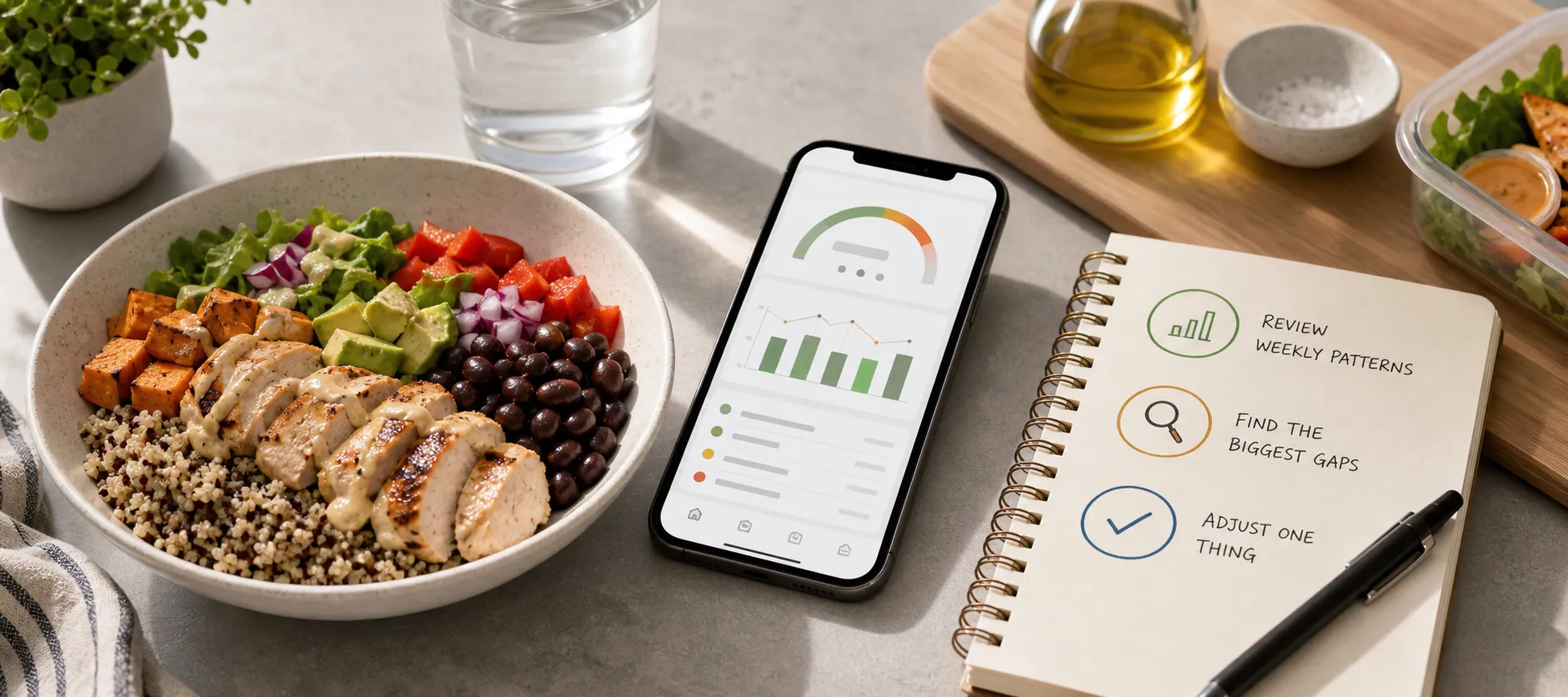
- What you'll learn
- How to set a calorie target as a weekly average instead of treating each day like a pass or fail score
- Which logging methods work fastest for packaged foods, repeat meals, restaurant meals, and messy homemade dishes
- How to spot and correct the biggest tracking errors, like oils, dressings, drinks, and large portions
- What to look for in weekly calorie averages, meal patterns, and weekend drift before changing your plan
- How to use lighter tracking when logging fatigue sets in without losing the feedback you need
- When calorie tracking may be stressful or compulsive enough that a different approach or professional guidance is a better fit
Most people do not stop calorie tracking because they cannot do the math. They stop because logging gets annoying, the numbers feel shaky, and the app leaves them with a total instead of a decision.
That is the real failure mode. Calorie tracking is not useful just because it records calories. It becomes useful when it helps you answer, what should I do differently today, this week, or next week?
A perfect-looking daily total that never changes behavior is less helpful than a rough weekly pattern that shows late-night snacking, low-protein lunches, or restaurant meals that keep throwing you off. Research on self-monitoring consistently links it with better weight-management outcomes, especially when people can do it regularly and over time.
This article uses a simpler standard: capture, correct, compare, decide. You do not need flawless entries for every portion guess, missed snack, or high-calorie day. You need a low-friction workflow that makes patterns visible and helps you choose the next action without getting obsessive.
That is also where tools like Kibora can help, by making capture faster and turning logs into feedback instead of a static calorie number. Next, we will walk through how to set a target, log with less effort, handle imperfect entries, read weekly patterns, and use the data to make better calls.
Useful tracking starts with the decision you want the data to improve
Start with the decision, not the app screen. The most useful question is not “How do I log everything perfectly?” but “What am I trying to improve?”
That shift matters because calorie tracking is a self-monitoring habit, not a precision contest. The CDC’s guidance on healthy weight emphasizes practical behavior change over perfection, which is exactly how tracking becomes useful in real life: as a way to notice patterns and adjust what you do next, not just collect numbers for their own sake CDC.
If your goal is weight loss, your setup may need total calories, protein, and a weight trend. Those numbers can help you make specific decisions, like shrinking portions, changing snacks, or tightening up liquid calories.
If your goal is maintenance, you may not need that much detail. Meal patterns, rough intake consistency, and a weekly average may tell you more than chasing exact daily totals.
If your problem is mindless snacking, track the moments that lead to it. A simple note of time, hunger level, or which meals were skipped may be more useful than obsessing over every gram at dinner.
If weekends keep throwing things off, compare weekday and weekend averages instead of trying to be perfect Monday through Friday. That gives you a clearer decision to make, like changing one restaurant meal, one drink habit, or one late-night routine.
The same principle works for consistency. If breakfast and lunch tend to determine how the rest of the day goes, start by tracking those meals first and see whether that changes the evening.
The best metric is the one that changes a repeatable behavior. If a number never affects your next choice, it may not need to be tracked forever.
That also means the “right” level of accuracy depends on the job. Useful tracking should be accurate enough to guide better decisions, without becoming so detailed that logging itself becomes the obstacle. If tracking starts to feel stressful or compulsive, especially for people with a history of disordered eating, a different approach or professional support may be a better fit.
Set a target you can treat as a weekly average, not a daily verdict
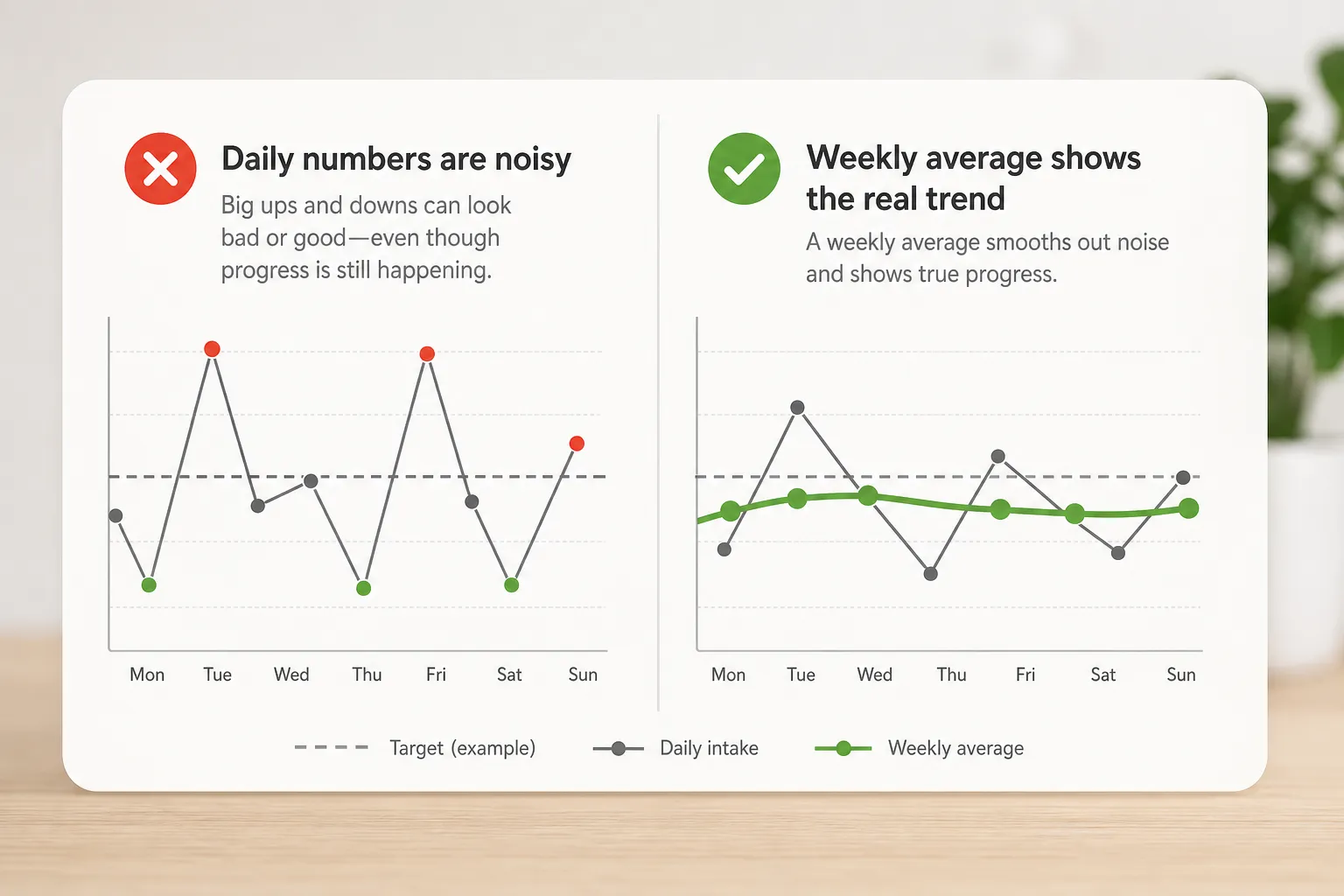
A calorie target works best as a planning anchor, not a pass or fail score. Your body does not reset at midnight, and your energy needs are not identical every single day.
That is why weekly averages are usually more useful than one isolated day. A 2,000 calorie target does not mean 2,250 on Tuesday is a problem if the rest of the week stays broadly aligned.
Single-day results can also look noisy for reasons that have nothing to do with fat gain or fat loss. Water retention, sodium, glycogen, meal timing, and digestion can all shift the scale or make a day of eating look more dramatic than it really is.
A practical way to set a target is simple. Start with a reasonable estimate, such as one from a calorie and macro calculator, then log consistently for 1 to 2 weeks before changing anything.
After that, compare your intake pattern with your outcome trend. If your weekly average intake matches your goal and your body weight, energy, or hunger trends are moving in a workable direction, keep going. If not, adjust slowly instead of making a big correction.
What counts as useful is repeatability. A target that looks good on paper but leaves you drained, overly hungry, or constantly starting over is usually too aggressive. The NIH notes that sustainable weight management tends to rely on realistic expectations and changes you can maintain, not extreme short-term restriction NIDDK.
That also means you should not slash calories after one higher day. Look for a pattern first. If weekends keep pushing your weekly average up, a better next step might be planning a higher-protein breakfast, pre-logging one restaurant meal, or making one repeatable change that lowers decision fatigue.
If tracking starts to feel stressful, compulsive, or overly rigid, step back and consider a different approach or professional support, especially if you have a history of disordered eating. The goal is not perfect numbers. It is a target realistic enough that you can follow it most days and learn from the trend.
Choose the fastest logging method that is accurate enough for the meal
The best calorie tracking method depends on what you are eating, not on one universal rule. If logging feels slow, people tend to skip it, and usability matters for long-term adherence in food tracking tools according to research indexed on PubMed.
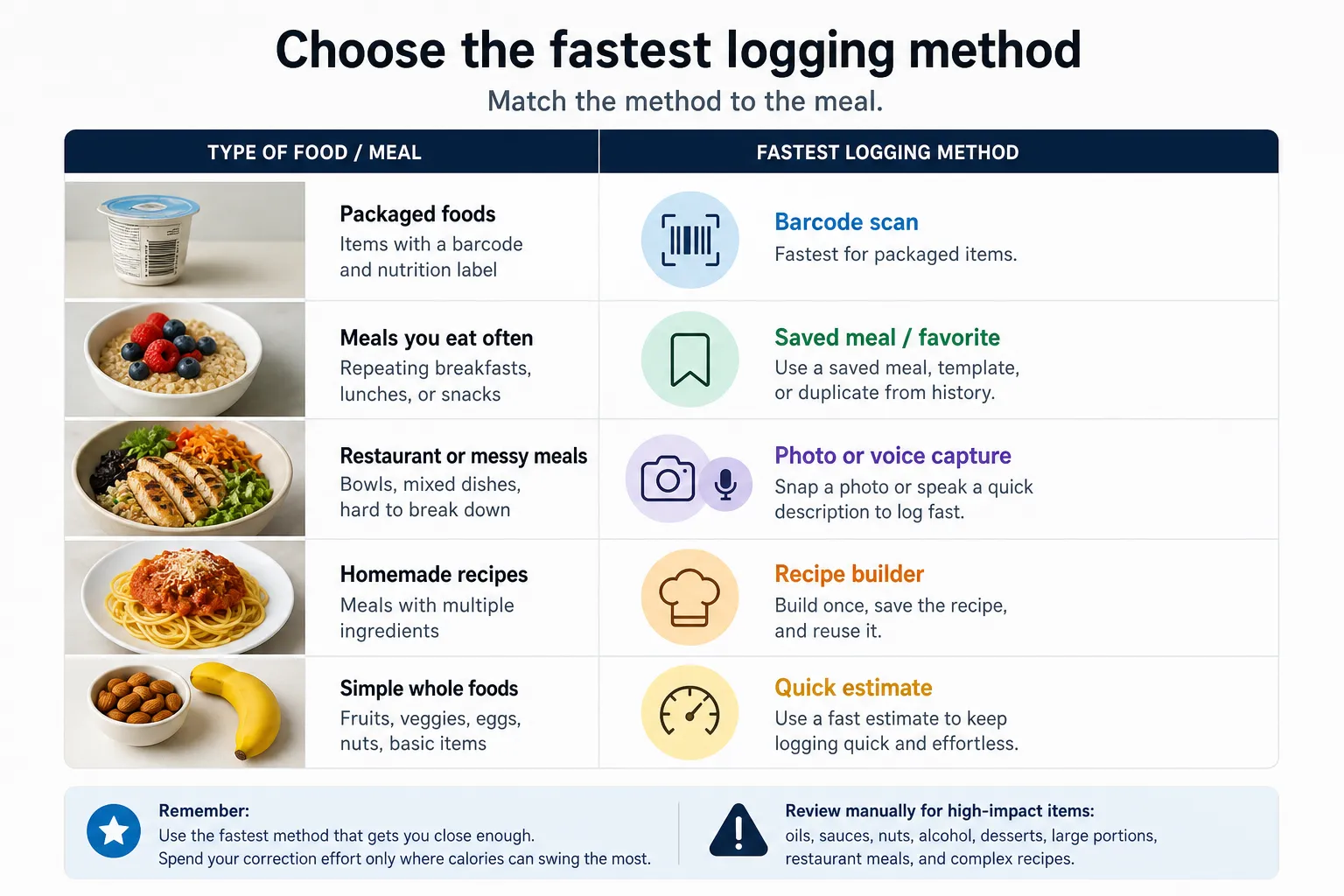
A useful workflow is simple: use the fastest capture method that gets you close enough, then spend your correction effort only where the calories can swing the most. That is what makes tracking practical instead of turning every meal into data entry.
Match the method to the meal
For packaged foods, barcode scanning is usually the fastest option. If you scan a yogurt, for example, the key step is not just accepting the entry but confirming the serving size, since database entries are still estimates and depend on portion details, even in strong reference sources like USDA FoodData Central.
For meals you eat all the time, do not rebuild them from scratch. Save your usual breakfast as a favorite, duplicate it from history, or create a simple meal template so repeat eating does not create repeat effort.
For meals that are annoying to type out, photo or voice capture can be the difference between logging and not logging. If you order a restaurant bowl, snapping a photo or speaking a quick description is often better than abandoning the entry because the meal feels too messy to enter.
This is where a tool like Kibora’s logging features can help in a practical way. Combining photo, voice, barcode, favorites, and history means logging does not depend on typing every ingredient every single time.
Know when to review manually
Fast capture works best when you also know what deserves a second look. The biggest errors usually come from a short list of high-impact items, not from whether your spinach entry was off by 10 calories.
Review these manually when they are part of the meal:
- oils and butter
- sauces and dressings
- nuts, nut butters, and seeds
- alcohol
- desserts and snack foods
- large portions
- restaurant meals
- homemade recipes with multiple ingredients
If you log a restaurant bowl with photo or voice first, then correct the obvious calorie drivers: rice portion, dressing, cheese, oil, or guacamole. If you make homemade pasta often, build the recipe once and reuse it; if it is a one-off meal, a reasonable estimate is usually enough to keep the data useful.
Accuracy and usefulness are related, but not identical. You do not need perfect entries to spot patterns, but you do need a workflow that is fast enough to repeat and easy enough to fix when the meal has bigger calorie variables.
If tracking starts to feel stressful, compulsive, or overly controlling, a different approach may be more appropriate, especially for people with a history of disordered eating. In that case, professional guidance can help you choose a method that supports health without making food logging the problem.
Fix the biggest errors instead of chasing perfect entries
Accuracy and usefulness are not the same thing. A log can still help you make better decisions even if some entries are rough. What matters most is using a consistent method and fixing the errors large enough to change the pattern you see.
Research on food records shows that underreporting and portion-estimation mistakes are common, especially with calorie-dense foods and mixed meals, so perfection is not a realistic standard for most people PubMed. The better goal is to catch the misses that meaningfully distort your intake, then keep moving.
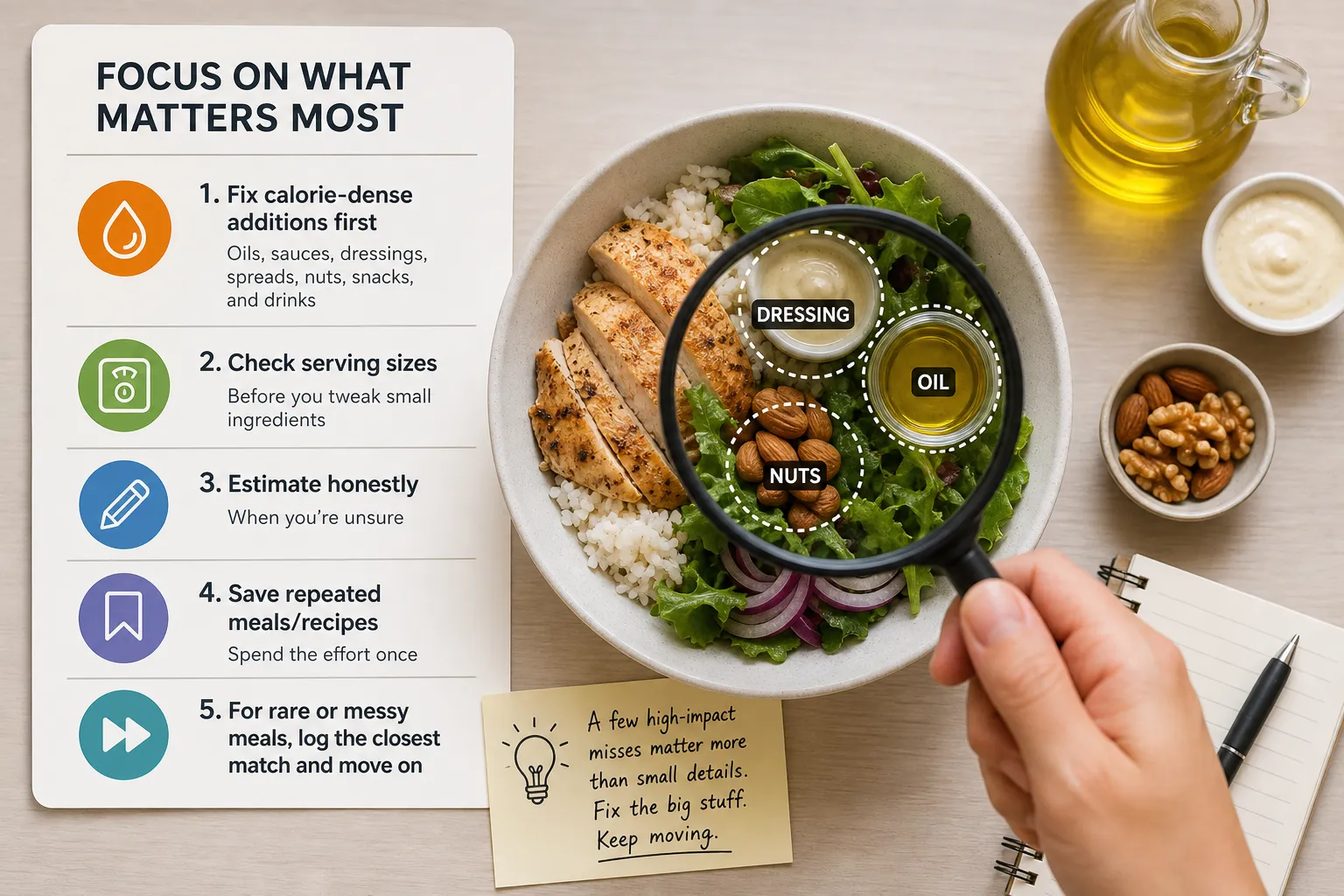
A simple priority order helps:
- Correct calorie-dense additions first, like cooking oil, sauces, dressings, spreads, nuts, snacks, and drinks.
- Check serving sizes before you tweak small ingredients.
- Estimate honestly when you are unsure.
- For repeated homemade meals, spend the effort once to save the recipe or meal.
- For rare or messy meals, log the closest match and move on.
If dinner looks surprisingly low, do not assume you found a miracle meal. Check whether oil, dressing, or the actual portion size got left out. Those small-looking details often matter more than whether the vegetables were logged as 90 or 110 calories.
Missed an entry? Do not abandon the day. If you forgot lunch, add a quick estimate like “restaurant sandwich and chips” so the day still reflects reality well enough to preserve the pattern.
A rough estimate is usually better than a blank space because blank spaces hide what happened. If an entry is uncertain, treat it as an estimate and avoid overreacting to that day’s total. The point is to support your next decision, not to grade yourself.
If photo logging helps you capture meals faster, it still works best with a quick review for obvious misses like sauces, sides, or portion size. This is where tools like Kibora can help reduce friction while still letting you correct the high-impact details that matter most. For a deeper look at where photo logging helps and where user review still matters, see this guide on AI calorie detection accuracy.
If tracking starts to feel stressful, compulsive, or overly controlling, a different approach may be a better fit, especially for people with a history of disordered eating. Use the data only as far as it stays practical and supportive.
Review patterns weekly before you change the plan
Daily logs are useful, but weekly review is where calorie tracking becomes decision support. One unusually high dinner or one very low day does not tell you much. A full week gives you enough data to spot patterns you can actually act on.
Start with your weekly average calories and compare that to the outcome you care about. If weight loss is the goal and weight is stable for several weeks, that may mean your average intake is higher than needed, so a small calorie reduction or a modest activity increase makes more sense than overhauling everything at once. This kind of monitor, review, adjust cycle fits the broader behavior-change approach supported by the CDC.
Then look for repeat behaviors behind the numbers. Useful patterns often include low-protein breakfasts, skipped meals that lead to overeating later, afternoon hunger, late-night snacks, high-calorie drinks, bigger weekend meals, or frequent restaurant meals.
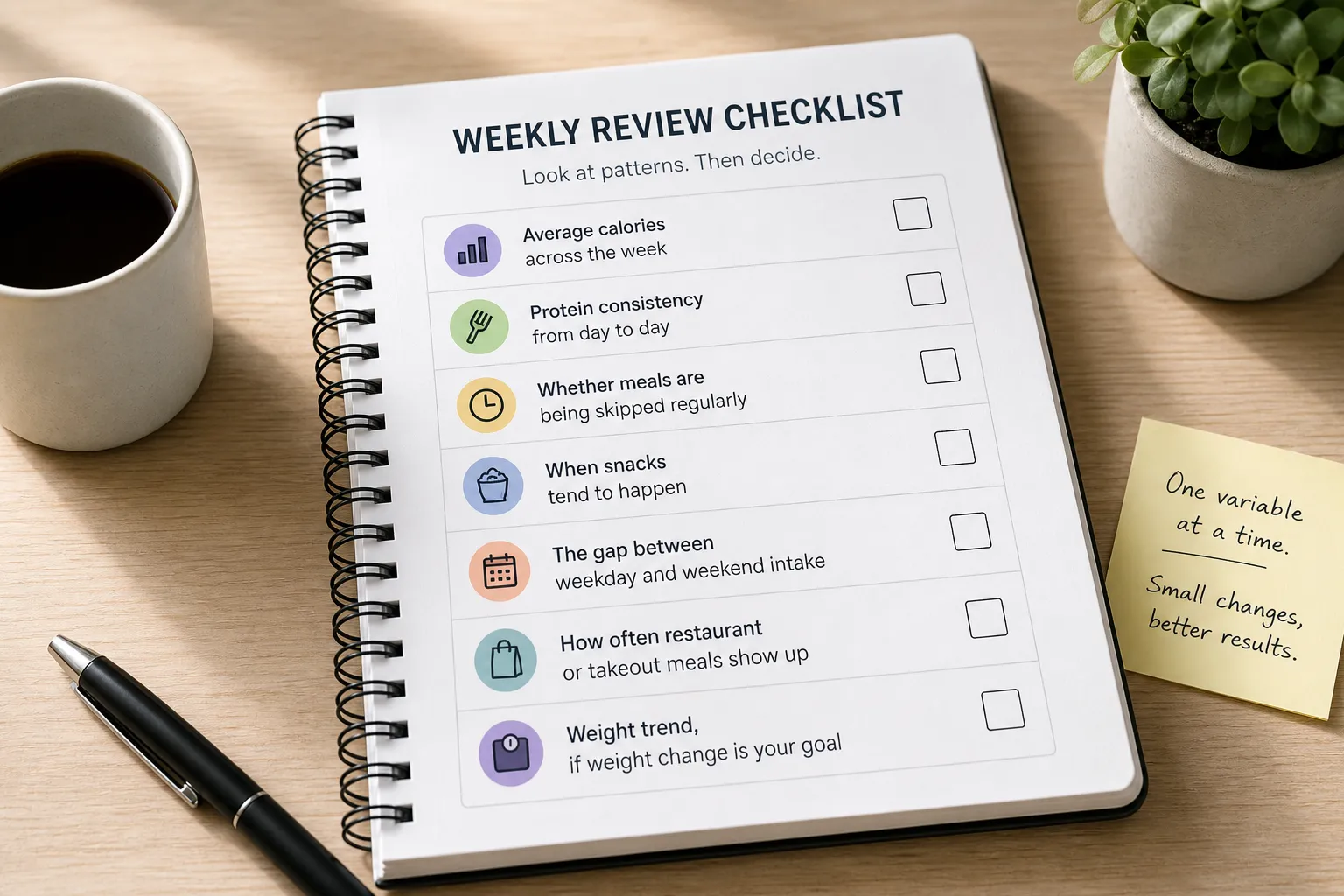
A simple weekly check can include:
- Average calories across the week
- Protein consistency from day to day
- Whether meals are being skipped regularly
- When snacks tend to happen
- The gap between weekday and weekend intake
- How often restaurant or takeout meals show up
- Weight trend, if weight change is your goal
The key is to make one-variable-at-a-time changes. If weekdays look solid but weekends drive the average up, try planning one flexible weekend meal instead of trying to eat perfectly. If hunger hits hard every afternoon, add more protein or fiber at lunch before cutting calories further.
This is where a tracker with insights is more useful than a static calorie total. The point is not just to display a number. The point is to surface a clear next step, whether that is tightening up restaurant portions, improving breakfast protein, or adjusting your calorie target based on real-world results. If you want a deeper framework for that, see how to adjust calories based on progress.
If tracking starts to feel stressful or compulsive, especially for anyone with a history of disordered eating, a different approach or professional support may be more appropriate. Useful data should help you make calmer decisions, not create constant pressure.
Use minimum-effective tracking when full logging starts to wear you down
Useful tracking does not require full precision all the time. Logging fatigue is one of the main reasons people stop, which is why a good system needs a lower-effort mode, not just an ideal mode. Research on adherence and usability in calorie-tracking apps consistently points to burden and friction as real barriers to sticking with logging over time PubMed.
Think of full tracking as a diagnostic tool. It is most useful when you are learning portions, troubleshooting a plateau, or adjusting a goal. Once you understand your patterns, lighter tracking can become a maintenance tool that keeps the feedback loop alive without asking you to log every gram forever.
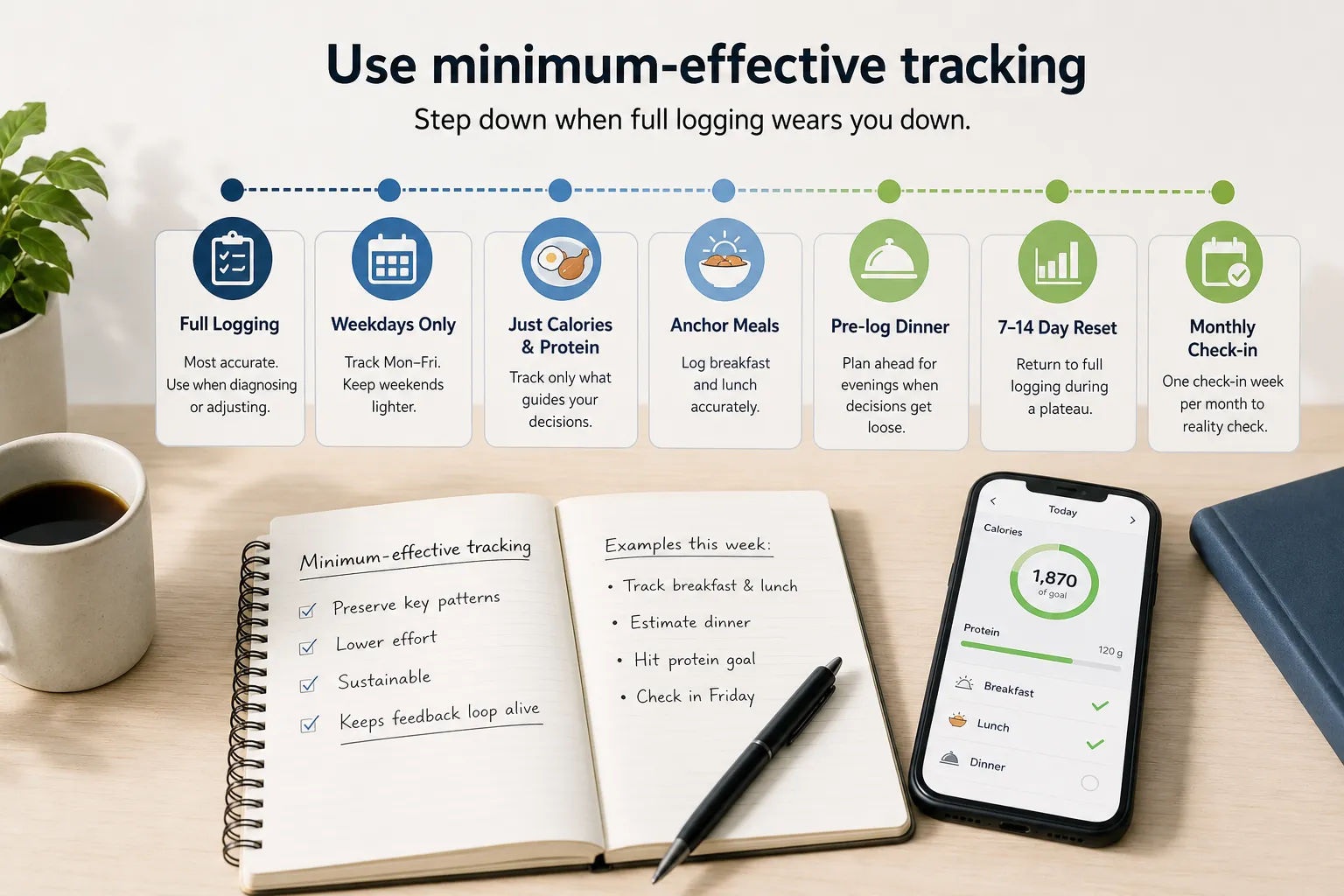
That lighter version only works if it still preserves the pattern you need to see. During a busy week, that might mean logging breakfast and lunch accurately, then estimating dinner. During maintenance, it could mean tracking three representative days per week to check whether portions have started to drift.
Here are a few step-down options that keep tracking useful:
- Track weekdays only when your routine is stable and weekends are more variable.
- Track just calories and protein if that is enough to guide food choices.
- Track anchor meals, such as breakfast and lunch, if those meals set the tone for the day.
- Pre-log dinner when evenings are where decisions usually get loose.
- Return to full logging for 7 to 14 days during a plateau to find what changed.
- Use one check-in week per month if you are mostly maintaining and want a reality check.
Repeatability matters more than rebuilding every meal from scratch. Saved meals, favorites, and history make lighter tracking far easier because your common foods are already there. In Kibora, tools like photo logging, voice entry, barcode scan, and meal history can help you keep enough data flowing without turning food logging into a second job.
For high-stress periods, reduce the scope on purpose. You might keep one anchor habit, like hitting protein at breakfast or logging restaurant meals, and let the rest stay simple for a week or two. If you want to compare tools through that lens, this guide to best calorie tracker apps can help you look at sustainable day-to-day use, not just long feature lists.
If tracking starts to feel stressful, rigid, or compulsive, scaling down may be smarter than pushing harder. Some people, especially those with a history of disordered eating, may need a different approach or professional support instead of more detailed logging.
The best calorie tracker makes better decisions easier
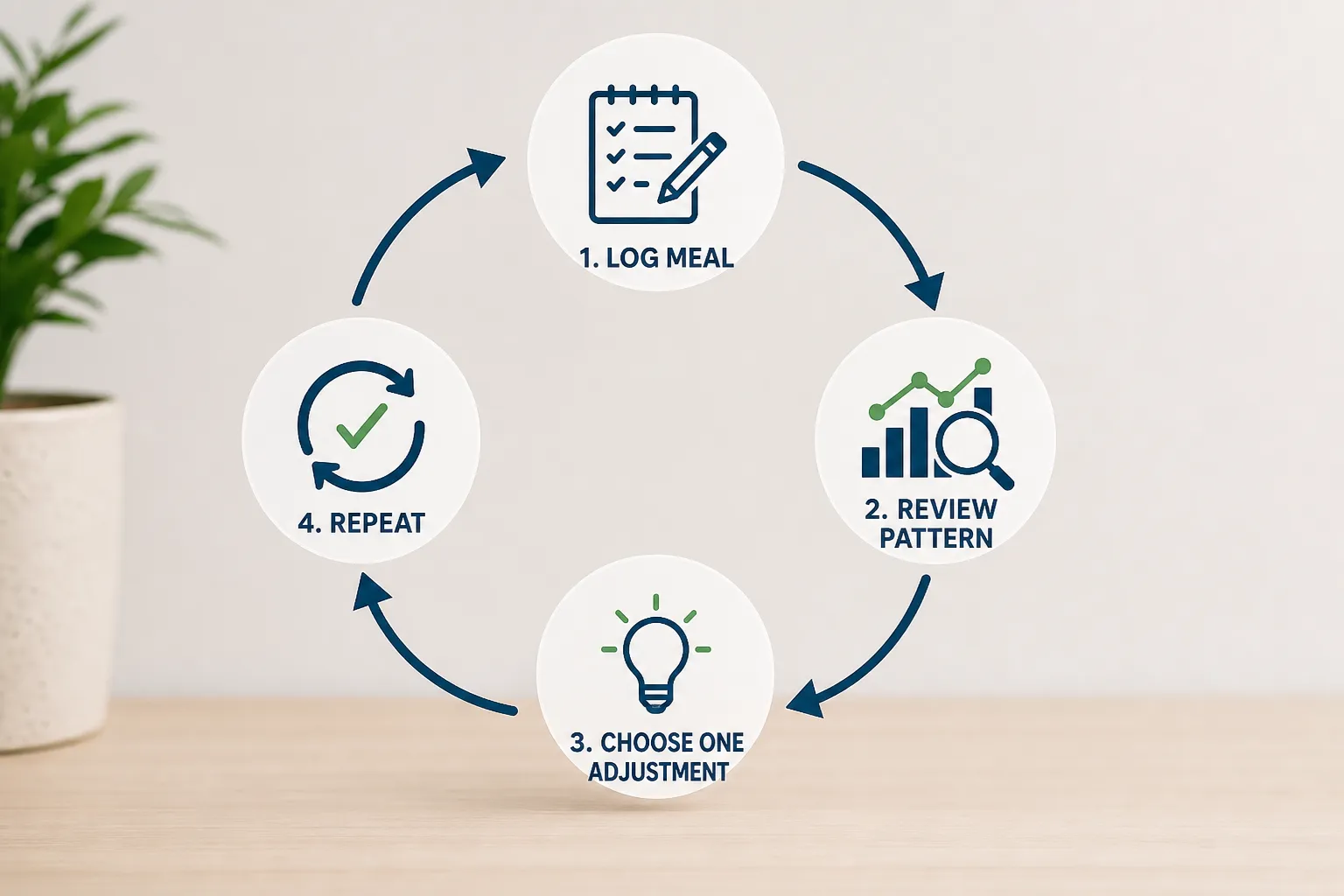
Useful calorie tracking is not perfect tracking. It is a simple loop you can repeat without much friction: set a realistic target, log meals in the easiest way that still gives you useful data, correct the biggest errors, review the weekly pattern, and change one thing at a time.
That is what makes calorie tracking actually useful. You are not trying to build a flawless record. You are using feedback to make the next meal, next day, or next week a little more informed.
A good system should feel easier and more informative over time. You learn your usual meals, save common entries, spot where estimates drift, and stop treating a daily number like an exact score. Accuracy still matters, but only to the point that it improves decisions.
The practical loop is straightforward: capture the meal, correct the obvious issues, compare the weekly pattern, choose one adjustment, repeat. If your tracker only gives you a static calorie total, you still have to do the hard part alone. Tools like Kibora are built around making that loop lighter with faster capture and clearer insights, so your logs can turn into next steps instead of just more numbers.
If tracking starts to feel stressful or compulsive, especially for people with a history of disordered eating, a different approach or professional guidance may be more helpful. For everyone else, the goal is simple: use calorie tracking to support better decisions, not to chase perfect records.
- Key sources
- CDC - Healthy Weight, Nutrition, and Physical Activity
- NIH / NIDDK - Choosing a Weight-loss Program
- Systematic review literature on self-monitoring and weight loss in peer-reviewed journals
- PubMed search on dietary underreporting and food logging accuracy
- PubMed search on calorie tracking app adherence and usability
- USDA FoodData Central


